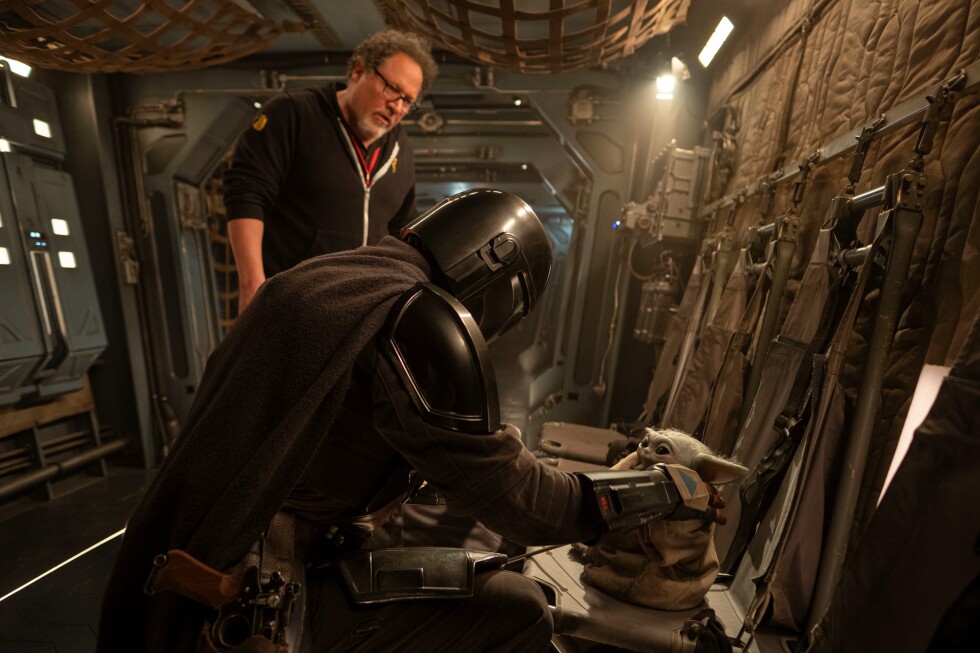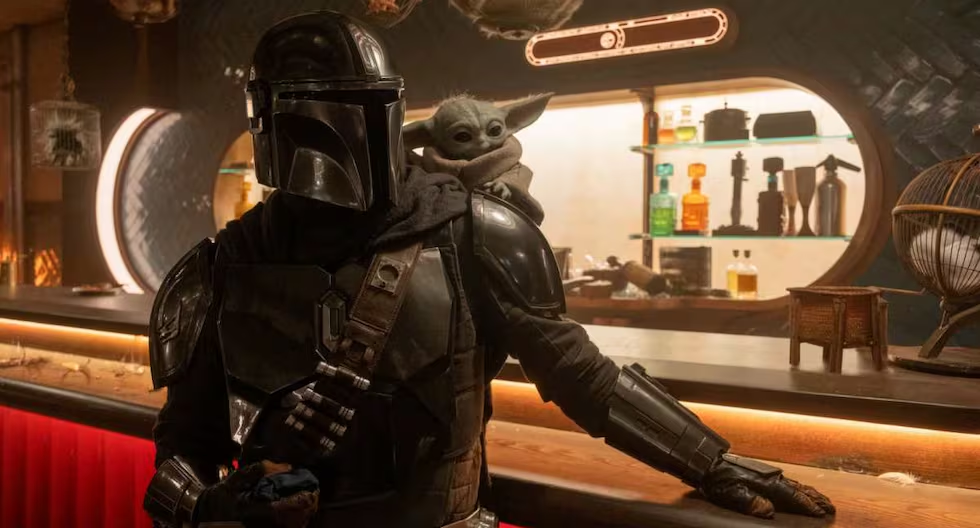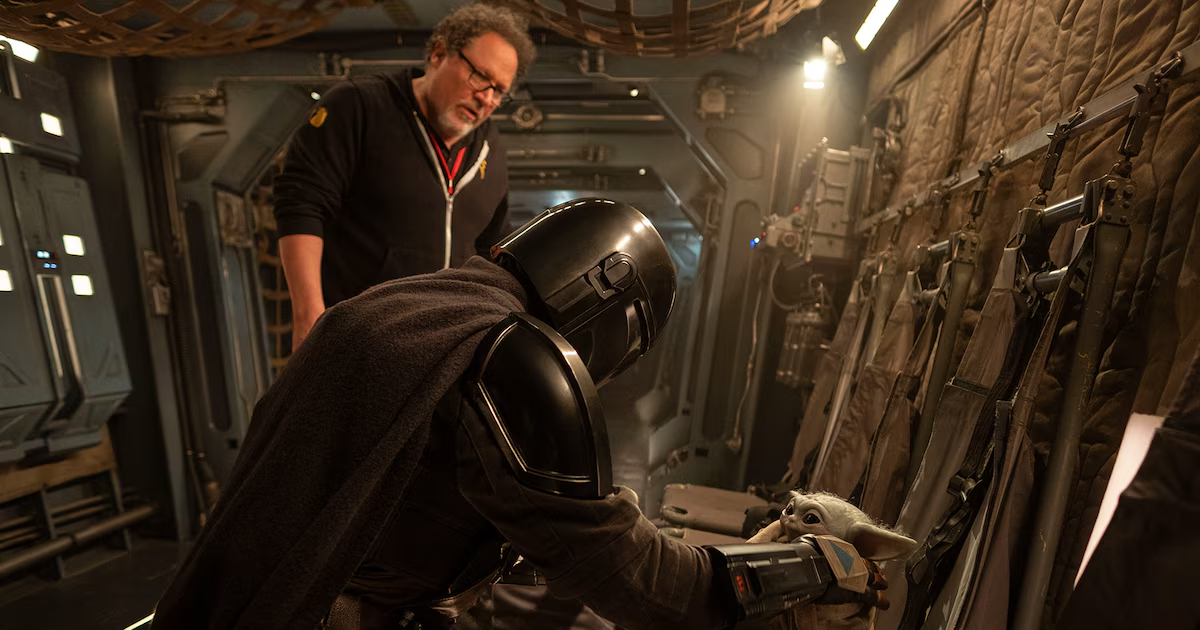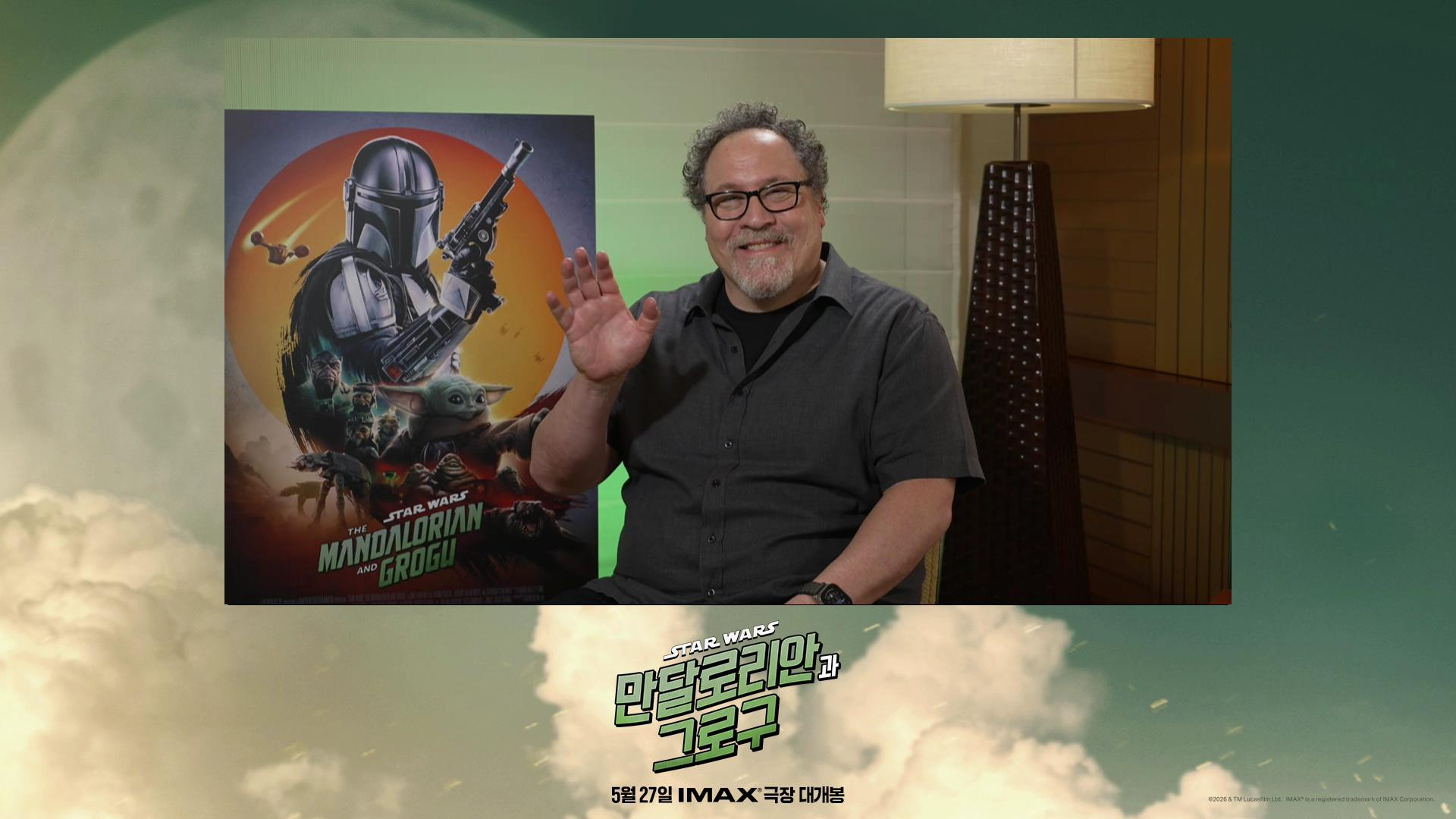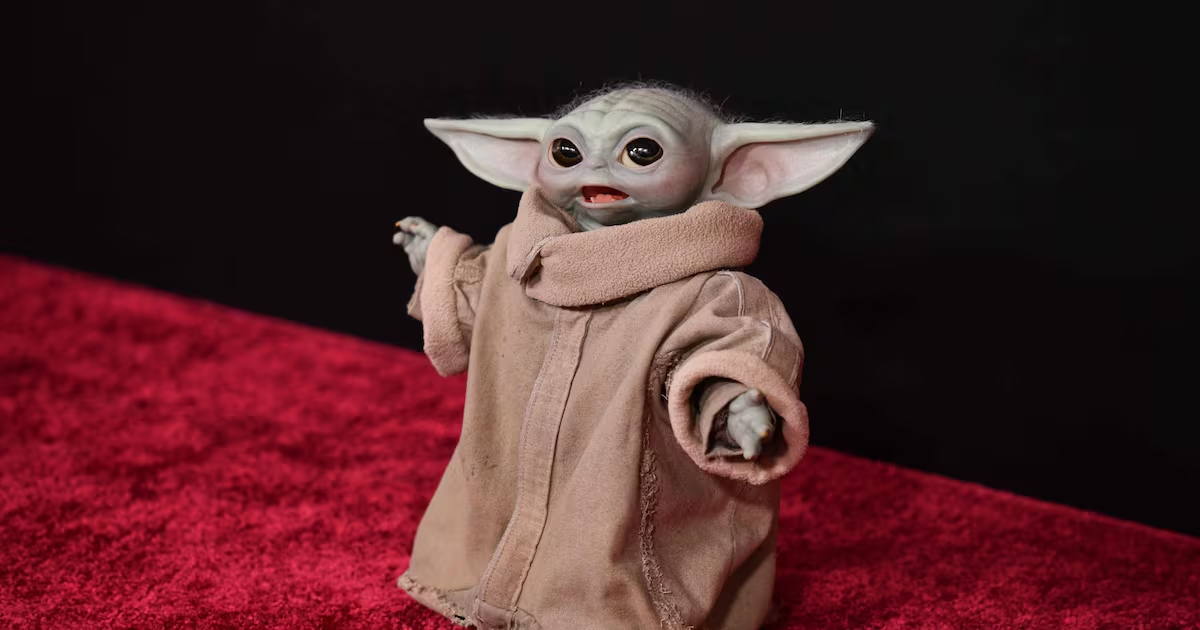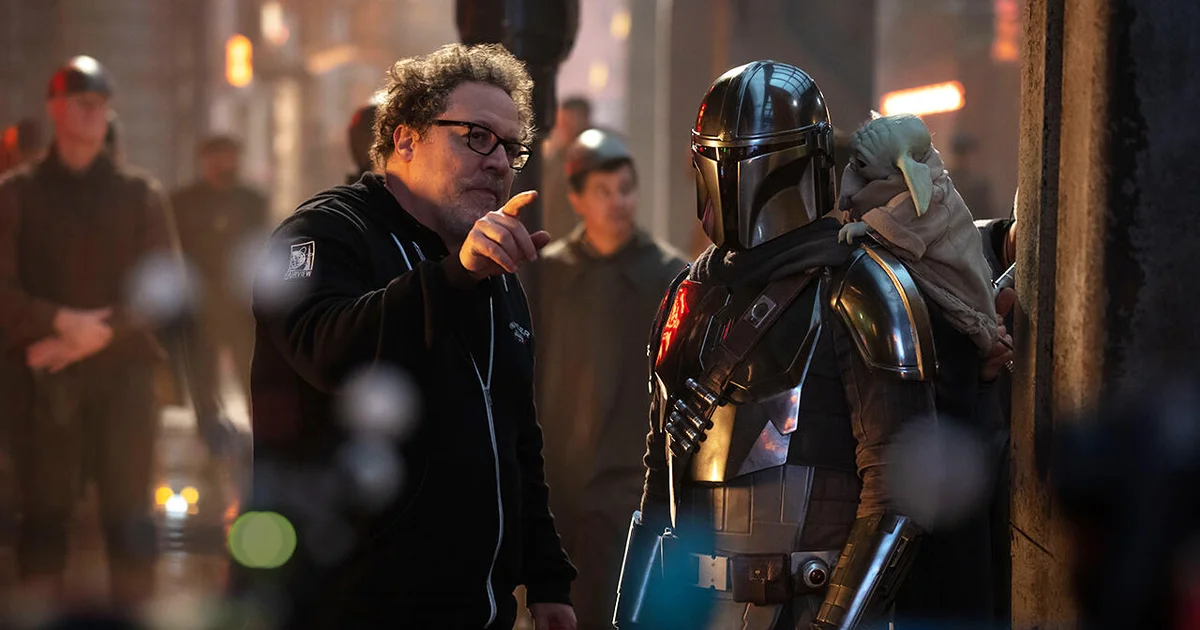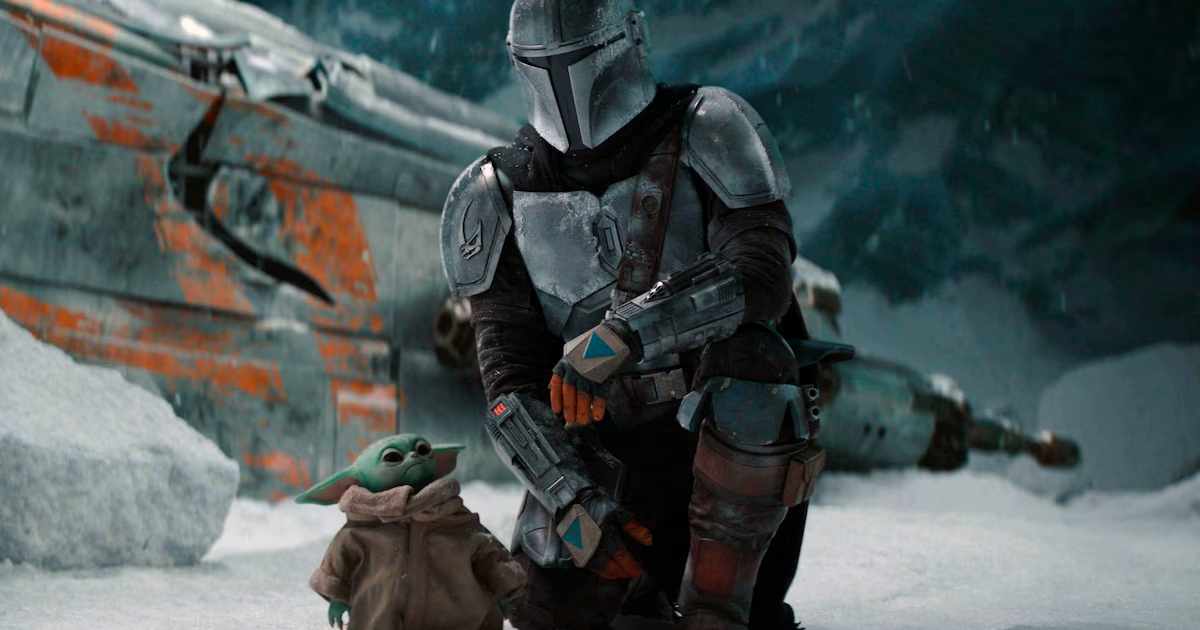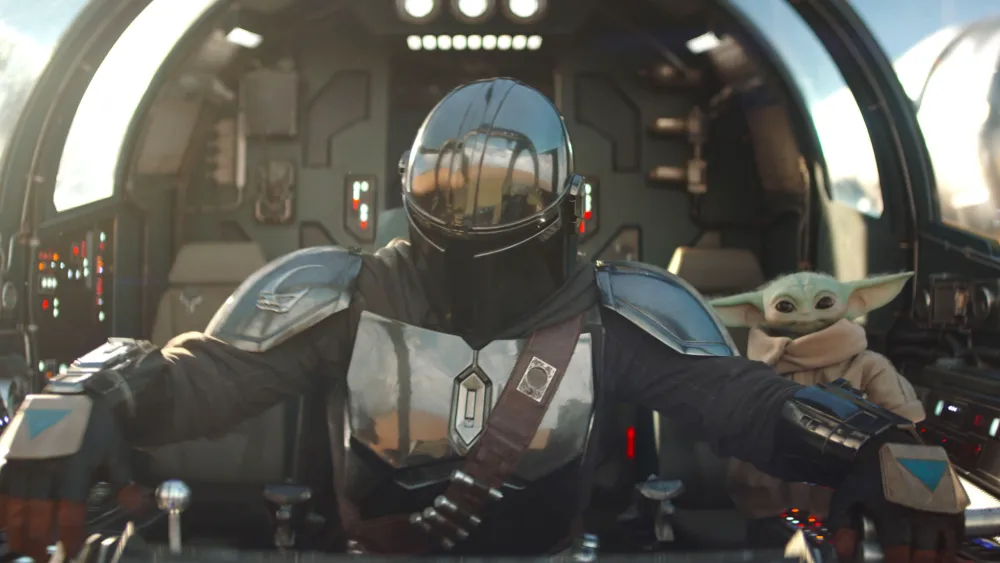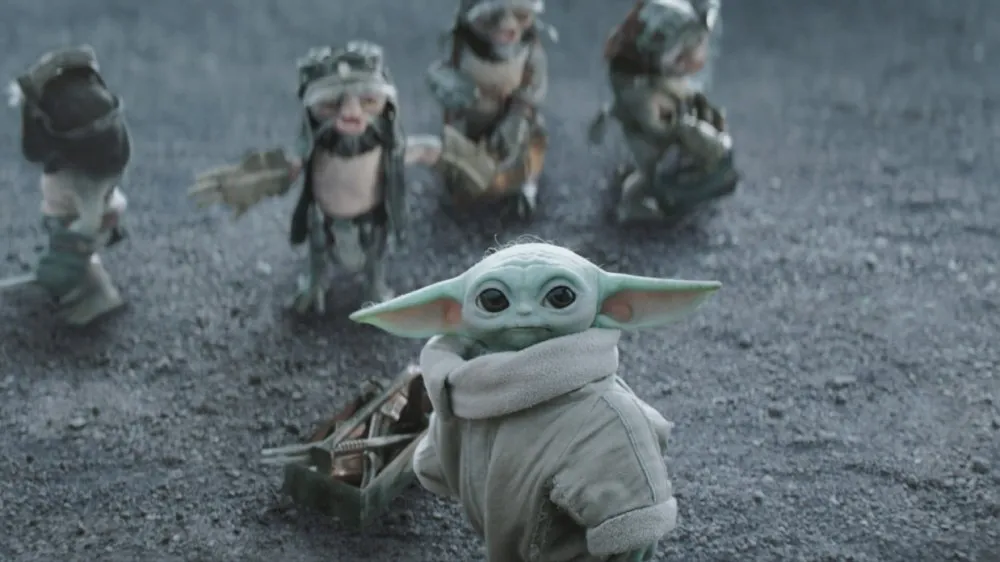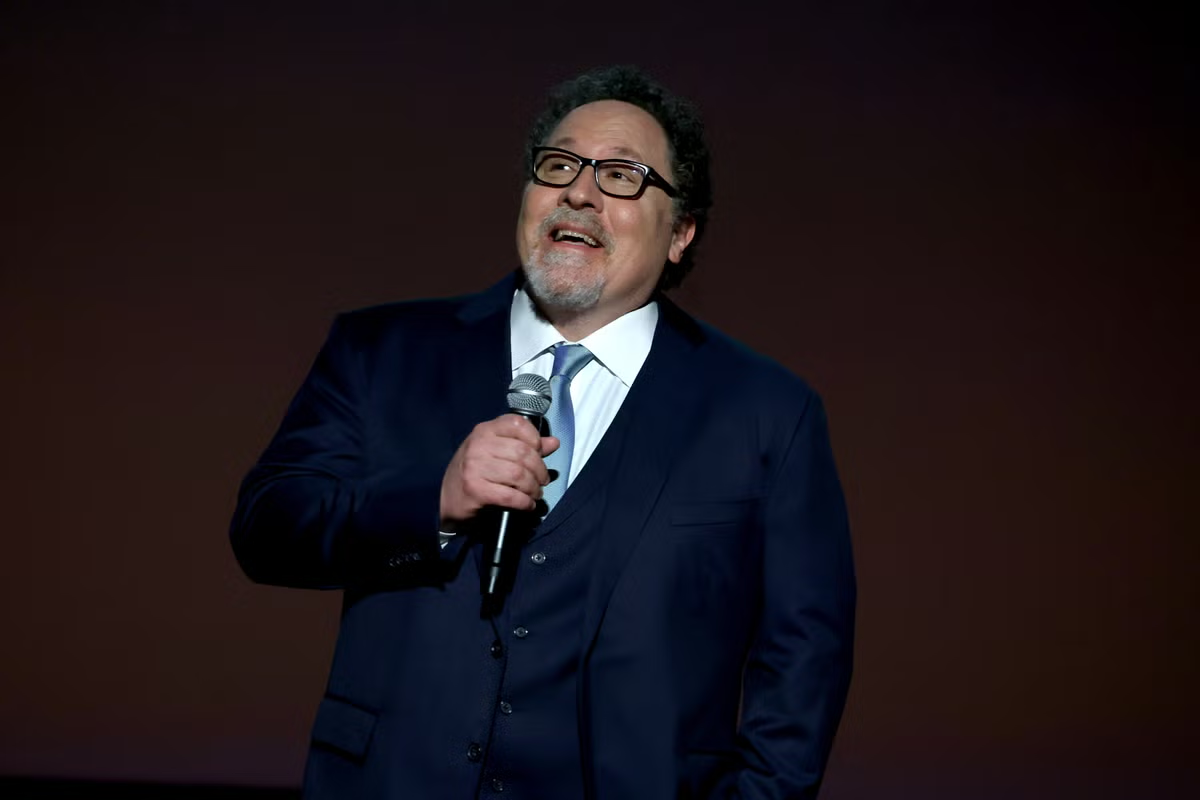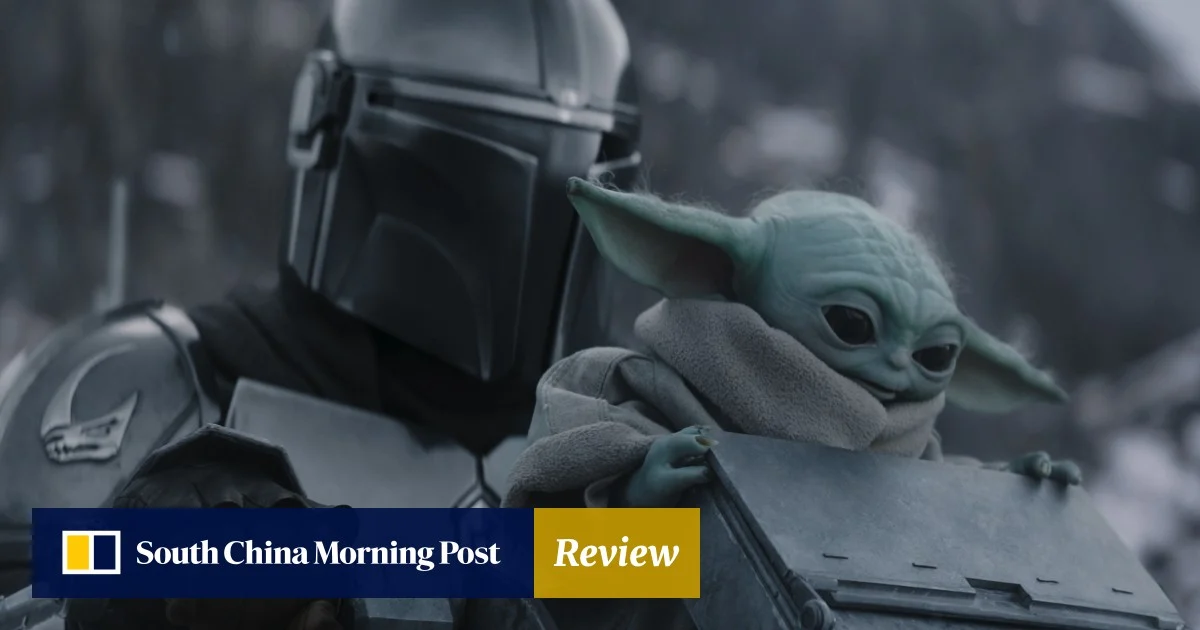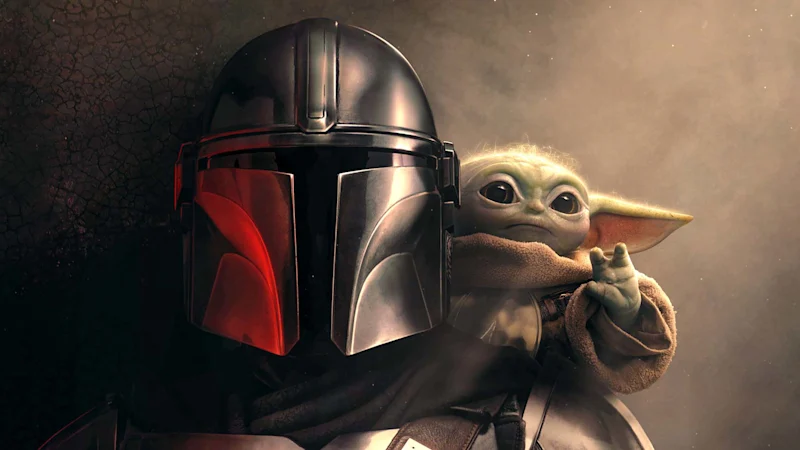
There is little doubt that in the modern cinematic canon, few films have been as influential as George Lucas’ 1977 masterpiece Star Wars. From its opening story crawl, Princess Leia’s hologram plea for help, Luke Skywalker and Han Solo rescuing her from the Death Star, to the clash of lightsabers between Sith lord Darth Vader and venerable Jedi master Obi-Wan Kenobi.Writer, producer and director Jon Favreau, who unveils his own Star Wars movie this week, The Mandalorian and Grogu, likens the journey to an unyielding chase to match each new adrenalin high to the first one. “And as much as I love the experience of Star Wars as an adult, I’m still chasing after that feeling that I had the first time,” he says.Favreau was just nine years old when the spectacular opening shot of the original 1977 film took his breath away. “The blockade runner passing me by, that first shot, the impact of it,” he says. “Everything I felt through all the story points and the relationships. It opened my mind to cinema. I didn’t realise [Lucas] was giving me a primer in Akira Kurosawa and John Ford and space operas.”Jon Favreau hopes to replicate the impact he felt as a nine-year-old.Lucasfilm/DisneyFor the new film, Favreau says, “you want to make it feel like the cinematic experience from the original Star Wars films. You want to fill the whole screen up and make it a two-hour adventure that people who grew up with Star Wars would appreciate, but people who’ve never seen a Star Wars film or television show would enjoy as well.”The journey of The Mandalorian from streaming television series to motion picture is a relatively short one. The series began as a flagship project for Disney’s then-new streaming platform Disney+. The first season was released in 2019, and two more followed in 2020 and 2023.The series took a deep dive into the political aftermath of the original trilogy: a toppled Empire, and surviving Imperial remnants struggling to hold on to power, while the Rebel Alliance struggled to become a functioning government for the New Republic.Against that backdrop, we met Din Djarin (Pedro Pascal), a lone Mandalorian bounty hunter working in the outer reaches of the galaxy, hired initially to retrieve an “asset” on behalf of remnant Imperial forces. When he realises the asset is the child Grogu – nicknamed “Baby Yoda” in popular culture – he instead takes the child under his protection.Pedro Pascal in a scene from Star Wars: The Mandalorian and Grogu.Lucasfilm/Disney via APAt the heart of The Mandalorian and Grogu is an examination of the relationship between father and son. What makes it so compelling is not the manner in which it is explored, but rather that it serves as a reflection of a wider exploration of that topic in our culture: the Bible, Superman, Dune, Hamlet, The Lion King and even Indiana Jones and the Last Crusade … all in some way can be seen through the prism of fathers and sons, but also burdens of lineage and transitions of generational power.“When we look at the enduring myths, be they religious or stories that repeat themselves or great literature, we see the human condition playing out,” Favreau says. “The more I do this and the more I get into technical and technological filmmaking, the more I realise it’s about people. Stories are about people. We care about other people. When there aren’t other people, we don’t engage. And so it’s the humanity playing out.”Searching for a touchstone, Favreau reaches sideways into the Marvel canon for Spider-Man. Unlike more classic comic mythologies, such as Superman and Batman, which create heroism out of the destruction of family, Spider-Man leans into it. “It’s about things playing out in a larger-than-life motif, but it’s about a guy, his parents, his adopted parents, his girlfriend ... there’s a familial interconnection.“Star Wars has that as well, and I think [creator] George Lucas, with his understanding of the monomyth and the hero’s journey, he infused all of it ... the idea of going back to the biblical stories, family relations, it’s not a given that they’re going to be positive. There’s sibling rivalry, there’s intergenerational tension. That goes across the work of Shakespeare [too]. George really hit something strong.”Also central to The Mandalorian and Grogu is that they are an expression of chosen family. “What we landed on was that even though these two characters didn’t start off as family, they became family and a very positive father-son relationship, and that bond is part of what differentiates this,” Favreau says.“George Lucas’ stories were always about the family that you found might be stronger than the family you’re born with, and it’s also about using those relationships to grow and about redemption. He sets a very high bar for the rest of us who play in his world and tell stories in Star Wars.”The Mandalorian (Pedro Pascal) and Grogu in a scene from the film.Lucasfilm/Disney via APStar Wars stories themselves have proven to be complex, both in the literary sense and also in terms of how they are expressed cinematically. There is an old-school Star Wars culture that clings to the matchless quality of the original trilogy. There is some warmth now for the prequel films (1999-2005). There is less warmth for the sequel films. But two properties stand out – the television series The Mandalorian, and the film Rogue One (2016) and its TV prequel Andor (2022-2025).They were both hailed as masterpieces, partly because they are genuinely extraordinary in terms of the scope of their storytelling and the cinematic execution of their vision. But they are also considered first among equals because they contain direct story links to the original Star Wars trilogy; Rogue One and Andor are set in the years, months and days prior, and The Mandalorian and The Mandalorian and Grogu approximately five years after.“The more experienced I get, the more I realise that we’re operating within a context that’s enduring and that you’re dealing with archetypes,” Favreau says, attempting to unpick (at my request) the alchemy of what works here, and why. “With Star Wars, it’s just more clearly defined because [George] cut closer to the bone in his stories.“He understood the work of Joseph Campbell (author of The Hero with a Thousand Faces); he understood the work of other filmmakers,” Favreau says. “He came from the perspective of an anthropologist. Stories emerge, whether it’s through images, paintings, comics, the ceiling of the Sistine Chapel or cave paintings. He understands the hero with a thousand faces.“Of course everything, the magic, the visual effects, all of that helps highlight all of it and helps make it interesting to the younger generation,” Favreau adds. “But as you get older, you start to really appreciate the characters and the relationships more. You have to acknowledge that there are people who are fans of Star Wars who have expectations around what George created and if I’m going to play in that context, then I have to be respectful of that.”One other curious aspect of the Star Wars canon – and one there are fewer clear artistic explanations for – is its extensive use of masks. In thematic terms, it speaks to the clashing sides of the Force, and the idea that the light side moves with clarity and the dark side with deception and illusion. But it also taps into story tools such as withheld closure, and the idea that these talismanic “faces” are given greater power by their mystery.In practical terms, they are everywhere: Darth Vader’s mechanical breathing mask, the helmet masks of Stormtrooper armour, Kylo Ren’s shattered copy of Vader’s terrifying visage, and of course, the mask of the Mandalorian, the helmet of his suit of battle armour, similar to the armour worn by other Mandalorians, notably Boba Fett in the original trilogy.A masked Pedro Pascal with Grogu in the film.Lucasfilm/Disney via APWithin the story, the Mandalorian creed requires its soldiers be masked, to preserve their honour. To be unmasked by an enemy is a humiliation too great to endure for any true son of Mandalore.“I don’t know why it is, and I don’t know that George knows why it is, but George knows how to surf the big waves of human storytelling from generation to generation,” Favreau says. “There’s a lot that changes, but there are certain things that hit us on a very deep level. When I grew up with Star Wars, certain characters had faces, but certain characters didn’t. Darth Vader was every bit as much of a character as Luke Skywalker and you never saw expression until the later films in the trilogy.“[Din Djarin’s Mandalorian forebear] Boba Fett was an image, and I would argue that even in the Western, if you think about The Man with No Name – Clint Eastwood’s character – he didn’t do a lot of facial performance. He adopted a mask, and he used the brim of his hat to disguise his eyes unless he wanted to share a glance,” Favreau says.It was William Shakespeare who wrote, in Much Ado About Nothing, “Oh divine air! Now is his soul ravished. Is it not strange that sheep’s guts should hale souls out of men’s bodies?” What he was talking about was the notion that a set of man-made musical instruments could tear us open and apart, lift our souls and shatter our fragile hearts.It speaks perfectly to Star Wars, whose majestic soundtrack – originally authored by John Williams and evolved for the Mandalorian era by Ludwig Goransson – transformed cinema music. The Imperial March sells dread like McDonald’s sells hamburgers. And moments like Luke Skywalker’s return appearance in The Mandalorian, which had fans screaming, weeping and cheering, often in the same breath.Jon Favreau on set with Pedro Pascal.Lucasfilm Ltd./Disney via APCollectively, it places a lot of power in the hands of storytellers who leverage those tools shrewdly and wisely. “It was one of the pinnacles that I’ve experienced,” Favreau says. “I’ve had a few of them, but that [Luke Skywalker] moment … it was satisfying, and it was hopeful and bittersweet and a lot of that was me inheriting a lot of good storytelling that came before me and just not fumbling the ball.“There is a power when everybody gets it right, and it’s a team sport, so it’s not about a filmmaker, it’s about a filmmaking team, and we’re inheriting something that came before,” Favreau adds. “It’s a bit of a relay race where the baton keeps getting passed, that we didn’t drop the baton, that it clicked just once in a really good way at the right time.“Unfortunately, it’s not something you can duplicate with any certainty,” Favreau says. “You just put yourself in a position to do the best you can and every once in a while you’re smiled upon and it comes together. To have that view that you had [watching people’s reactions online], to actually see into other people what other people shared of their reaction. It just felt like a moment where everything came together. It was one of the high points of my career.”The Mandalorian and Grogu is released on May 21.Want more Movies? We’ve got you.Newsletter: See our critical guide to what’s showing on a screen near you. Get Screening Room delivered every Thursday.In The Richest Woman in the World, Isabelle Huppert revisits the court case that tore a billionaire family apart.Pike River: Why the story of a real-life mining disaster drew Melanie Lynskey home to New Zealand.
Jon Favreau was nine when Star Wars took his breath away. Can his new film do the same?
The Mandalorian and Grogu director is mindful of the ‘very high bar’ set by George Lucas.
1,917 words~9 min read