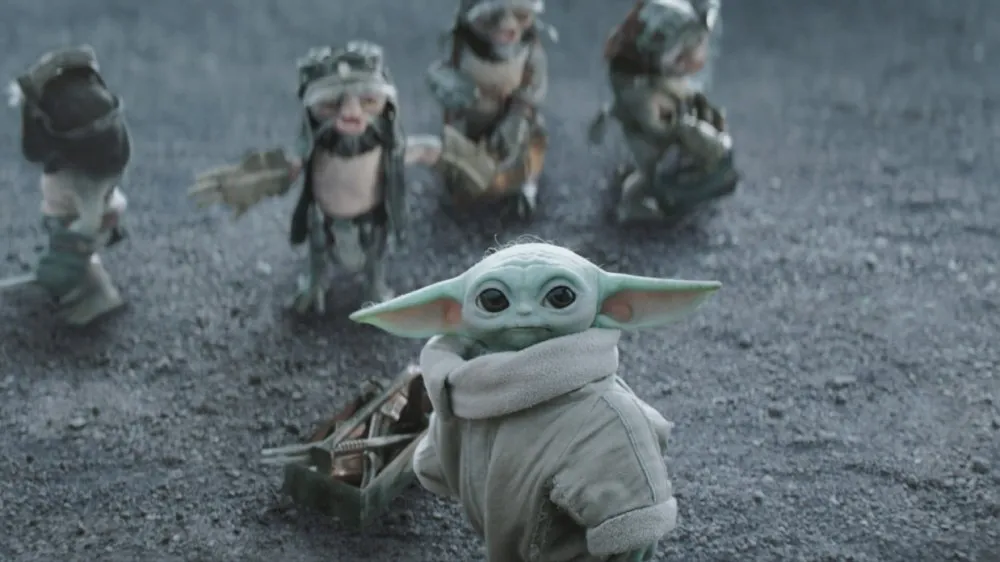
In 2019, Baby Yoda was ubiquitous. The adorable green sidekick to Pedro Pascal’s masked bounty hunter made his debut on the Disney+ series “The Mandalorian,” becoming a pop culture sensation and fueling enough memes and merchandise to fill the galaxy.
Seven years and one pandemic later, is the force strong enough to turn the creature formally known as Grogu into a big-screen star? His box office bankability will be tested in this summer’s “Star Wars: The Mandalorian and Grogu,” a continuation of the hit television show. As the first “Star Wars” movie in (what feels like) eons — the last was 2019’s “The Rise of Skywalker” — there’s mounting pressure to prove the space opera series is still a viable cinematic property.
“The Mandalorian and Grogu” is estimated to earn $80 million to $100 million domestically over the four-day Memorial Day weekend. Those ticket sales would be decent were this not a “Star Wars” film. Sure, the box office hasn’t returned to full strength since COVID, and major brands — Marvel too — haven’t been immune to the changing tastes of audiences.
Yet “Star Wars” is one of Hollywood’s preeminent film franchises. It’s a beloved property with few equals, so there’s an expectation of a certain level of box office. Case in point: Disney-owned Lucasfilm plunged into crisis mode after 2018 spinoff “Solo: A Star Wars Story” opened to $103 million (not adjusted for inflation) over the same holiday frame. With lackluster reviews and distracting behind-the-scenes turmoil, “Solo” became the first “Star Wars” movie ever to lose money in its theatrical run — it tapped out with $392 million globally against a massive nearly $300 million budget. That said, “The Mandalorian and Grogu” carries a leaner $165 million price tag, not including the mega marketing spend.