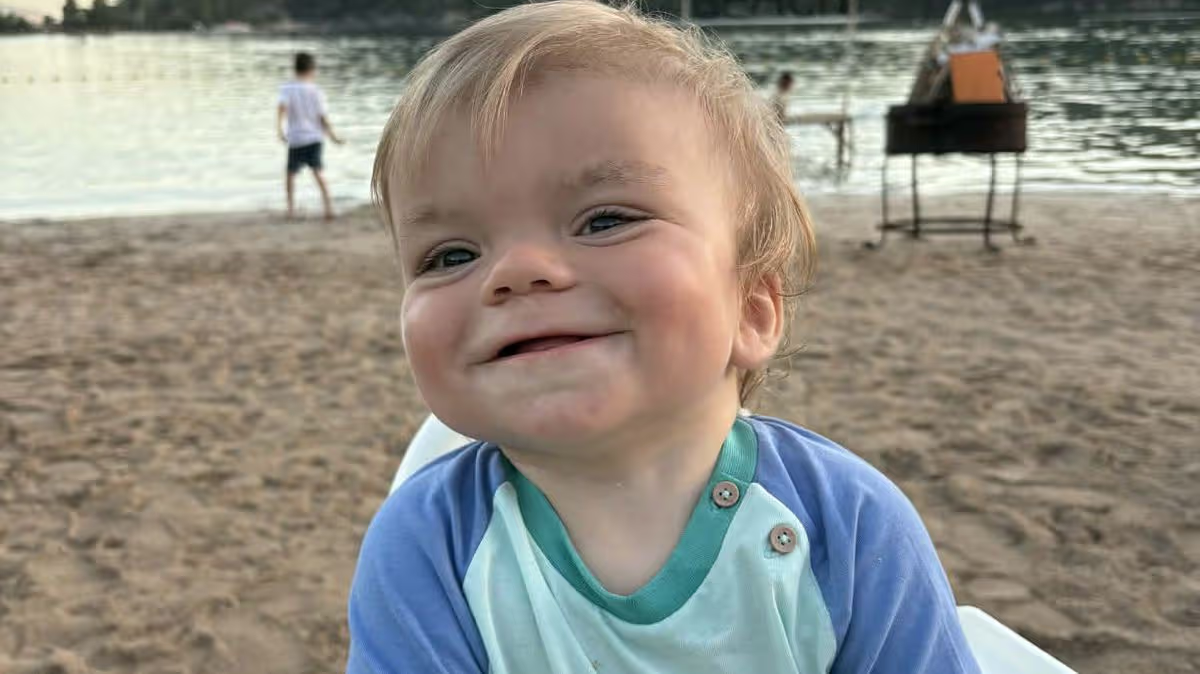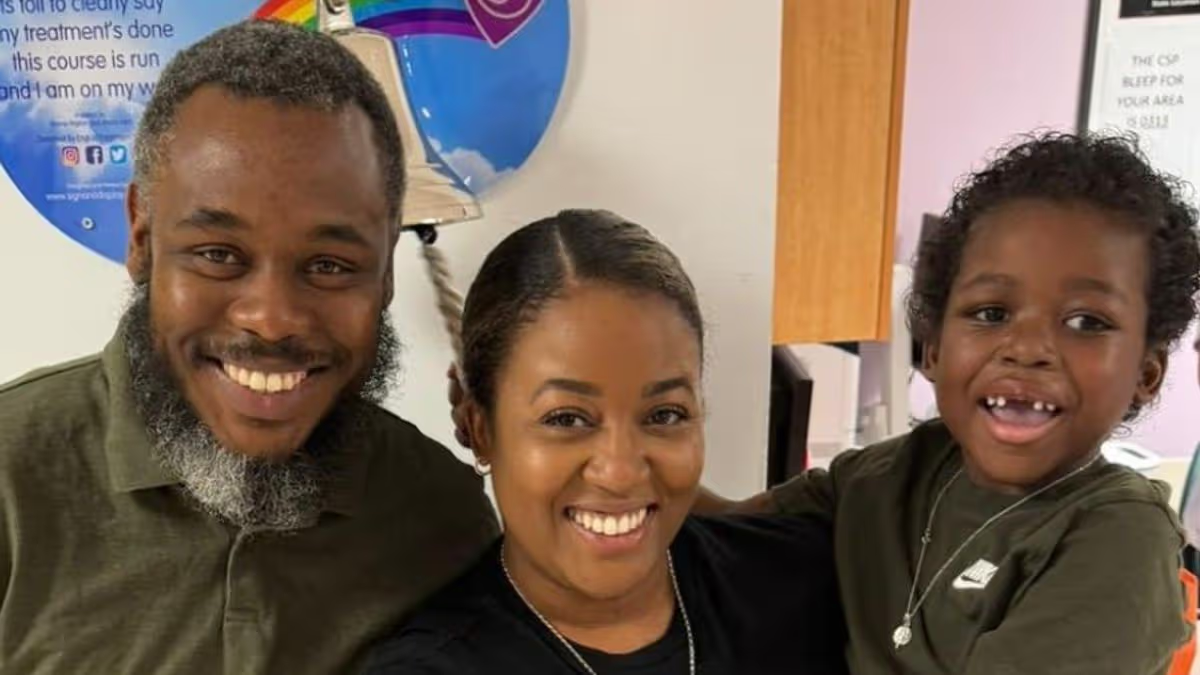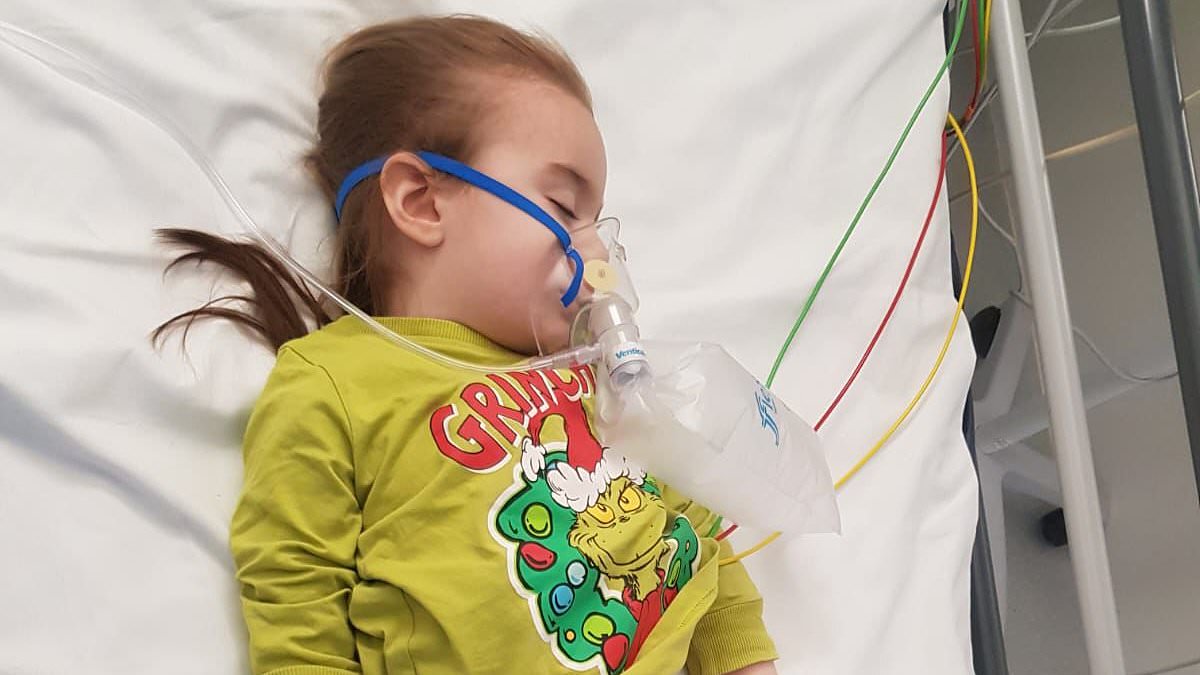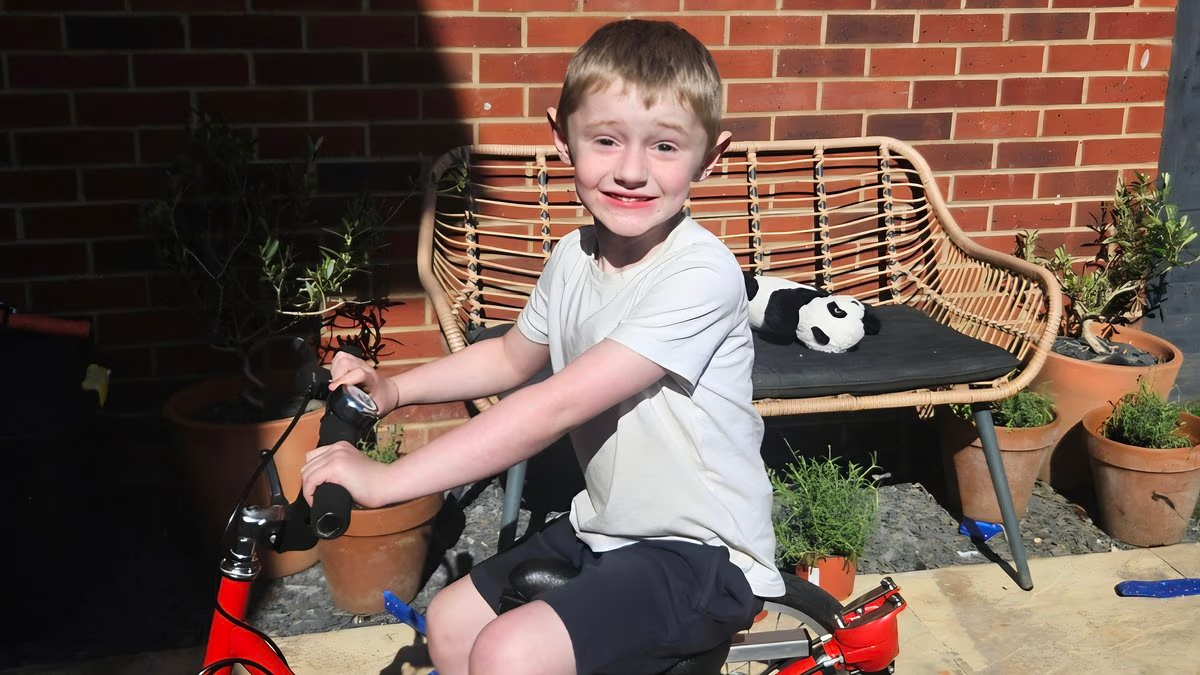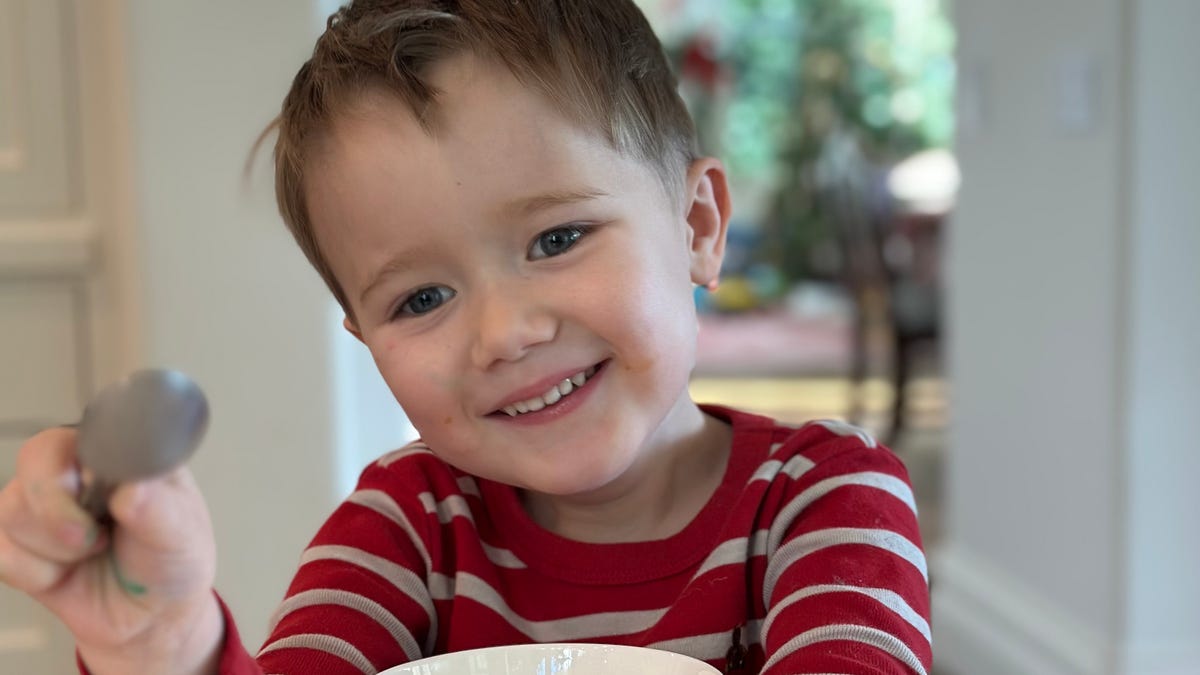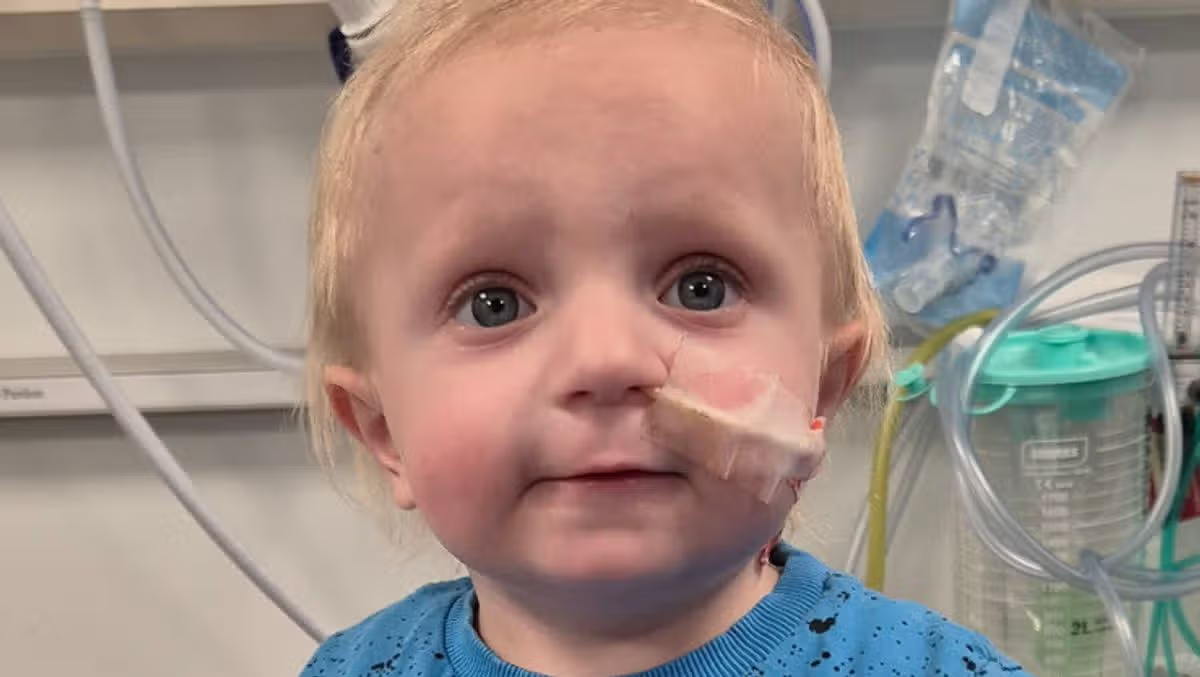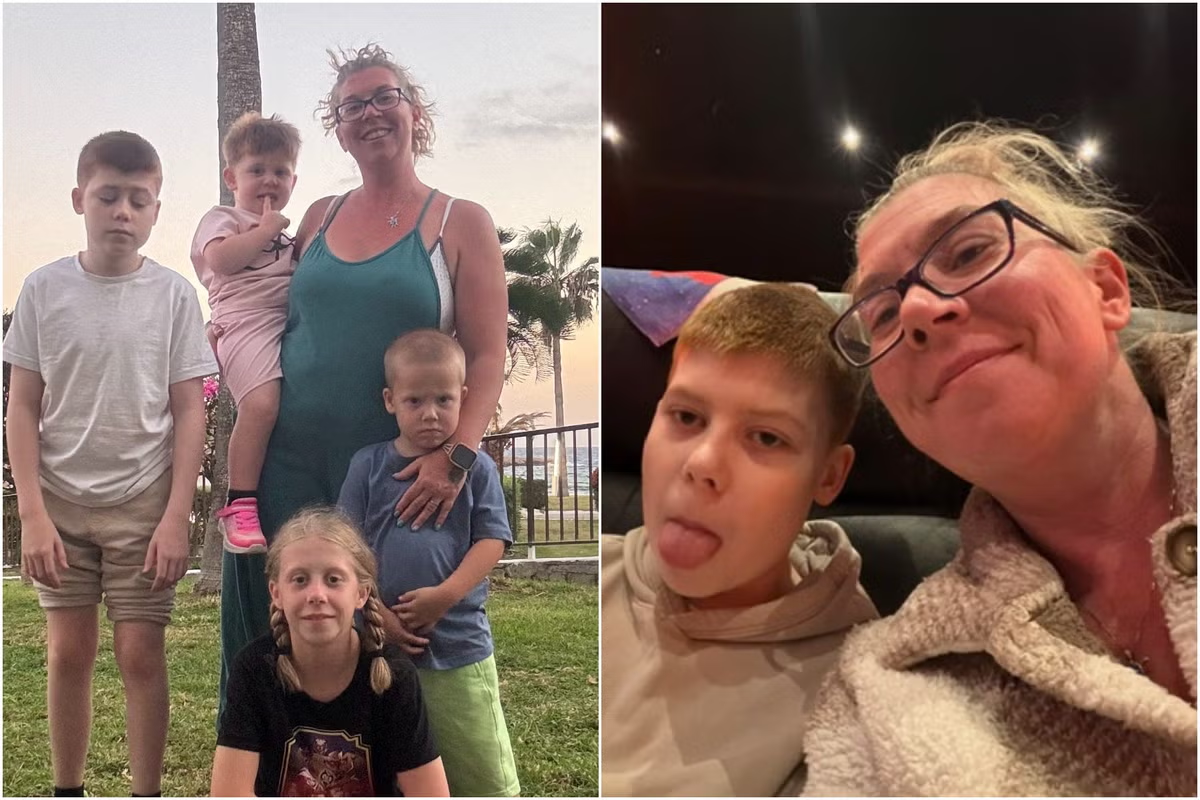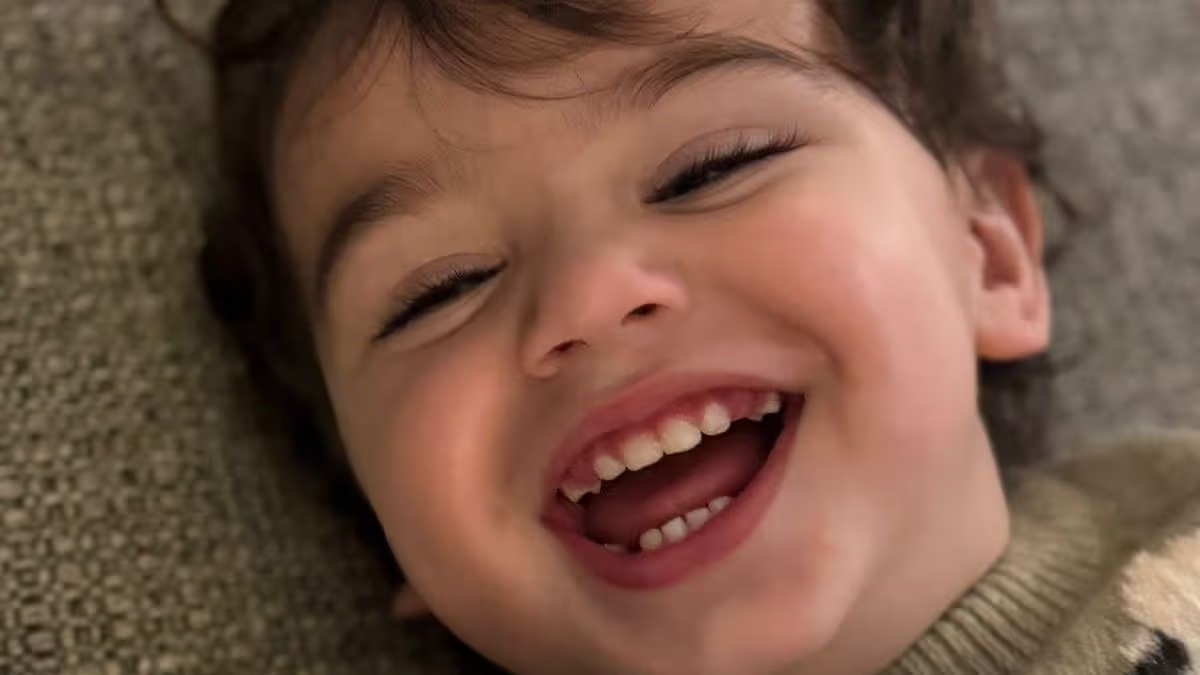
Kandace says they had spotted symptoms before he had to be rushed to hospitalNeil Shaw Assistant Editor (Money and Lifestyle)08:07, 20 May 2026Toddler has condition so rare doctors hadn't heard of it, and there's no cureA mum has explained how she discovered her two-year-old son was seriously ill with a rare condition after he went from being a normal toddler to collapsing with a seizure in February this year. Reuben Suckley seemed much like any other two-year-old – obsessed with Liverpool football club, animals, and playing with his older brothers.But by the start of this year the toddler was still unsteady on his feet while walking, and in February he had a seizure and was rushed to A&E by his worried mum, Kandace Giordani, 33. A week later, Reuben was diagnosed with leukodystrophy.The rare, fatal and inherited disorder causes rapid motor and cognitive decline, targeting different parts of the brain one by one, and has a heartbreakingly young average life expectancy. It was the first time many of his doctors had heard of the condition.“It was a horrendous shock and a pain I can’t even explain,” said Kandace, from north London. “The consultant that told us the diagnosis had limited knowledge or answers for us because it is so rare. It was such heavy news, and we had so many questions, but no one had the answers, so we were really scared.“When the people that need to help you don’t know what you’re dealing with, you can’t help but wonder ‘What now?’.”Reuben’s aunt, Chelsie Osborne, 27, added: “It was surreal, and a feeling of such painful hopelessness.”Further testing revealed Reuben has a form of leukodystrophy called Krabbe Disease, which is typically rapidly progressive. But despite the severity of the diagnosis, Reuben’s symptoms had been worryingly minor in the months prior.His family had noted that the left side of his body appeared slightly weaker, and he would often store food in his mouth but not swallow it. Most of all, they spotted that his walking remained unsteady as he grew, and he never seemed confident on his feet.While Kandace has her concerns, doctors suggested he was still developing and advised she bring him back at a later date, when Reuben was two. But when he stopped walking altogether, regressing to crawling, they knew something was amiss.His family also spotted him making little jerking motions, which they put down to balance and instability issues, until one instance when Kandace realised it looked like a seizure. She rushed him to the hospital, where the NHS were quick to run tests, including an MRI, ECG, EEG and bloodwork.The MRI found indicators of the destruction of white matter on his brain – an indicator of leukodystrophy. Life changed forever when Reuben was officially diagnosed, and he is now closely monitored by multiple specialists, including a neurologist and a local team of therapists.While he remains much the same as he always has for the time being, his family have been told by doctors that only 50% of children with Krabbe disease live to the age of five, and they are likely to see a consistent decline in Reuben. The decline in his mobility is something they have already witnessed, and Reuben never fully developed speech, but the family are now preparing to see a decline in his ability to swallow, see and hear.Kandace said: “The hardest part is not being able to do anything about it. As a mother, you would do anything to help your child. But with leukodystrophy, there is nothing I can do to take it away from my Reuben.“There is no medicine, no treatment, and no amount of rest that can change this – and that is my greatest heartbreak. I love my son with all my heart and it pains me beyond words to know I cannot protect him from this or make it better. This is a horrific experience that I wouldn’t wish on anyone.”His family has decided to share Reuben’s story, with the aim of raising awareness of the condition so that other families might have a chance before it’s too late to act. Kandace said: “It often starts as a hidden disability, something you don’t immediately see, and when it progresses, it comes as such a devastating shock. From the moment of diagnosis, it feels like you are already grieving.”Chelsie added: “The helplessness is truly agonising.”The family has been advised to make Reuben as comfortable and happy as possible, and have been adjusting home life to suit his needs. While his physiotherapist has recommended keeping him moving as much as possible to prevent his muscles from stiffening further, the family struggles to be able to give him a safe environment in which to roam freely.To help, Chelsie, Reuben’s aunt, is currently fundraising for an all-important home soft play, as well as further funds for any additional therapies not covered by the NHS – with a goal of £50,000. With plans to build a small garden house with padded walls and flooring, a ball pit and some minimal soft play toys, they hope to provide Reuben a safe environment to enjoy play just as any other youngster can.Chelsie said: “Reuben just wants to be free and play like any other two-year-old, and it’s not fair that he can’t do that safely. He lights up when he sees a soft play, but we can’t safely give him that freedom at the busy local ones, which aren’t really accessible for him.“Soft plays often have climbing structures that he cannot access, and are filled with older kids and lots of noise that triggers his seizures. So to be able to give him one at home would help keep him moving and happy.”Despite all that he faces, Reuben continues to bring his family a huge amount of joy – and always has a smile. Kandace added: “Although this is so horrendous, painful and heartbreaking, Reuben remains his bubbly self.“He loves animals and Liverpool football club – as soon as it comes on the television or the song plays, he’s ecstatic and bouncing. He is just the happiest little boy. Since he started smiling as a baby, every single day, he has a smile for us.“He’s clever and understands a lot – although we have been told he most likely won’t speak, we are teaching him Makaton, a form of sign language, to help him communicate. He’ll sign ‘more’ when he wants more food or more tickles, and even signs ‘thank you’ and ‘please’.Article continues below“We are helping teach him as much as we can, as quickly as we can, because we know time isn’t on our side.” Chelsie added: “Our goal is just to do everything we can for him to live life as happily and safely as he can – to the fullest.“We will do everything in our power to make sure he continues to be the happy little boy he is and lives his life as fully and joyfully as possible – because he deserves nothing less than the very best.”
Mum told to make toddler 'as comfortable as possible' after diagnosis
Kandace says they had spotted symptoms before he had to be rushed to hospital
1,170 words~5 min read