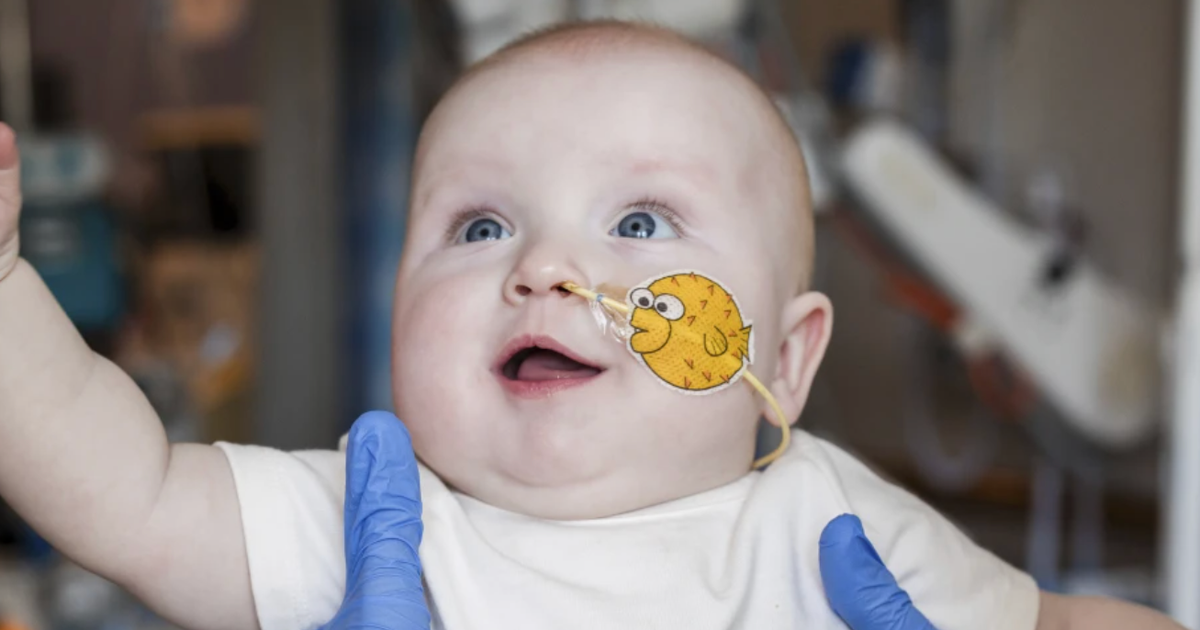
In the first, tenuous weeks of her life, Jorie Kraus and her parents faced her possible death repeatedly. Muscles throughout her tiny body simply didn’t work properly. Her heart. Her legs. Her larynx. Even the involuntary action of breathing was labored, and constantly faltering.
In those panicked days, through a haze of terrible news and incomprehensible instructions, something incredible happened: A long-shot attempt to discover the root cause of her problems identified a widely available, yet previously unknown, treatment.
“The results were so fast,” Joanie Kraus, Jorie’s mother, told the audience at STAT’s Breakthrough Summit West in San Francisco on Tuesday. Suddenly, she recalled, a child who spent 73 days in a neonatal intensive care unit and then the first two years of her life facing developmental plateaus, could move freely, maneuver around obstacles, and look at a Fisher-Price toy, hold it up, and say “(s)quare,” even if dropping the s.
“I said, ‘This can’t be,’” Joanie Kraus recalled. “It can’t be, and it can’t be so fast. It was almost like a light switch.”
What turned the switch on, improbably, was Klonopin, a widely available muscle relaxer commonly used to treat seizure disorders and panic attacks.