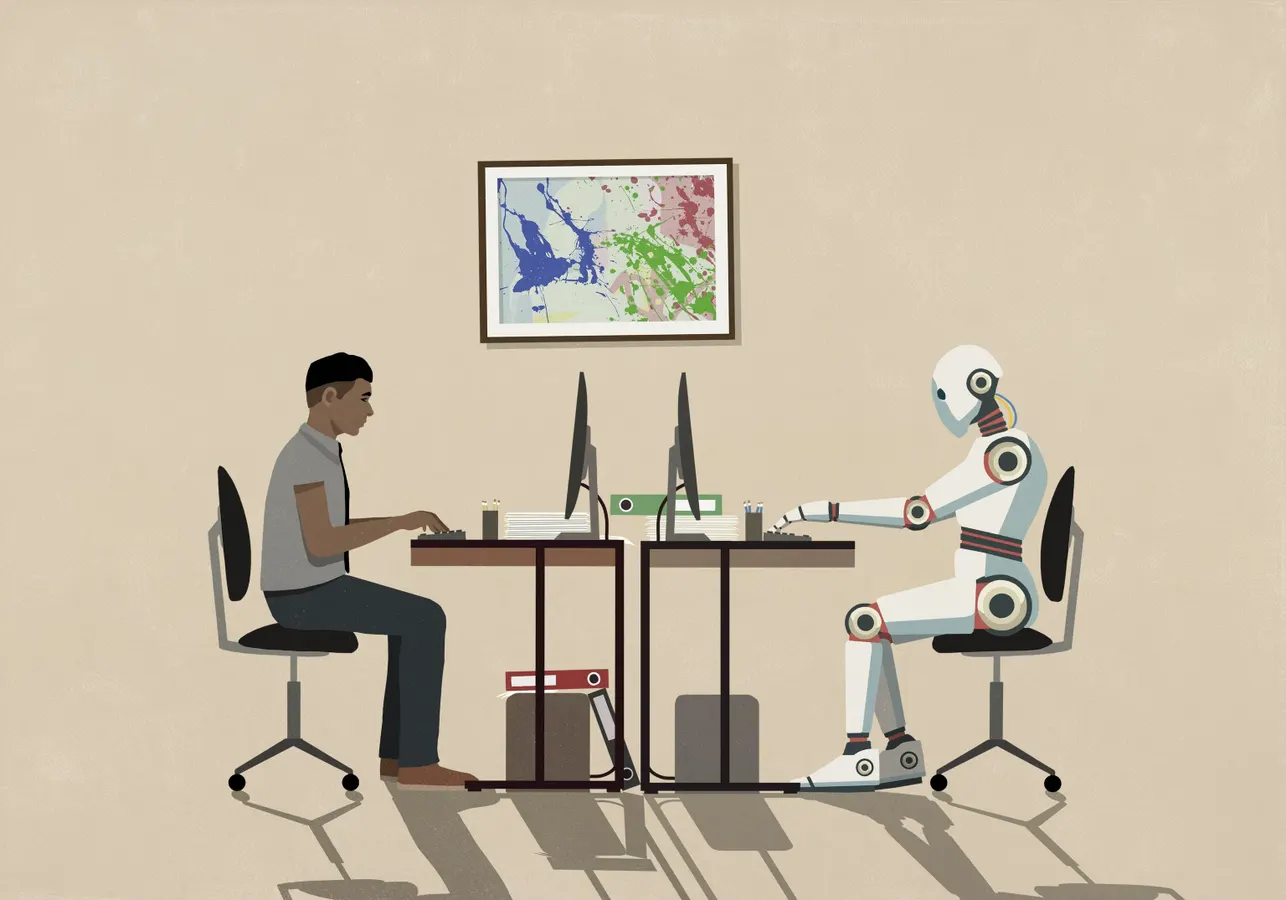
Every CEO Dan Shipper recently offered a sharp way to think about AI and work. As models become better at summarizing, drafting, coding, researching, scheduling, and coordinating, the middle of many knowledge workflows starts to look increasingly machine shaped. The work that remains most human gathers at two ends.
At the first end sits intent. Someone must decide what matters, what question deserves attention, what standard counts as good, and which tradeoffs are acceptable. AI can produce options at speed, but the first valuable act is choosing the problem with enough taste and context that the output has somewhere meaningful to go.
At the second end sits accountability. Someone must stand behind the result, explain it to other people, notice when it feels wrong, and carry the consequences when the neat answer fails in the real world. This is where trust, ethics, customer empathy, craft judgment, and organizational memory still matter.
The brutal part of the metaphor is what happens to the middle. A large share of professional work has lived in translation between intent and result. Turn meeting notes into a plan. Turn a plan into copy. Turn a chart into a memo. Turn a bug report into a patch. Turn research into a deck. These tasks once proved competence because they consumed attention. Now they are becoming the natural territory of agents.