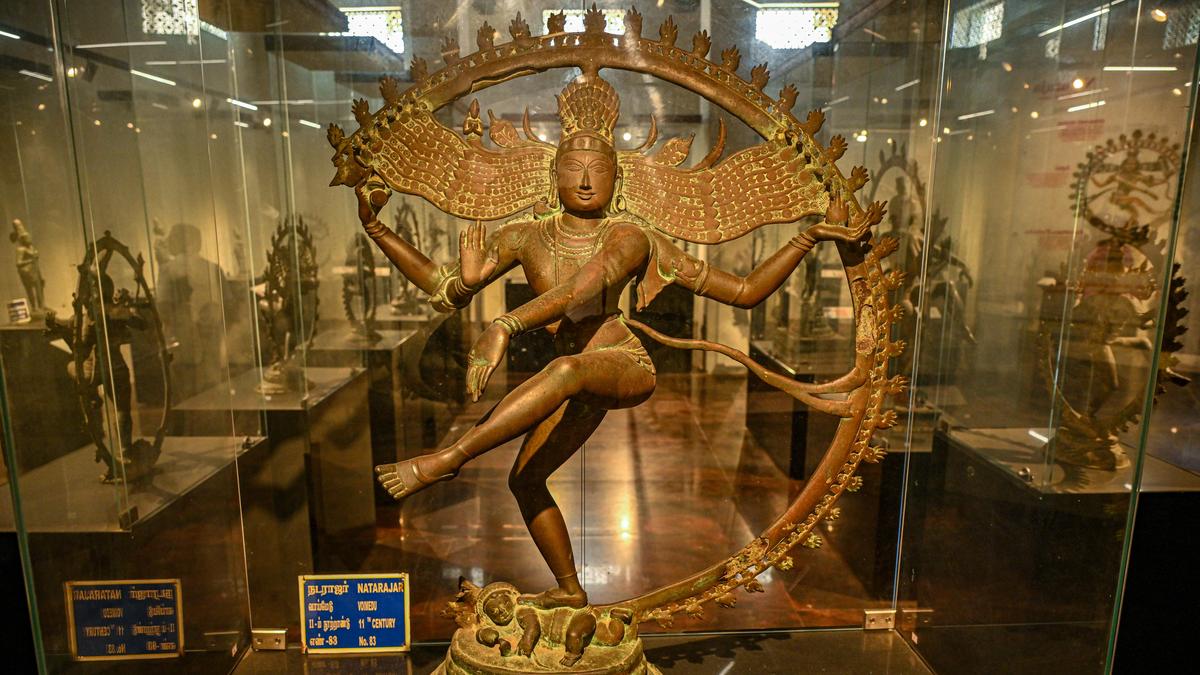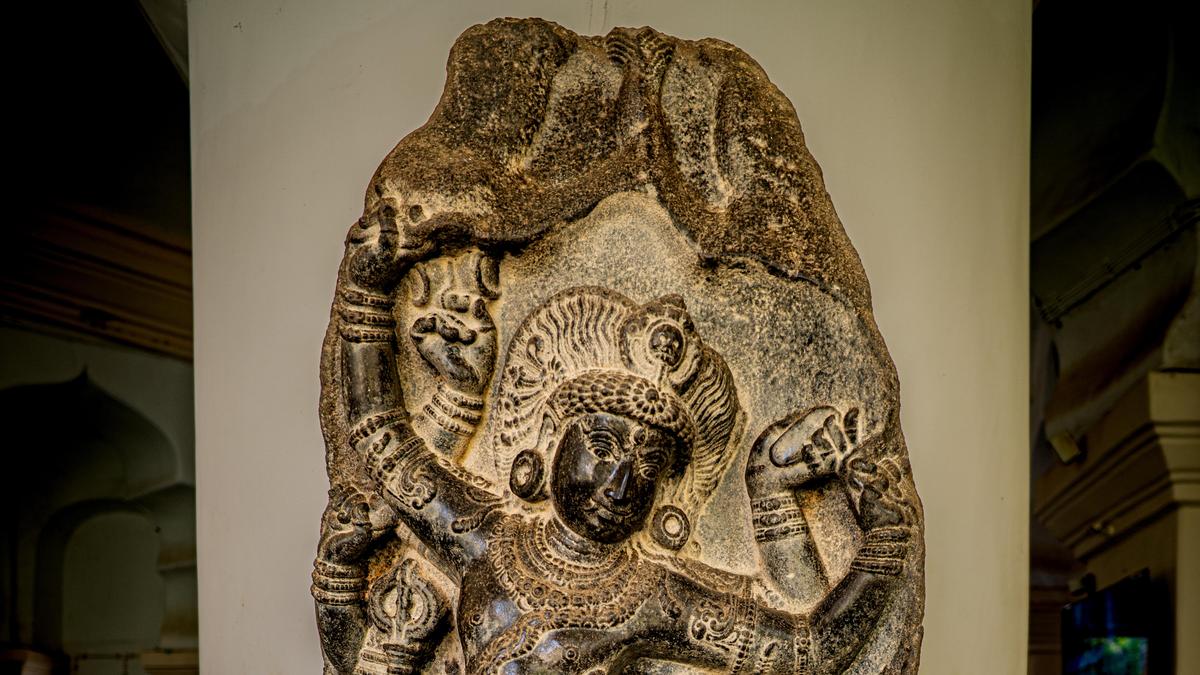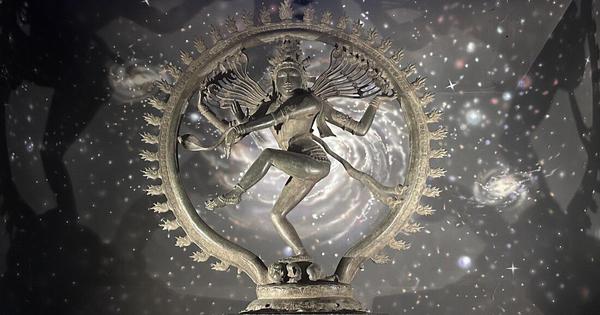
In the FAQ section of the European Organisation for Nuclear Research’s website, one social media query used to recur: “Why does CERN have a statue of Shiva?” The question was understandable. A six-and-a-half-foot bronze South Asian deity, at first glance, appears incongruous within a European scientific campus. CERN’s answer explained that the “deity was chosen by the Indian government because of a metaphor that was drawn between the cosmic dance of the Nataraj and the modern study of the ‘cosmic dance’ of subatomic particles”. Shiva has danced at CERN only since 2004, but the philosophical and aesthetic association between Nataraja and the metaphors of science is neither recent nor sudden.The Nataraja became a symbol of India’s antiquity and civilisational sophistication from the early 20th century, a nationalist symbolism contemporary scholars believe was catalysed during the colonial era by the controversial art historian Ananda Coomaraswamy’s 1912 essay The Dance of Siva. The figure later gained global visibility through physicist Fritjof Capra’s bestseller The Tao of Physics, which is quoted both in CERN’s old FAQ response and on the plaque accompanying the Nataraja on site. Yet, alongside the philosophical interpretations attached to it, the figure’s iconography itself invited wonder: one leg bent, the other raised and crossed at the hip, four arms extended, each hand poised in a distinct gesture.For those curious about this cosmic character, the Bronze Gallery of the Government Museum in Chennai offers a chance to behold iterations across several centuries. At the far end of the lower floor, against a printed backdrop of a night sky, looms a massive 11th-century Nataraja from the village of Kankoduttavanitam. The height of a tall adult, he presides dramatically over the area, his verdigris patina bespeaking a thousand-year vintage.The very bhangas (postures) and mudras (gestures) that qualify the cosmic characterisation in modern discourse may be linked to a prescientific imaginary. Around the time the Indian government gifted the CERN its Shiva statue, archaeometallurgist Sharada Srinivasan of Bengaluru’s National Institute of Advanced Sciences proposed an intriguing theory developed with the late astrophysicist Nirupama Raghavan. In the 2006 paper The Art and Science of Chola Bronzes, Srinivasan posited “an exciting iconometric link between Nataraja and the constellation Orion”. By mapping star charts onto images of Nataraja sculptures, she explored the form’s “astronomical and astrological connotations”. Superimposing an 800 CE star chart of Orion onto what she says is the earliest known Nataraja sculpture, she found an “astonishingly good fit”, suggesting a stellar inspiration for the icon, “at least at its inception”.
Was Nataraja inspired by the stars?
One theory maps the Chola-era icon to the stars, but scholars warn that a purely scientific reading obscures its medieval history.
1,756 words~8 min read