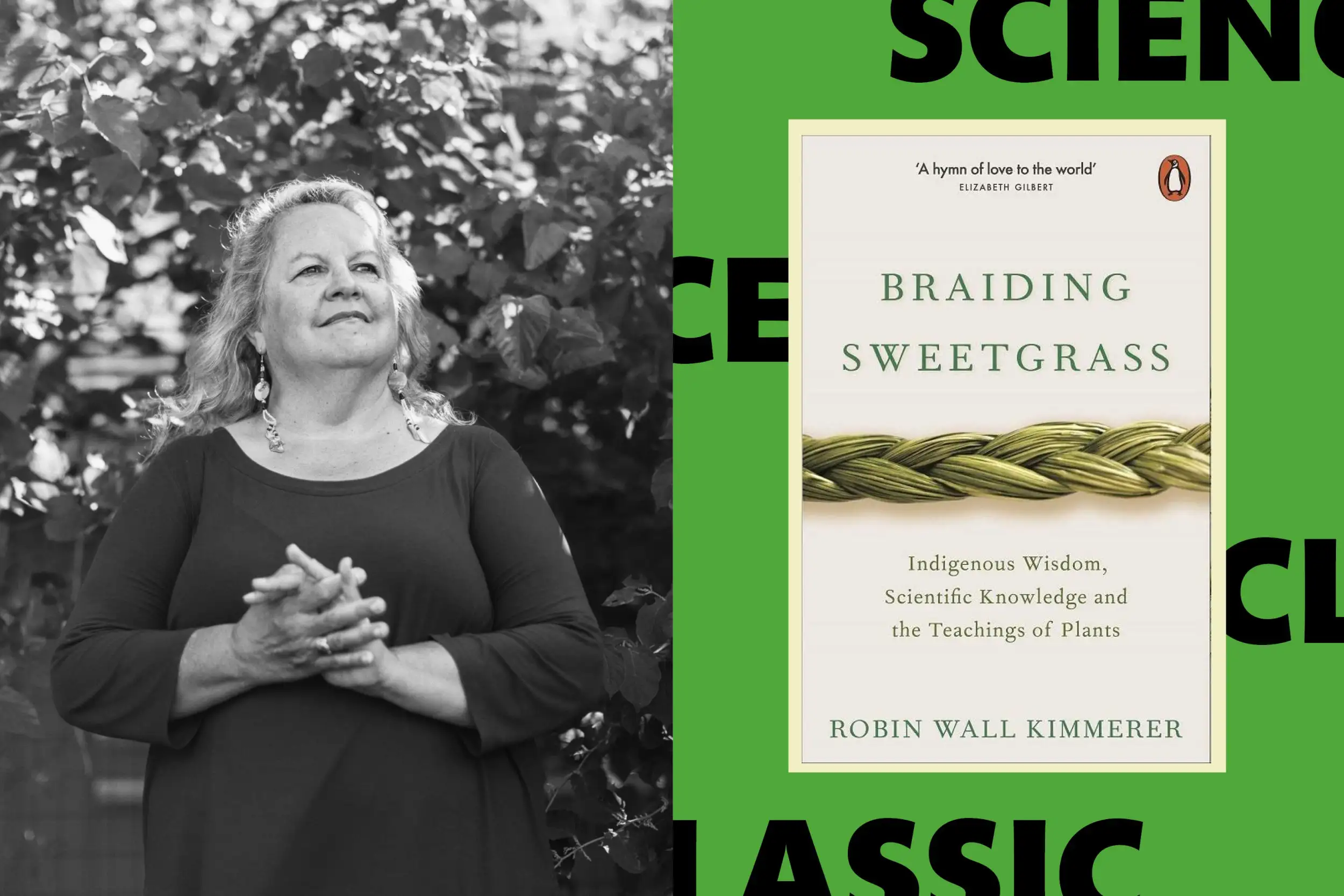
Braiding Sweetgrass by Robin Wall Kimmerer is still a vital science read, 13 years after it was first published
For Indigenous peoples, Western science has rarely been a neutral enterprise. Its history is entangled with colonialism, dispossession and extraction, and with institutions that converted knowledge into power, wealth and policy. Fifteen years after the United Nations formally urged governments to respect Indigenous knowledges and cultures, the language of reconciliation has become familiar. Yet the substance often remains elusive. We are told, repeatedly, to “listen to Indigenous voices”, but far less often shown what it would actually mean for Indigenous knowledge and Western science to work together – let alone whether such a marriage is desirable.
I came to Robin Wall Kimmerer’s Braiding Sweetgrass, first published in 2013, with doubt in my mind, doubt that she skilfully dispels by dissolving the impasse between Indigenous knowledge and science. Kimmerer, a botanist and a member of the Potawatomi Nation, offers not a manifesto but a lived demonstration of what Indigenous science can look like in practice – particularly in the plant sciences. Through a series of intimate, braided essays, she demonstrates how it can shape scientific inquiry itself: what questions are asked, how experiments are designed, and how results are interpreted.