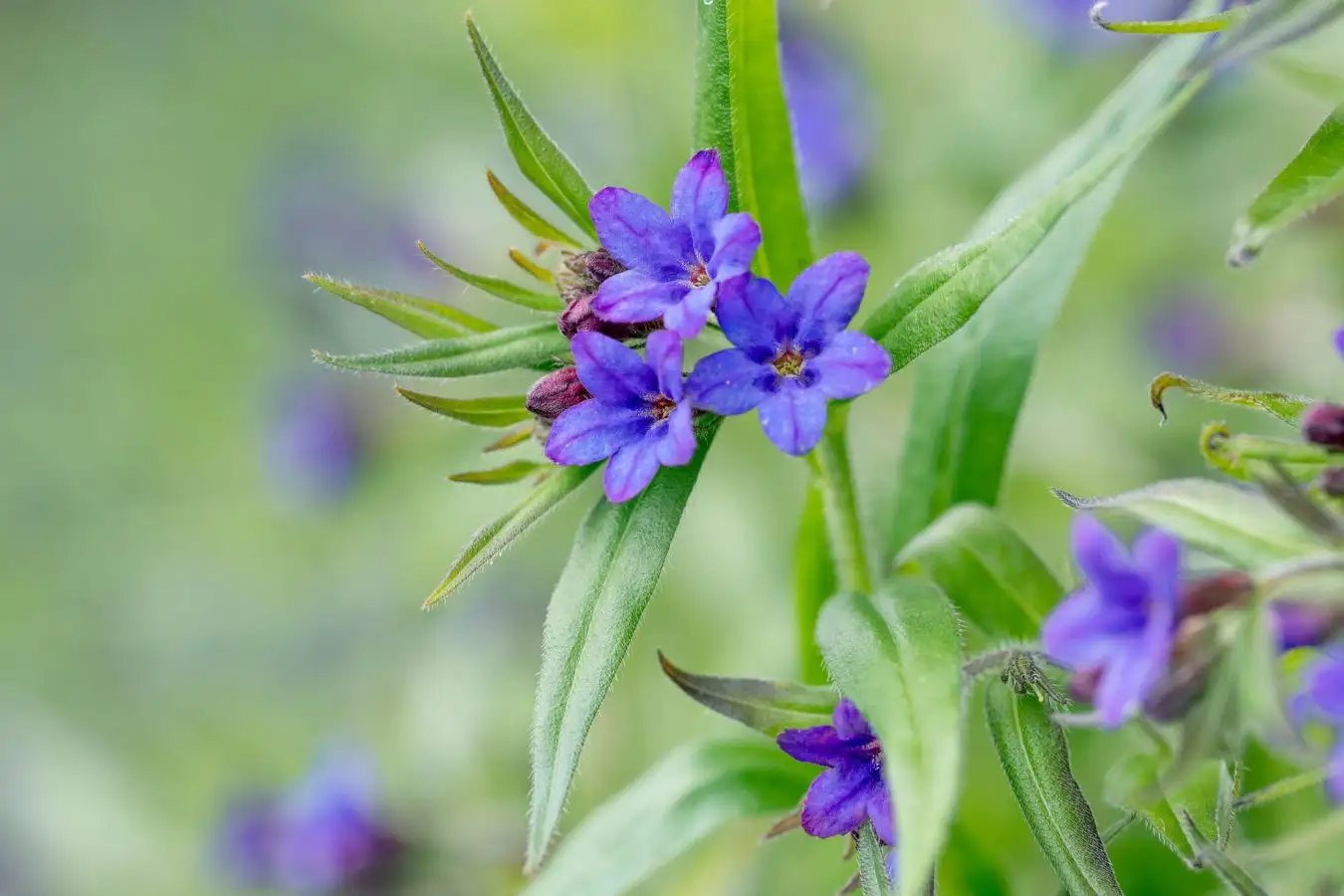
Genome duplication has occurred in many flowering plants, such as the purple gromwellDavid Chapman/Alamy
Extra copies of genetic instructions may have helped flowering plants survive mass extinctions, including the catastrophe that saw off the dinosaurs.
New findings suggest that angiosperms – flowering plants like daisies, grasses and fruit trees – may have survived major environmental and ecological upheavals in Earth’s prehistory thanks to accidentally duplicated genomes. Normally, such surplus genomes are an evolutionary burden, but during chaotic periods they may have helped angiosperms flourish into the dominant plant life we see today.
Typically, organisms that reproduce sexually have two copies of their chromosomes, one from each parent. But plants – and especially angiosperms – often have more than two, a condition called polyploidy, resulting from the genome failing to halve in the reproductive cells. Plants like potatoes and some wheat varieties have four copies of their chromosomes. Others might have eight copies or more.
A third of angiosperms today are polyploid, says Hengchi Chen at the University of Göttingen in Germany. But previous analyses of the deep evolutionary history of polyploidy have suggested that old duplications are fairly rare.