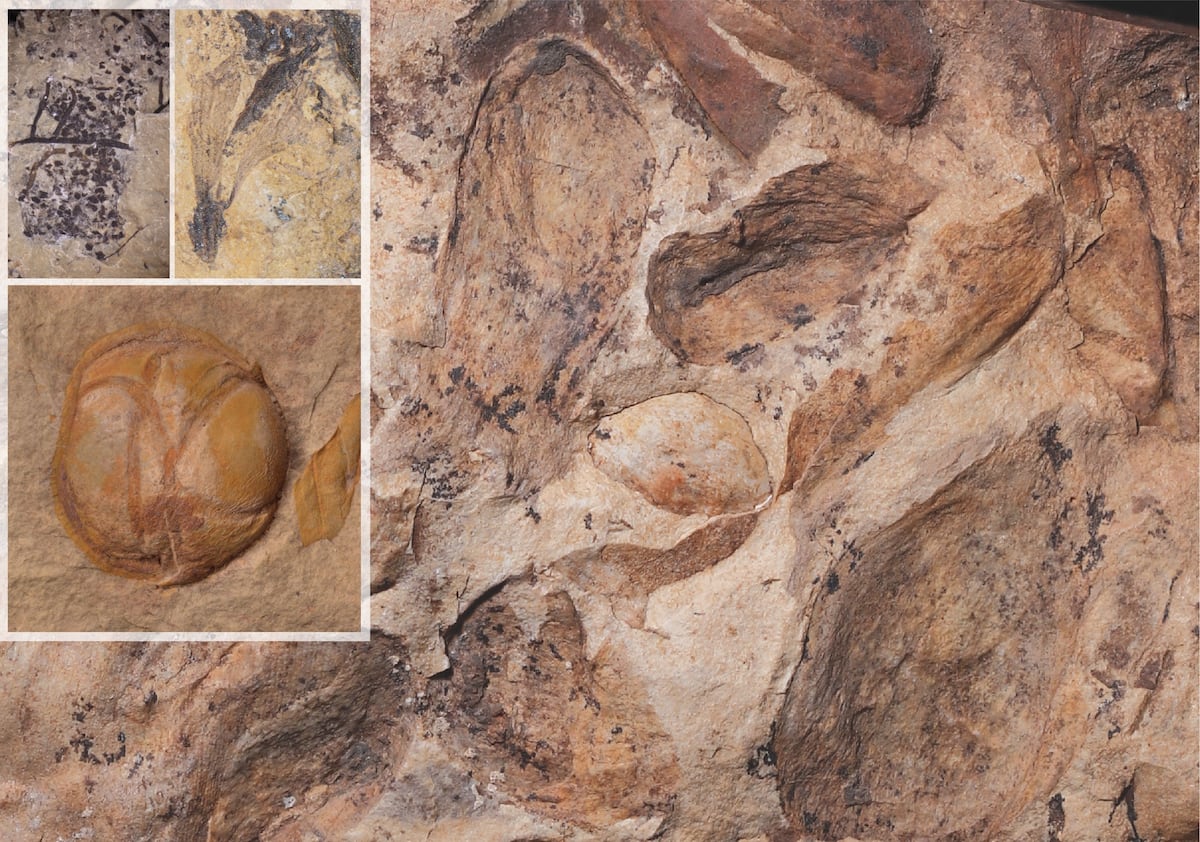
Flowering plants, or angiosperms, now dominate Earth’s flora, but biologists thought they truly took off only after an asteroid impact 66 million years ago. A ‘botanical Pompeii’ containing fossilized seeds and fruits shows they prospered 10 million years earlier.
By Robert Sanders
June 25, 2026
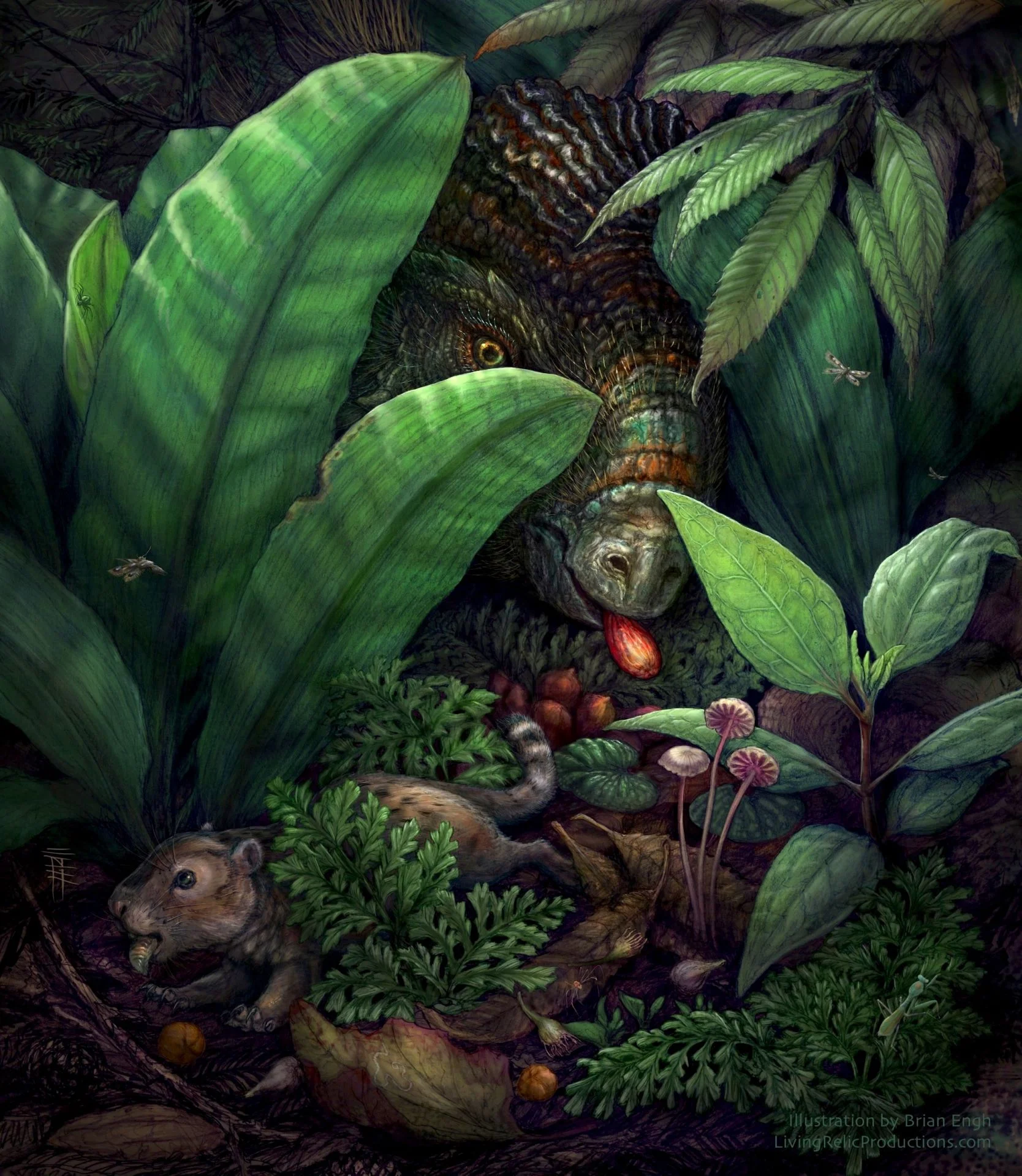
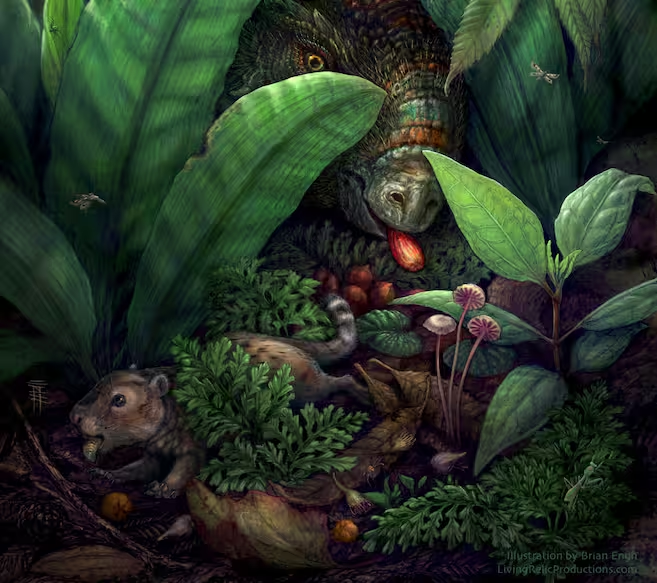
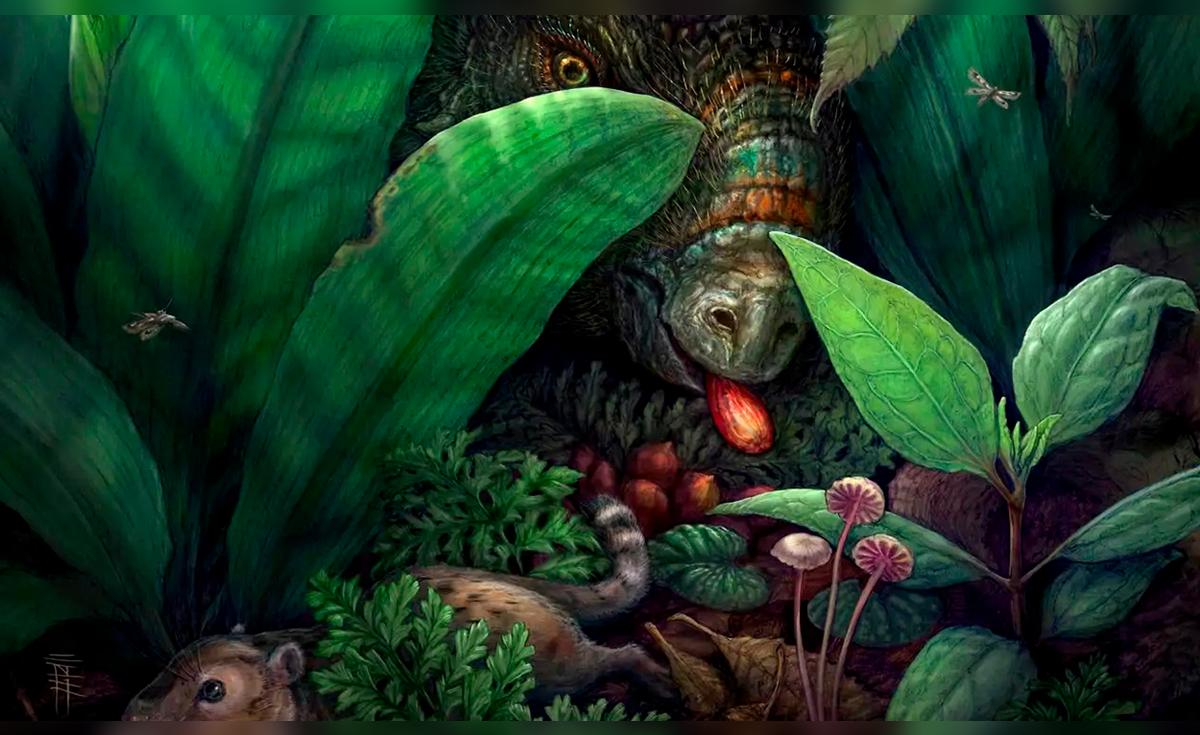
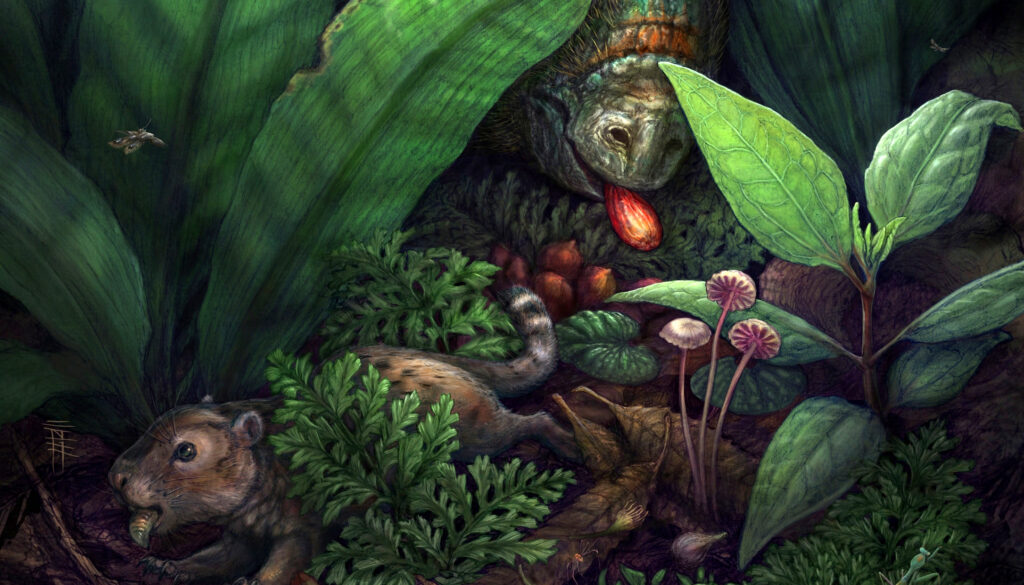
An artistic reconstruction of the understory of a late Cretaceous forest based on 75-million-year-old fossils from an inland environment that is now part of New Mexico. The scene depicts two hypothetical examples of dispersers of large flowering plant (angiosperm) seeds before the dinosaurs disappeared 66 million years ago. Shown are an early mammal (left) — a member of a now-extinct group of rodent-like animals called multituberculates — and a marginocephalian dinosaur (top) among angiosperms and ferns.Brian Engh, livingrelicproductions.com
A unique cache of plant fossils from volcanic deposits in New Mexico contradicts the common narrative that flowering plants were minor players in Earth’s forests until dinosaurs disappeared 66 million years ago.