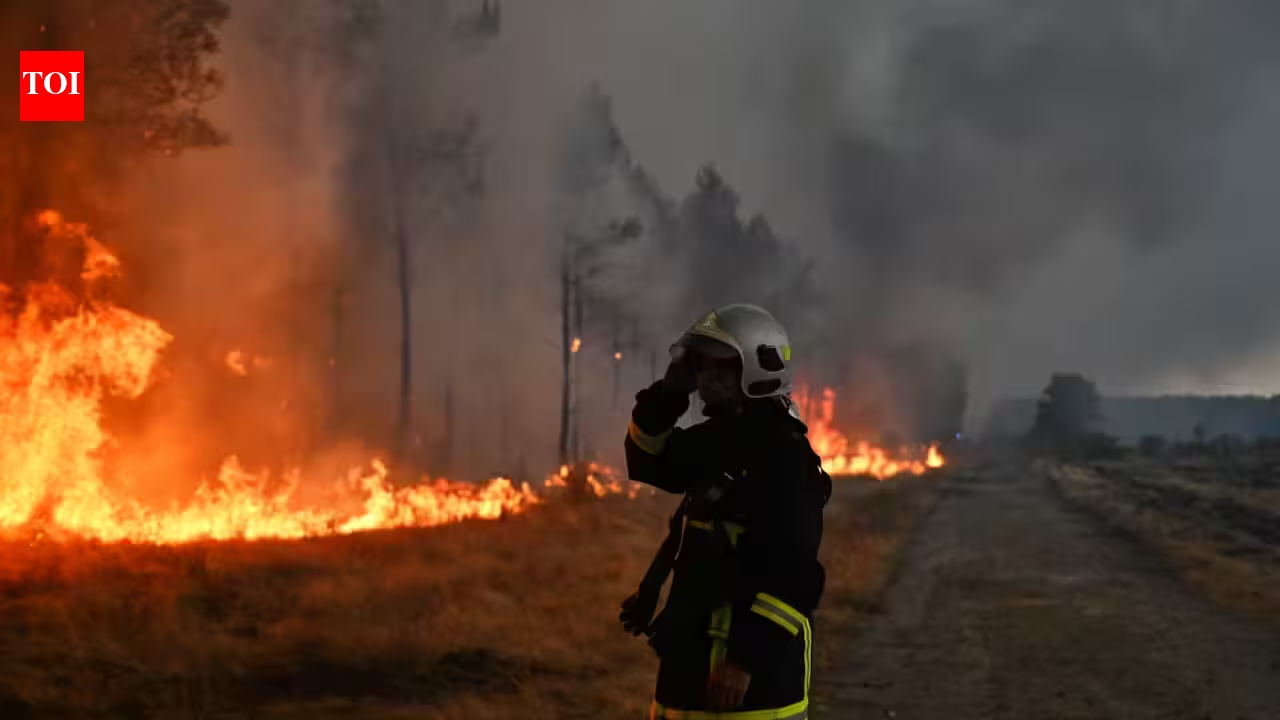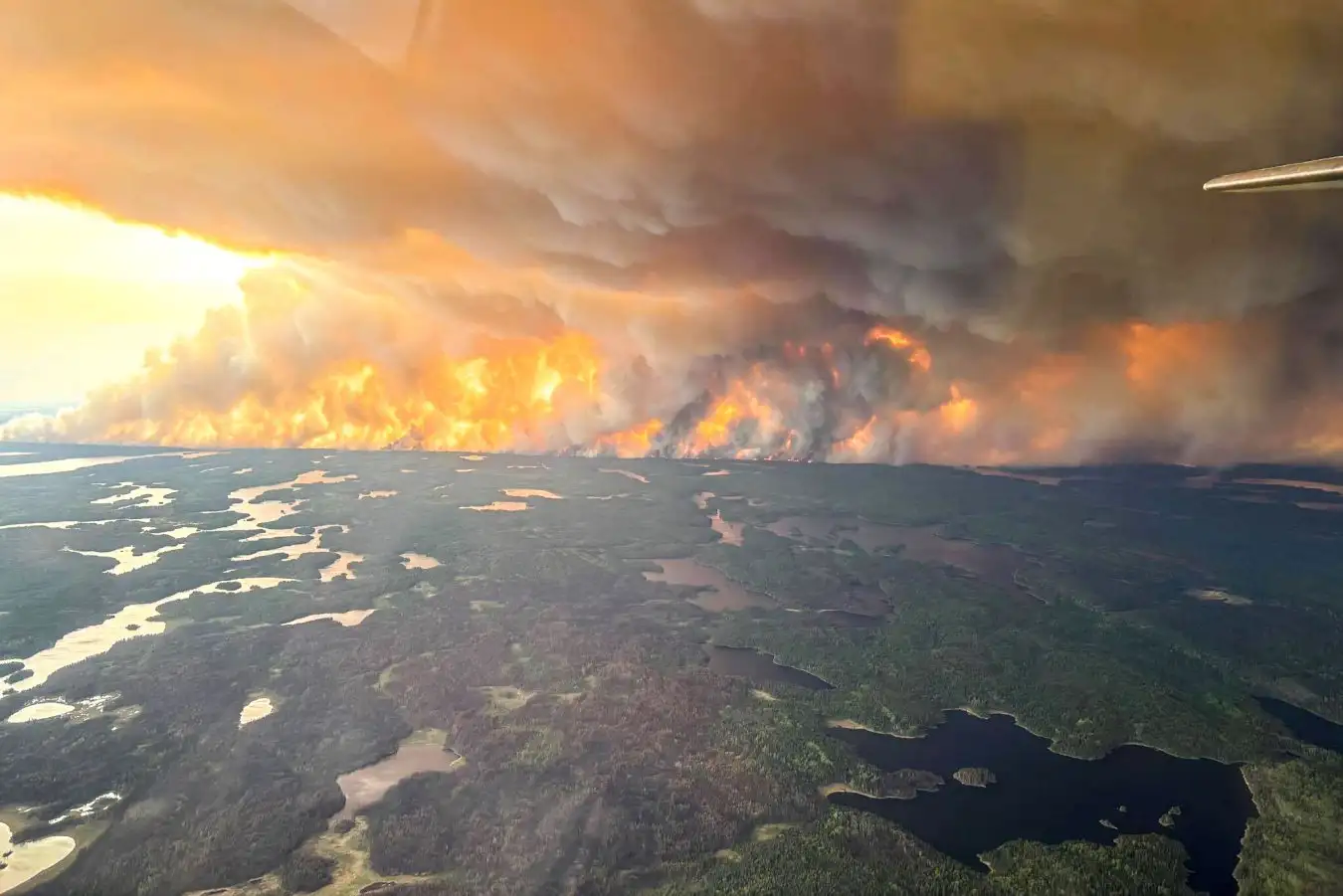
A wildfire rips through the boreal forest in Manitoba, Canada, in 2025Anadolu via Getty Images
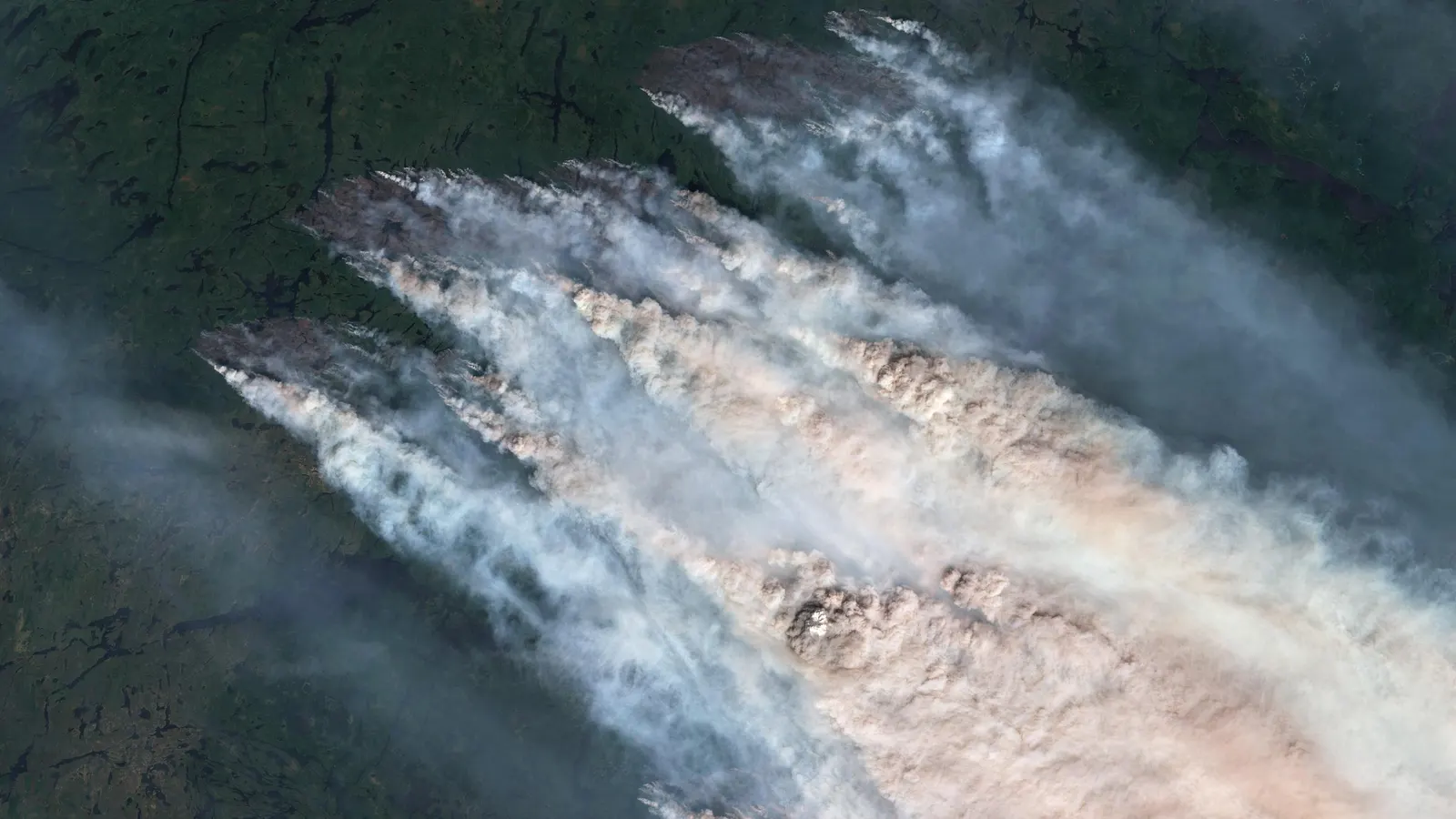
The wildfires that have been raging in many places around the Arctic in recent years could be contributing much more to global warming than currently thought. It has been assumed that what’s burning is mostly recent plant growth, but a study of soil cores from around the Arctic and boreal regions has shown that these fires are igniting stored carbon that is up to 5000 years old.
“Soil combustion could unlock long-stored carbon from soils that have been considered previously as carbon sinks,” said Meri Ruppel at the Finnish Meteorological Institute in Helsinki. Currently, climate models don’t take the release of this ancient carbon into account.
Plants grow slowly in the cold conditions of the Arctic, but their remains can accumulate in soil in forms such as peat, building up over centuries and millennia. This means soils in the Arctic and in the boreal forests nearby have been acting as a carbon sink – that is, helping to remove carbon dioxide from the atmosphere.
But with fires becoming larger and more frequent in the Arctic region, this may be changing. To investigate, Ruppel’s team collected soil cores from a number of areas where there have been recent fires.