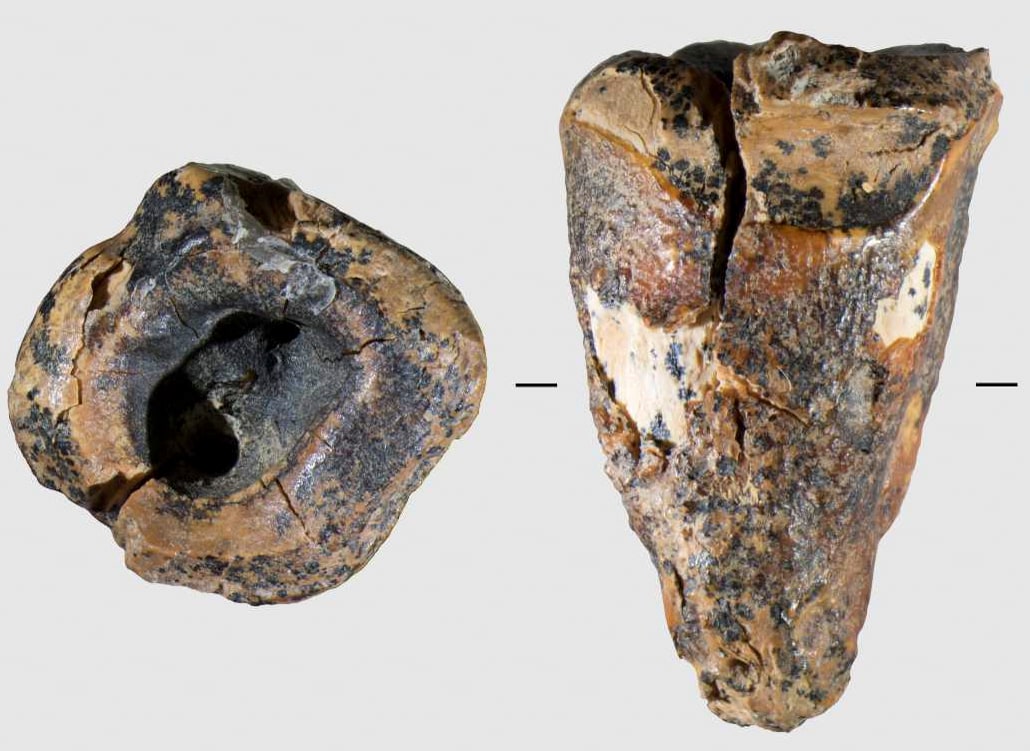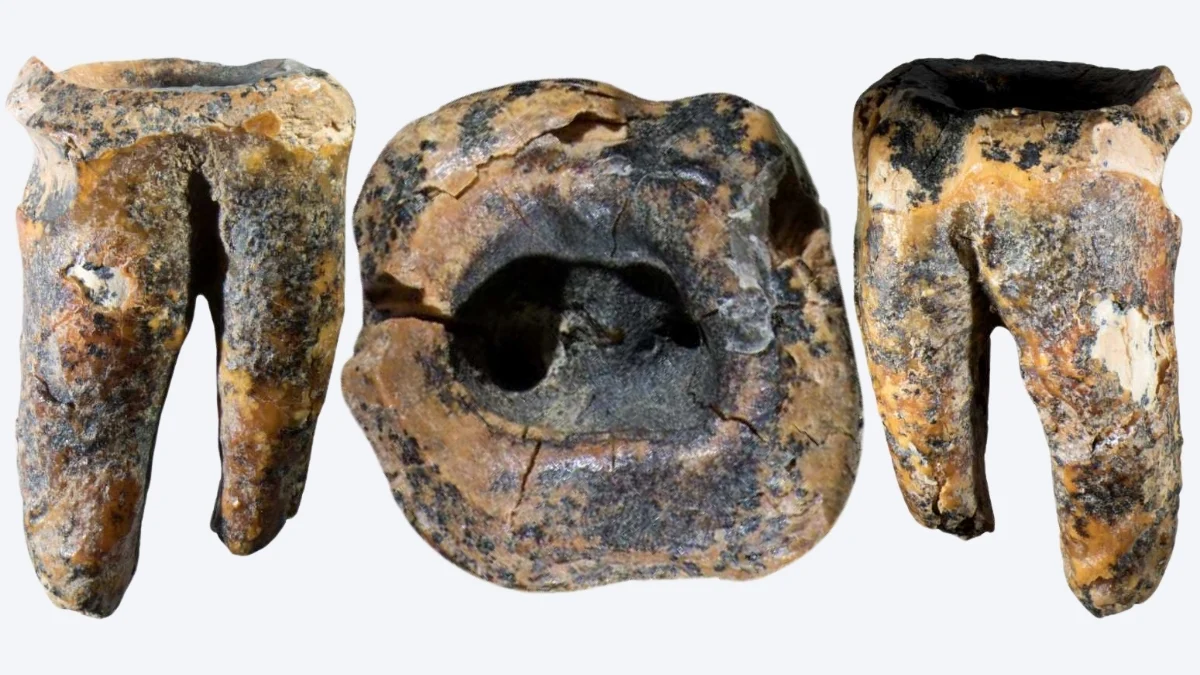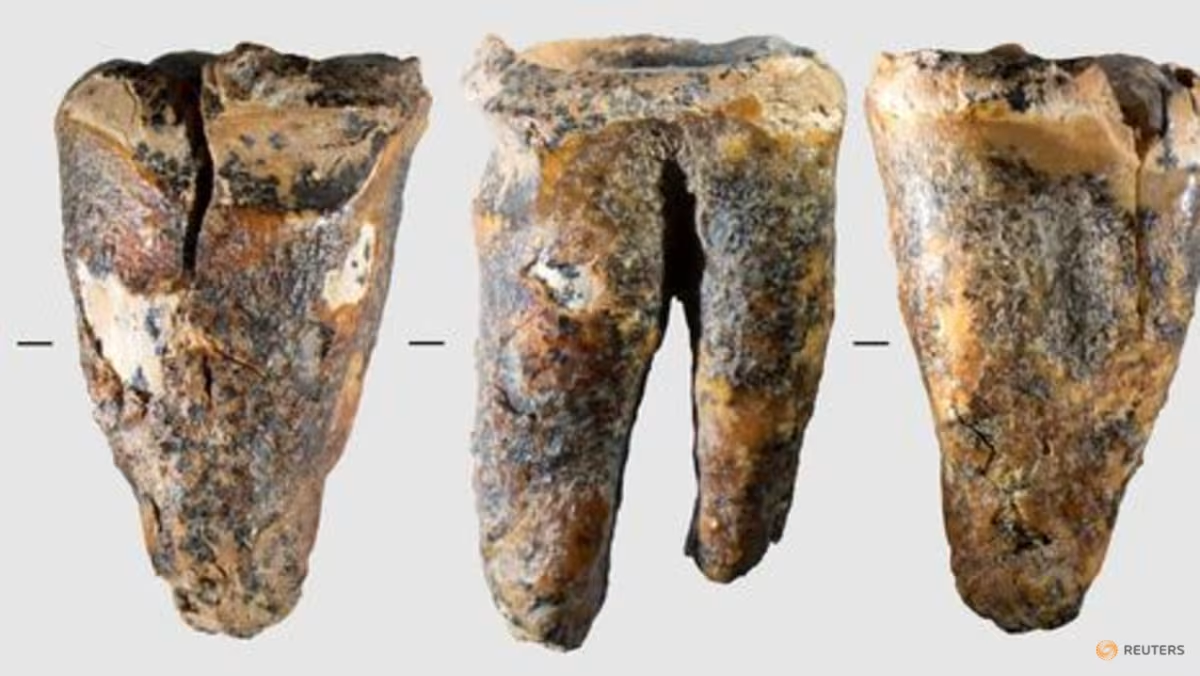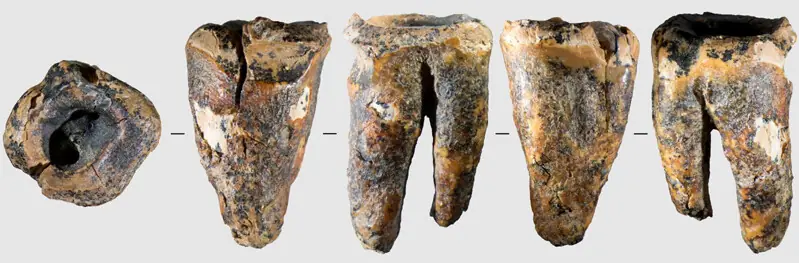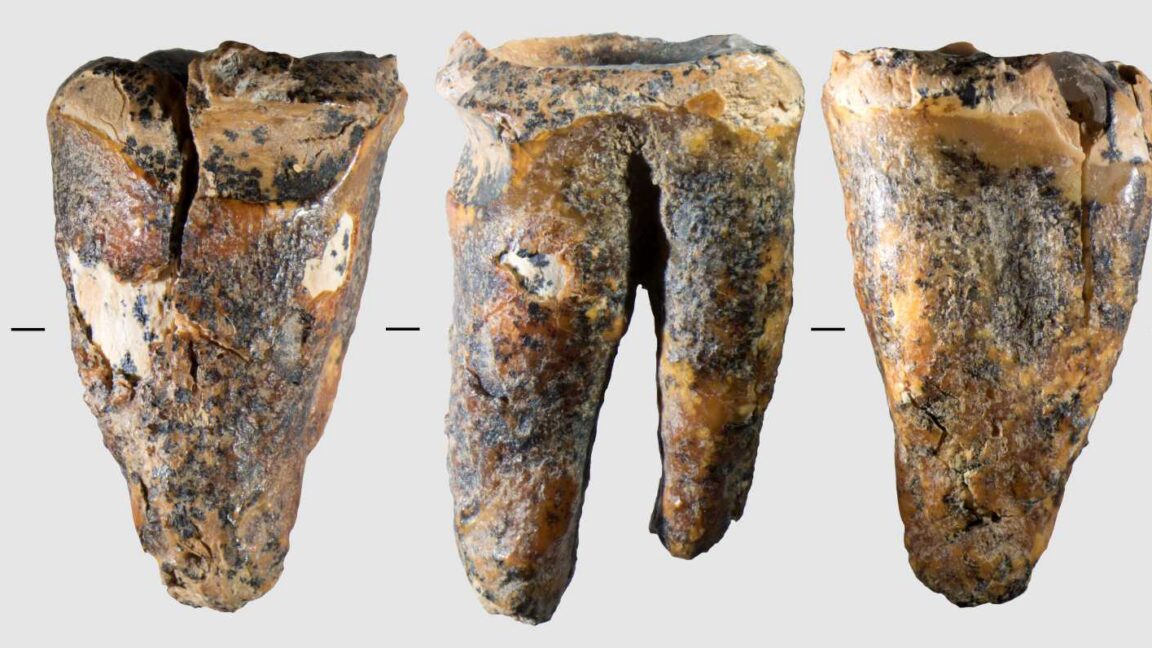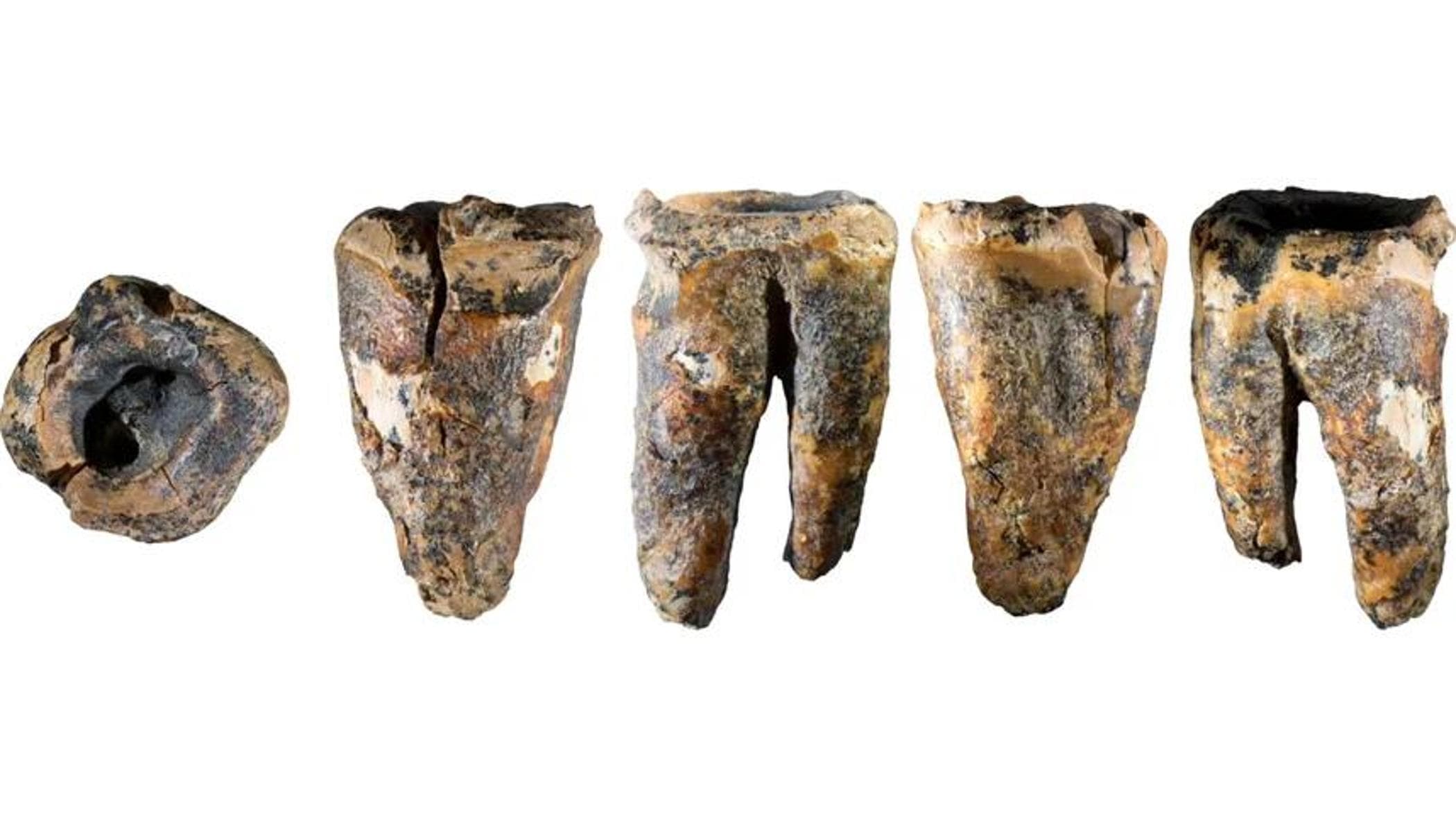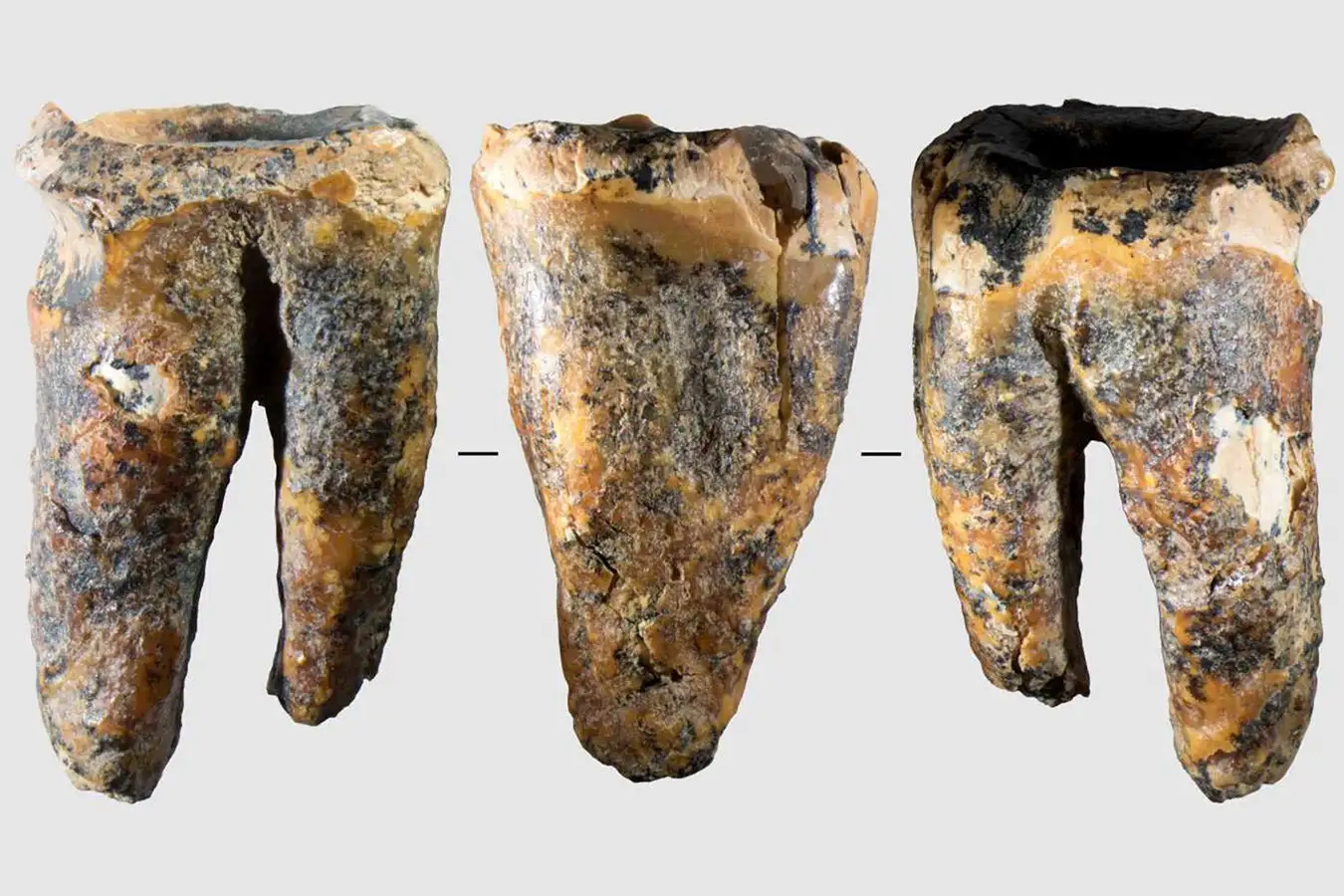
Three views of the Neanderthal tooth with evidence of dental treatmentHexian Culture, Tourism and Sports Bureau, Ma’anshan
A 59,000-year-old Neanderthal tooth found in a Siberian cave shows signs of deliberate drilling to treat a deep cavity, pushing back the earliest evidence of dentistry by about 45,000 years.
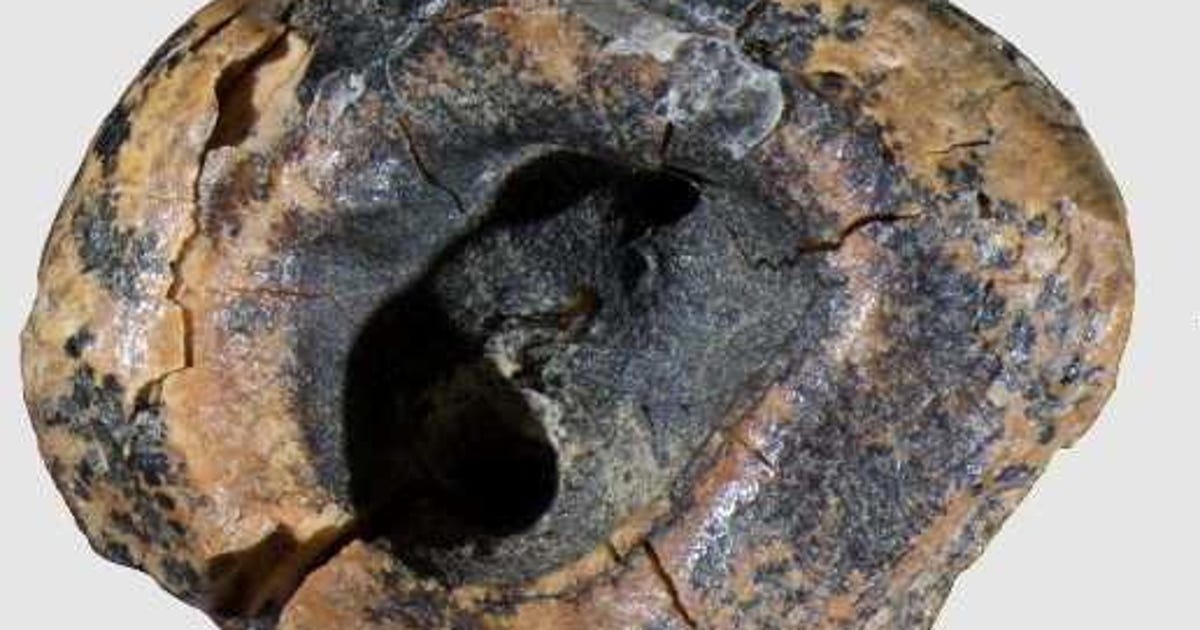
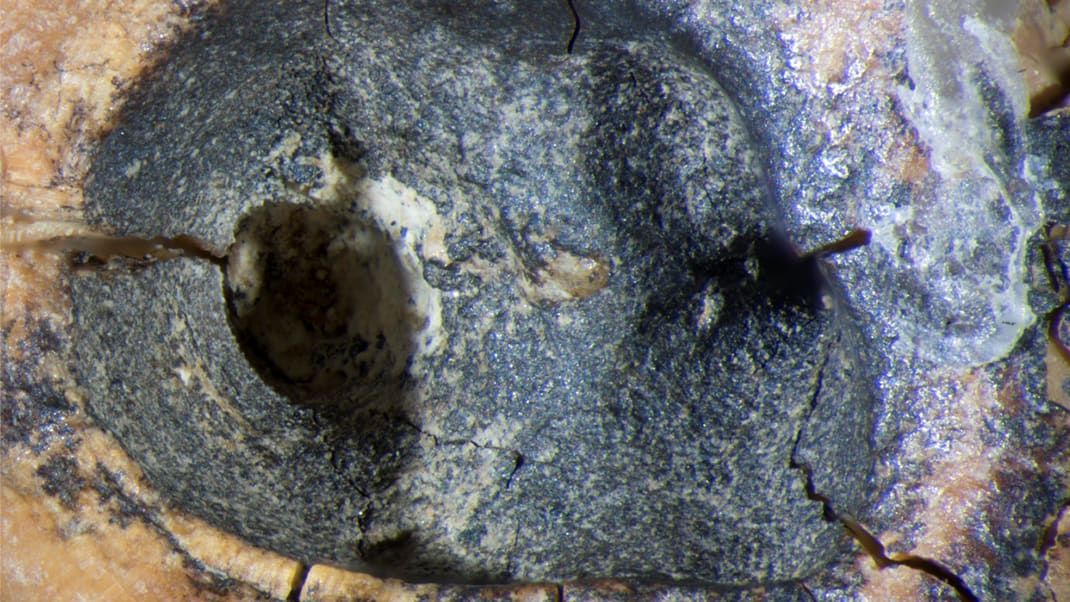
The lower second molar – plagued by suspected bacterial decay – features tell-tale marks of experienced stone-tool boring, in three stages, down to the pulp. While the procedure would have been excruciating, it probably led to pain relief in the individual, who went on to chew with the tooth, possibly for years, says Kseniya Kolobova at the Russian Academy of Sciences.
“Our discovery challenges prejudices about Neanderthal cognition directly, showing that they were capable of causal reasoning about disease,” she says. “We trust the evidence from our microscopes.”
In the Altai mountains of south-western Siberia, Russia – where Neanderthals migrated from Europe about 70,000 years ago – researchers discovered a lower molar with a large, irregularly shaped concavity comprising three partially overlapping dips into the entire pulp chamber.