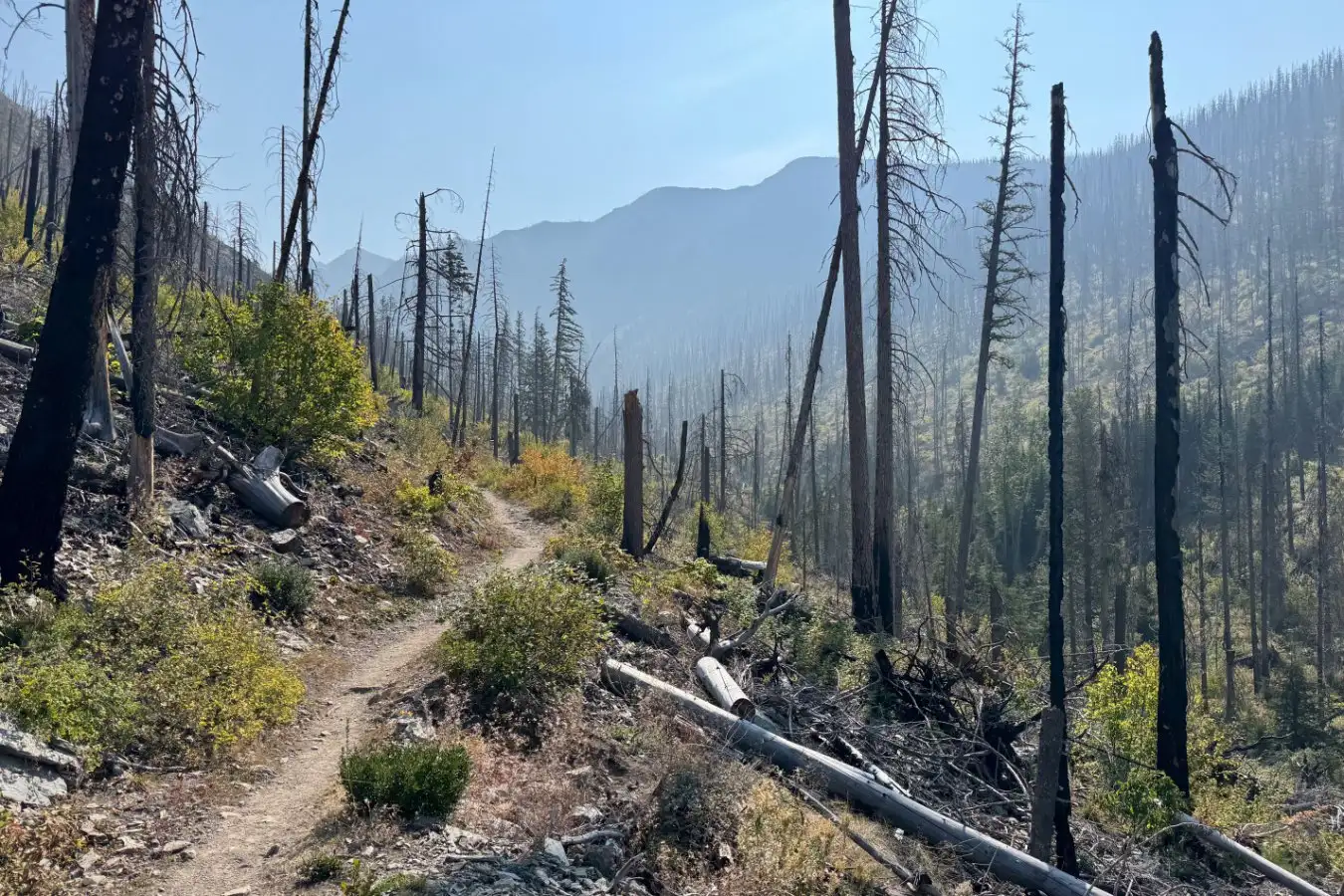
Charred trees still standing after a wildfire in Glacier National Park, MontanaGorski/NurPhoto/Shutterstock
In 2021, a smouldering underground coal seam ignited the tinder-dry grass and brush in Poverty Flats, Montana, setting off a wildfire that burned 267 square kilometres. The blaze killed 50,000 trees, mostly ponderosa pines, that had shaded cattle grazing on the Gentry Ranch.
Black, partially burnt snags stood across a moonscape of charred earth. These “widowmakers” could have unpredictably toppled onto workers or cows, or fuelled the next wildfire. Standard practice would have been to burn the trees in piles, emitting almost 7000 tonnes of carbon dioxide.
Instead, bulldozers and logging machines with giant claws dumped the trees into a 5000-square-metre pit and covered them over with 6 meters of soil and gravel and a polypropylene fabric. The company running the operation, Mast Reforestation, says this way the trees won’t decompose for centuries, preventing more global warming and making another fire less likely. Mast can also sell carbon credits to pay for planting new trees.
“By no means do we consider this a silver bullet – it requires all of the other pathways that are out there – but for forests, this is a very, very strong tool,” says Mast CEO Grant Canary.