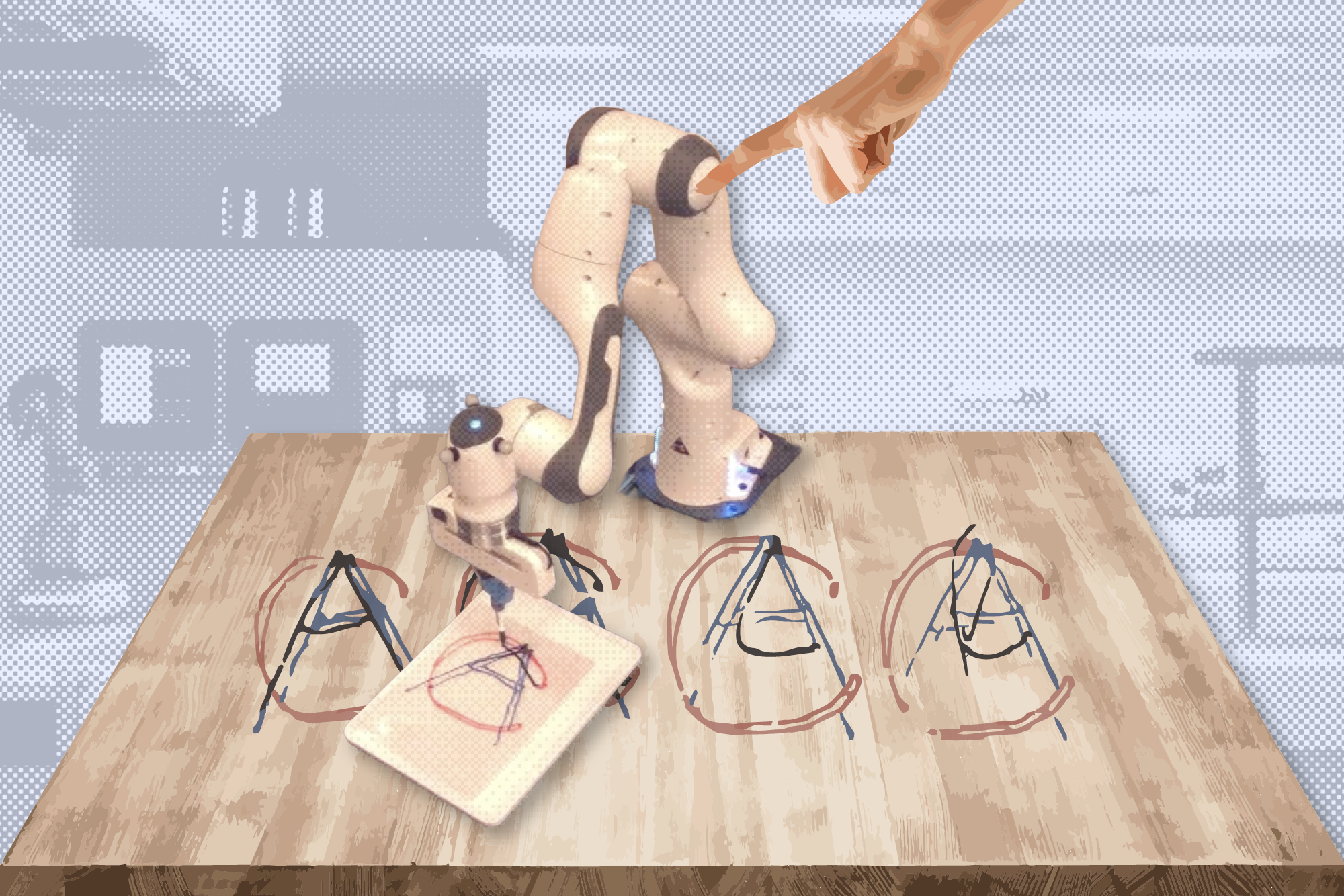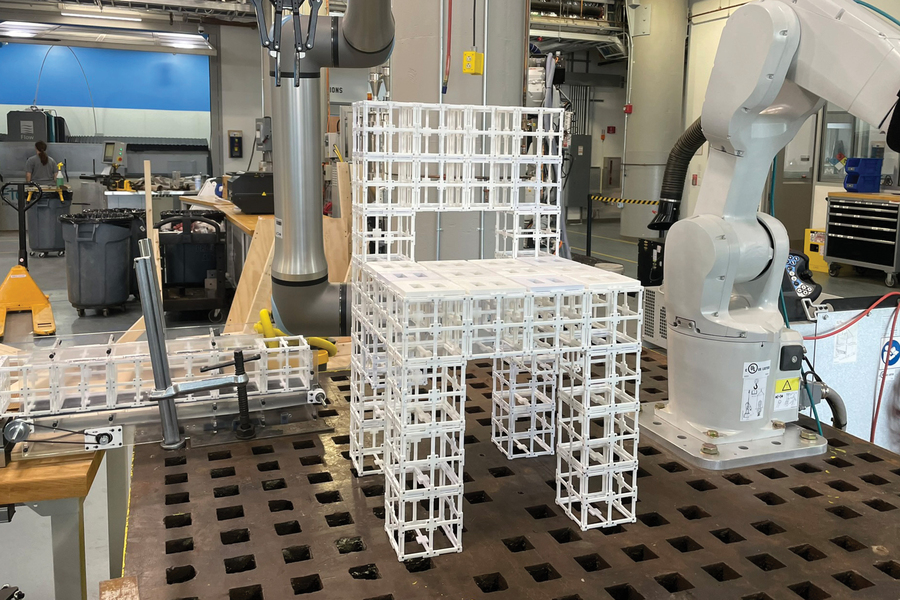
Given the prompt “Make me a chair” and feedback “I want panels on the seat,” the robot assembles a chair and places panel components according to the user prompt. Image credit: Courtesy of the researchers.
By Adam Zewe
Computer-aided design (CAD) systems are tried-and-true tools used to design many of the physical objects we use each day. But CAD software requires extensive expertise to master, and many tools incorporate such a high level of detail they don’t lend themselves to brainstorming or rapid prototyping.
In an effort to make design faster and more accessible for non-experts, researchers from MIT and elsewhere developed an AI-driven robotic assembly system that allows people to build physical objects by simply describing them in words.
Their system uses a generative AI model to build a 3D representation of an object’s geometry based on the user’s prompt. Then, a second generative AI model reasons about the desired object and figures out where different components should go, according to the object’s function and geometry.