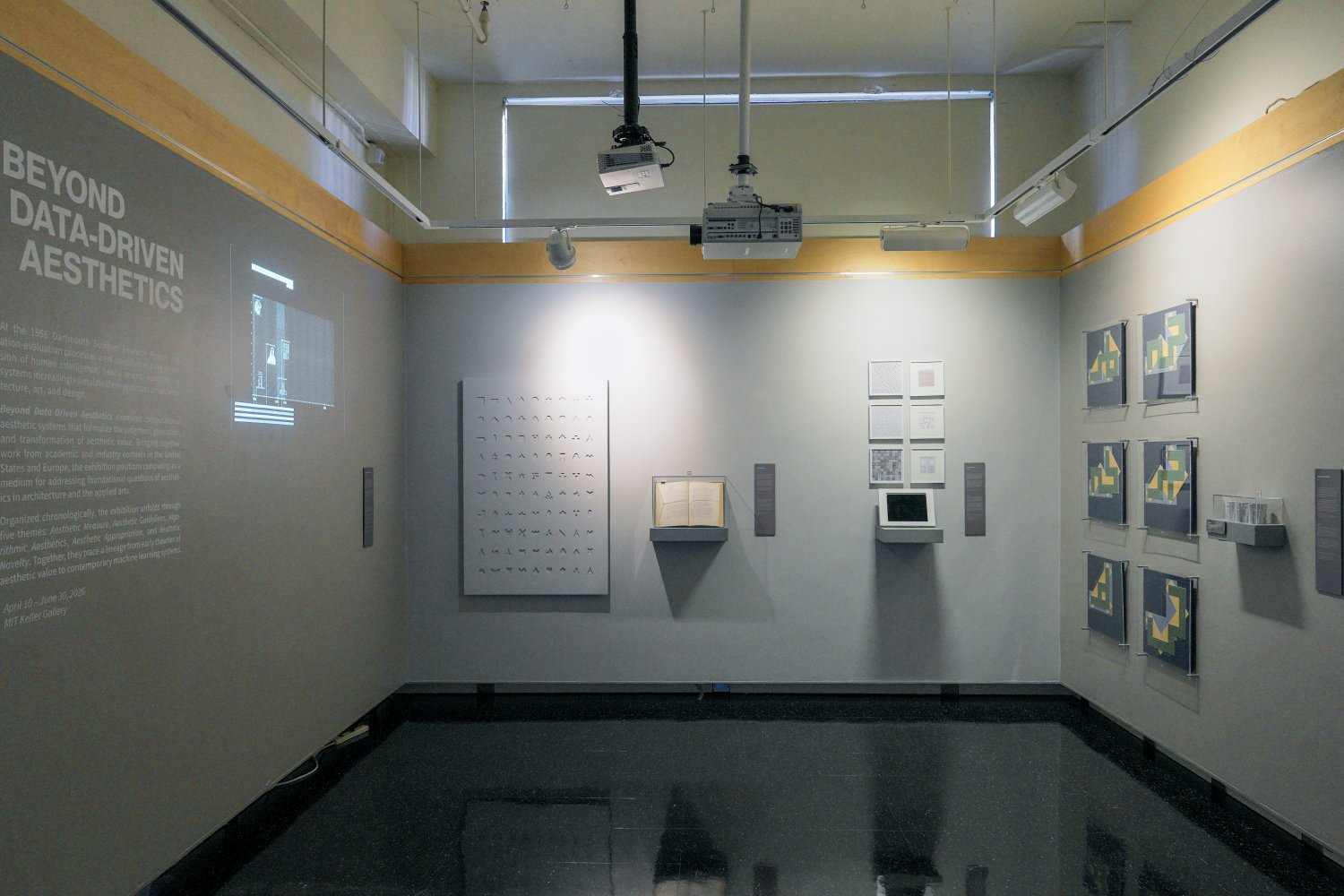
Research papers, it goes without saying, are not meant as objects to walk through. But after Alexandros Haridis spent four years writing them, rather than just submit them to a journal and move on, he started wondering what they would look like as a room.
Haridis is an architect by training, a computational researcher by practice, and a faculty member at Harvard University. That combination, design thinking fused with a precise understanding of how systems work, shapes everything about the exhibition now on view at the MIT Department of Architecture’s Keller Gallery in Cambridge, Massachusetts.
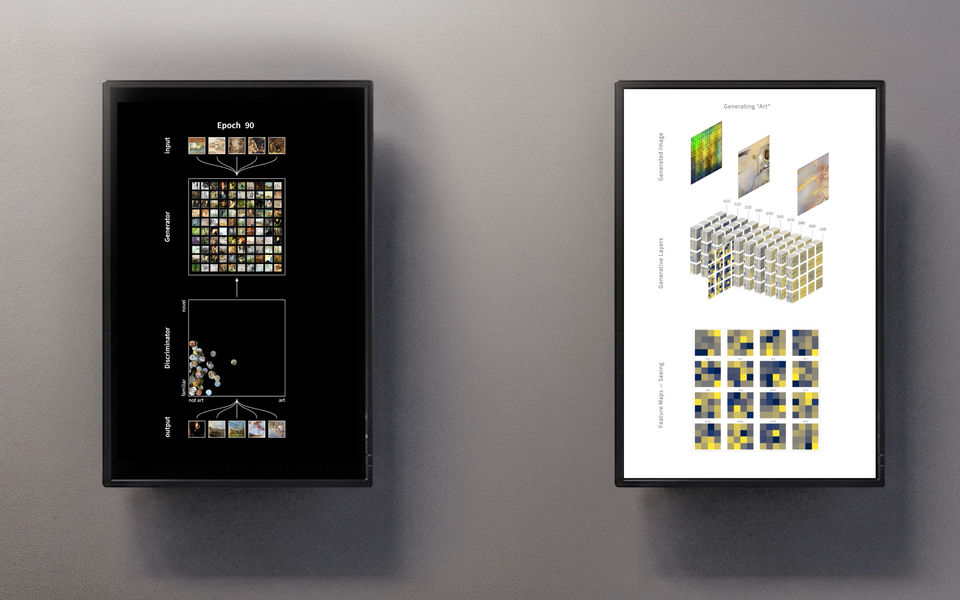
“What you’re trying to do,” he said, “is take a research paper that’s very dense, sometimes with mathematical formulas, algorithmic ideas, and instead of describing it in words, transform it into a story that includes interaction, physical material, and digital visualization.”
The exhibition, “Beyond Data-Driven Aesthetics,” is organized around five installations, each drawn from archival sources and academic literature, and structured around a question Haridis has spent years working on: not whether AI can create, but whether it can evaluate. Whether it can look at two things and know, in any meaningful sense, which one is better.