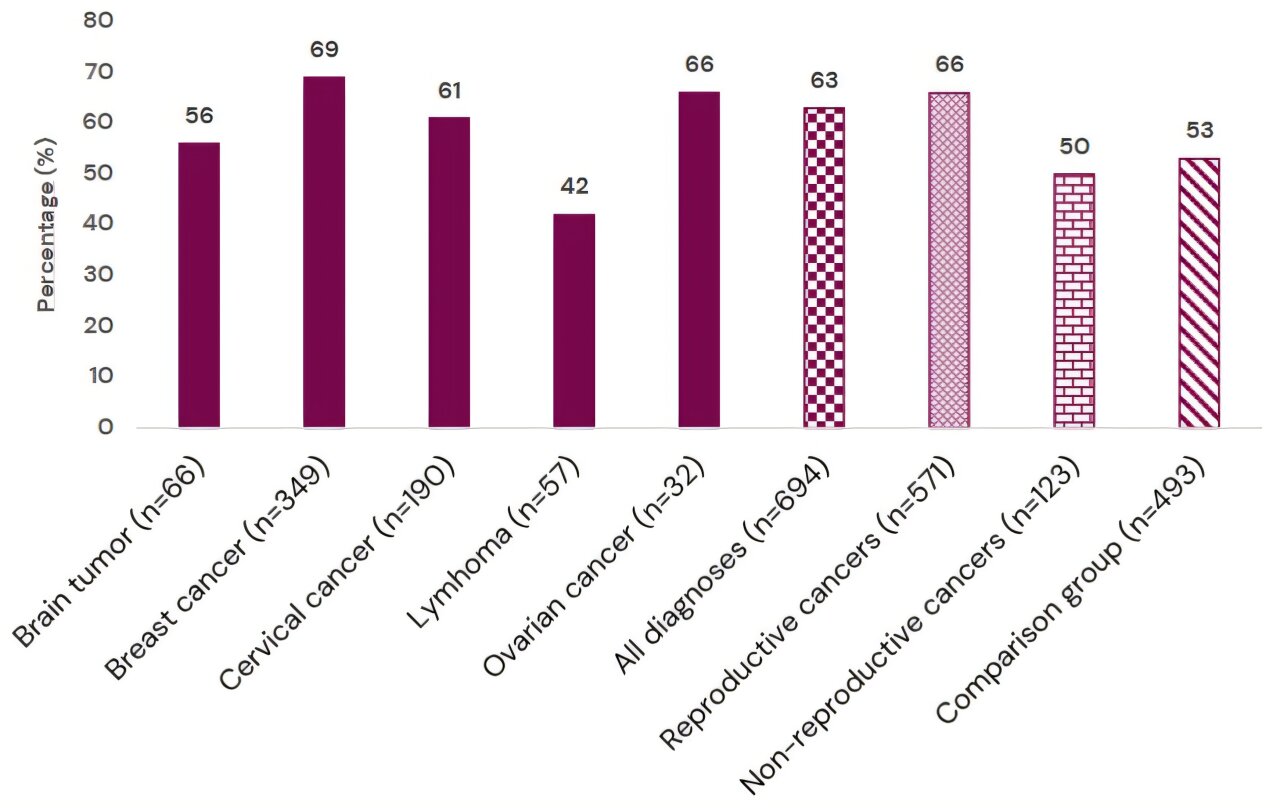
Sexual dysfunction in at least one domain as reported by young adult women 1.5 years post diagnosis, grouped by cancer type, reproductive/nonreproductive cancers, and comparison group. Credit: Charlotta Bergström (2026). DOI: 10.69622/31388233
Each year, approximately 2,000 people aged 18–39 are diagnosed with cancer in Sweden. Most survive their illness, but for many, life continues with long-term consequences. In a new doctoral dissertation, Charlotta Bergström has investigated how sexual problems develop in young adults following cancer and cancer treatment.
The thesis is based on data from the research project Fertility and Sexuality Following Cancer (Fex-Can) and includes just over 1,000 young adults with conditions such as breast cancer, gynecological cancer, testicular cancer, lymphoma, and brain tumors. Participants were followed up with surveys one, three, and five years after diagnosis, and the results were compared with a group of peers without a history of cancer.
The results show that sexual problems were significantly more common among women with breast cancer and gynecological cancer than among women in the comparison group one year after diagnosis. Common issues included reduced sex drive, low satisfaction with their sex life, orgasm problems, and vaginal discomfort. Women who had received more intensive treatment reported more problems.