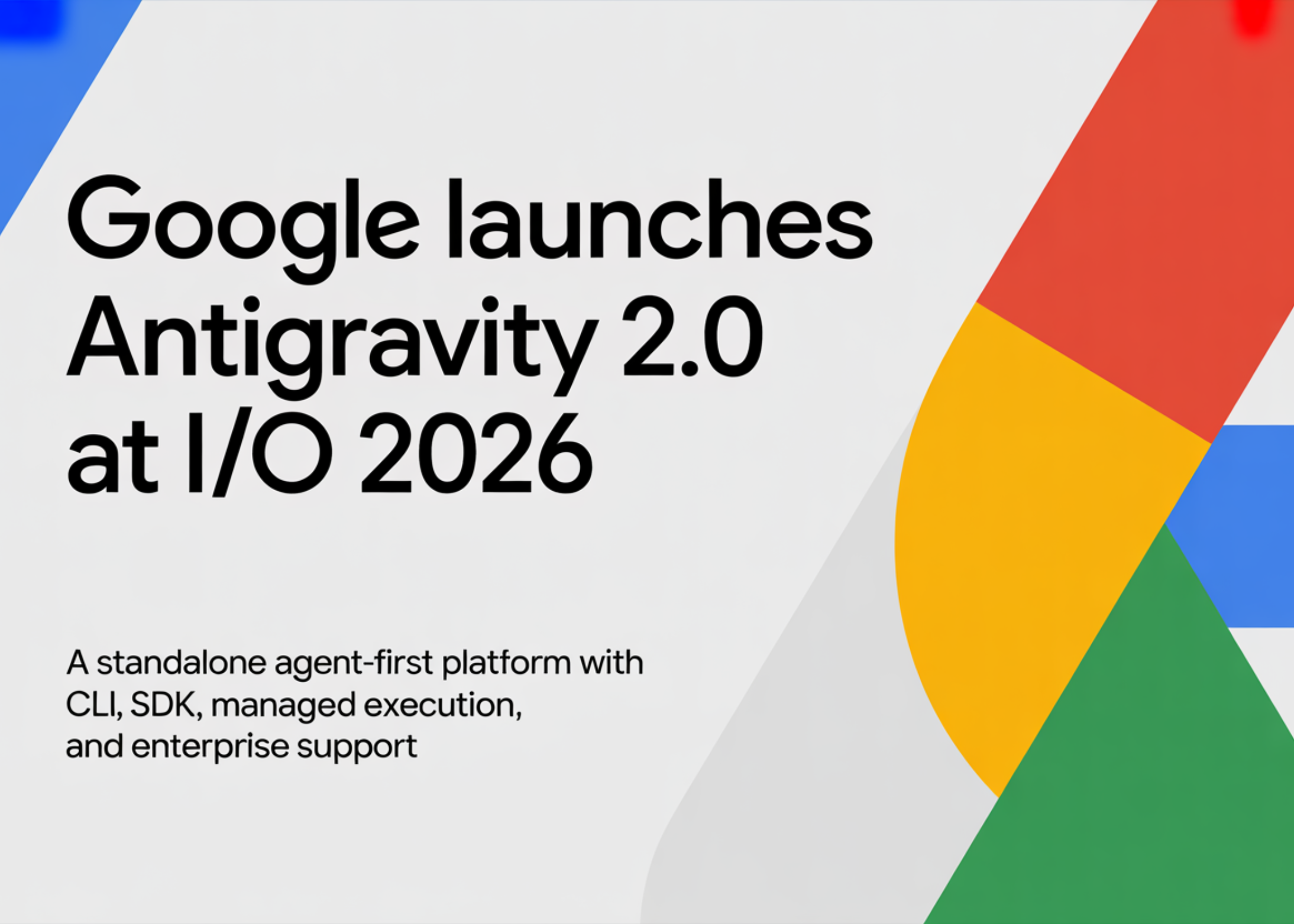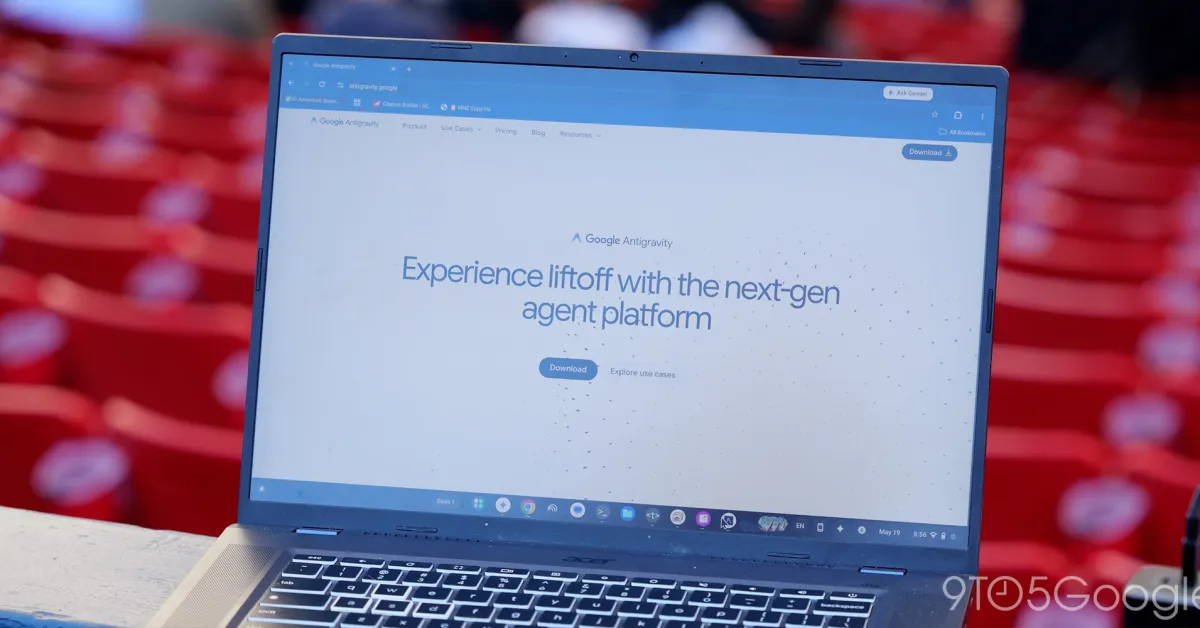
TL;DRGoogle announced Antigravity 2.0 at I/O 2026, upgrading its agentic coding tool into a full developer platform with a revamped desktop app, a new CLI built in Go, and an SDK for custom agents. The update also introduces a $100/month AI Ultra plan and retires Gemini CLI for consumer users.
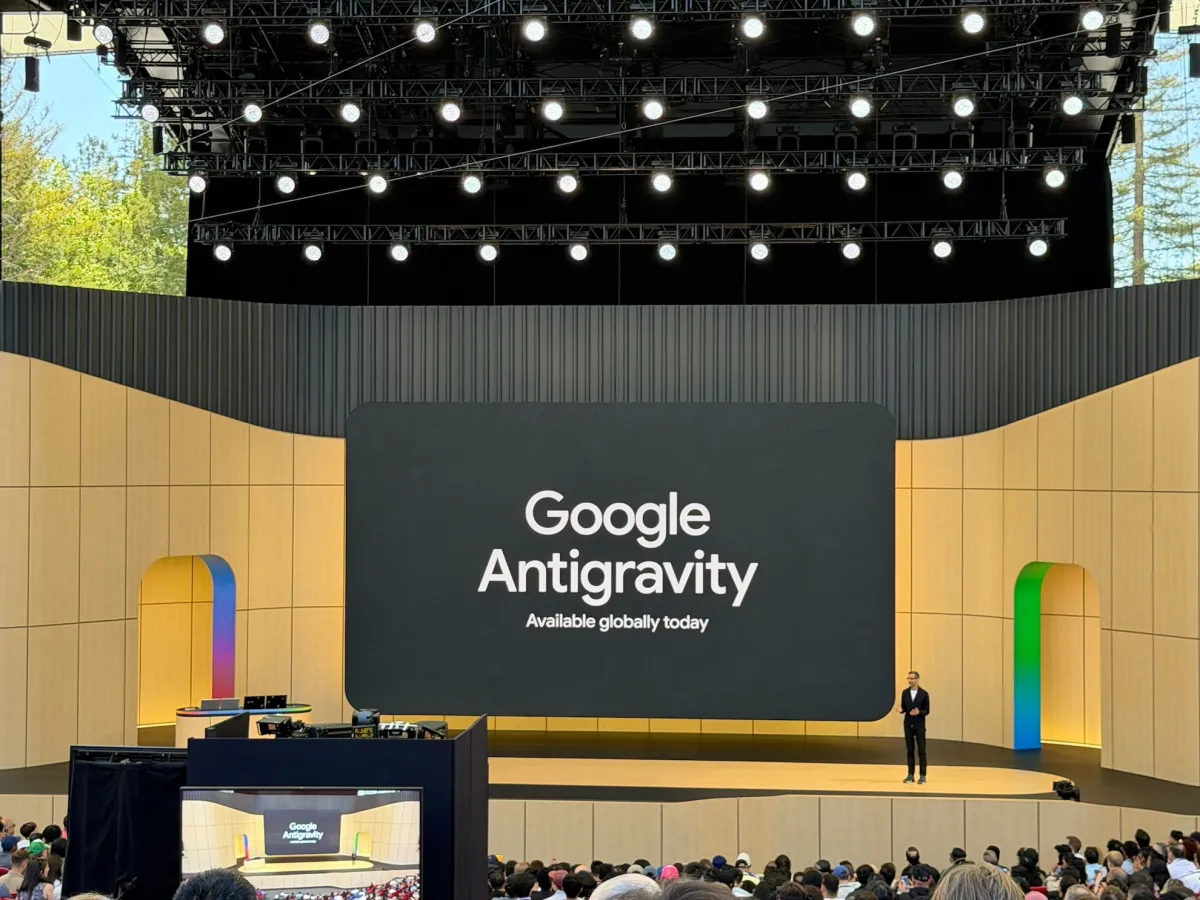
Google just made its most aggressive move yet in the rapidly evolving agentic coding market. At I/O 2026 on Monday, the company unveiled Antigravity 2.0, transforming what started as a Cursor competitor into a sprawling developer platform complete with an updated desktop app, a new command-line tool, and an SDK for building custom agents.
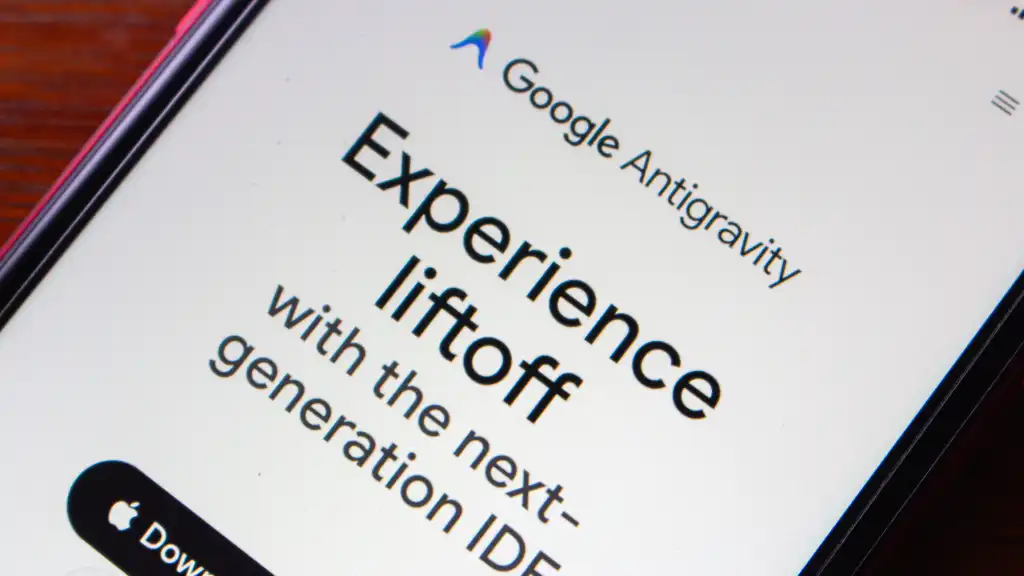
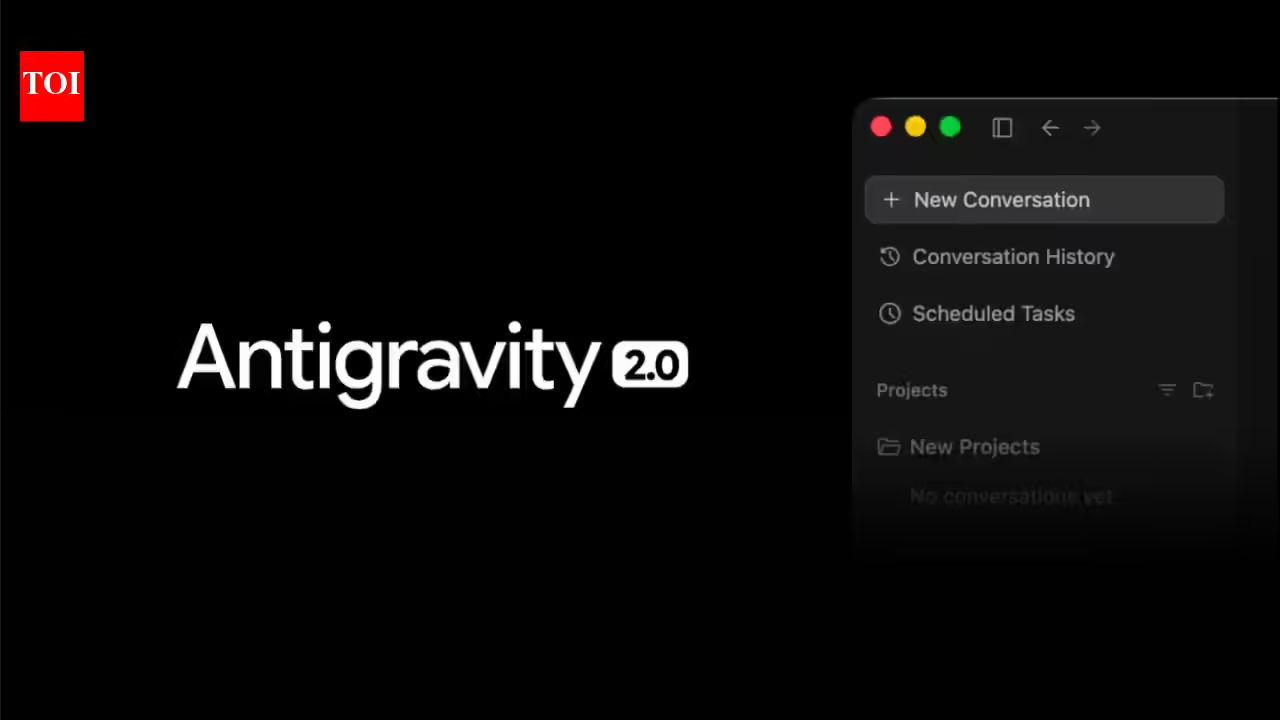
The original Antigravity launched in November 2025 alongside Gemini 3 as a free, agent-first IDE. Version 2.0 is a different beast entirely. The centrepiece is the revamped desktop application, which puts multi-agent orchestration front and centre. Developers can now set several agents to work on problems simultaneously, design custom subagent workflows, and schedule tasks that run automatically in the background.
The integrations go deep. Antigravity 2.0 connects natively with Google AI Studio, Firebase, and Android, letting developers export projects from AI Studio directly to their local Antigravity instance while carrying over full context. For those who prefer working in the terminal, Google is shipping a brand-new Antigravity CLI built in Go, which the company says is faster and more responsive than its predecessor.