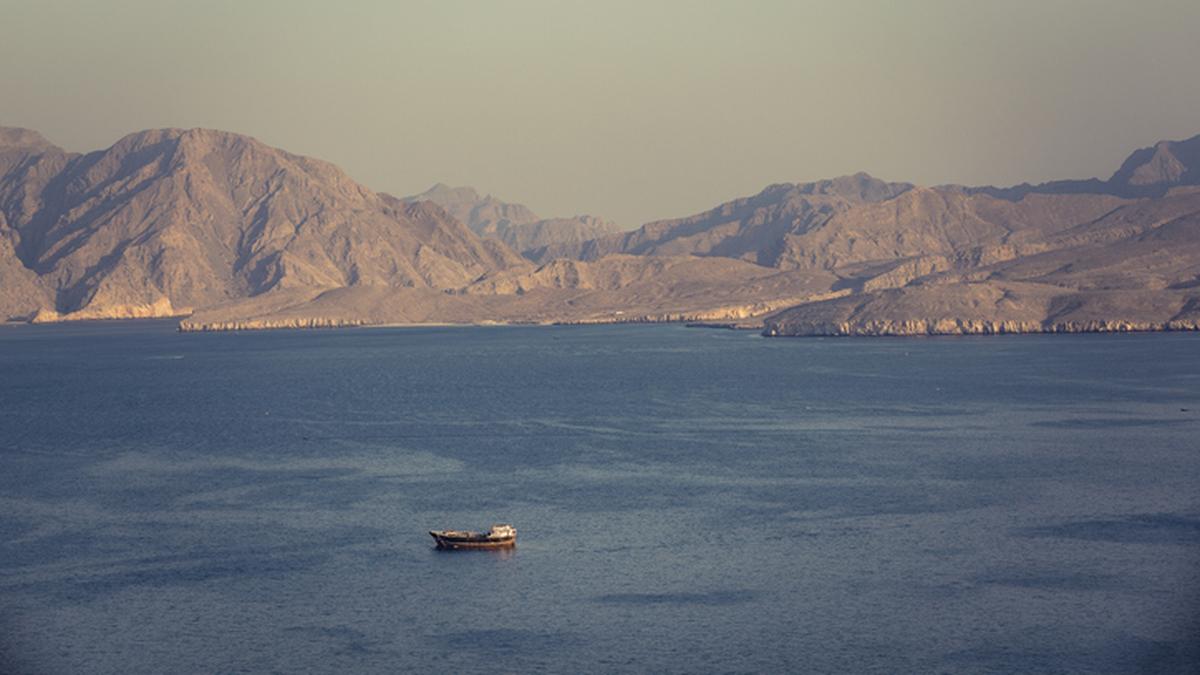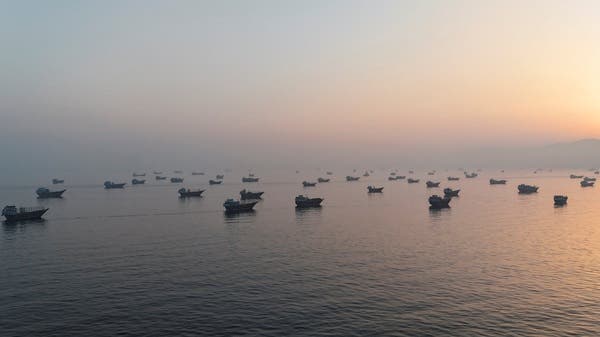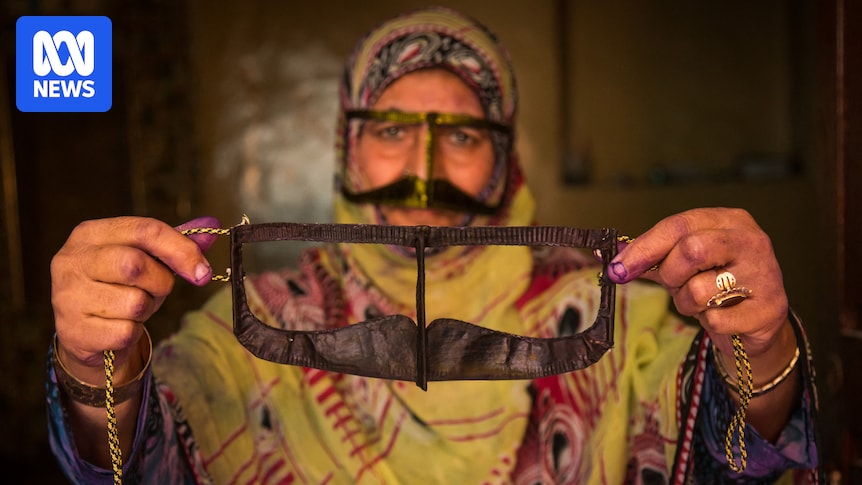
For years, the islands scattered across the Strait of Hormuz drew a particular kind of traveller.Before the war, backpackers slept in villagers' spare rooms, families enjoyed picnics at Hormuz Island's Red Beach and urban Iranians came for the strange geology and remoteness that felt far from Tehran's political orbit.People came to the Strait of Hormuz for the colours.On Hormuz Island, rust-red hills descend to salt caves streaked with pale pink and mustard yellow, like melting fabric.Melody*, an Iranian living in Melbourne, grew up visiting with her family and described it as "the rainbow island"."When you walk on the silver sand, it's like everything is shining. It feels like heaven," Melody told ABC News.Unique landforms made from salt, iron oxide and colourful minerals on the island of Hormuz. (ABC News: Libby Hogan)The islands are a place where Persian Gulf heat slows everything and centuries of trade with India, Africa and the Arabian Peninsula have created a unique culture, different from the rest of Iran.Now the ferries have stopped, guesthouses are empty and locals are facing months without incomes.Some Iranians interviewed for this article gave only their first names, fearing repercussions for their families living in Iran.Men playing drums during a zar ceremony, an ancient tradition that dates back to Arab and East African trading routes. (AFP: Hans Lucas)A culture shaped by the seaWhen Marco Polo passed through the Strait of Hormuz in the 13th century, he described bazaars packed with Persian jewellery and Indian goods.Golshah*, an Iranian jeweller who grew up in the Gulf port city of Bandar Abbas and now lives in Australia, traces those histories in her craft."The province has a vibrant identity shaped by the sea, trade and the meeting of different cultures over many generations," she said.A woman from Qeshm makes traditional embroidered trousers. (ABC News: Libby Hogan)For centuries, traders moved spices, textiles and enslaved Africans through the ports of the Gulf, and with them came East African music with heavy drumming and spiritual beliefs about winds carrying illness or possession.That legacy is visible in the vibrant culture and fusion of flavours.Even the lava-red "gelak" (mineral-rich soil) is used in a traditional sorakh spice, sprinkled into tomoshi, a local flat bread, or in a fish stew. Golshah emphasised that women have been central to preserving traditional skills and culture."Women were the ones who picked ripe dates and worked with different parts of the palm trees to create food products and fibres for handmade items," she said.Women take part in an art class on Hormuz. (Supplied: Instagram/@Ahmad.Nadalian)"It is a place where colour, rhythm and tradition are deeply woven into everyday life."The older women of the islands traditionally wore brightly coloured burqas or distinctive curved black face coverings. Some say this was influenced by the islands' proximity to the Arab countries across the Gulf.Younger generations have abandoned the burqa, rejecting both its obligatory nature and the conservative framework that enforced it.Other traditions have endured, such as heavily embroidered trousers and intricate gold stitching known as golabatoon.Golabatoon is a traditional form of ornate hand embroidery from southern Iran. (Supplied: Golshah)From her home in Melbourne, Golshah preserves those traditions through jewellery designs and dokhtolook dolls stitched from embroidered fabric scraps."Mothers and grandmothers make these dolls to pass on traditions, carrying stories and identity from one generation to another," she said.With executions continuing, internet shutdowns and growing fear inside Iran making information difficult to obtain, members of the Iranian diaspora in Australia say the strait is too often reduced to oil prices while the people living there are forgotten.A space for womenAs tourism expanded through the 2010s, conservative island communities found themselves sharing streets and homes with urban Iranian visitors who brought different ideas about gender, dress and public life."Because people of those regions were more culturally conservative than urban tourists from Iran, there were some social shocks," said Adel Habibi Nikjoo, an Iranian social researcher who lived and studied tourism trends on the islands.Dolls made by grandmothers with fabric passed down through generations. (Supplied: Libby Hogan/File)Some of these encounters created friction but they also exposed locals to different attitudes.Yasaman*, a conservation and biodiversity expert from Iran who previously worked in tourism, said a "double life" existed for women in the Strait of Hormuz.While local women still lived under conservative social restrictions, wealthy Iranian and foreign tourists could temporarily escape the heavily surveilled cities and enjoy freedom along the sparsely populated coast. "There were possibilities on some shores and coasts that you can enter the water and feel like a normal human being, while many local women were in the grip of sharia law and misogynistic beliefs in their communities," she said.Women enjoy more freedom and leisure time in the open space and sea of Hormuz island. (AFP: Atta Kenare)Mr Nikjoo said tourism became one of the few industries on the islands that women could enter and earn their own incomes.Families converted spare rooms into guesthouses and women cooked for travellers, sold handicrafts and slowly stepped into public life in new ways."Local women gradually got more power, gaining money out of tourism because tourism enterprises have an easier entry for them," he said.Art classes give women a new income stream selling art to tourists. (Supplied: Instagram/@ahmad.nadalian)In communities where many women traditionally spent most of their time with family in the home, tourism altered visibility itself.Now, with the Iran war, communities are cut off from an income and access to the sea is fragile.Tourism season that carried the yearTourism on the islands has always moved with the weather.For a few cooler months, ferries arrived carrying tourists. Before the war, the island of Hormuz was a population destination for Iranian families and backpackers. (AFP: Atta Kenare)Mr Nikjoo explained that many local families depended almost entirely on tourism revenue, stretching earnings from a few months across the rest of the year.Now, many of those businesses have collapsed due to the war."They will suffer a lot in the next months," Mr Nikjoo said.Golshah said her family in Qeshm described a once-crowded cafe near their street with no customers at all."No-one comes to buy because they have lost their jobs," she said. "They cannot afford coffee at home, let alone at a coffee shop."And if they do have money to spend, they spend it on the dentist, fuel, or other necessities now considered luxuries, said Yasaman.Artworks depict Bandari women, which translate as women of the port. (Supplied: Instagram/@Ahmad.Nadalian)Fishing boats that once left before sunrise now remain tied to the dock.Fish prices have doubled, despite entire communities living beside the sea.Government-imposed internet restrictions make keeping in touch with family members inside Iran extremely difficult.Young entrepreneurs who built businesses importing clothes and other goods from nearby Dubai and selling them online have lost access to their customers."All of that is gone now with the regime shutting down the internet," said Yasaman.Water and survivalThe conflict has exposed how fragile life in the Strait of Hormuz has always been.The islands have never had reliable fresh water, but survived through adaptation.A traditional water reservoir on Qeshm Island.
Life inside one of the world's most dangerous waterways
Before rising conflict pushed the Strait of Hormuz into the spotlight as a choke point vital to economies globally, tourism transformed women's lives.
1,846 words~8 min read