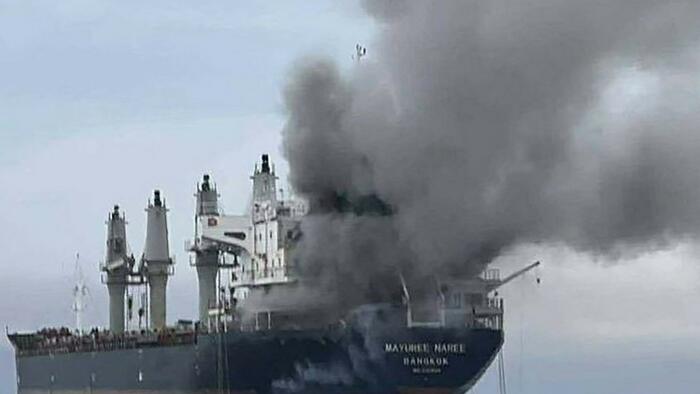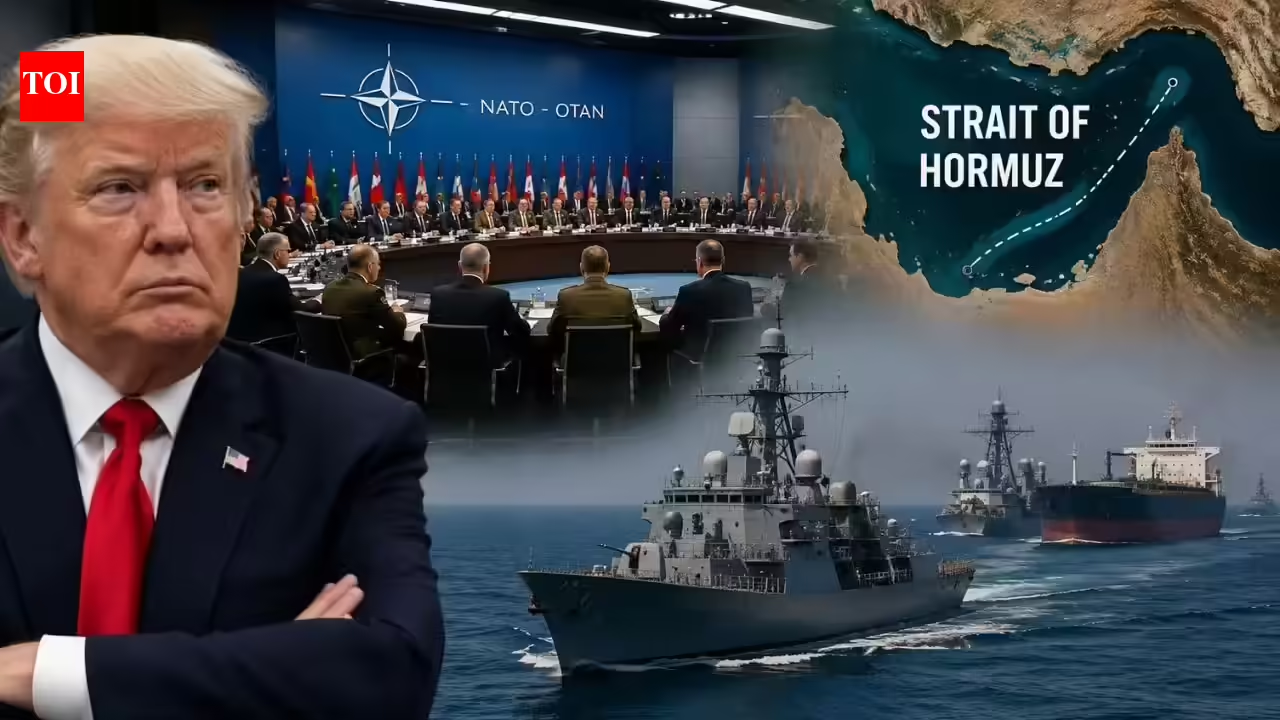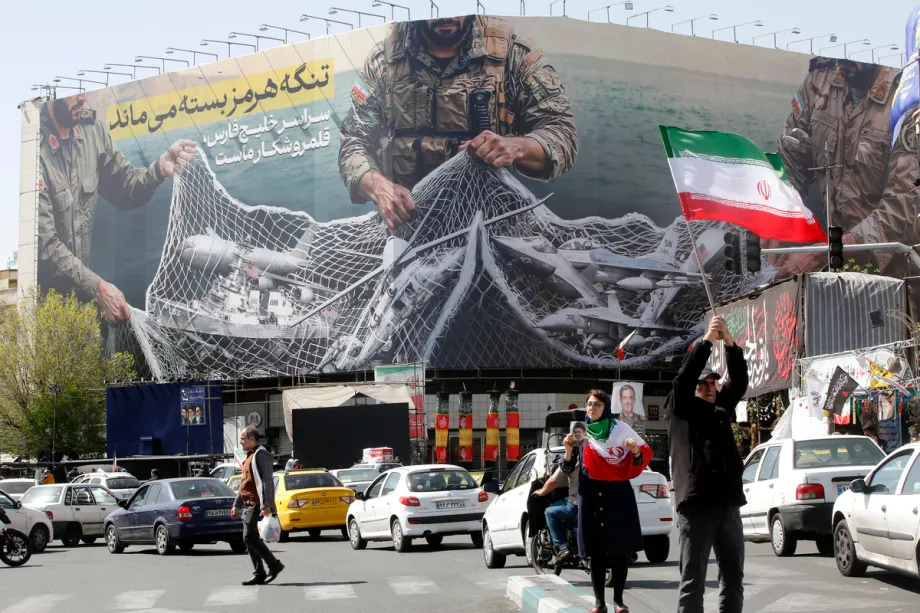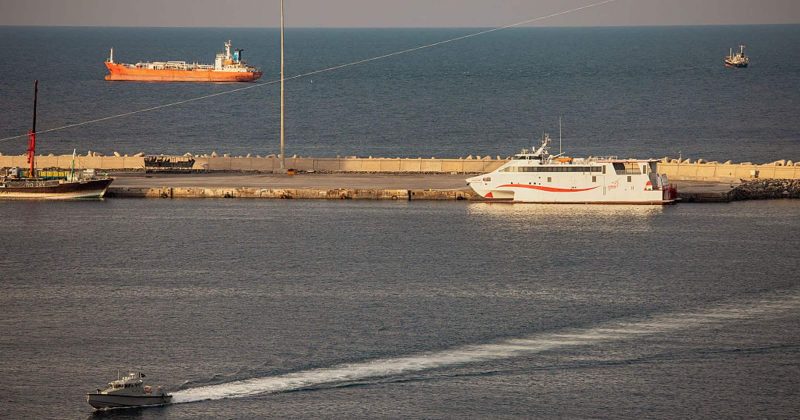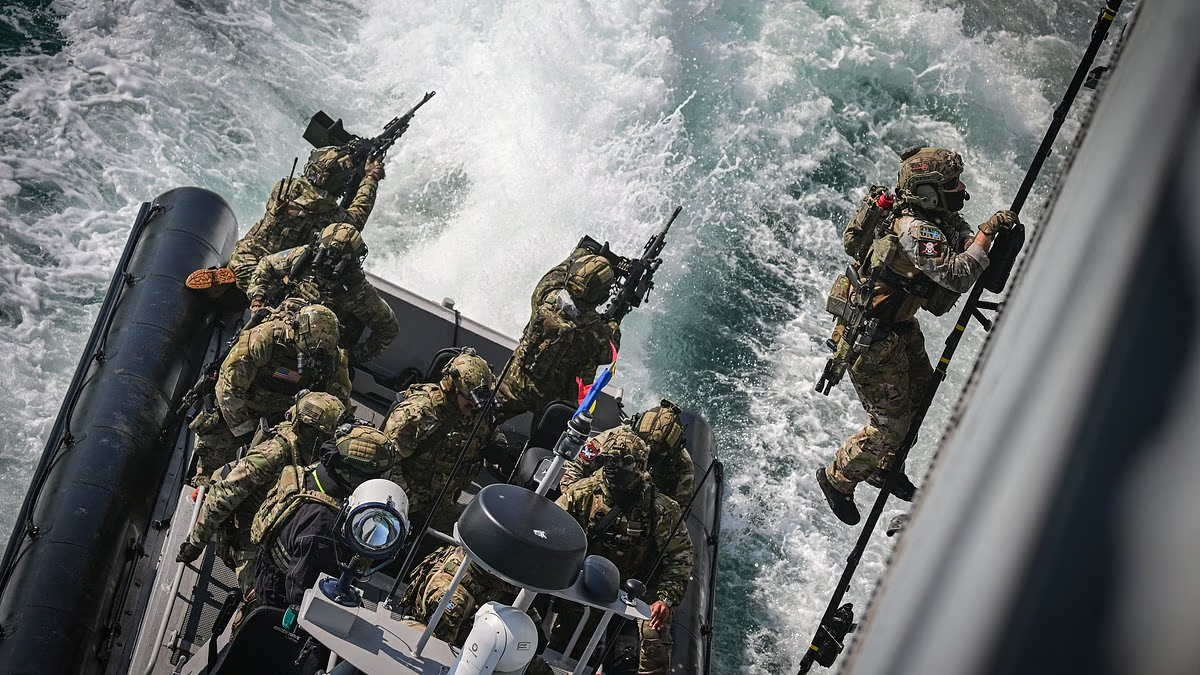
NATO is considering deploying a mission to the Strait of Hormuz if the waterway remains closed by July. The Strait has been all but blocked since late February, after Iran deployed its navy there following the US and Israel's air war against the nation. Iran still has a chokehold on the Strait of Hormuz, the vital shipping lane for global oil supplies, even as the US military has enforced its own blockade on Iranian ports. The channel of water ordinarily sees a fifth of all oil pass through every day. Since its closure, oil prices have dramatically spiked. The result of the ongoing cessation of ships sailing through the waterway appears to have massively shifted NATO's strategy regarding the Middle East. Though Donald Trump has desperately tried to get the US' international partners to get involved with his war, the defence bloc has so far said it will only get involved once fighting has stopped and they can form a broad coalition that includes non-NATO members. But a diplomat told Bloomberg that the idea of sending a mission to Hormuz is gaining traction, though unanimous support has not yet been reached. A senior NATO official, meanwhile, said that while a few member nations still oppose authorising a mission, they will likely rally around the plan if the blockade carries on. Officers of the NATO Special Operations Forces are seen during the Trojan Footprint 2026 (TFP26) military exercise at sea in Constanta, south-eastern Romania, on May 18, 2026 NATO is considering deploying a mission to the Strait of Hormuz if the waterway remains closed by JulyThe war in Iran has split NATO. While some member states, like Spain, have outright refused to engage and have denied Trump the use of bases on their soil, others have quietly allowed the US to access their bases to provide logistical support. Trump has lashed out at his NATO allies for their refusal to engage in his war, recently announcing the US would pull 5,000 troops from its bases in Germany. Trump has considered himself an effective dealmaker above all else, but he appears to have hit a wall with Iran as his tough talk, threats and even military action haven't moved Tehran from its long-established positions.With shifting goals that make it difficult to judge the status of the US effort, Trump and his top aides have insisted the US has already won the war and that Iran is ready to reach an agreement in the wake of escalating US threats during a tenuous ceasefire.But Trump once again backed down, saying Monday that he'd put plans for an imminent resumption of attacks on hold at the request of Gulf Arab states because 'serious negotiations are now taking place, and that, in their opinion, as Great Leaders and Allies, a Deal will be made, which will be very acceptable to the United States of America, as well as all Countries in the Middle East, and beyond.'It comes as US Treasury Secretary Scott Bessent today called on allies to more forcefully disrupt Iran's financing networks and said the Treasury would scrub its sanctions list of outdated designations to make it easier for financial institutions to root out the most sophisticated terrorist financing schemes.In remarks prepared for delivery at an anti-terrorism financing conference after G7 finance leaders met in Paris, Bessent said that participants needed to 'stand with us in full measure' against Iran. Donald Trump speaks to the press aboard Air Force One enroute to the U.S. following his official visit with President Xi Jinping in China, May 15 AH-64 Apaches flying above the Strait of Hormuz during a patrol on April 17 'That will require, for example, our European partners to join the United States in taking action against Iran by designating its financiers, unmasking its shell and front companies, shuttering its bank branches, and dismantling its proxies,' Bessent said. 'It will require those of you in the Middle East and Asia to root out Iran's shadow banking networks.'As the Trump administration tries to pressure Tehran to reopen the Strait of Hormuz to unlock vital oil flows disrupted by the US-Israeli attacks on Iran, the US Treasury has stepped up its sanctions efforts through a program dubbed 'Economic Fury.' It aims to disrupt Iran's shadow banking networks, and has frozen nearly half a billion dollars worth of cryptocurrency linked to Iran's regime.To make this more effective, the Treasury will modernize its sanctions architecture because 'our adversaries adapt and innovate' by creating new shell companies.Most US Treasury sanctions are imposed on individuals, companies and other entities that are added to its Specially Designated Nationals List, which contains tens of thousands of designees that are cut off from the dollar-based financial system and see assets frozen. Anyone that transacts with designated entities risks being sanctioned themselves.'To sharpen national security outcomes, Treasury is tailoring our sanctions program for the 21st century. We are reviewing outdated and obsolete designations to help financial institutions focus on the most sophisticated terrorist financing and sanctions evasion schemes,' Bessent said. An oil tanker burns after being hit by an Iranian strike in the ship-to-ship transfer zone at Khor al-Zubair port near Basra, Iraq, late Wednesday, March 11He said the most effective sanctions are aggressive and targeted, and those left in place too long could create unintended consequences.'Sanctions are meant to change behaviour, not to punish populations,' Bessent said. 'Sanctions left in place for years with no visible and tangible changes in behaviour can have generational impacts that are nearly impossible to predict.'He said the Treasury's approach would 'maintain agility to maximize effectiveness' and cited examples of easing sanctions on Syria and Venezuela after regime changes as examples of how the Trump administration intends to adjust sanctions.
NATO 'considers deploying to Strait of Hormuz if it stays closed'
NATO is considering deploying a mission to the Strait of Hormuz if the waterway remains closed by July.
952 words~4 min read