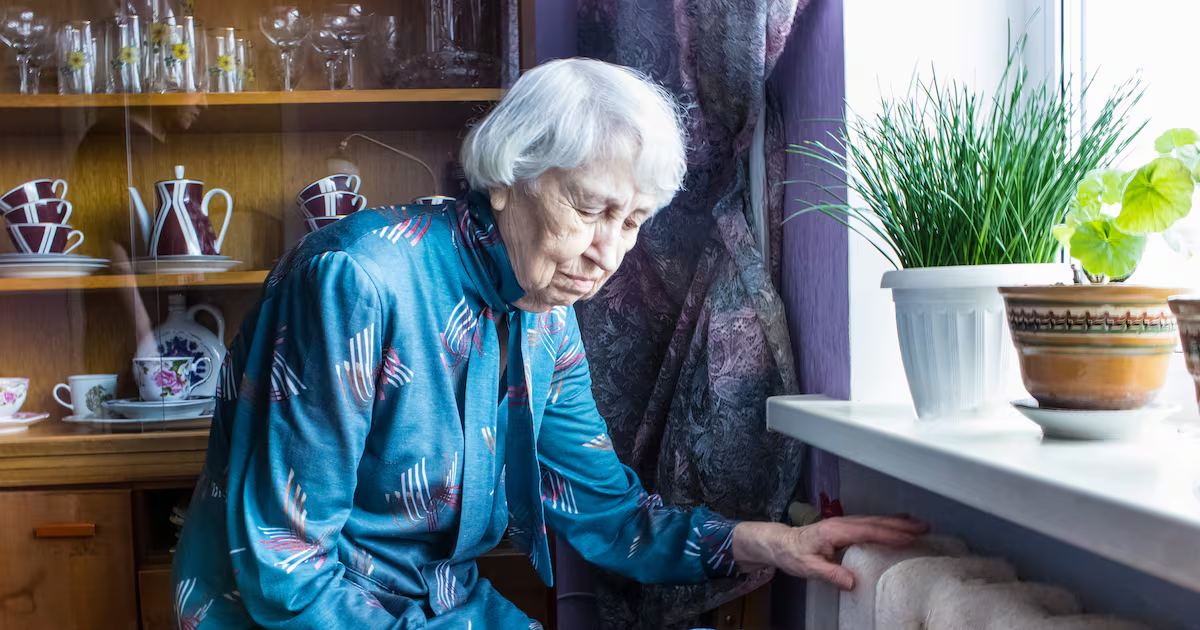
The number of older people living alone in poverty almost doubled last year, the Society of St Vincent de Paul has said. While the consistent poverty rate – the measure used for the combined hardships of low income and deprivation – dropped marginally for the general public from 5 per cent to 4.7 per cent, the rate for older single households rose from 5.2 per cent to 9.6 per cent. The charity said this was particularly stark as one-off supports and energy credits were still in place last year. “The rate would have been significantly higher without them,” Louise Bayliss, the charity’s head of social justice told the Oireachtas Committee on Budgetary Oversight on Tuesday afternoon. The charity called on the Government to convene an emergency energy summit to help households cope with rising fuel and power bills and the growing rate of arrears. “Despite successive cost of living measures, our evidence shows that poverty is becoming more concentrated and more severe for specific groups, who are falling further behind,” Bayliss said. Those calls were backed by Social Justice Ireland policy analyst Susanne Rogers who told the meeting people were rationing basic functions because they could not afford power. “When putting on the immersion or having a shower is a luxury, that is not the Ireland with a budget surplus, that is not the Ireland of full employment,” she said. She said the level of arrears on gas and electricity bills – 316,838 and 179,439 respectively – was “outrageous”. Bayliss said those figures did not even show the full the extent of the problem as they excluded people on pay-as-you-go meters who ‘self-disconnected’ when they ran out of money.“We have no record of how many people are running out on a Monday or Tuesday and doing without until they get some money on a Wednesday,” she said. Social policy officer with the Irish Congress of Trade Unions Ger Gibbons said if the energy crisis was not addressed, unions would have no option but to lodge pay claims. “The trade union movement fully acknowledges that the Government is not responsible for the fuel crisis but it is responsible for the policy options it chooses in response,” he said. The package of supports approved after the recent fuel price protests were skewed towards certain sectors and did little for the majority of workers, he said. “If Government is neither willing nor able to adequately address the energy crisis and cost of living pressures faced by workers, particularly low-paid workers and workers in rural areas who spend a larger proportion of their incomes on energy and transport, then unions will have no option but to seek to resolve them exclusively through pay bargaining,” he said.
Poverty rate doubles among older people living alone, St Vincent de Paul says
Charity calls for emergency energy summit as utility bills continue to rise, Oireachtas committee hears
452 words~2 min read