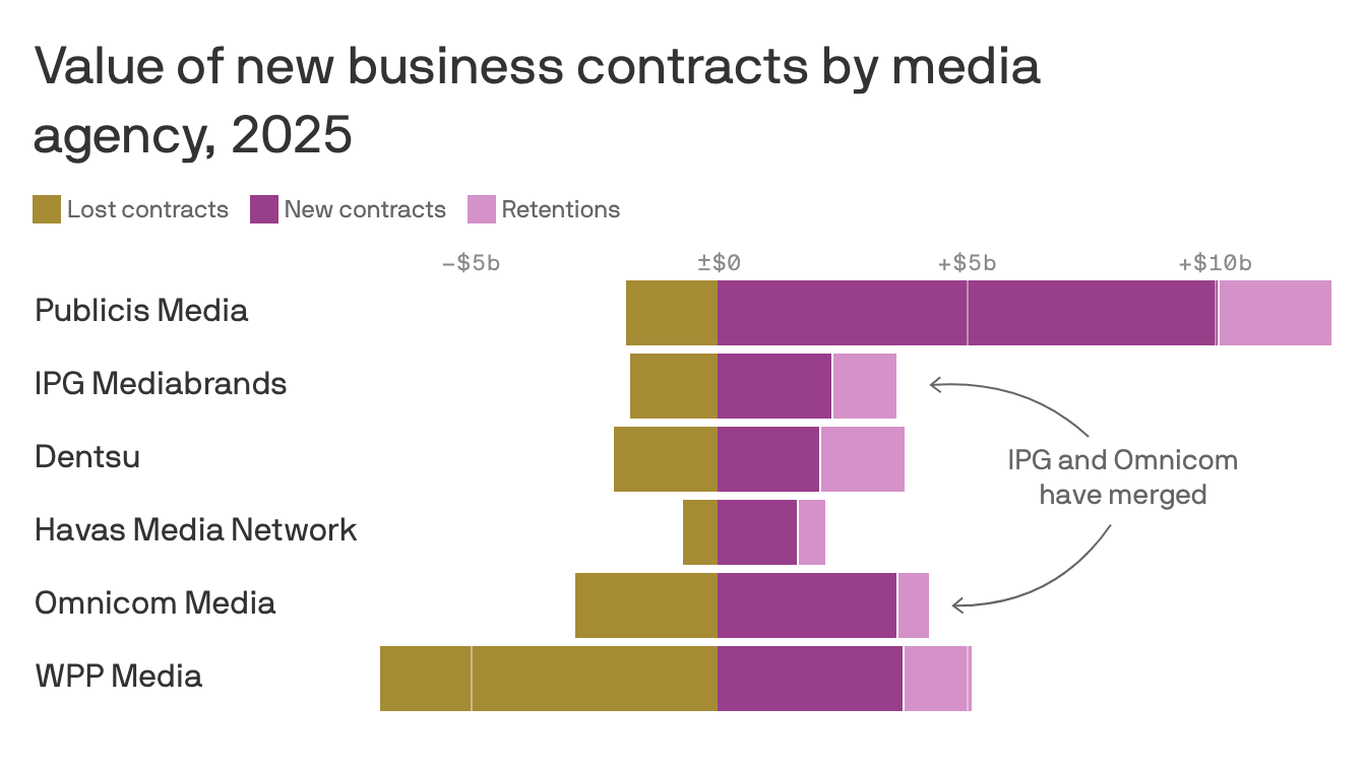
Publicis Groupe's deal for data software company LiveRamp is expected to reinvigorate ad tech M&A after a relatively slow first quarter. Why it matters: The move is another strategic win for Publicis at a time when it's already outperforming rivals. The $2.2 billion all-cash deal marks one of the biggest ad tech acquisitions since Publicis bought Epsilon in 2019.Driving the news: Publicis agreed to pay $38.50 per share for LiveRamp, representing a nearly 30% premium to the stock's closing price Friday, the companies announced. As one of the advertising industry's most widely used data collaboration platforms, LiveRamp connects more than 25,000 publisher domains and more than 500 technology and data partners across 14 markets.Publicis CEO Arthur Sadoun said the deal positions Publicis as a leader in "data co-creation," helping clients "generate new, exclusive and proprietary data" to build the "smartest, most differentiated AI agents."Reality check: LiveRamp's independence is part of its value, operating as a neutral infrastructure across agencies, brands and publishers.Leadership from both companies stressed on a Monday conference call that LiveRamp will remain neutral. But analysts and buyers who spoke with Axios are skeptical that perception will hold if the company sits within Publicis."Agencies, retailers, and marketers that want alternatives to Publicis-owned infrastructure may start looking more aggressively for replacements or acquisition targets," Madison and Wall wrote on Monday. Catch up quick: Launched in 2011, LiveRamp was a spinout of marketing data firm RapLeaf. Data giant Acxiom acquired it in 2014 for $310 million. In 2018, Acxiom sold its marketing services division to Interpublic Group for $2.3 billion, rebranded to LiveRamp and remained a publicly traded company.LiveRamp has become a key player in the ad industry's embrace of privacy-safe data collaboration. In 2024, it acquired Habu to expand its clean room capabilities.LiveRamp just reported $813 million in revenue for fiscal year 2026, up 9% from the prior year. The big picture: Publicis has widened its lead over rival holding companies by winning new business and aggressively investing in the infrastructure powering modern advertising. Publicis Media, its media buying agency, led new business rankings in 2025 with roughly $10.5 billion in new billings, according to Comvergence data. IPG Mediabrands, now under Omnicom, generated $1.8 billion, followed by Dentsu at $1.6 billion. The agency has spent years building out its ad tech stack, acquiring Epsilon for consumer data and identity capabilities in 2019 and Lotame in 2025 to deepen audience targeting. Publicis also expanded aggressively into influencer marketing by buying Influential and Captiv8.What to watch: Competitors will need to "decide whether to partner, build, acquire or accept a weaker position across data, workflow and transaction layers," Madison and Wall wrote.Shares of WPP and Omnicom rose following news of the deal, which validates their strategies to invest in data and tech infrastructure in the AI era.A deal of this size will require regulatory review. Publicis was one of several agencies that settled with the Federal Trade Commission last month over allegations of collusion. Omnicom and IPG had agreed not to bar ads based on politics while seeking approval for their merger.
Publicis' LiveRamp deal puts competitors on edge
The move is yet another strategic win when it's already outperforming rivals.
510 words~2 min read