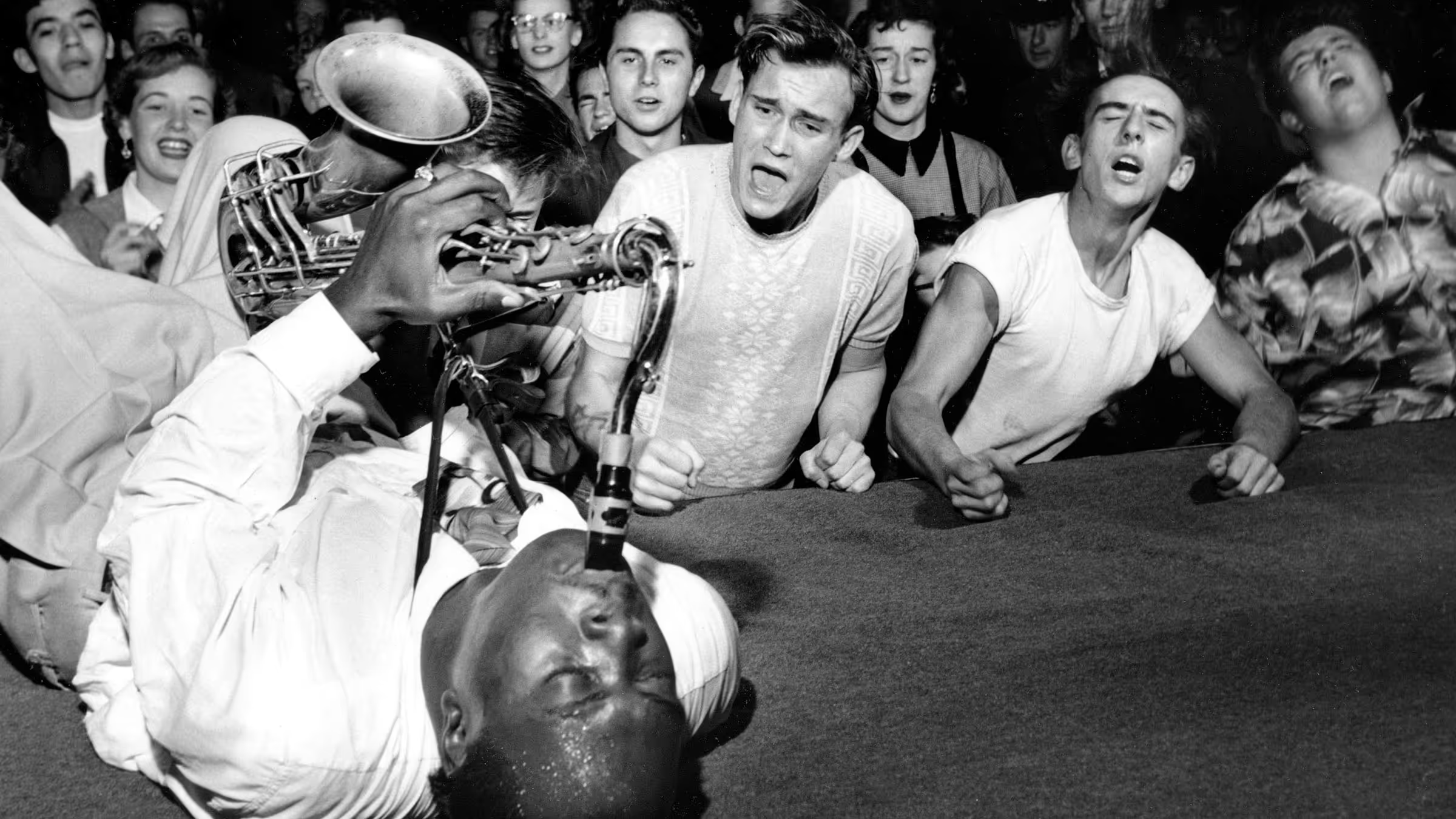
Harvard Business Review LogoYour most devoted employees and customers have a lot to teach you about loyalty and performance. by Marcus BuckinghamBob Willoughby/Getty ImagesThe goal of any corporate leader is to effect behavioral change: to move people to achieve certain outcomes. For employees, those outcomes might include high engagement and performance; for customers, purchasing decisions; and for both, loyalty and advocacy (being willing to recommend working for or doing business with the organization). By those standards, leaders today are struggling. Although business leaders have focused for decades on engagement and loyalty and, more recently, on employee (and customer) experience, employee trust levels are at all-time lows and engagement levels are at the bottom of a 20-year range. At the same time, customers are more demanding and more fickle. They expect immediate fulfillment, effortless returns, and products tailored precisely to them—and they will walk away quickly if those expectations aren’t met.A version of this article appeared in the May–June 2026 issue of Harvard Business Review.
What Companies Can Learn from Their Biggest Fans
Despite decades of effort by companies to boost engagement and loyalty, employee trust and customer commitment continue to decline. Most organizations try to fix deficiencies or incrementally raise satisfaction levels. But human behavior does not change in response to mildly positive experiences. The author argues that behavior shifts only when experiences are extremely positive—when people say they “love” them. Drawing on large-scale research and examples such as Kroger and Disney, he shows that outcomes accelerate only after experiences cross a critical emotional threshold. People are most likely to love an experience when it meets five conditions in sequence: control, harmony, significance, warmth, and growth. When leaders intentionally build those elements into employee and customer journeys, they unlock deeper engagement, stronger loyalty, and more sustainable business performance.