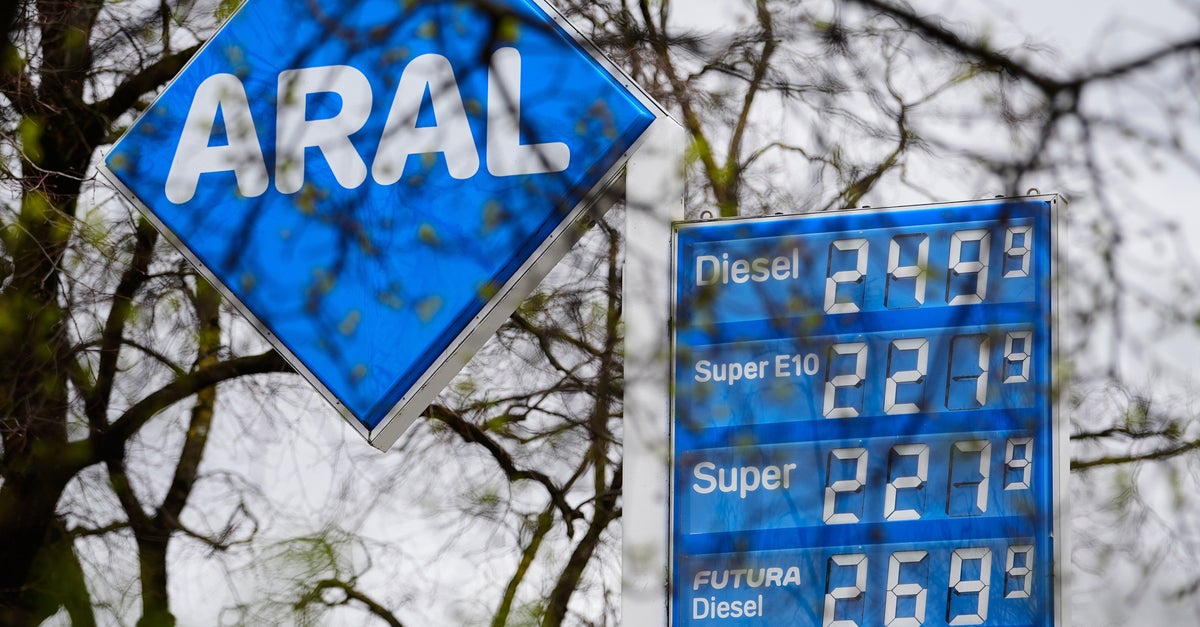
The issue of supporting households is once again dominating the government’s agenda, even before the package of measures already announced has been fully implemented.Energy prices are surging sharply, while Europe remains reluctant to ease fiscal constraints in order to create additional fiscal space. The week begins with unleaded fuel prices reaching their highest levels since the outbreak of the war, both at wholesale and retail levels. This significantly increases the likelihood that inflation will remain above 5% for yet another month, as the decline in diesel prices alone is insufficient to reverse the trend.As the country moves toward a new record high in retail fuel prices — at least for unleaded gasoline, which affects a larger number of drivers — the economic staff is expected to decide within the coming days whether to use the government’s remaining reserve fund for the financing of additional support measures, which currently amounts to 200 million euros. By the end of the month, the government must announce whether the subsidy on diesel fuel will be extended.a) If the subsidy is not extended, the annual increase in diesel prices in June — assuming no change in international market conditions — is expected to reach 37%, compared with 24% currently, with corresponding implications for June inflation.b) If the subsidy is extended, at least 50 million euros will be drawn from the 200-million-euro reserve fund, without any assurance that such expenditure will subsequently be excluded from the fiscal accounting framework governing “net expenditure,” given that the diesel subsidy constitutes a horizontal and universal support measure.Decisions at the last minuteGovernment officials insist that decisions will be taken literally at the last possible moment, as the latest available data must first be assessed. (An extension of the diesel subsidy can be implemented through a simple ministerial decision and does not require further legislative intervention.)Why such caution?Firstly, because even today the majority within the Eurogroup remains opposed to fiscal easing. Despite inflation affecting the entire euro area and the European Central Bank preparing to announce interest rate hikes, potentially as early as June, the prevailing logic is to safeguard sovereign bond yields. The war in the Middle East has increased borrowing costs across Europe — with German yields above 3%, Italy at 4%, France near 3.8%, and others — and, given the hundreds of billions of euros in bond issuances planned by Europe’s largest economies, policymakers consider it essential to avoid creating concern in the markets, even as household incomes across Europe are already under pressure.Secondly, because even if the Eurogroup signals support for “targeted fiscal flexibility,” this would apply only to temporary and one-off measures. The diesel subsidy does not fall into this category, leading the economic staff to hesitate over maintaining a measure that cannot evade the scrutiny of the European Commission.Thirdly, because it is still only May, and the remaining 200-million-euro reserve is likely to prove insufficient should the crisis persist — a scenario that increasingly appears plausible. The government’s economic team does not wish to breach fiscal rules, as at least ten other countries have already done, particularly with the imminent Thessaloniki International Fair in September. The central objective remains the design and implementation of permanent support measures for next year. A breach of fiscal rules this year would not contribute positively toward that goal.The government has already earmarked 1 billion euros for additional support measures in 2027, with the aim of safeguarding these resources and distributing them to citizens at the start of the new year.At present, all scenarios regarding diesel fuel subsidies remain under consideration.Accelerating implementation of the 500 million packageThe economic staff also considers it imperative to accelerate the implementation of the 500 million euro support package announced in early April. The relevant draft legislation is expected to be released for public consultation immediately and will remain under consultation for 15 days. This will be followed by parliamentary approval and the issuance of implementing decisions.The key priorities are as follows:I. Payment of the extraordinary child allowance (150 euros per child) by the end of June or, at the latest, early July, as this measure alone accounts for nearly half of the support package, with a budget of 240 million euros.II. Launch of the application platform through which farmers may apply for fertilizer subsidies by the end of the month, enabling them to receive compensation at least for the period from March 15 through the end of April.III. Commencement of the 72-installment debt settlement scheme and the expanded out-of-court restructuring mechanism, including the eligibility of debtors with liabilities exceeding 5,000 euros.
Relief measures: A new package ahead? Scenarios and challenges
Energy prices are surging sharply, while Europe remains reluctant to ease fiscal constraints in order to create additional fiscal space. The week begins with
789 words~4 min read