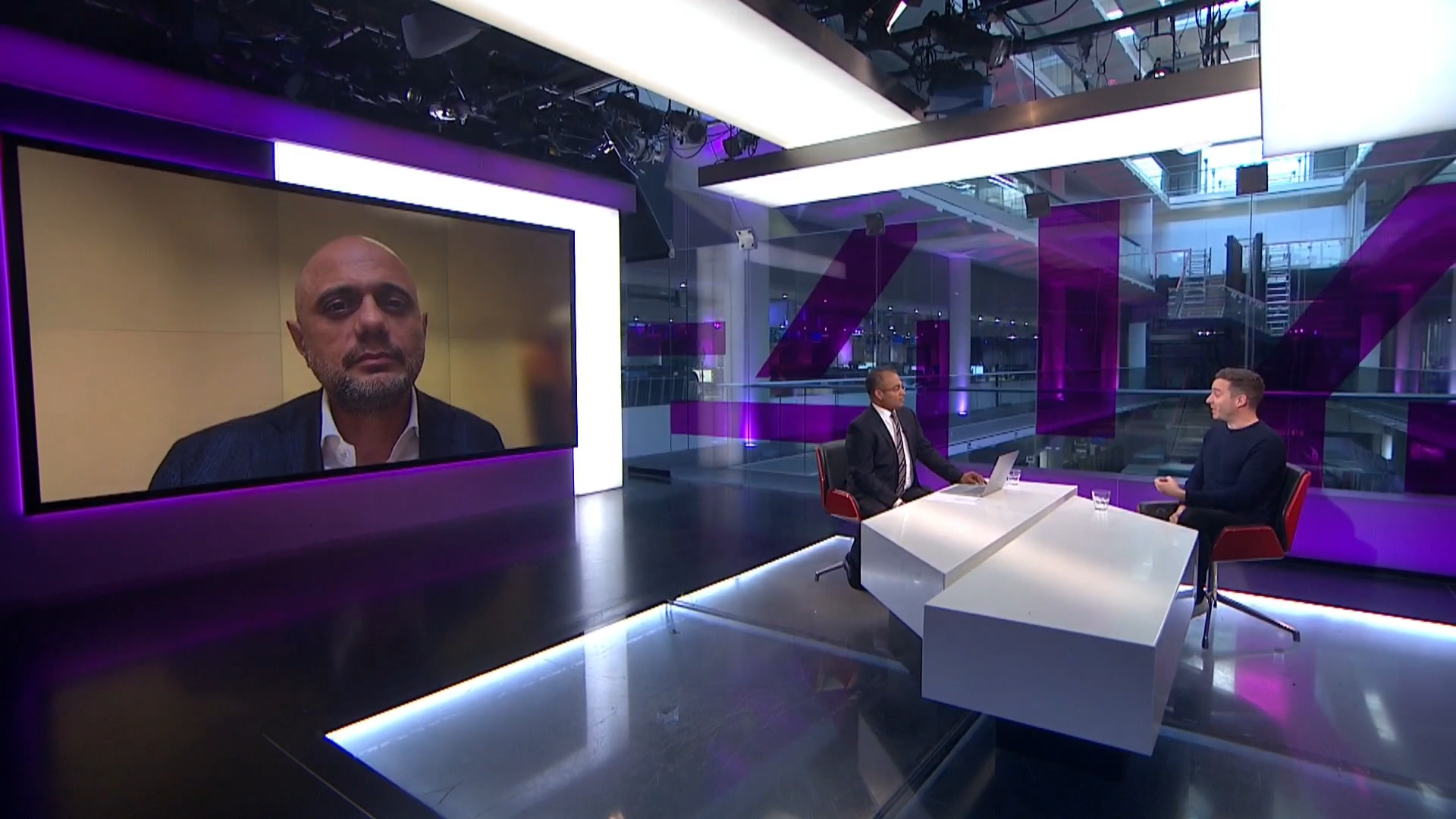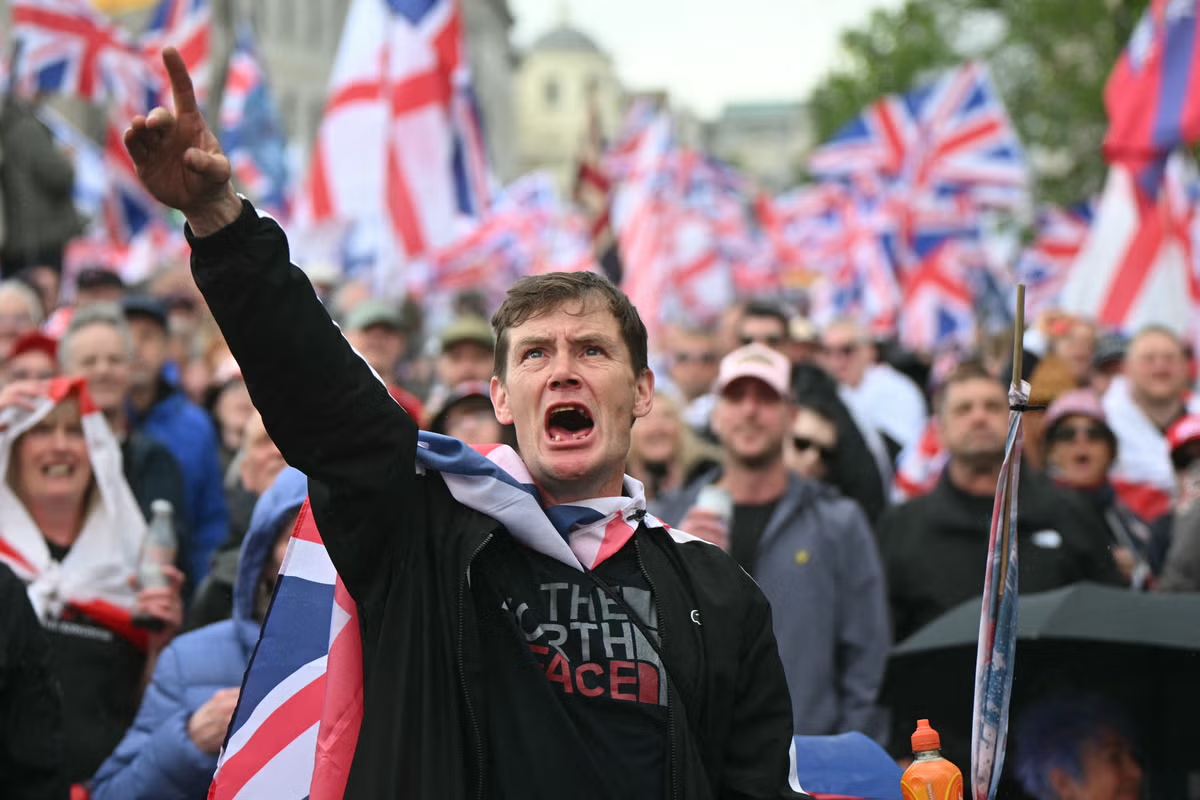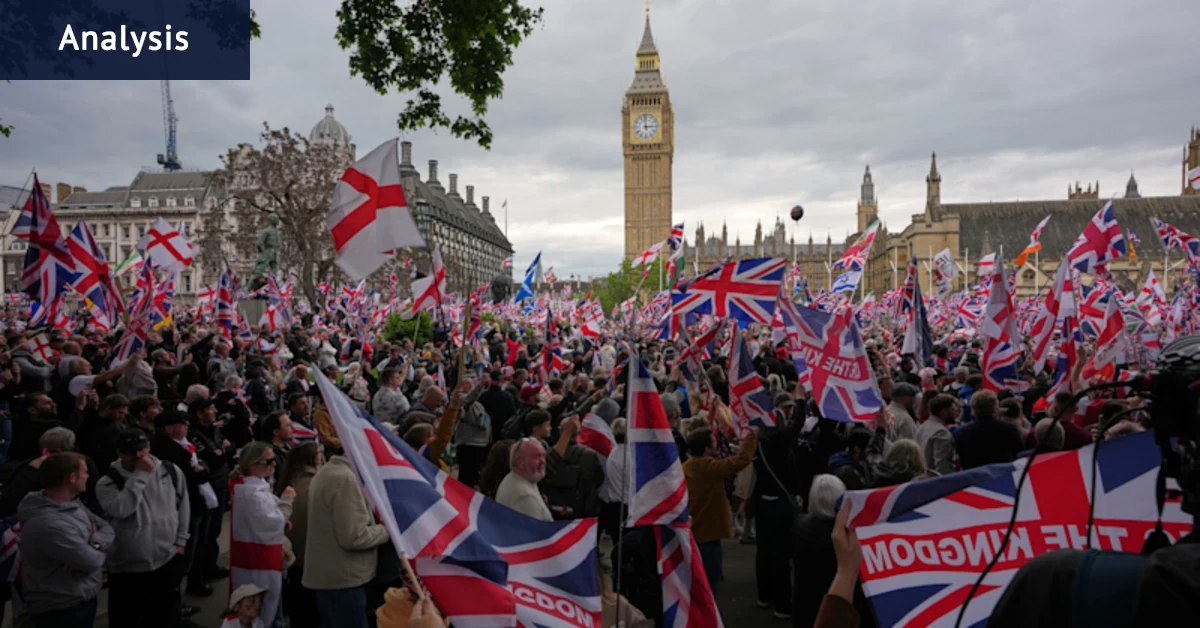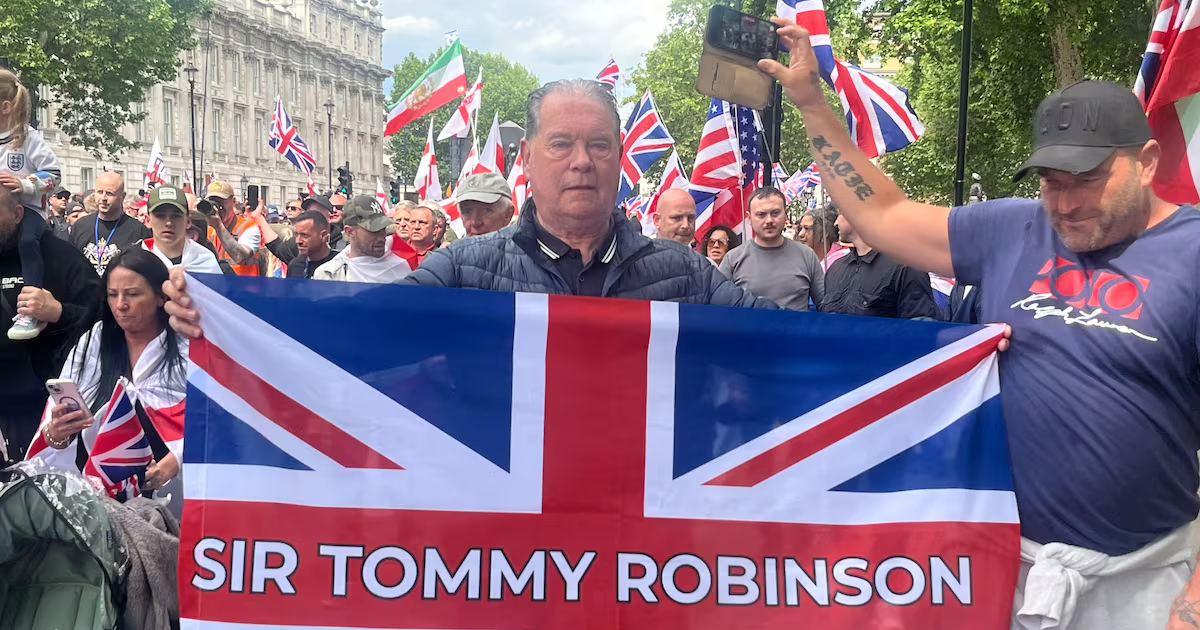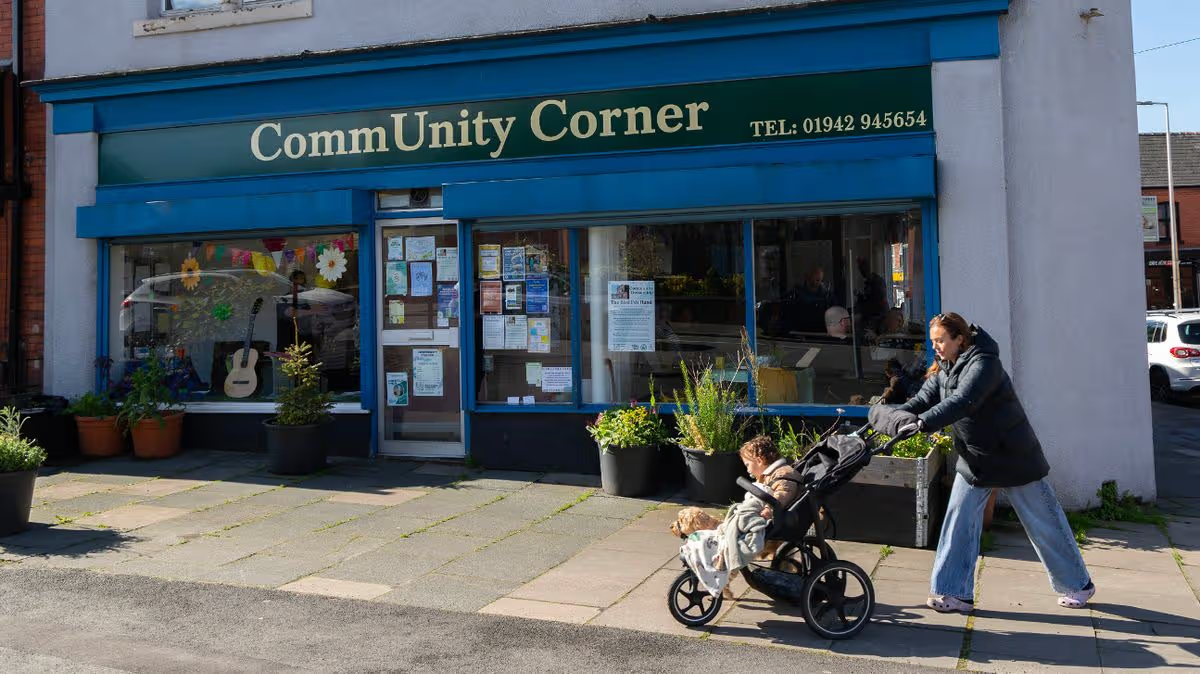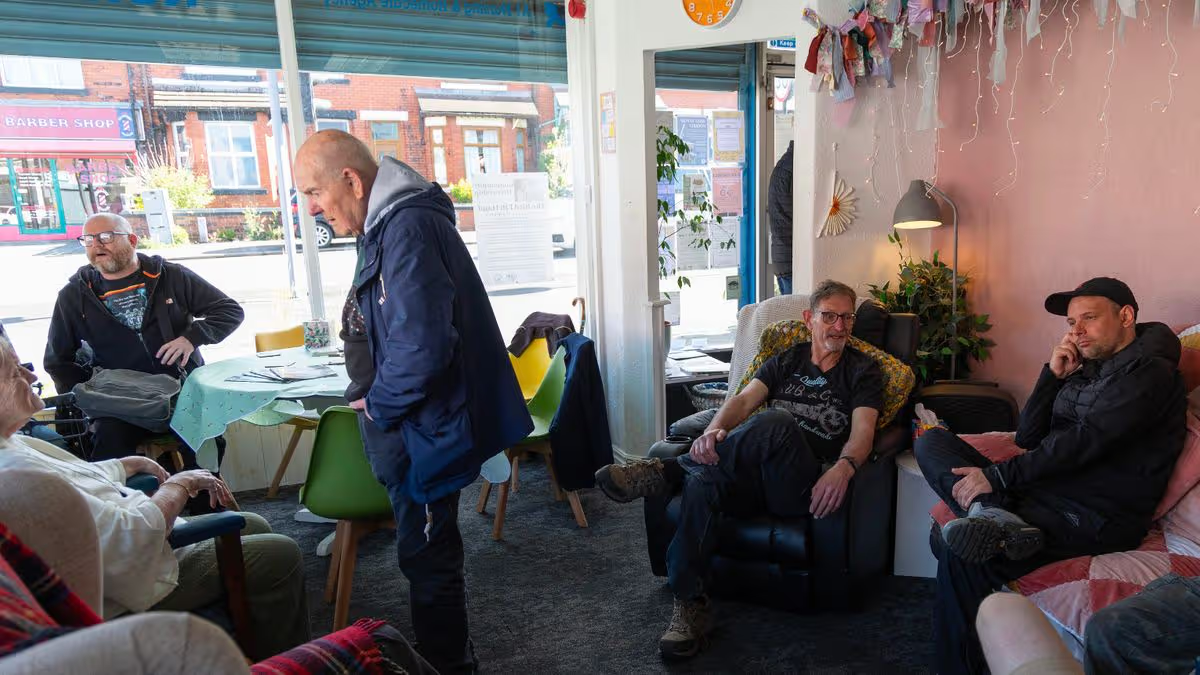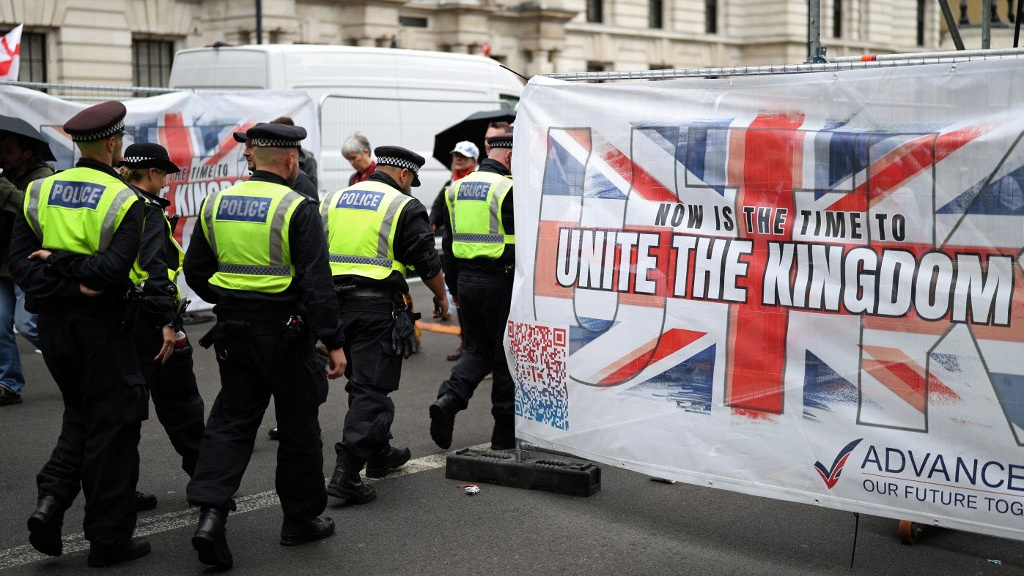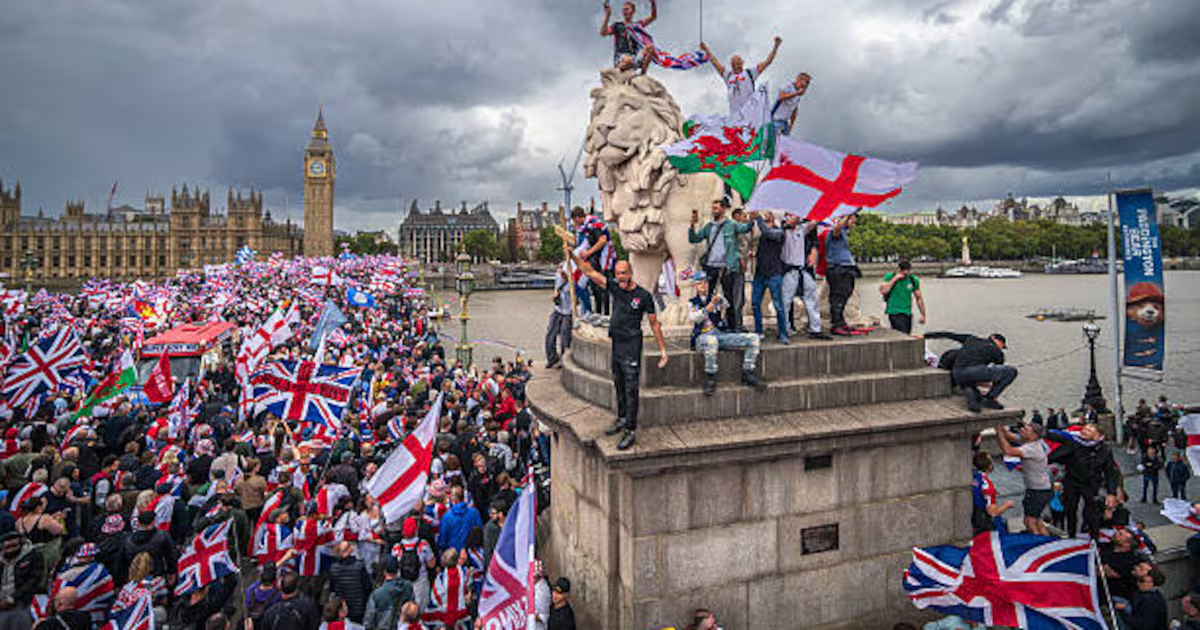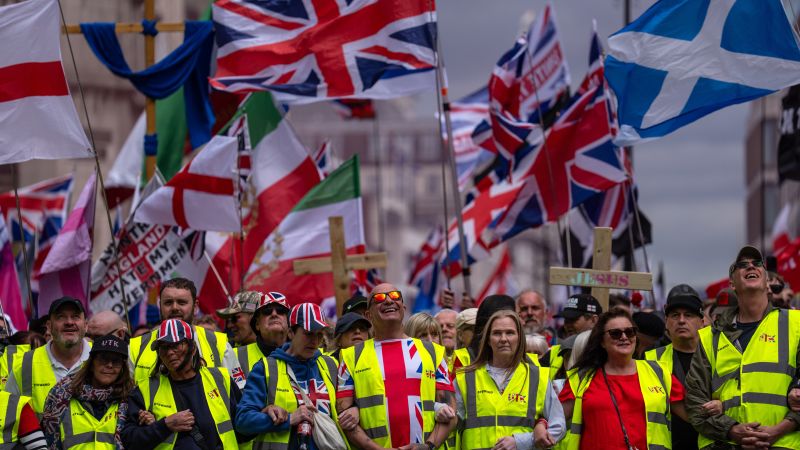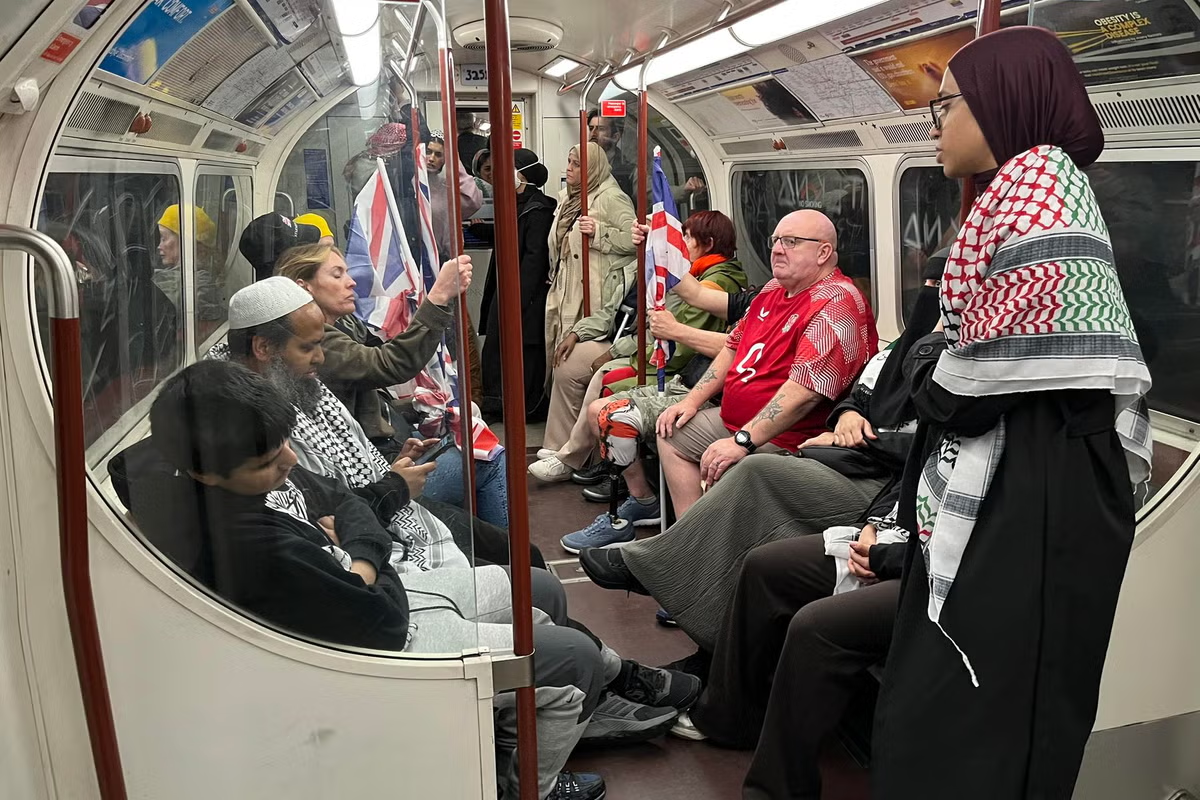
At first glance, it’s an unremarkable scene: the interior of a tube carriage, packed with people just trying to get from A to B. Most have their eyes closed or sport the familiar expression of weary boredom reserved exclusively for travelling on the London Underground. All is quiet. All is calm. There would be nothing noteworthy about it whatsoever, were it not for the fact that half the people on board are holding union jack flags aloft, while the others sport keffiyehs. This photo swiftly did the rounds on social media over the weekend, snapped in the capital following two rival protests: a Unite the Kingdom march orchestrated by far-right activist Tommy Robinson, and a pro-Palestine rally. Not every picture is worth a thousand words, of course – not in the world of infinite selfies – but this one proves the old adage can still be on the money. For what could more elegantly encapsulate a fundamental truth that we seem to have forgotten in a world of ever-increasing discord: underneath all our differences, we have the same basic needs. We all use the same public services and share the same spaces. We all need to get home after a hard day’s march, no matter which “side” we were on. State of the nation: opposing protesters sharing the same tube carriage on Saturday (Danny Briottet)Mull on it some more, and one could even conclude that those in it had more in common than they’d dare to imagine. As the screenwriter Sarfraz Manzoor said when posting the picture on Instagram: “If I was more a talented writer I would try to write a play set inside this tube carriage on the day of the two marches. The plot is that the train breaks down and the passengers end up falling into conversation to pass the time.” Many of those replying agree: “They’d find they have so much more in common than they realise.”That sentiment is certainly what The National Conversation project, launching today, is hoping to tap into. Spearheaded by the Independent Commission on Community and Cohesion, the new research aims to figure out what it is that actually unites us in this increasingly splintered nation. What do we truly care about? What does it mean to be British? What makes this complicated island feel like home?The campaign is being championed by leaders from across the political spectrum, from former Conservative cabinet minister Sajid Javid to former Labour policy coordinator Jon Cruddas. Brits from all walks of life are being encouraged to complete a 10-minute survey, including recording a one-minute voicenote on their vision for the future of the country. Using AI to analyse the responses, researchers from the University of Oxford will “map out” a shared positive vision based on our overlapping values and ideas.It’s arguably never been more timely, considering not only the weekend’s clash of ideologically opposed protesters but the latest bout of Westminster infighting. Ten years after the referendum, it seems the cursed “Brexit” word is back on the table once more and it feels like the old, festering wound is about to be ripped open again.It’s also been a decade since the murder of Labour MP Jo Cox. Though that felt like a horrendously politically charged time, the nation’s polarisation has only deepened further since her death. According to research conducted by the British Red Cross, three-quarters of UK adults believe Britain is divided as a country; almost as many (72 per cent) say the country has become more divided over the last five years; and around half say they feel uncomfortable discussing politics (52 per cent), immigration (50 per cent) or global conflicts (51 per cent) with their partner.Supporters of Tommy Robinson watch Unite the Kingdom speeches on screens during Saturday’s march (AFP/Getty)“This is more pressing than it has been in recent history, I think at any time since the end of Second World War” says Brendan Cox, widower of Jo Cox and co-founder of the Together Coalition. “There are forces that are pulling us apart and our political response to them has been anaemic and fractured. The sense of what binds us together has to come from the public.”It’s hardly surprising that we’ve entered the age of rage, he says: the economic shocks of the past 20 years, combined with a collective sense of being let down by successive governments, have led to people feeling “hopeless and angry”. We’ve also forgotten how to talk to each other – or, more accurately, how to listen. It’s a subject that particularly interests playwright and screenwriter James Graham, who helped advise on the design of The National Conversation. The forces are all against us, our public realms and our social infrastructure have been completely decimated over the past decadeJames Graham, screenwriter and adviser on The National Conversation“It’s not about creating some artificial harmony just because it’s nicer when people are nice,” says the writer, who penned television movie Brexit: The Uncivil War, crime drama Sherwood, and the play and adapted television series Dear England. “People are always going to have disagreements, but I do think the conduct and the tone and the style and the manner in which we disagree is deteriorating. And we know why: the forces are all against us, our public realms and our social infrastructure have been completely decimated over the past decade.”Graham cites research from the Trussell Trust that revealed half of Brits have lost access to community in the last few years, whether it be pubs, shops, high streets, libraries, parks, recreation spaces or youth centres. “It’s harder to be together. And in that situation, we retreat online to find engagement and a sense of belonging – but as we know, unfortunately, these spaces are algorithmically designed not to create unity, tolerance, or nuance. It’s about outrage and anger and dividing us and then distracting us with horrible slop.”It all speaks to a nation lacking that most crucial of elements: hope. And yet Graham remains convinced that there really is more that unites us than divides us. “To begin making a national plan for how we can restore social cohesion in our country together – we have the expertise and we have the wherewithal and we have the want. I don’t know about you, but I really do think we’re not knocking at a closed door here.”And if those post-march protesters sitting side by side on the Bakerloo Line on Saturday show us anything, it’s that at the end of the day, we’d all appreciate a bit more peace and quiet in an increasingly noisy and divided world.The National Conversation runs from 18 May until the end of August. Take part at thenationalconversation.org.uk
The picture that proves we’re not such a divided nation after all
An extremist march and political infighting reveal an increasingly divided country, but a new campaign asks Brits to share their vision for the country to find common ground. Is there really more that unites us than divides us, asks Helen Coffey
1,112 words~5 min read