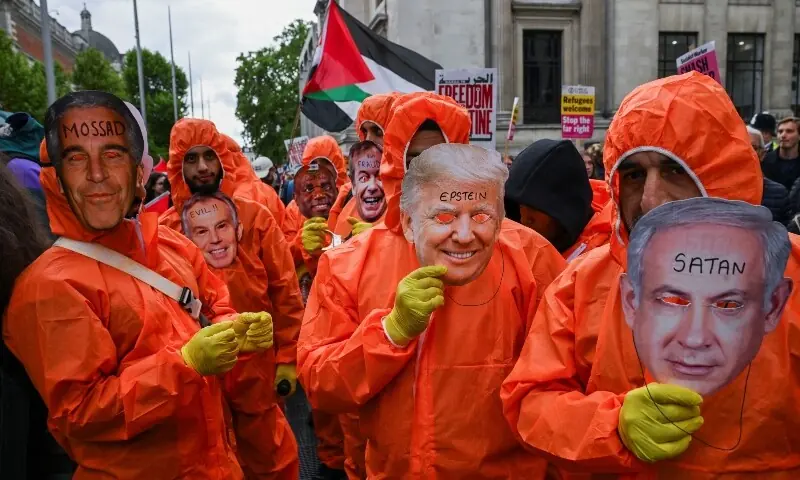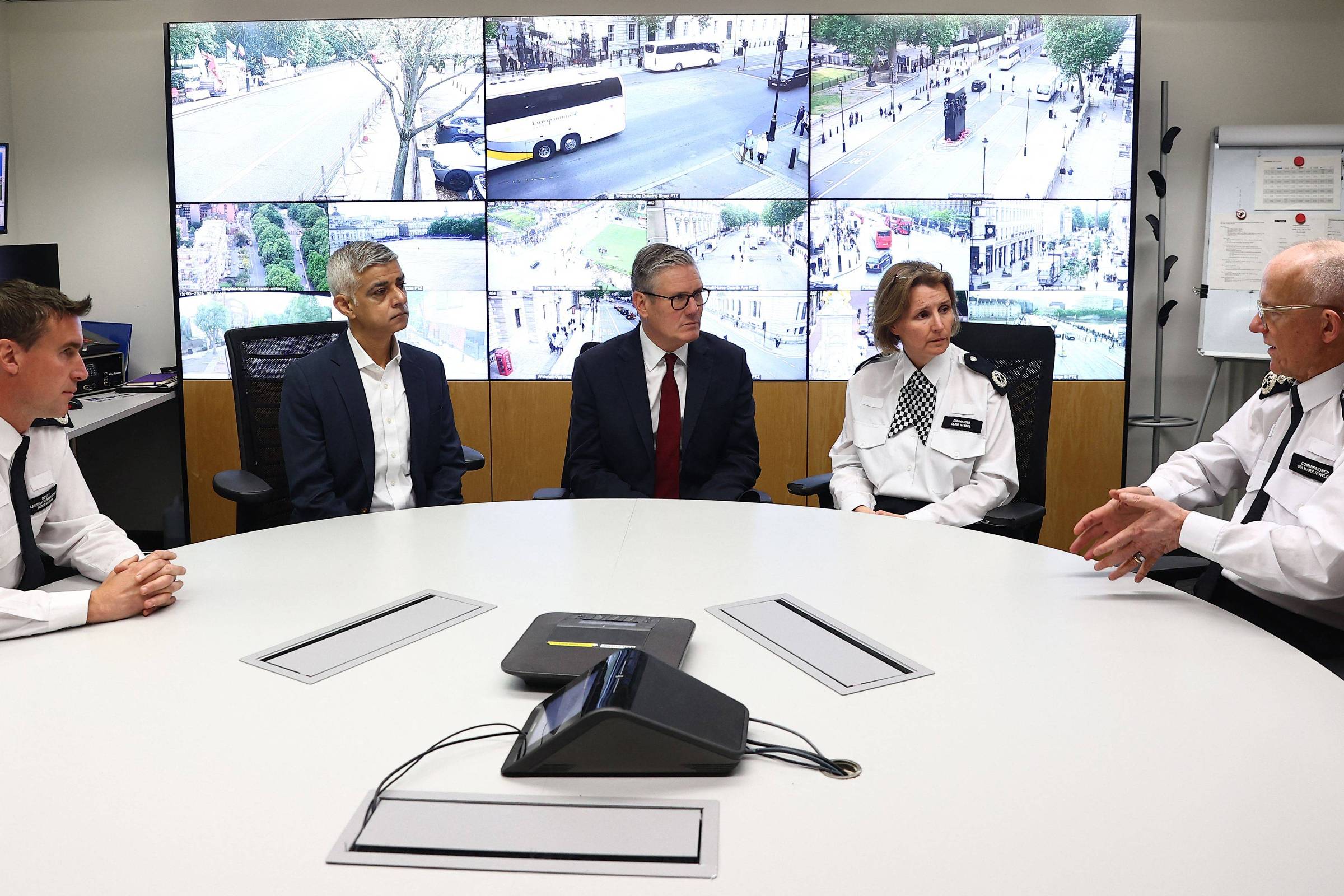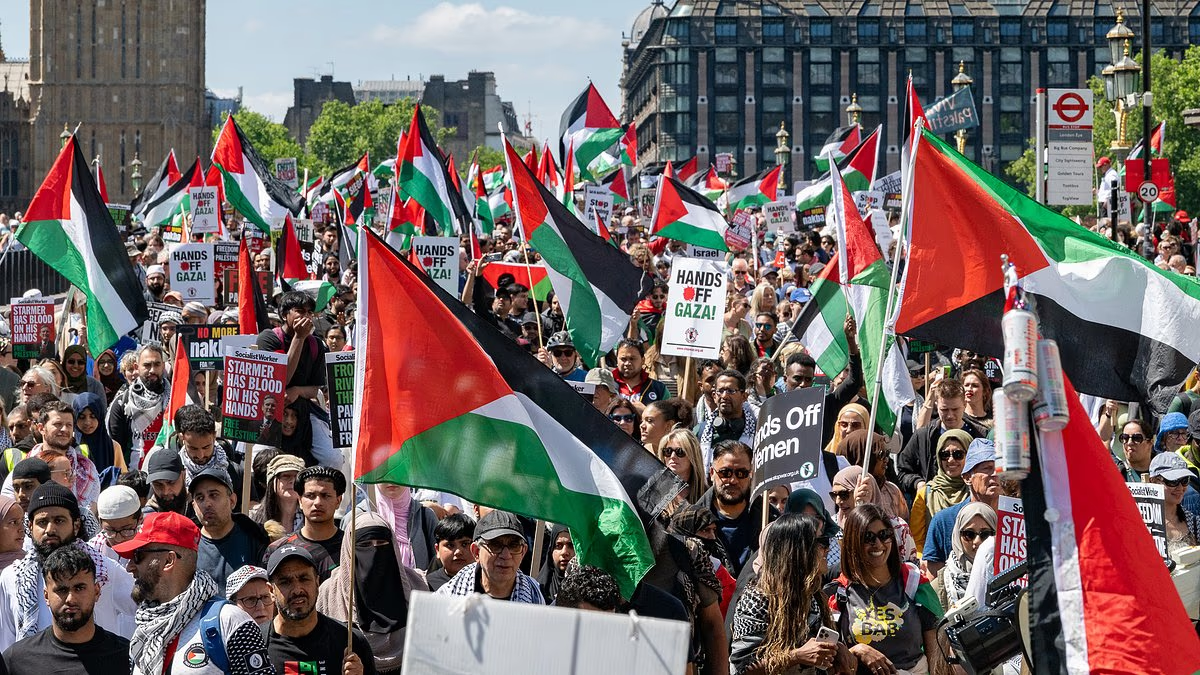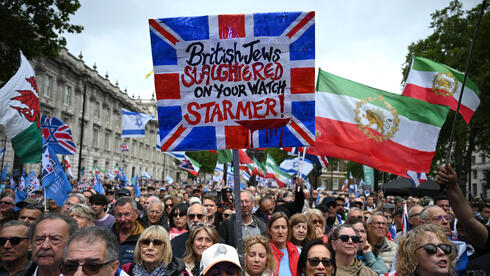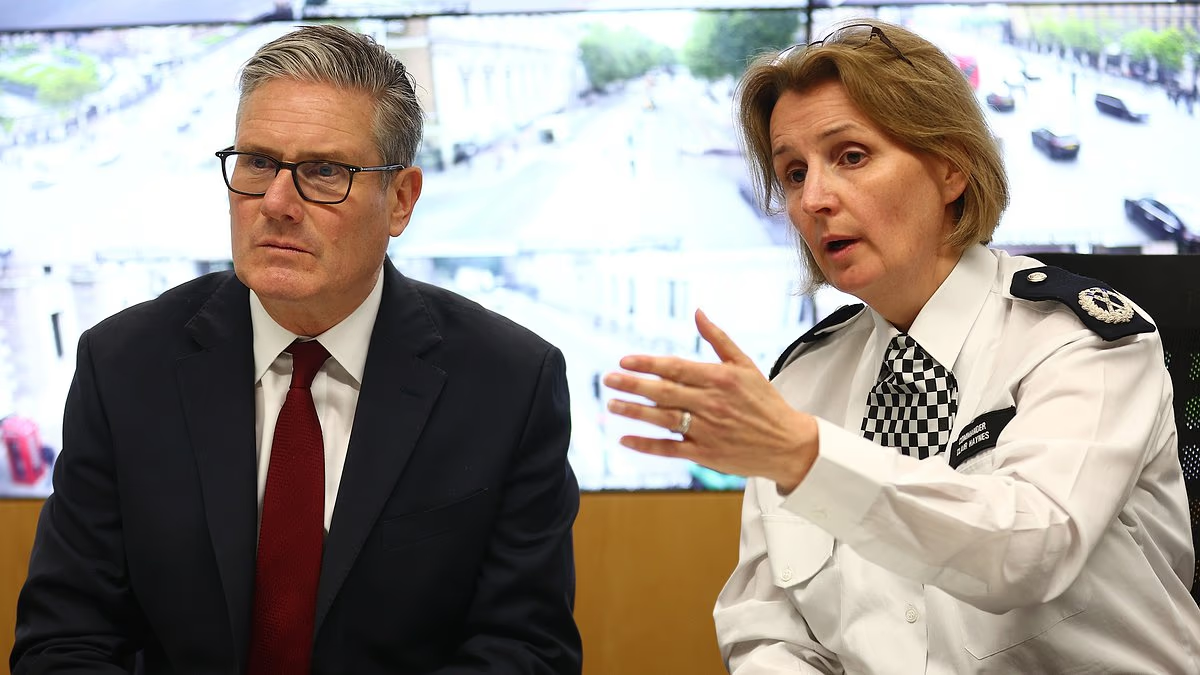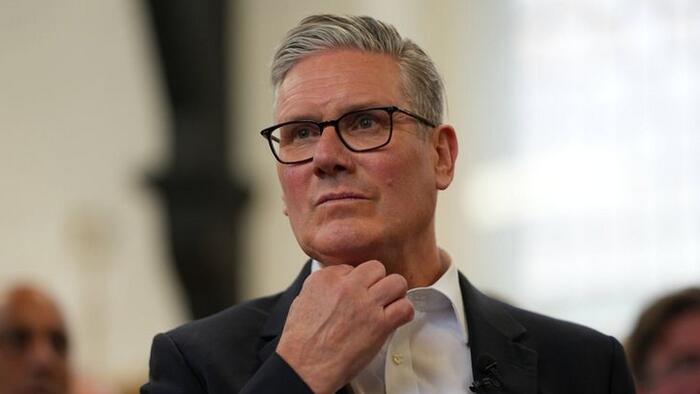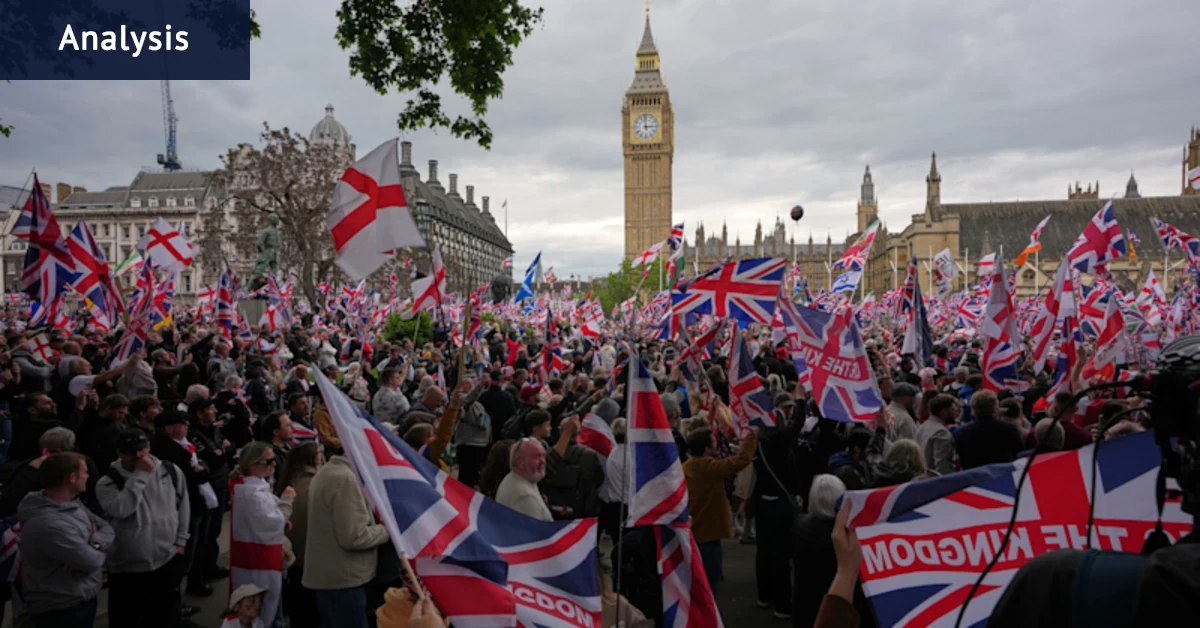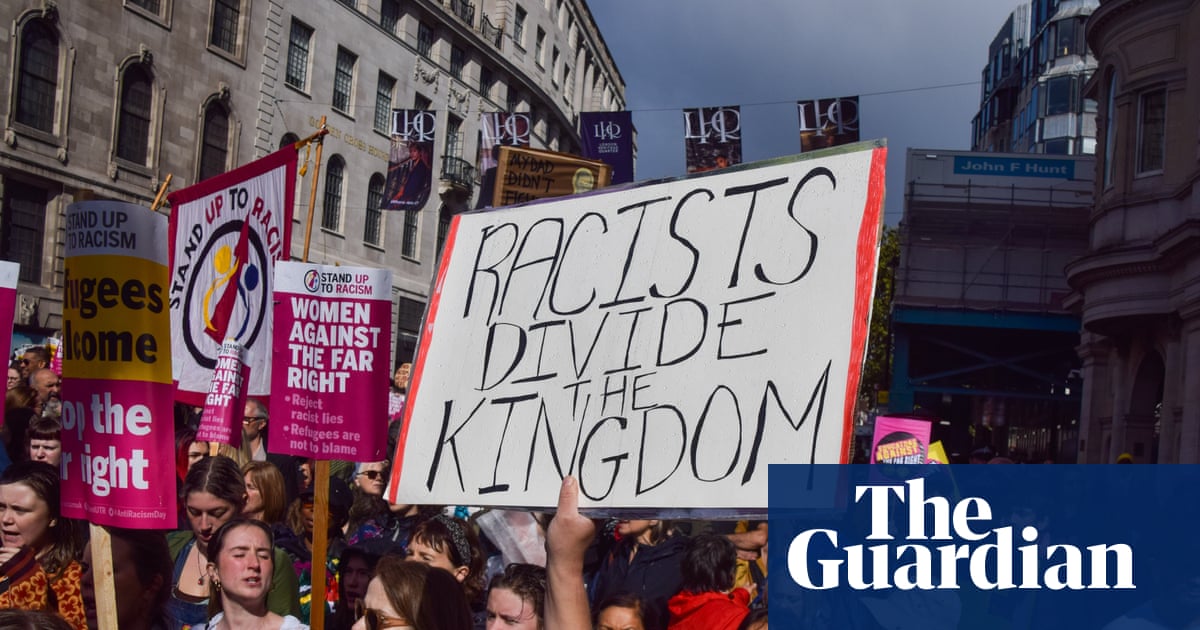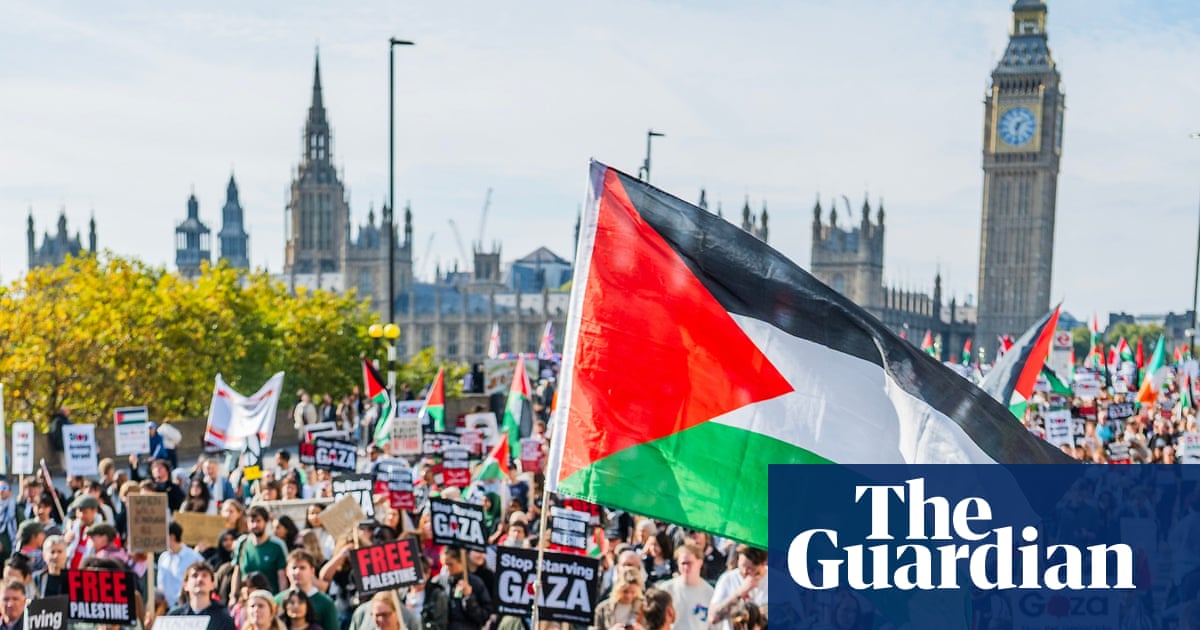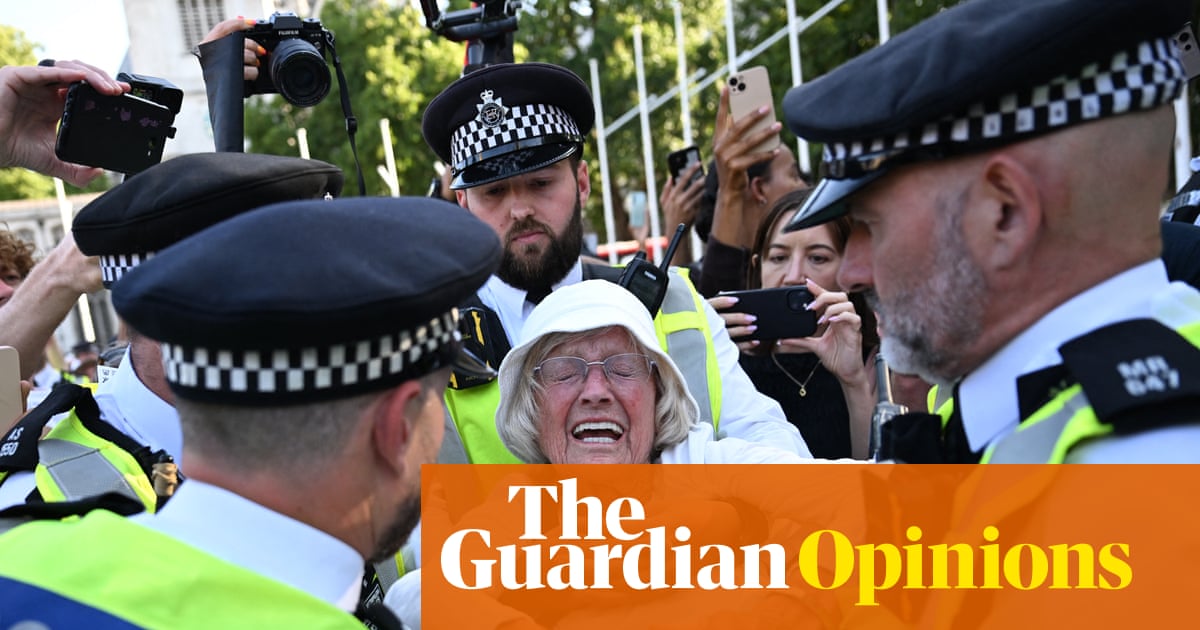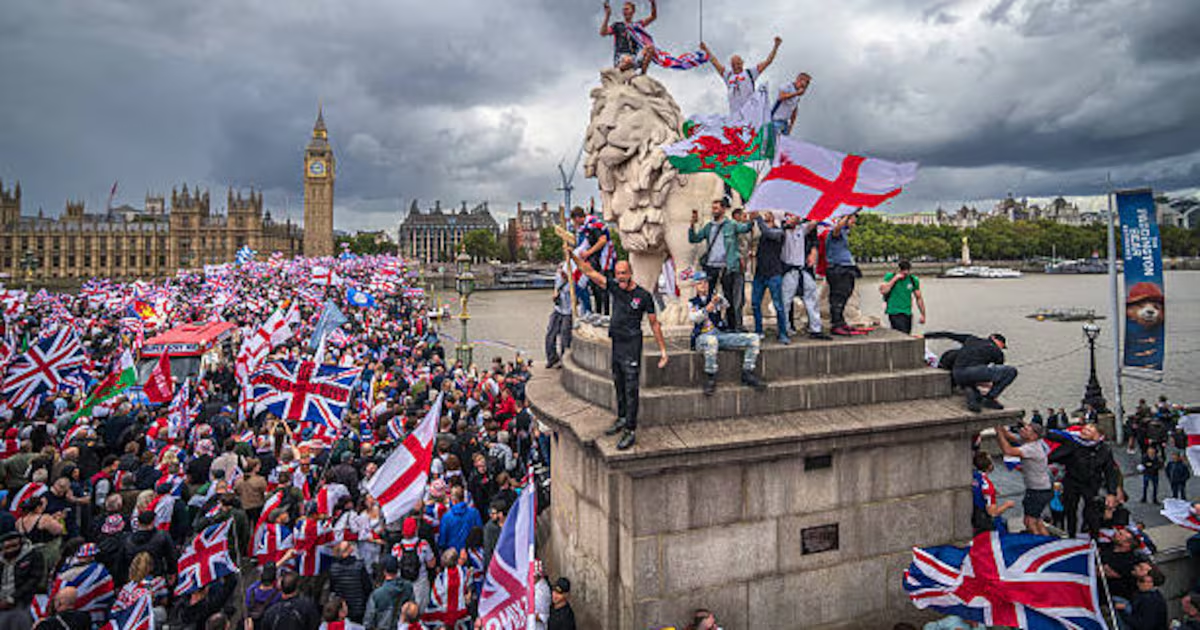
There was an urgency to Keir Starmer’s tone on Monday morning, a tremulousness in his voice. The UK prime minister rarely sounds this emotive or grave.He was arguing that British values of tolerance and respect were under threat from a more abrasive, divisive form of politics. One focused on keeping foreigners out.Starmer’s eyes narrowed as he leaned over the lectern at the Coin Street neighbourhood project in Waterloo, central London, where he was giving his speech, emphasising each word with a lawyer’s precision.“I don’t think that’s British,” he said. “That is not the decency and respect we are known for ... But it’s here. That politics is with us now. And you’ll see it again on Saturday at a march designed to confront and intimidate this diverse city, this diverse country.”Starmer announced he would block foreign hard-right “agitators” from entering Britain to take part in the latest Unite the Kingdom rally by anti-immigration activist, Tommy Robinson. The event is expected to draw hundreds of thousands to Parliament Square.Meanwhile, a pro-Palestine Nakba Day rally, which in effect will be a hard-left counter protest, will be at nearby Waterloo Place. Starmer wants police to arrest anyone who chants “globalise the intifada” – British Jews say it makes them feel unsafe because, they believe, it is a coded call to harm them as proxies in the struggle against Israel.Protesters from both marches – enemies in belief and much else – will need to be kept apart to prevent trouble. Throw in the FA Cup final on Saturday, and London is in for one of its busiest policing days. About 4,000 officers, including many drafted in from forces outside the city, are being sent in to keep order.The number of officers is as many as an army brigade. That is what is needed to keep London from boiling over these days. The city feels like a tinderbox heading into the weekend. In truth, so can much of Britain when immigration and culture are at the fore.UK prime minister Keir Starmer meets police officers to discuss operational planning ahead of this weekend's protests in London. Photograph: Peter Nicholls/Getty Images “This is nothing less than a battle for the soul of our nation,” said Starmer. Meanwhile, the UK prime minister is in the fight of his political life, one which he increasingly seems set to lose.UK politics feels just as febrile as the culture wars playing out on London’s streets. Starmer drew a link between these issues and the fragmentation of the political system, with the rise of Nigel Farage’s Reform UK on the right and the Greens on the left.[ Keir Starmer finds himself in office without powerOpens in new window ]If media are but a mirror to society, politics are its ugly reflection.Starmer was at Coin Street on Monday trying to save his premiership. It was as existential as that.Last weekend, the calls began in his Labour Party for him to resign or lay out a timetable to quit. Labour was annihilated in elections last week. Starmer, assailed by accusations of being disorganised and uninspiring, was blamed.His earnest words about British values being under threat were the strongest moments of an otherwise typically insipid speech. Within an hour, calls for him to quit resumed.Starmer was resolute that he would not resign: “I will prove my doubters wrong.”But from the moment he finished speaking at Coin Street, his exit seemed like the most likely end to this story. By Monday night, it was being reported that cabinet members, including home secretary Shabana Mahmood, were urging him to plan for his exit.Wes Streeting has ambitions to replace Labour leader and prime minister Keir Starmer. Photograph: Brook Mitchell/AFP via Getty Images Tuesday morning was one of those political circus moments that used to happen once in a generation, but which now crash into Britain’s news cycle with unnerving regularity.It is believed that up to six cabinet members, including health secretary Wes Streeting, one of his main rivals for the Labour leadership and the keys to Downing Street, wanted to confront Starmer at the weekly UK cabinet meeting.A feverish, shouting horde of media on Downing Street – The Irish Times was among them – asked ministers if they wanted Starmer to quit, as they ran the gauntlet in front of cameras.A Mackem accent, Keith Bray’s from GB News, soared impressively above all others, asking ministers if Starmer should go. His booming voice was the soundtrack of the dramatic moment. If the British did Reeling in the Years, this would be on its 2026 edition.“Keith Brays? He certainly does,” said another member of the Westminster press pack.[ Keir Starmer’s troubles must be worrying Micheál MartinOpens in new window ]Starmer basically refused to let his cabinet rivals speak at the meeting about his position, or even to listen him. He bunkered down for the fight and by that evening, his allies in Labour’s parliamentary party believed he had seen off Streeting.But the health secretary’s MP allies – the “swifties” calling for Starmer’s “swift” exit – kept popping up. Some of Streeting’s allies also started resigning from government jobs. Yet, Starmer’s allies were confident that Streeting didn’t have the number of MPs, 81, required to trigger a leadership contest.By Thursday morning, Streeting had quit the cabinet. He had “lost confidence” in Starmer.All the while, allies of Starmer’s other main rival for the leadership, Greater Manchester mayor Andy Burnham, were also calling for the prime minister to go in “an orderly transition of power” – this was code for a delayed contest, to give Burnham time to return to parliament as an MP in a byelection.It seemed allies of Starmer were right and Streeting didn’t yet have the numbers for a challenge. He quit but didn’t trigger a contest. Hours later on Thursday, Burnham made his big move. An MP in Makerfield, near Wigan, stepped aside to give him a potential route back to parliament. If Burnham can hold off Farage’s Reform in a byelection expected next month, he will return to Westminster as a conquering hero.Mayor of Greater Manchester Andy Burnham is making a bid for the prime minister's office. Photograph: Ryan Jenkinson/Getty Images Starmer would likely be next on Burnham’s list for vanquishing. He is, by far, more popular in Labour than the prime minister, and also Streeting, who increasingly appears to see the writing on the wall.Former deputy prime minister Angela Rayner, whose tax affairs are now in order, and energy secretary Ed Miliband may yet have something to say about the leadership. But for now, the political momentum – the Big Mo – appears to be with Burnham.Starmer seems too weak to block him from competing. The irony for the prime minister is that his only hope of keeping his biggest internal rival out of the Labour leadership race is the intervention of his biggest external rival: Farage.If the Reform leader can galvanise the vote in Makerfield for his party’s byelection candidate, he could yet defeat Burnham and do Starmer a favour.Farage’s election slogan last week was: “Vote Reform, get Starmer out.” Now, he is effectively trying to keep him in by battling Burnham. Meanwhile, the Manchester mayor would probably love to – but never will – repurpose Reform’s slogan for the upcoming byelection. “Vote Burnham, get Starmer out” is basically what the whole thing is about.Such is the head spinning mode of recent British politics.Meanwhile, as the weekend drew in and Robinson’s Unite the Kingdom rally, and the left-wing protest, drew in, Starmer returned to sounding the alarm and promising action. On Friday, he released a video and statement decrying the events. He revealed that Britain’s border officers had barred 11 “agitators” coming to Robinson’s rally.11 far-right agitators have been barred from the UK ahead of Tommy Robinson's rally “We’re in a fight for the soul of this country, and the Unite the Kingdom march this weekend is a stark reminder of exactly what we are up against. Its organisers are peddling hatred and division, plain and simple,” said Starmer.Robinson told The Irish Times on Friday that the UK prime minister was peddling “smears and lies and false accusations”.“Anyone with a difference of opinion to the communist Starmer is labelled as an extremist,” said Robsinon, also sometimes named in media as Stephen Yaxley-Lennon.[ A day with Tommy Robinson, leader of Britain’s right-wing nationalist upsurgeOpens in new window ]Robinson continued: “Starmer can’t stop rapists, jihadists from coming into the country ... Yet here he is stopping people with different political opinions. It is two-tier tyranny from the government, and they will only embolden people to come tomorrow.”An unpalatable truth for Starmer and perhaps for Britain is that people such as Robinson are at the sharp end of movements, with much of the energy, enthusiasm and momentum in UK social and cultural debates today.Starmer and the British political system can condemn rally organisers on the fringes of the political left and right. But it is getting harder to ignore them.Whoever eventually succeeds Starmer in the race for Downing Street will face the same problems he does.Britain is on the edge, its centre in real danger of collapse.
Britain on edge: Crisis politics and streets braced for protest ahead of fraught weekend
After a week of drama at Westminster, London prepares for far-right and pro-Palestinian marches
1,518 words~7 min read