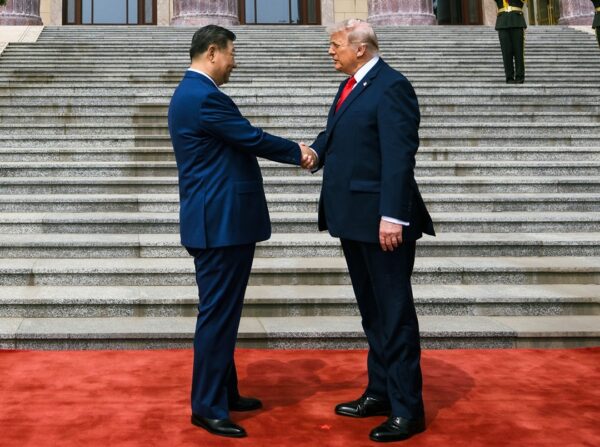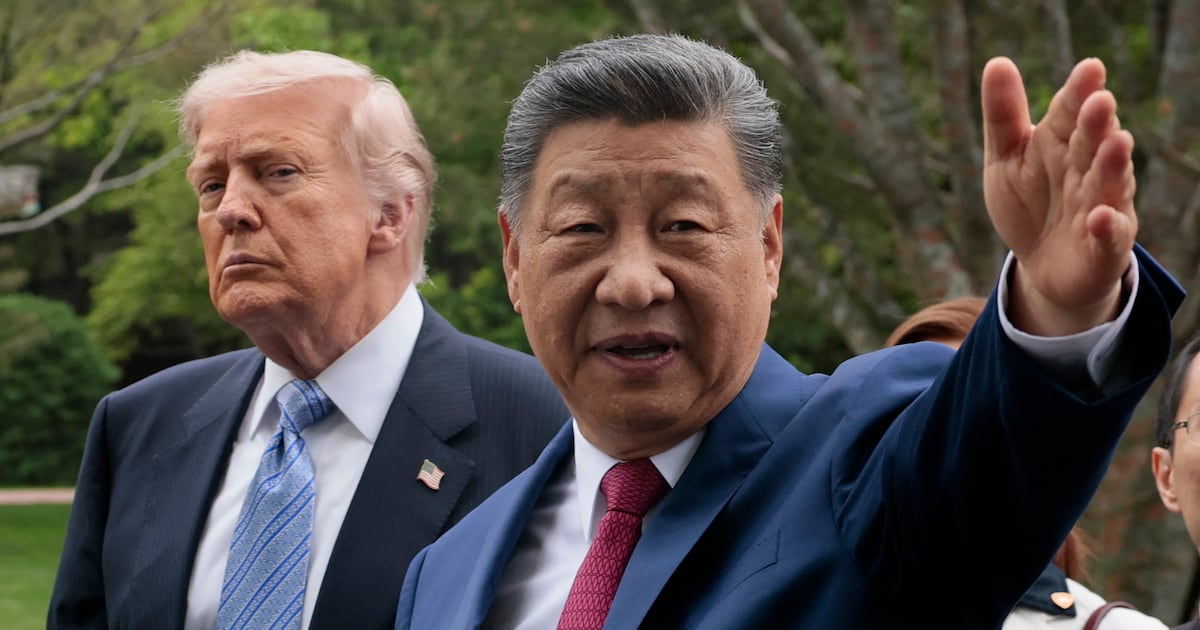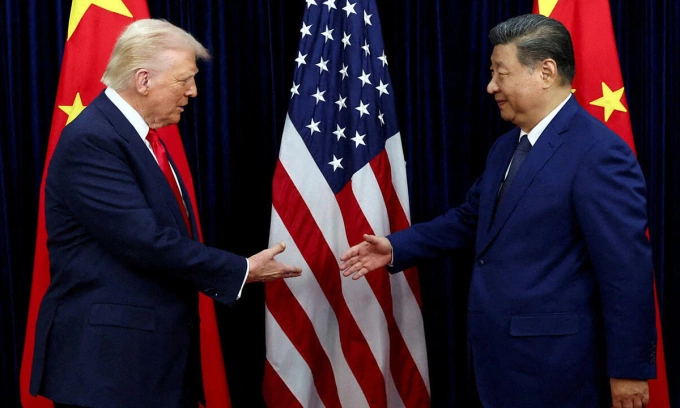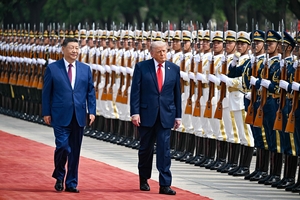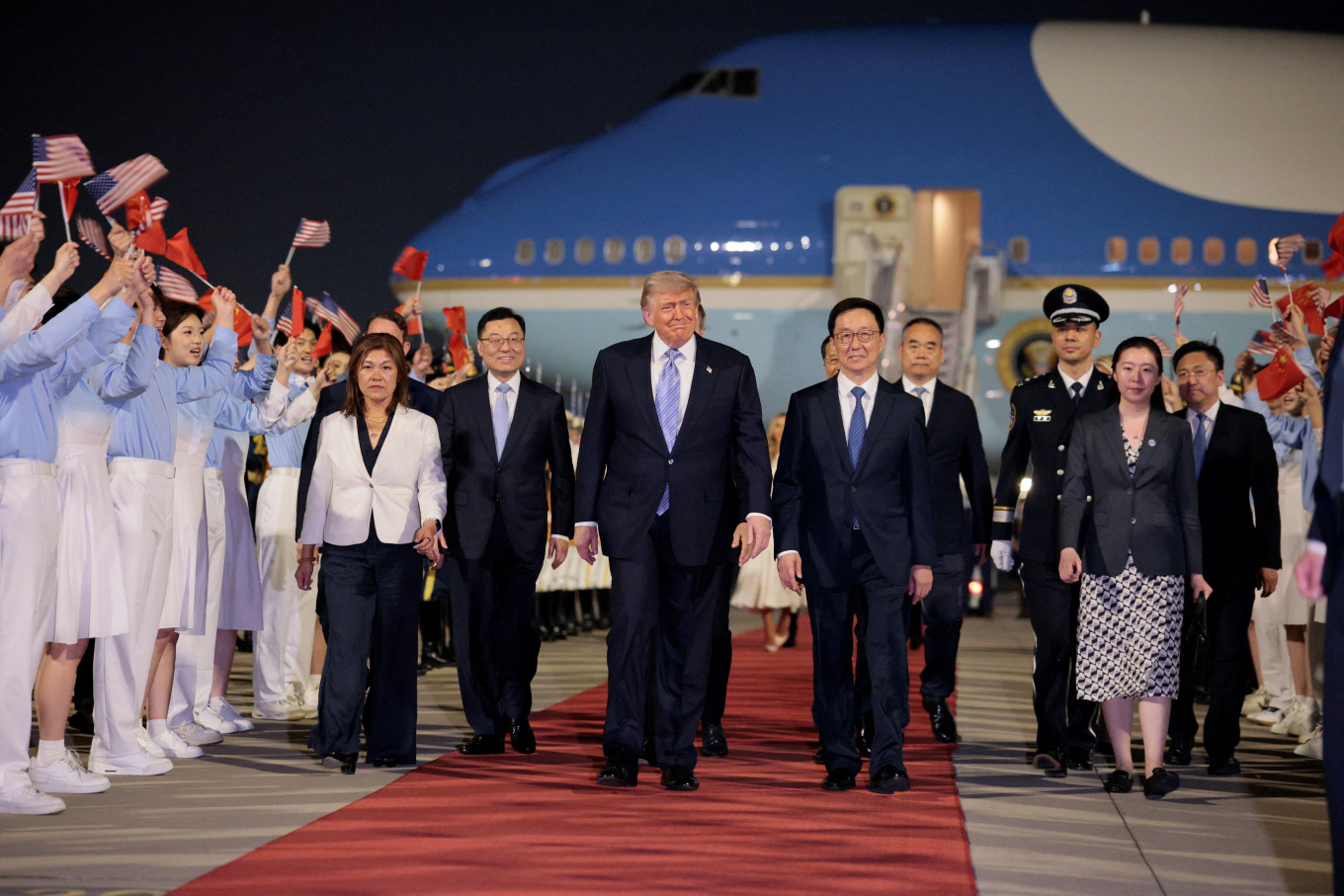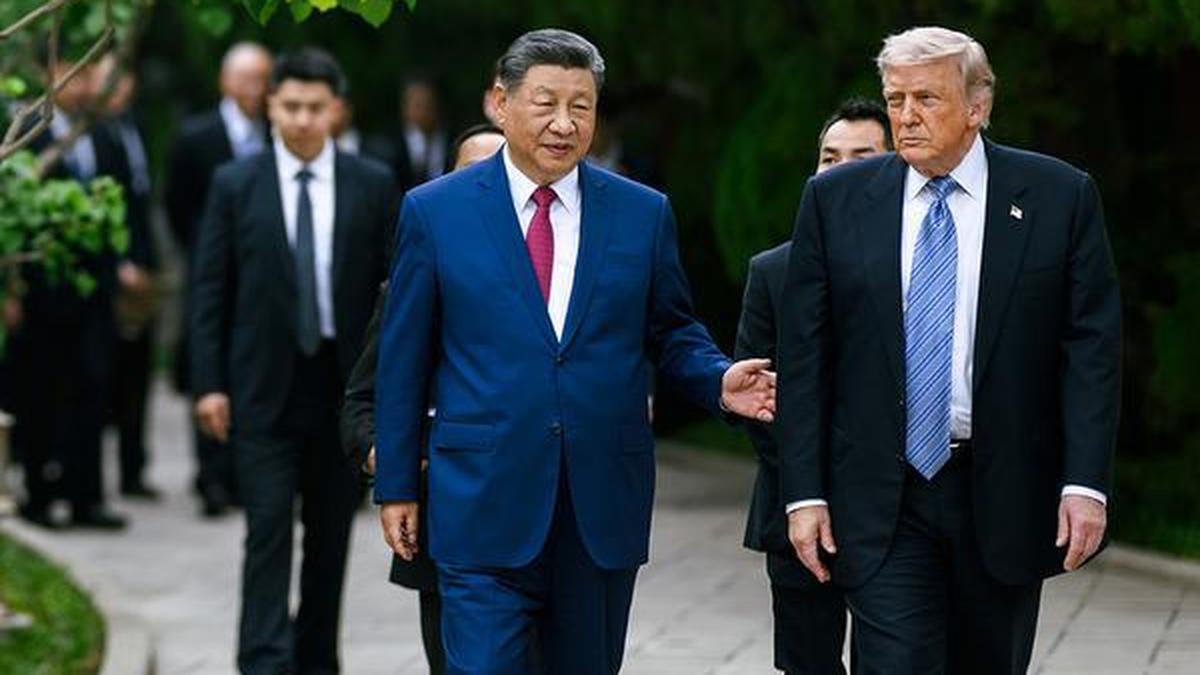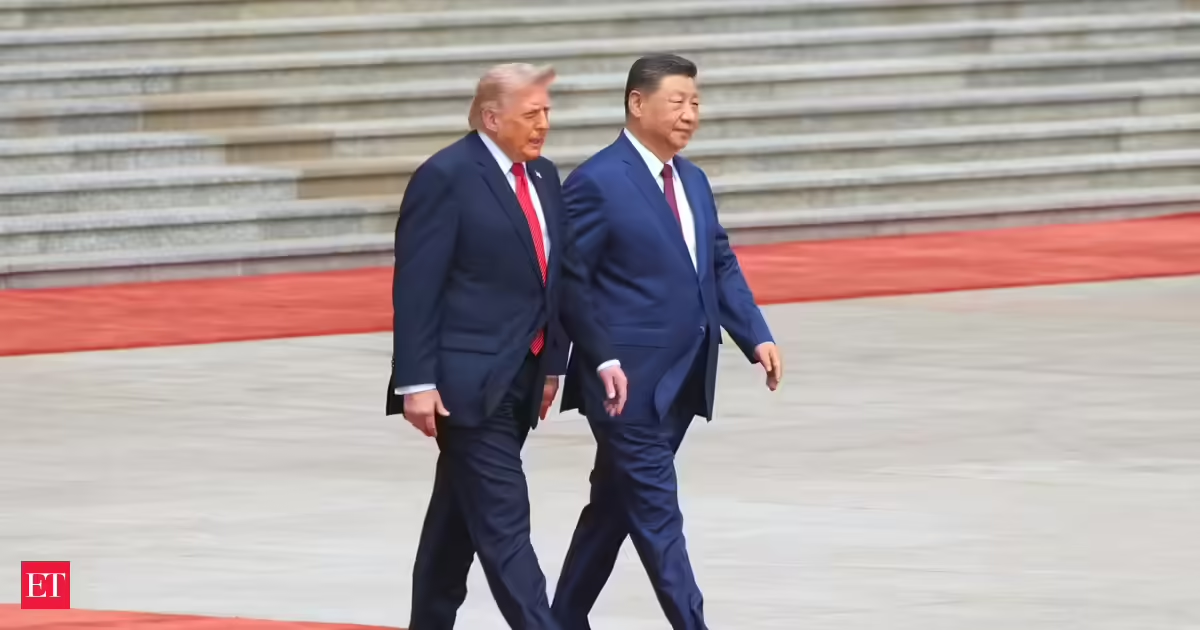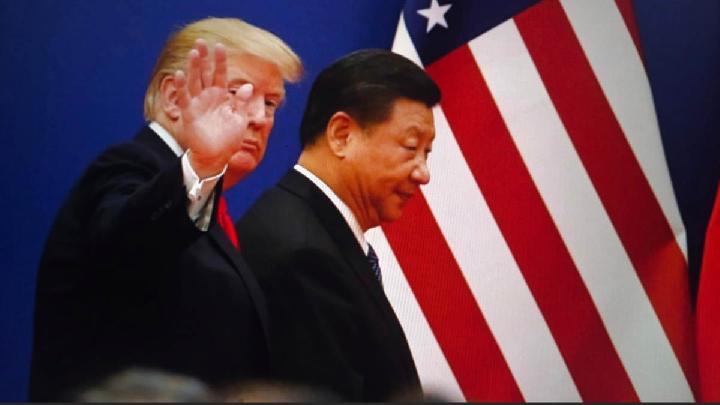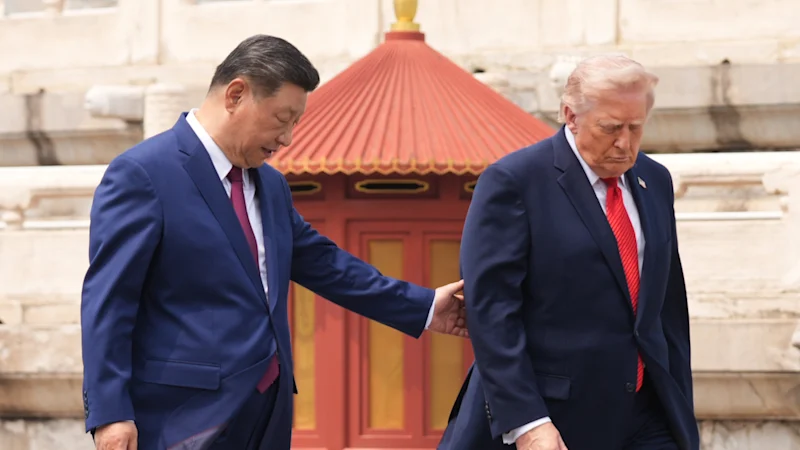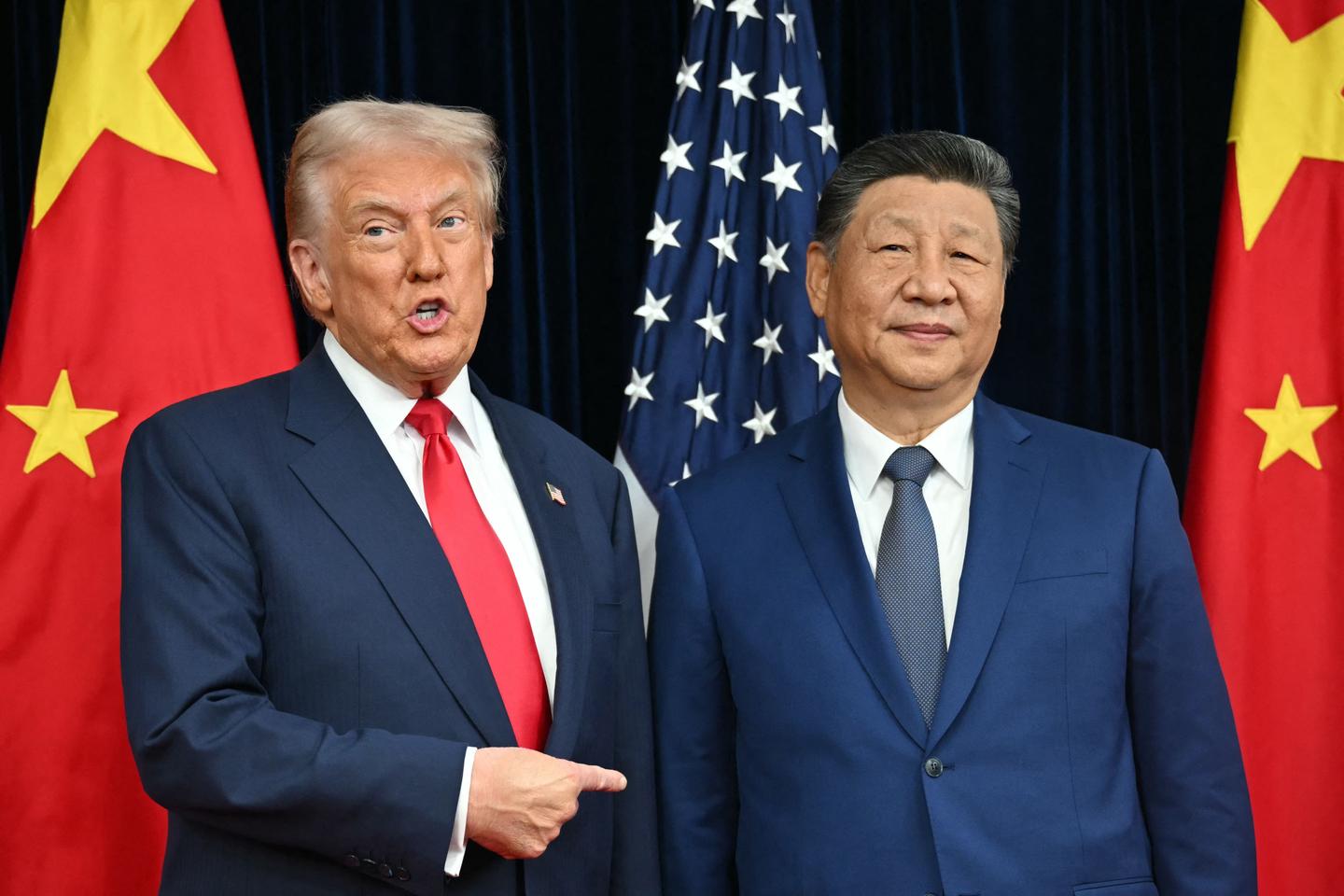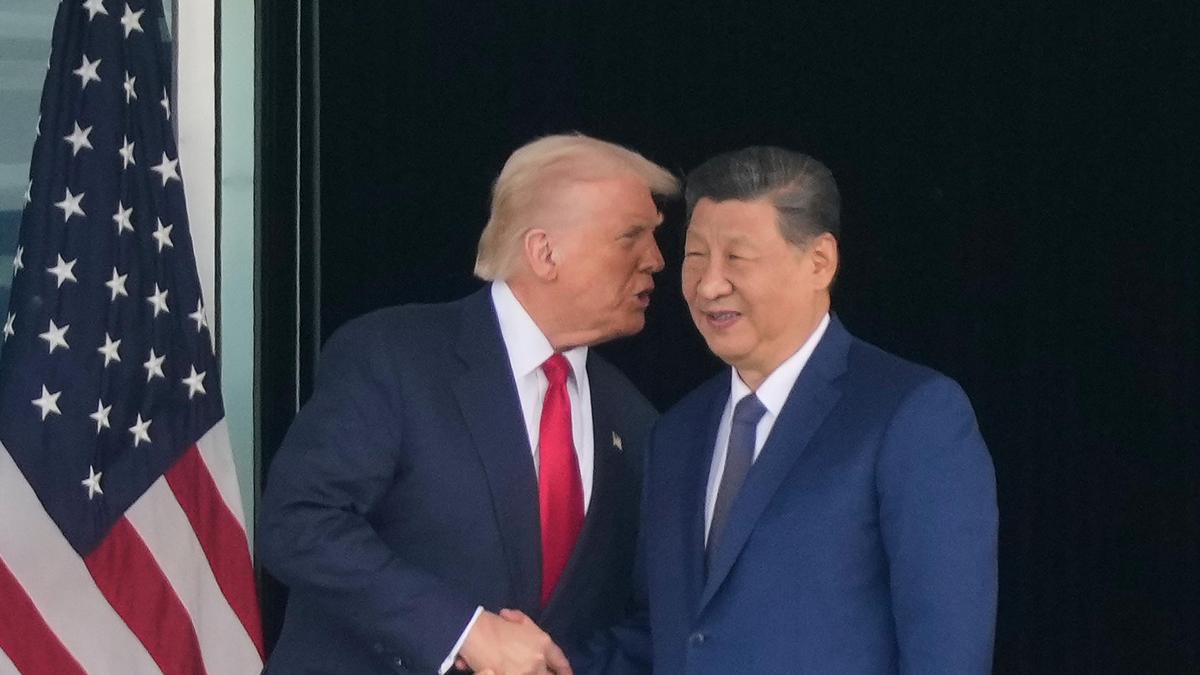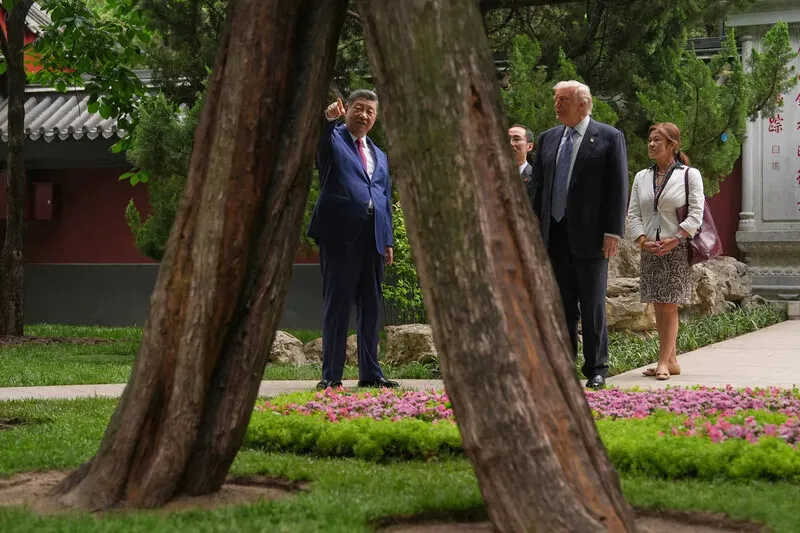
President Xi Jinping of China and President Donald Trump of the United States pay a visit to the garden in the Zhongnanhai leadership compound in Beijing, China, on May 15, 2026. (Reuters/Yonhap)
By Kim Yeon-chul, former minister of unification and current professor at Inje UniversityTwo powers met in a world of disappearing norms.China underlined its principles on the Taiwan issue, while the US asked for China’s cooperation in its war with Iran and eased competition in the area of trade. While their agreements were lacking in substance and the gap between them is pronounced, their dialogue will continue.Since China and the US are forced to modulate competition with cooperation, the conversations that went undisclosed are every bit as important as those that were reported.How will the Korean Peninsula be impacted by the two powers’ relationship?While Korea was mentioned, its relative omission from the published statements suggests it wasn’t a top priority. The two leaders had too much ground to cover in their discussion.The critical issues were a compromise on trade and supply chains, the Taiwan question, and — perhaps most urgently — an off-ramp in the US and Israel’s war against Iran.Notwithstanding the importance of a meeting between US President Donald Trump and North Korean leader Kim Jong-un, the time wasn’t right, and preparations weren’t in place.Now that the Trump-Xi summit is over, China is likely to make a move now that it has confirmed that the North Korean issue is a handy tool in negotiations with the US. Trump is probably itching to know why North Korea has been so hesitant to meet despite his multiple overtures.China knows why.China has experience brokering relations between Pyongyang and Washington. It hosted the now defunct six-party talks and is also indispensable for any attempt to convert the wobbly armistice agreement on the Korean Peninsula into a permanent peace treaty.China has also repaired its relationship with North Korea enough to allow recent strategic communication. While North Korea has focused its efforts on cozying up to Russia, its ties with Beijing are also important.North Korea is seeking a reliable broker before entering negotiations with the US. South Korea only played a limited role in 2018.The kind of broker North Korea wants isn’t one that can only convey Trump’s views, but one capable of narrowing the divide between North Korea and the US.There is evidently an emotional rapport between Trump and Kim. Given Trump’s reliance on intuition in his bargaining style, good vibes can set the stage for a meeting. But intuition isn’t enough to resolve thorny issues such as Russia’s war against Ukraine, the US’ war against Iran, and the North Korean nuclear issue.How can such complex disputes be untangled when technical negotiators are kept out in the cold? What’s needed is a broker who can compensate for the shortcomings of the US’ internal policymaking process.There are still numerous hurdles to clear before North Korea and the US can reach the negotiating table.It’s not clear who benefits most from playing for time. In an authoritarian state, the leadership is largely shielded from the economic pain of a blockade. That applies to North Korea, just as it does to Iran.How does the variable of time compare in a democratic state with competitive elections and an authoritarian state without them? The point is that time isn’t necessarily on the Americans’ side.Considering that North Korea rejects the very concept of denuclearization, initiating negotiations with North Korea will ultimately require coming to terms with reality. At the outset, the talks will have to focus on reducing the nuclear threat, rather than denuclearization. Discussions of both conventional weapons and nuclear weapons can continue inside the framework of a peace regime.What’s important right now is resetting the negotiations. Trump may want a grand bargain, but Iran and North Korea prefer an incremental approach, or in other words, a series of narrow deals. In the absence of trust, small states with few bargaining chips are leery of all-in-one agreements. Trust is built by keeping promises.Both Iran and North Korea have a tendency to make deals commensurate with the current level of trust and to make moves contingent on already implemented deals. To bridge the gap between the comprehensive settlement and the bare-bones agreement, security guarantees and economic benefits could be offered to compensate for the lack of trust.What’s needed is the ability to keep the negotiations on track and prevent the situation from deteriorating. In the current situation, only China is capable of that. But China can’t do that by itself. That’s why Beijing-Seoul relations are so important.Better relations between North Korea and the US and stability on the Korean Peninsula are areas where South Korea’s and China’s strategic interests coincide. Given the strain in inter-Korean relations, it’s time for Seoul to upgrade strategic communication with Beijing to manage the situation and seek a chance to resume negotiations.Following North Korea’s adoption of the two-state doctrine, multilateral dialogue will be different from before. We can no longer expect much from the special nature of inter-Korean relations.Kim Jong-un has promised to handle relations with South Korea through hard-headed calculations based on North Korea’s national interest. Ultimately, rebooting inter-Korean relations will require balancing the two sides’ interests.Three-way dialogue between Seoul, Pyongyang and Washington foundered in the last round of negotiations, which culminated with Trump and Kim’s summit in Hanoi in February 2019.Since inter-Korean relations have soured, Seoul can’t play the mediator.The world has changed, setting the stage for four-party talks including Beijing. That’s a greater level of complexity than we’ve seen before. It will require innovative thinking by South Korea’s national security and foreign policy teams.Please direct questions or comments to [english@hani.co.kr]