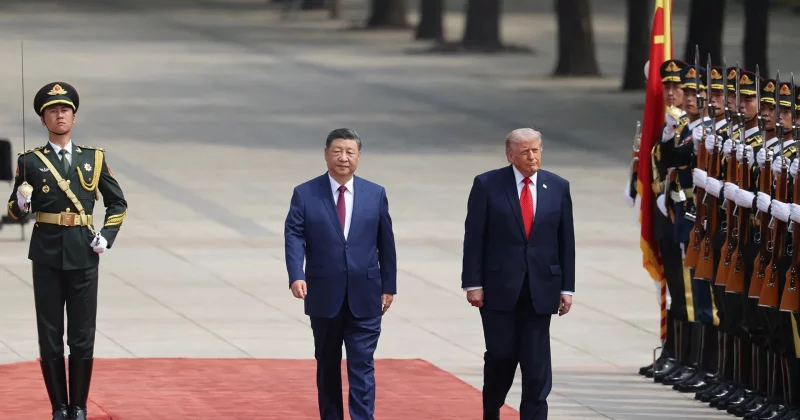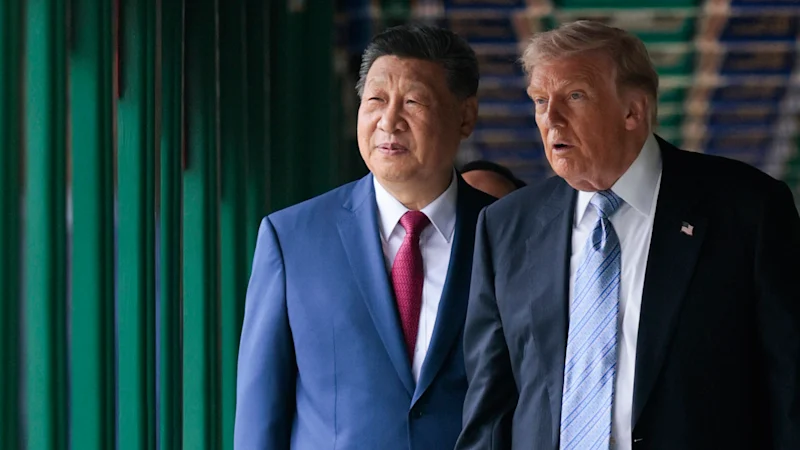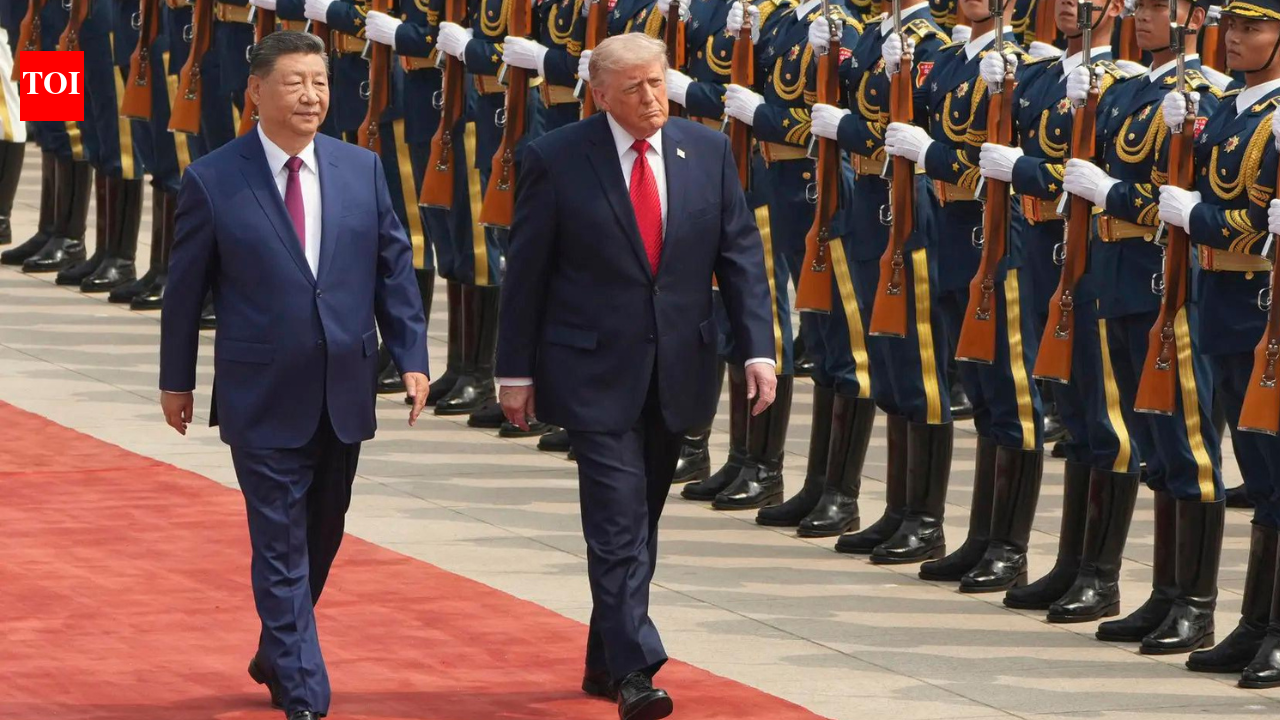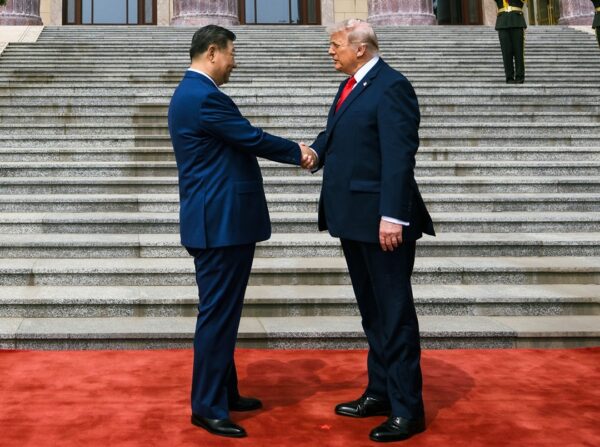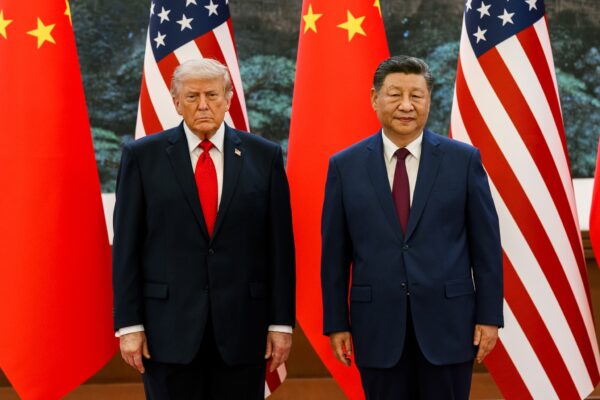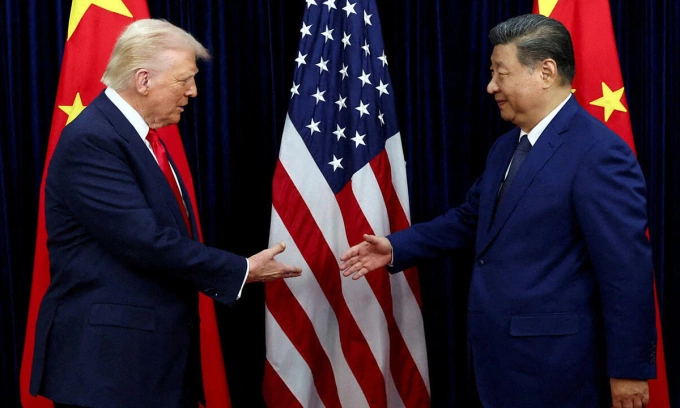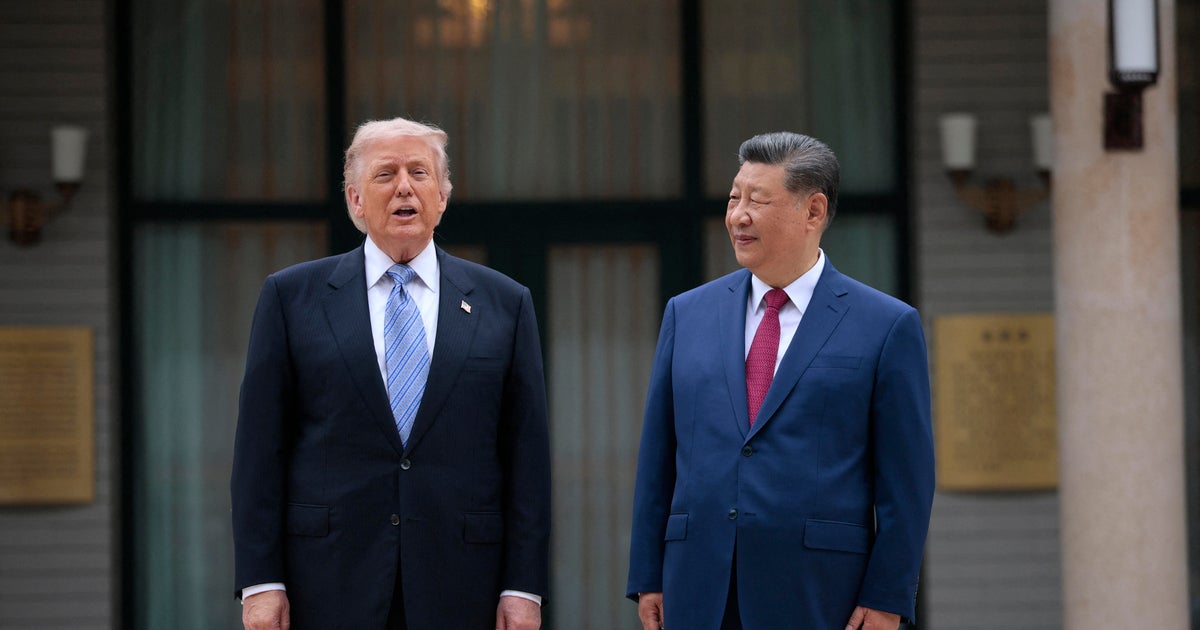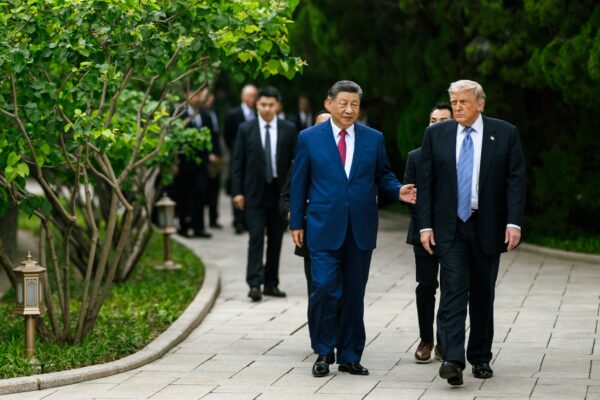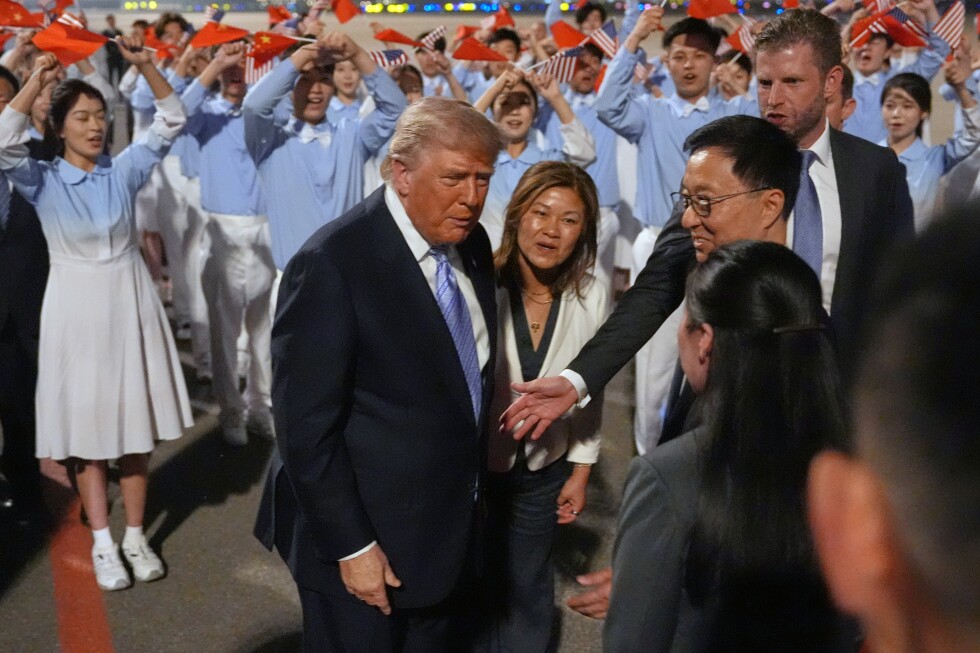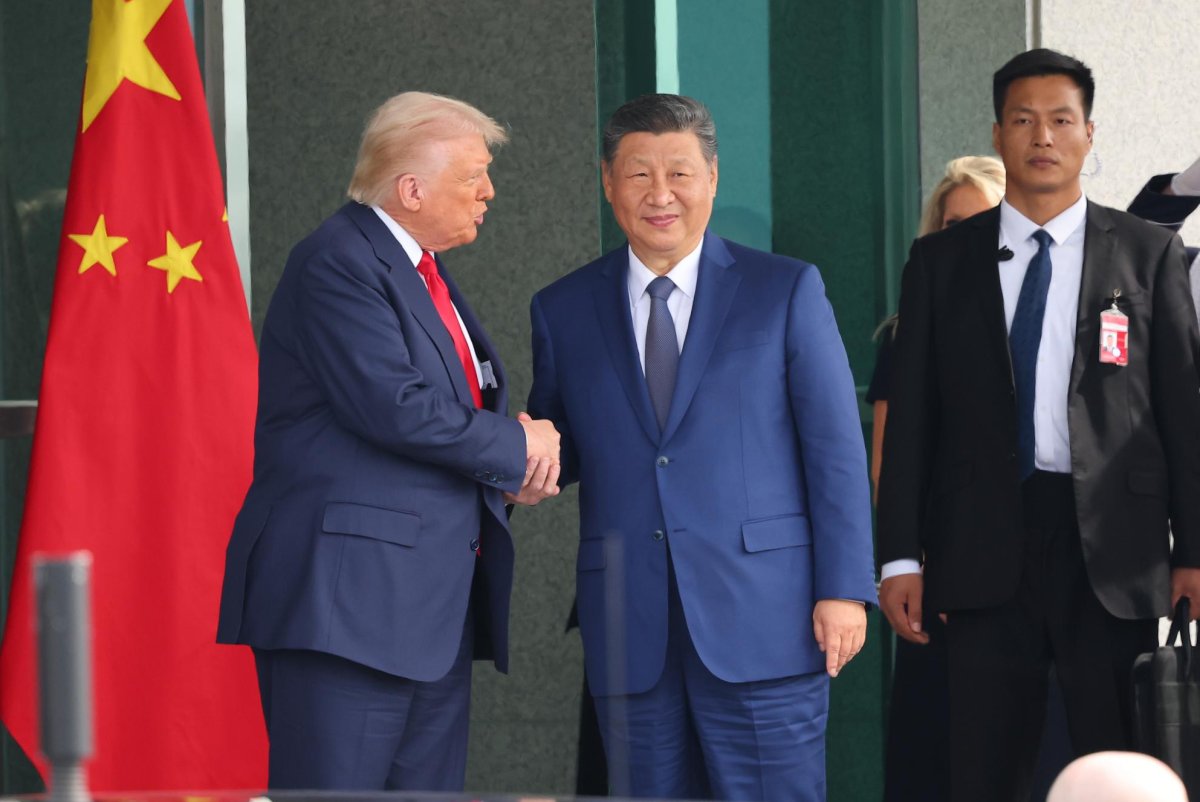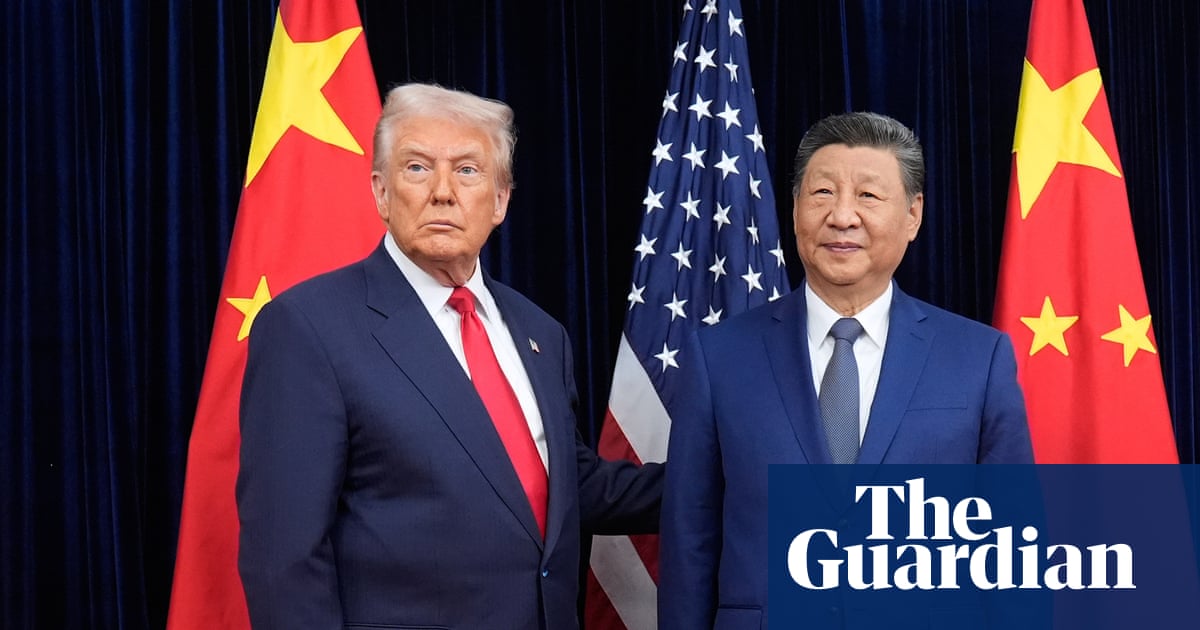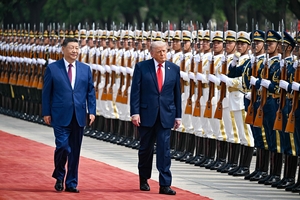
Summit eases worst-case concerns over supply chains and energy imports, but offered few substantive agreements US President Donald Trump (right) and China's President Xi Jinping inspect a guard of honour during a welcome ceremony at the Great Hall of the People in Beijing on Thursday. (AFP-Yonhap) US President Donald Trump and Chinese President Xi Jinping wrapped up a high-stakes summit in Beijing Friday, committing to stabilize relations between the two superpowers, though the meeting yielded little headway on broader trade and most contentious issues.For South Korea's export-reliant economy, primarily dependent on both the US and China, the summit offered some relief by easing fears of a worst-case geopolitical escalations that could disrupt trade, energy imports and supply chain.However, the lack of a formal joint statement or concrete progress on key agendas such as tariffs, semiconductors and rare earths means Seoul must continue to carefully manage its primary security ally Washington and its largest trading partner Beijing.After the meetings, Trump described the relationship as "very strong," while Xi said the two countries had agreed to a new framework based on "constructive strategic stability," though what that entails remain unclear.China's Ministry of Commerce also announced that both sides have agreed to reduce tariffs on select goods, including agricultural products, as part of broader efforts to boost bilateral trade, with further details still to be disclosed.“Even if there were no major tangible gains and many details remain ambiguous, the fact that the US and China are trying to stabilize their conflict structure rather than let tensions spiral further is itself a positive signal for the Korean market,” said Kim Tae-hwang, a professor of international trade at Myongji University.“If the US and China move into a mode of managing volatility and risks more stably, South Korea could face less pressure from US containment measures toward China.”But Kim cautioned that Korea needed to be cautious about major practical economic effects."For now, we have to take a careful wait-and-see approach," he said.One of the central topics discussed during the two-day summit was the ongoing Iran conflict and traffic through the the Strait of Hormuz, a key trade route, particularly for oil and gas.A White House readout said both leaders “agreed that the Strait of Hormuz must remain open to support the free flow of energy,” and that China is opposed to the militarization of the strait and any effort to charge a toll for its use.The Strait of Hormuz, which has been disrupted following US-Israeli strikes on Iran in late February, is one of the world’s most critical energy chokepoints that handles about 70 percent of Korea’s crude oil imports and 20 percent of its liquefied natural gas imports.The effective blockade of the waterway has sharply increased oil prices, weakened the already under-pressur Korean won and and triggered broader supply chain volatility across industries ranging from refining and petrochemicals to aviation and agriculture. Korea's inflation is also expected to rise further if elevated oil prices persist, according to the state-run think tank Korea Development Institute.The summit’s emphasis on keeping the strait open and Trump’s later mention that Xi offered to help end war in Iran, eased some of the worst-case concerns that had been hanging over Korean industry in recent weeks."Talks are better than no talks. I don’t expect substantial outcomes, but confirming willingness to prevent escalation around the Strait of Hormuz is meaningful,” Kim said.Trade, chips, rare earths unresolvedDespite a warm handshake in Beijing and Trump describing the visit as “incredible” while touting they made some “fantastic trade deals, great for both countries,” analysts said the summit fell far short of a major trade agreement or meaningful progress on major points of contention.“There were symbolic and political messages, but not many substantive agreements for now,” said Heo Yoon, professor of international trade at the Graduate School of International Studies at Sogang Univeristy.“In a normal summit, you would usually see a joint statement, working groups and follow-up mechanisms. We haven’t really seen that here yet,” he said. “That suggests the meeting was more declaratory and diplomatic in nature.”Analysts noted that there were no detailed announcements on sensitive issues such as semiconductor export controls, tariffs or China’s restrictions on rare earth exports — topics that have direct implications for South Korea.“In terms of having a deliverable, tech was also a disappointment,” Ali Szalwinski, vice president at The Asia Group. “Export controls were not a major topic of discussion. There were no details about purchases of H200 chips. Nothing significant indicated that progress was made on sensitive tech issues. Tariffs were also a bit of a disappointment; there were no concrete details regarding an extension of the tariff truce.”US Trade Representative Jamieson Greer also told Bloomberg TV that chip export controls were not discussed during Trump-Xi talks.Leading up to the summit, markets had speculated that Washington could partially soften restrictions on advanced AI chips and semiconductor equipment exports to China, fueling hopes for Korean chipmakers such as Samsung Electronics and SK hynix would gain greater flexibility at their semiconductor production facilities in China.Expectations were further buoyed by Nvidia CEO Jensen Huang’s last-minute addition to the US business delegation, alongside Reuters reports that Washington had greenlit Nvidia’s advanced H200 chip sales to around ten Chinese companies. Nvidia CEO Jensen Huang speaks to the media as he attends a meeting between Chinese Premier Li Qiang and US business representatives, at the Great Hall of the People in Beijing on Thursday. (AP-Yonhap) Investors had anticipated that a broader reopening of Nvidia’s China sales would drive up demand for high-bandwidth memory and server DRAM chips supplied by Samsung Electronics and SK Hynix, which provide key memory components used in Nvidia’s AI accelerators.But the summit ultimately delivered little concrete progress on sensitive technology issues.Another closely watched issue for Korea was critical minerals and rare earths, which remain essential to industries ranging from batteries and semiconductors to electronics and electric vehicles.With China dominating global rare earth supply chain — from raw materials to processing and manufacturing — Korea has been scrambling to secure supply sources, as the country relies on China for about 80 percent of its rare earth imports. Concerns have intensified since Beijing introduced a licensing reime last April, in an apparent retaliation against US tariffs.Despite market hopes that China could consider some easing of export controls, in exchange for US’ tariff reductions, there were no signs of meaningful changes to rare earth shipments and related restrictions.Heo said Beijing continues to view rare earths as a strategic bargaining tool in its rivalry with the US and the West.“China is unlikely to fully give up rare earth controls because they are viewed as long-term strategic leverage against US and the West,” he said. “There may be temporary adjustments or procedural easing, but the broader framework will likely remain.”Taiwan also remained one of the most sensitive and closely watched issues at the summit, with Xi warning that mishandling the Taiwan issue could lead to conflict between Beijing and Washington.Observers said Seoul was also carefully watching tensions in the Taiwan Strait, given that roughly 30 to 40 percent of the country’s trade cargo passes through the route. Any instability there could have broad implications for Korea’s semiconductor supply chains, exports, shipping and financial markets.
Trump-Xi talks offer relief, few breakthroughs for Korea
US President Donald Trump and Chinese President Xi Jinping wrapped up a high-stakes summit in Beijing Friday, committing to stabilize relations between the two
1,200 words~5 min read