Alvaro Ardisana/Shutterstock
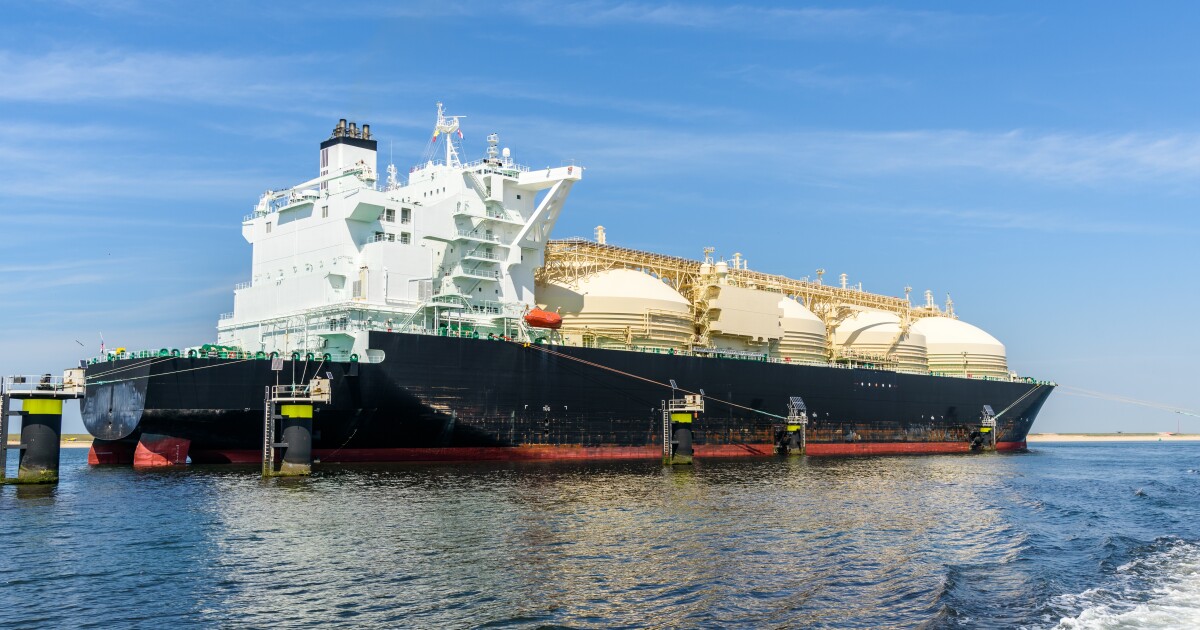
The global energy debate has become increasingly polarized. In some corners, hydrocarbons are treated as assets in decline. In others, short-term geopolitical volatility drives thinking about energy security and supply disruption. Both perspectives miss the larger structural reality reshaping global energy markets, in our judgment: The world is entering a prolonged period of undersupply in reliable, scalable natural gas infrastructure.That reality is why Mubadala Energy is investing across the gas value chain — and why our investment in Caturus and the final investment decision (FID) on the Commonwealth LNG project in Louisiana represent far more than a single transaction. They reflect a long-term conviction that LNG will remain one of the defining strategic commodities of the coming decades.The energy transition is not reducing the importance of gas. In many respects, we consider it is increasing it.Infrastructure Becomes StrategyAs economies electrify, as artificial intelligence and data infrastructure expand, and as industrial demand continues to rise across Asia and emerging markets, the need for stable, dispatchable energy is accelerating. Renewable energy capacity will continue to grow rapidly and should. But renewables alone cannot yet provide the reliability, flexibility and industrial feedstock requirements demanded by modern economies, in our view. Natural gas — and increasingly LNG — will thus remain indispensable to the global energy system, as we see it.Forecasts suggest the US could provide as much as 80% of Europe’s LNG imports by 2030. Meanwhile, rapidly growing economies across South and Southeast Asia rely on LNG to power industrial growth, expand access to reliable energy and meet long-term demand. This is not a short-term market cycle. We regard it as a structural shift.Years of underinvestment across upstream gas development, liquefaction infrastructure and export capacity have, in our opinion, created a widening gap between future energy demand and available supply. At the same time, energy security has become a defining policy priority for governments worldwide following repeated disruptions to global energy markets. The result is that globally competitive LNG infrastructure is becoming increasingly strategic.The New LNG ArchitectureThis is precisely why Mubadala Energy has adopted a deliberate strategy of investing not only in individual assets, but across the broader gas value chain. We expect that future value creation will favor integrated platforms capable of linking production, infrastructure and global market access. In a more volatile world, integration creates resilience.The Commonwealth LNG project represents that thesis in action. The $13 billion project, which has now reached FID, will establish a 9.5 million ton per year LNG export facility in Cameron, Louisiana, with operations expected by 2030 and first cargo by 2031. Supported by long-term offtake agreements with a diversified group of global counterparties including EQT, Glencore, Mercuria, Petronas and Aramco Trading, Commonwealth LNG is positioned to become one of the most competitive and efficient LNG export facilities in the US.What makes the project particularly compelling is its role within the broader Caturus platform. Caturus currently produces more than 1 billion cubic feet equivalent per day on a net basis and has rapidly emerged as one of the leading private natural gas producers in the US. And this is where integration becomes so important with its unique “wellhead-to-water” model.Integration Drives ResilienceHistorically, LNG investment has often been fragmented, with companies investing independently in upstream gas, infrastructure or trading. We anticipate that the next phase of the LNG industry will reward integrated platforms that can optimize economics, manage volatility, secure long-term customers and deliver reliable supply at scale.This is not simply about owning assets. It is about building durable strategic positions in markets where barriers to entry are rising.Importantly, the US offers a uniquely attractive combination of scale, liquidity, regulatory transparency, resource depth and established export infrastructure. The Gulf Coast has become one of the world’s most important LNG hubs and will remain central to global energy trade for decades to come — an assessment that is deeply rooted for Mubadala Energy and built over several years.We also contend that energy transition strategies must be grounded in economic realism, and energy systems cannot transition away from hydrocarbons before scalable alternatives are fully capable of replacing them. The consequences of getting that balance wrong risk price volatility, supply insecurity and industrial competitiveness challenges across multiple economies. From our perspective, natural gas is not competing against the energy transition, it is enabling it.Beyond Short-Term CyclesFor that reason, we continue to see attractive long-term opportunities not only in LNG export infrastructure, but across upstream gas production and integrated energy systems more broadly. The next generation of energy leaders will be companies capable of operating across interconnected value chains rather than isolated assets.Mubadala Energy’s approach reflects that philosophy. We are not deploying capital opportunistically or pursuing short-term returns disconnected from industrial logic. We are building a globally diversified gas-weighted portfolio anchored in strategic partnerships, operational alignment and long-duration infrastructure.Our partnership with Kimmeridge through Caturus reflects exactly that approach. Successful energy investment today requires more than capital alone. It requires patient investors willing to support complex projects through commodity cycles, regulatory evolution and geopolitical volatility.This is why we remain confident in the long-term outlook for LNG despite near-term market fluctuations or supply side challenges.The world is going to require more reliable energy, not less. Demand growth across Asia, industrial expansion, electrification and the rise of digital infrastructure are all reinforcing the need for stable and scalable energy supply. At the same time, governments are placing greater emphasis on diversification of supply and resilience of infrastructure.Against that backdrop, globally competitive LNG projects with integrated upstream access and strong commercial foundations will become increasingly valuable strategic assets, in our opinion.The Commonwealth LNG project is not simply an investment in export capacity. It is an investment in the future architecture of global energy markets.Naser Al Hajri is the chief corporate support officer at Mubadala Energy — with over 27 years of leadership experience gained in diverse technical, operational and strategic roles across the energy sector. The views expressed in this article are those of the author.