Why are many nations in the Global South still struggling to develop? Shabodien Roomanay explores the systemic barriers imposed by neocolonial practices and financial institutions that perpetuate underdevelopment.
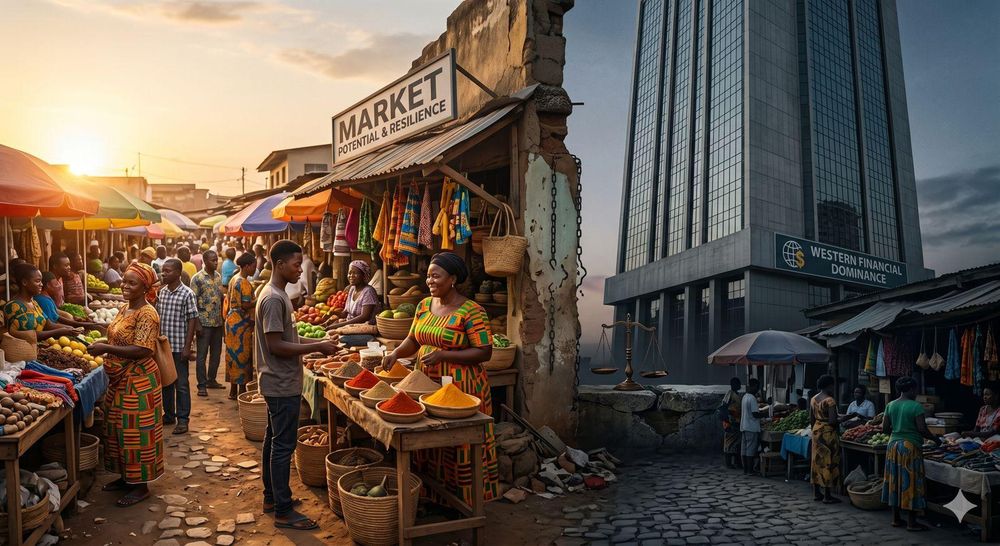
The growing global debate about the resurgence of the imperialist project, most starkly exposed by the unprovoked war on Iran and the ongoing devastation of Palestine, must be understood within the broader context of financial, economic and resource domination. In this light, the great tragedy of the modern world is not simply that many countries, particularly poorer nations, failed to achieve development; rather, it is that they were systematically prevented from doing so.
For decades, the world has been told a comforting story: that poverty in Africa, Latin America, parts of Asia and the Caribbean is largely the result of corruption, incompetence, tribalism, laziness or a lack of innovation. The prescription offered by powerful Western financial institutions and controlled media was therefore simple; borrow money, liberalise markets, privatise state assets, cut public spending and prosperity would surely follow.
But for millions across the Global South, the outcome was not development. It was ever deeper dependency. This is what scholars called “developing underdevelopment”; a process in which the global economic system does not merely fail poor countries but actively structures their weakness. Behind the polished language of “economic reform,” “stabilisation,” and “fiscal discipline” lay a harsh reality: entire societies were forced into austerity while wealth continued flowing outward toward global financial centres. Much of this was exposed in the book “Confessions of an Economic Hitman” by John Perkins.