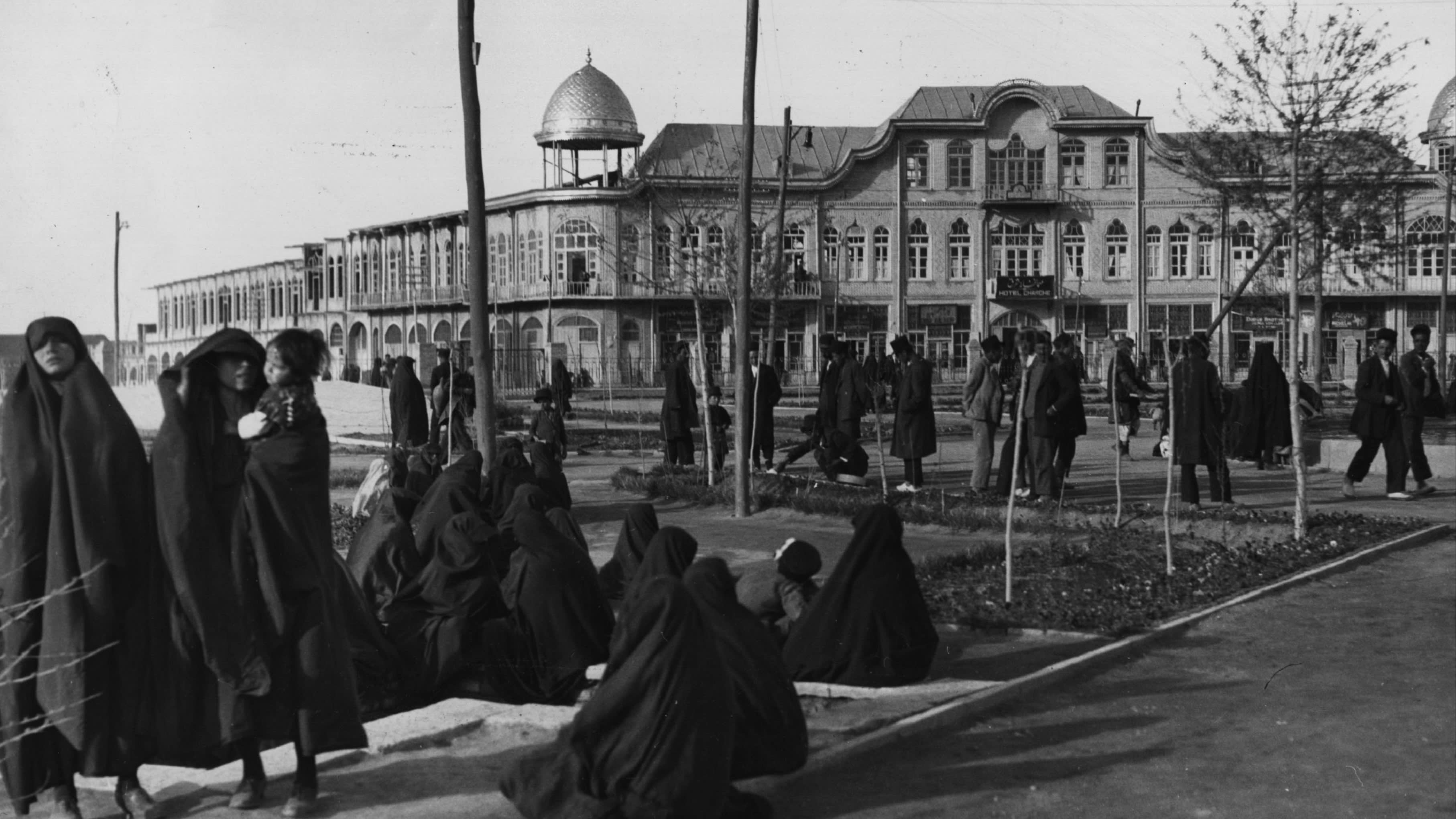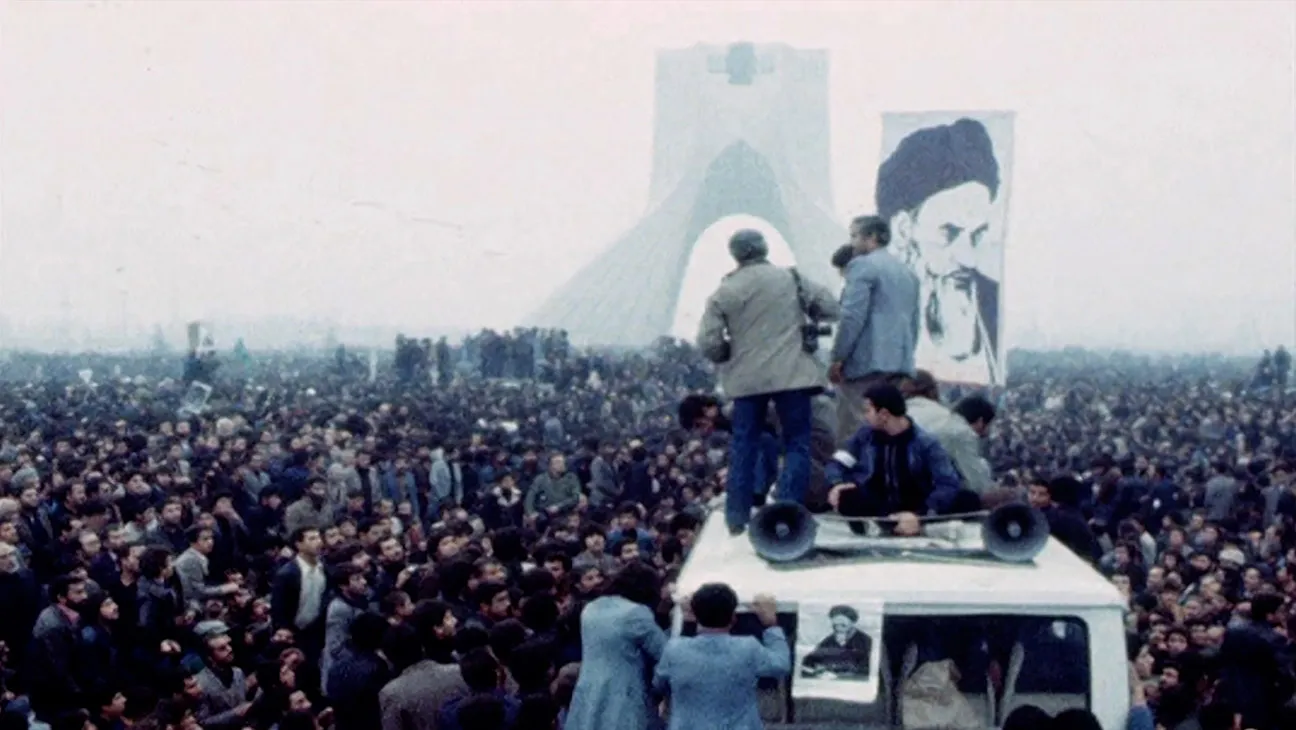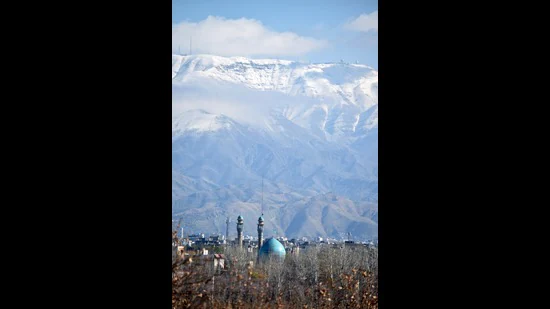
In 1953, Iran’s history was taking a tumultuous turn with the coup that overthrew Prime Minister Mohammad Mosaddegh. This event, orchestrated by the British and the CIA, reinstated the Shah and marked the beginning of a period of political oppression and instability that would shape the country for decades. Author Shahrnush Parsipur, a child of seven at the time, witnessed the chaos and violence of that moment, and it resulted in a hundred-page novella about women navigating a society shaped by political upheaval, foreign interference, and ever-shifting cultural norms.The women in the novel eventually gather in Karadj, a city in Iran. (Shutterstock)Parsipur’s Women Without Men or Zanān bidūn-i mardān was banned in Iran the same year it was published. Parsipur, who wrote it, had already served four years in prison by then, in part because of this book. She eventually left Iran and hasn’t gone back. It is easy to understand, upon finishing the book, why she has spent much of her life in exile.The novel follows five women from different corners of Iranian society, each imprisoned by her circumstances in a different way. Their stories begin separately, orbit each other for a while, and eventually converge in a garden outside the city, where they share a brief period of relative peace before the world closes in again. These women are entirely human in their contradictions and sometimes complicit in their own oppression and that of each other. Here, women appear without the protection of men and outside the structures that men have built around them.The focus on women’s sexuality is one of the reasons why it was banned. Topics such as virginity, sexual desire, and female autonomy were taboo, particularly after the Islamic Revolution of 1979, which imposed strict rules on women’s behaviour and appearance. The fear and anxiety surrounding virginity are central to the story. Munis’s struggle to understand her body and her sexuality, Fa’iza’s fear of societal judgment, and Mahdokht’s symbolic retreat into the earth all point to how these social expectations are deeply internalized.Parsipur’s own life has all the struggles that she writes about. She was imprisoned in 1977 for her writing and spent four years in Iranian jails before eventually moving to the United States. Like her characters, she faced a system that punished women for asserting themselves, whether through art, the intellect, or a simple desire for autonomy.The women’s stories converge in a country house outside the city of Karadj. This house, with its garden, becomes a kind of sanctuary and a place removed from the immediate control of men and society. It is there they come together, support each other and create a small space of freedom.The garden can be seen as a parallel to the Garden of Eden, but unlike the biblical story, it is a place of potential renewal and peace, not sin. Even here, however, their struggles are real. Social norms, past traumas, and lingering male authority still exert pressure, and they must navigate these carefully. All of which is telling. Women do not escape their struggles even in the Amazonian garden of recluse. The novel also includes a single male figure, the gardener, who seems almost like a mystical presence. He seems to exist on the edges of the women’s world.Parsipur also draws on real-life experiences in creating her characters. Mahdokht is inspired by a cousin who suffered from anorexia, Munis is based partly on Parsipur herself and on an aunt who endured an early arranged marriage, and Zarrinkolah is reminiscent of the women Parsipur met during her imprisonment. Even Farrokhlaqa has roots in Parsipur’s family history.When the book was published in 1989 and banned in Iran, it was largely because of its treatment of themes such as virginity in ways that clearly challenged dominant moral codes. Through its range of female characters, many drawn from women Parsipur knew, the novel engages with honour killings, polygamy, transactional marriages, the chador, premarital sex, and, above all, internalized misogyny and the burden placed on virginity.“Don’t worry, it’s possible to live without virginity. I have lived without it for 33 years.” “What will happen to my reputation?” Fa’iza answered dejectedly. “How can I justify it to my husband on the wedding night?” “If it comes to that,” Munis said, “I’ll do something so your husband won’t find out.”So, the combination of realism with magical elements in Parsipur’s storytelling becomes a tool to address these disparate realities. This technique works very well in Iran with its long tradition of folklore and myth. Mahdokht’s transformation into a tree, Munis’ fate and temporary resurrection, and other surreal events express the women’s desire for freedom in a world that systematically denies them control over their own lives. The magical element is there to reflect the intensity of what these women endure and the depth of their inner lives.Mahdokht, a former teacher spending the summer at her family’s country house, mistakenly witnesses an intimate moment between the gardener and a young maid. The shock alters how she understands her own body. She begins to imagine her virginity as something organic, almost like a tree. Fa’iza continues to visit her friend Munis, even while dismissing her as foolish, largely in the hope of gaining favour with Munis’s brother, Amir Khan.At one point, Munis climbs onto the roof, falls, and wanders the streets for a month. She spends days under a tree reading a book called The Secrets of Sexual Success, or Know Your Body, three times through. When she comes back, she says: “I am no longer the old Munis. Now I know many things.” Now, she must confront her brother’s anger. She remains the most compelling figure in the novel, the one who undergoes the most layered transformation. Her growing awareness leads to detachment, where repeated personal tragedies begin to feel almost absurd. Munis bears the cost of knowledge and says:“Of course, they say ignorance is bliss, but I had decided to walk the path of enlightenment even if it meant suffering hardships… You either have the substance to overcome hardships or not. If you don’t, you return to the flock like a poor little lamb… Even so, because you have taken the risk of stepping out, others think of you as mangy. You’re avoided, ostracized.”Farrokhlaqa, trapped for more than 30 years in a loveless and isolating marriage, comes to see her retired husband as a constant intrusion on her peace of mind. At 51, she is forced to endure his remarks about menopause and his desire to take another wife in order to have children.“With him in the house, she felt restricted and claustrophobic… In the 32 years of their marriage, she had learned to be inactive when her husband was home. Instinctively she felt vitality and joy in his absence.”Zarrinkolah has been a prostitute since puberty, but when the number of men she receives rises to around 25 a day, she begins to see them as headless bodies.These women, introduced separately, eventually gather in Karadj around Mahdokht. The novel leans heavily on magical realism here. At times, it feels as though the narrative turns to the magical because it cannot fully resolve these women’s struggles within realism alone. Eventually, they find a refuge in a countryside house purchased by a wealthy woman who has also suffered within marriage but resolves her situation with simplicity.Each woman is trying to break away from a masculine vice forced upon her, their lives gradually converging: lust in Mahdokht and Zarrinkolah, mockery and humiliation in Farrokhlaqa, jealousy in Munis, and emotional neglect as in Faiza.Munis’s cycle of death and rebirth as a symbol of women’s resilience; Zarrin-Kolah’s vision of men as headless figures hinting at the rise of brutish, unthinking power (the story sits in 1953, after all); the sheer absurdity of Munis’s arc resembling the excesses of Qeysar-style cinema and its fixation on the violated woman, none of this is difficult to grasp.In the end, it is clear that the individual finds ways of surviving even when the door to freedom is locked.Pranavi Sharma writes on books and culture. She lives in New Delhi.
Review: Women Without Men by Shahrnush Parsipur
Translated by Faridoun Farrokh, the Farsi novel, that was longlisted for the International Booker, follows five women from different corners of Iranian society
1,345 words~6 min read