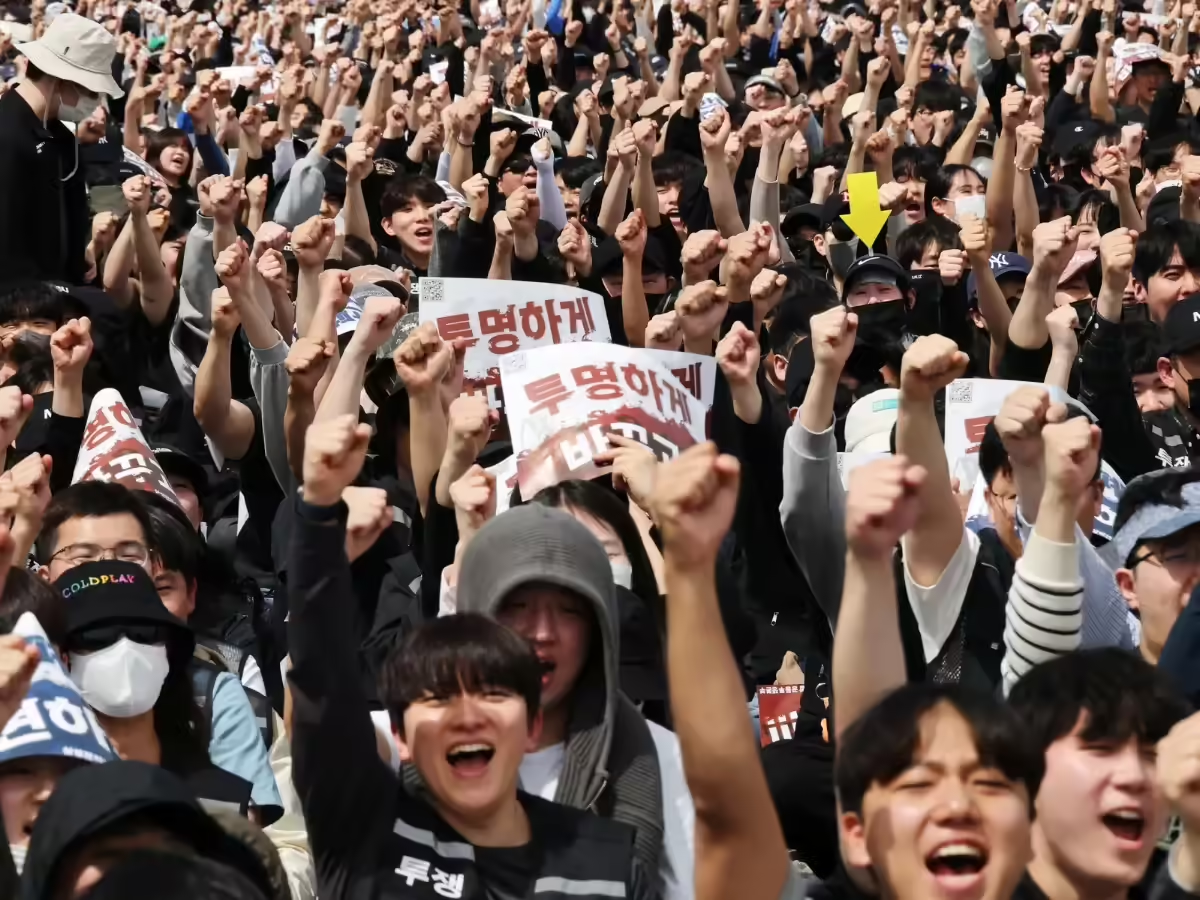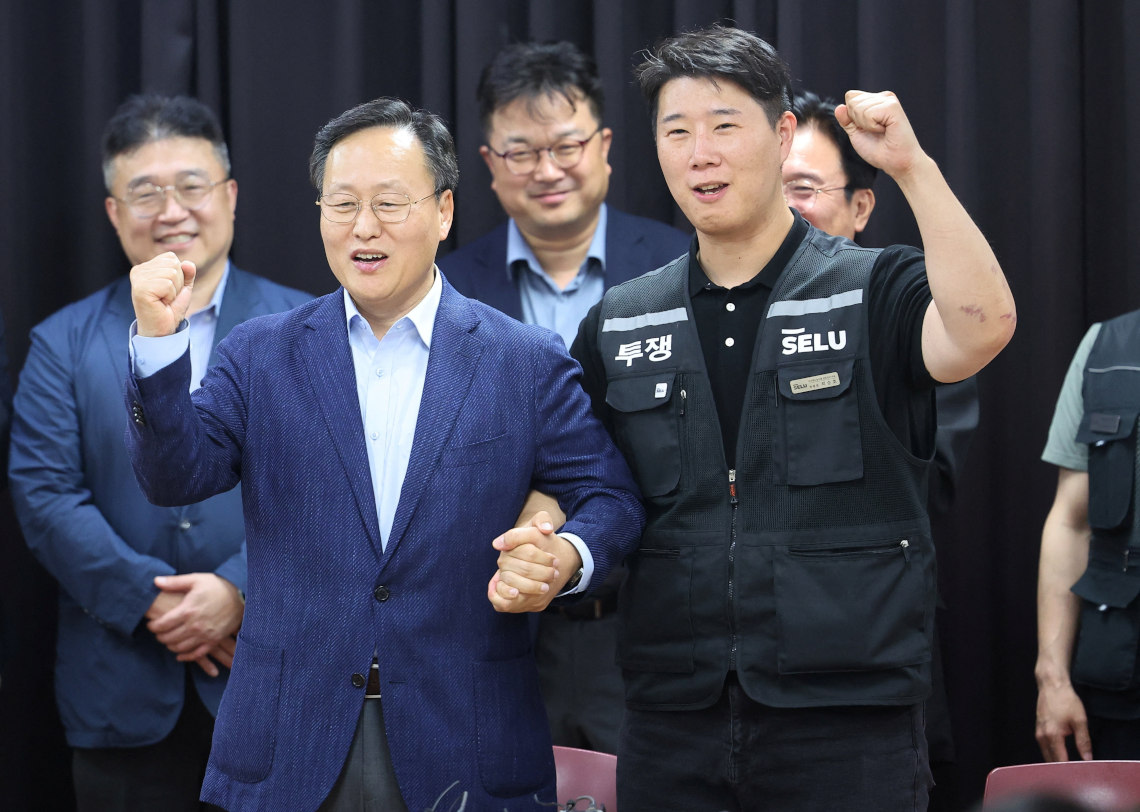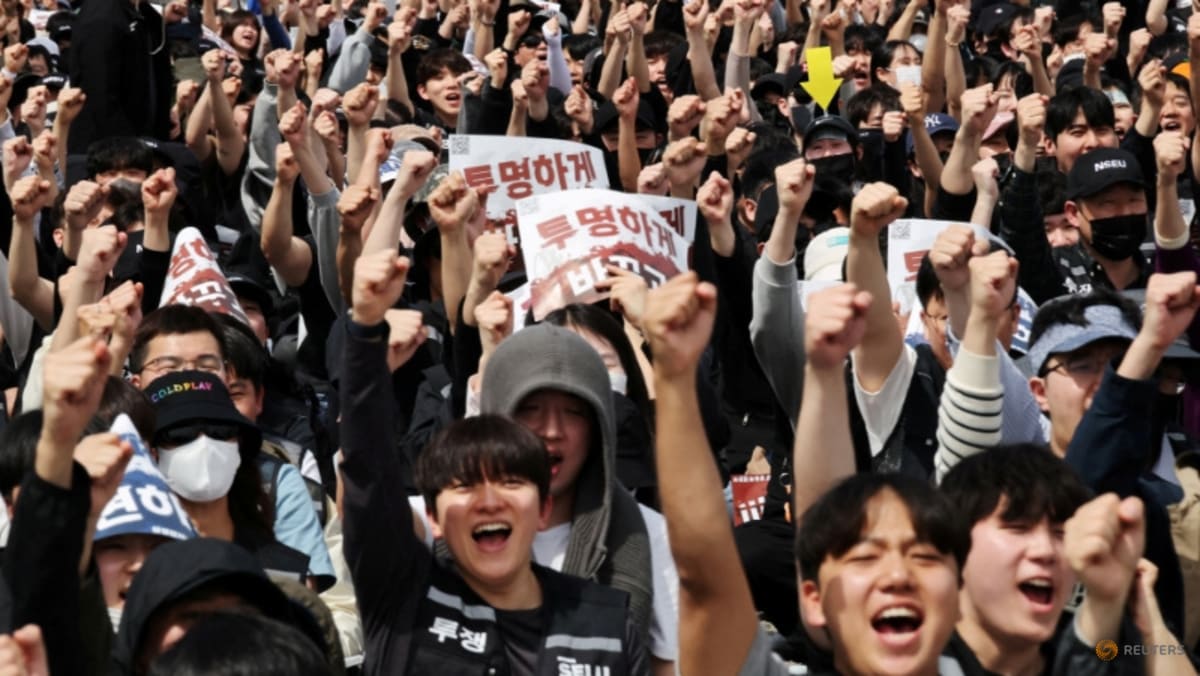
Unlike SK hynix’s fixed profit-sharing model, Samsung’s EVA-based system remains largely opaque to employees Samsung Electronics and SK hynix (Yonhap) Samsung Electronics and its majority union returned to mediation Monday, three days before a planned 18-day strike by as many as 50,000 workers, with negotiators still circling the same disagreement that has broken every previous round.The gap is not about how much; it is about how.The union wants 15 percent of the chip division's operating profit codified as the bonus pool and the existing cap, set at 50 percent of annual salary, abolished. Management's latest offer keeps the cap and the current Overall Performance Incentive framework intact, adding a conditional special bonus on top: 9 to 10 percent of operating profit, but only if the Device Solutions division clears 200 trillion won ($133 billion) in operating profit, and only for three years before the terms are renegotiated.Two formulas, two philosophiesSamsung pays its chip employees through a layered system. Annual salary is divided into 20 portions distributed across monthly pay and biannual Target Achievement Incentives, with the OPI added at the start of each year based on divisional results. OPI is capped at 50 percent of annual salary and calculated from Economic Value Added, a measure that subtracts a capital cost charge from operating profit. Samsung and SK hynix pay their chip workers through fundamentally different bonus systems, with transparency emerging as the sharpest point of divergence. The specific formula and capital-cost assumptions are not disclosed to Samsung employees, leaving room for the company to adjust inputs even as earnings improve.SK hynix runs a different system. Its profit-sharing bonus, paid early each year, is tied to a fixed 10 percent of operating profit, with the cap abolished through a labor agreement in 2025. A separate productivity incentive of roughly 100 percent of base salary is paid twice a year, and special bonuses on top have pushed total annual compensation into the hundreds of millions of won per employee at the peak of the current AI memory boom.The cash gap is real, but the predictability gap is what reshaped expectations. SK hynix workers can estimate their bonus from published earnings; Samsung workers cannot.An industry official told The Korea Herald that SK hynix's move in 2025 was less generous than strategic. After a 2021 internal revolt over the same kind of opaque EVA-based formula Samsung uses, the company likely concluded that the "recurring cost of formula disputes, attrition and internal disengagement was more damaging than a fixed 10 percent rule," he said.Samsung has not made that trade."The core issue is institutionalization and transparency," a Samsung HBM mass-production engineer told The Korea Herald, asking not to be named. "Even if the company says it'll match SK hynix-level compensation for memory, the problem is it's a one-off, partly paid as restricted stock for three years. That isn't a system."Why management won't codifySamsung's resistance reflects a business shape SK hynix does not have to manage. The Device Solutions division houses memory, which is reaping the AI windfall; foundry, which makes custom chips for clients including Tesla and Nvidia; and system LSI, which designs mobile processors. Foundry and system LSI have reportedly lost trillions of won in recent years.Samsung's former lead negotiator, Vice President Kim Hyung-ro, put management's logic on the record during talks reviewed by Reuters on Friday. The logic chip businesses "posted losses in the trillions of won, and honestly, if it had not been for our company, they probably would have gone out of business or closed down," he said. "Those investments are being funded with money earned from the memory business."Codifying a fixed share of DS operating profit would constrain management's ability to redirect memory cash flow into businesses that Chairman Lee Jae-yong has publicly committed to growing. Management has offered a three-year trial of the new terms, but not permanent institutionalization.The Central Labor Relations Commission's first-round proposal, an extra 12 percent of operating profit as a special bonus if the chip division leads the industry in revenue and operating profit, sits roughly midway between the two positions. Whether Monday's session converges around 12 to 13 percent was the immediate question.The deeper question was whether any number would hold without being written into the system. Union chair Choi Seung-ho has been blunt. "We don't trust the company's promises. We're demanding clear institutionalization," he has repeatedly said since talks collapsed in the early hours of May 13.
Why Samsung’s bonus talks keep breaking over the same formula
Samsung Electronics and its majority union returned to mediation Monday, three days before a planned 18-day strike by as many as 50,000 workers, with negotiator
734 words~3 min read