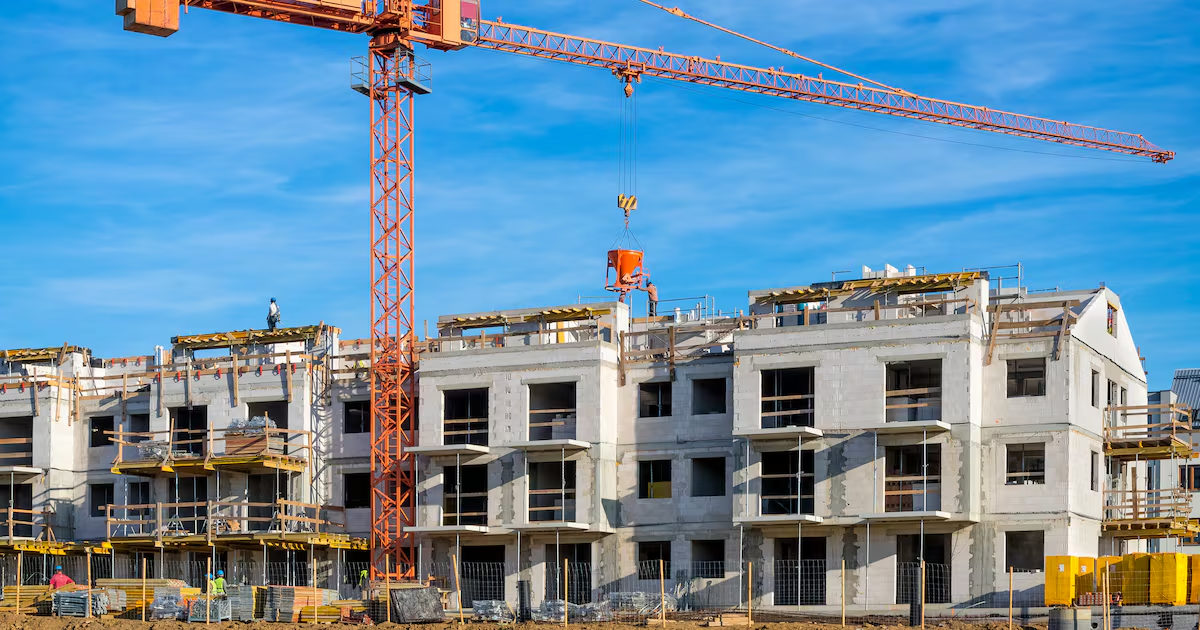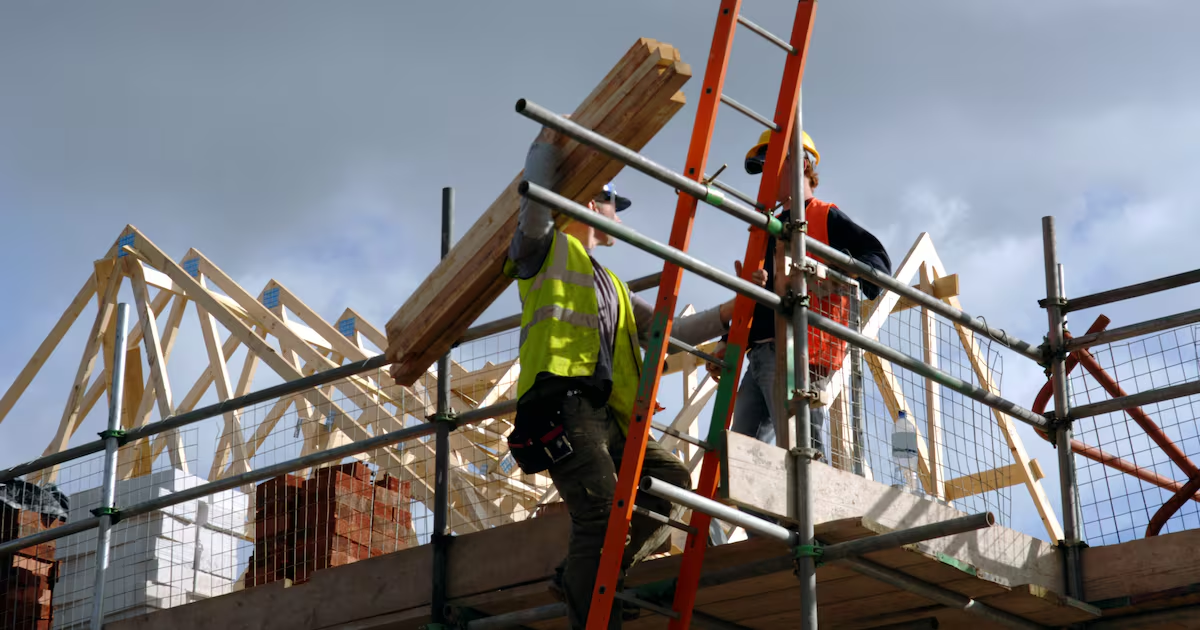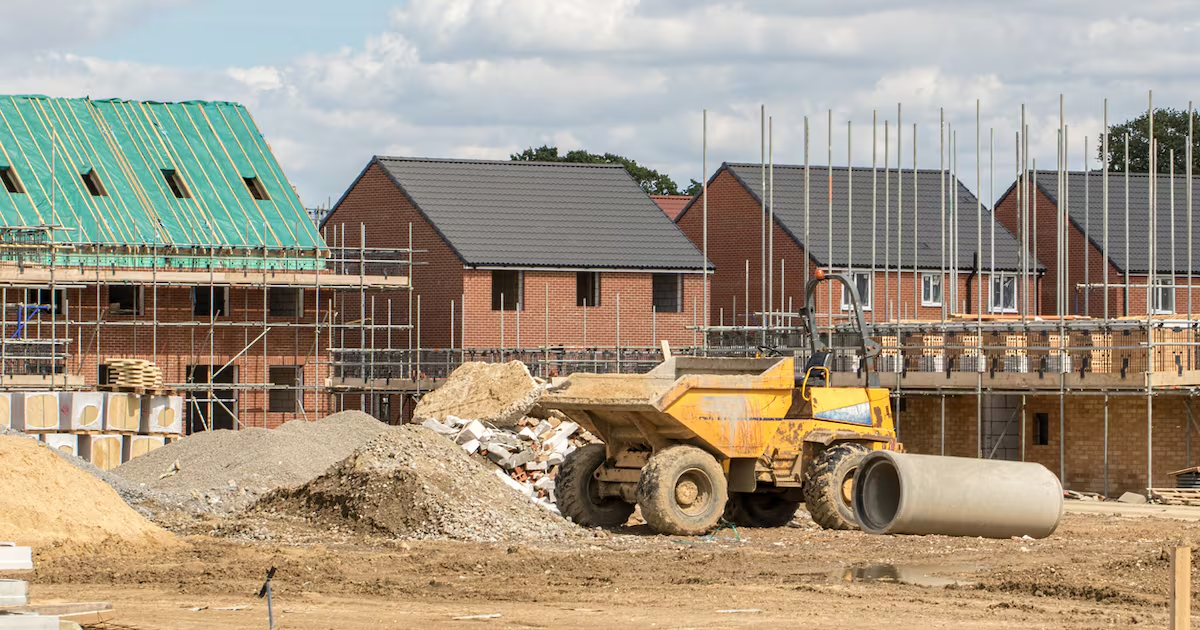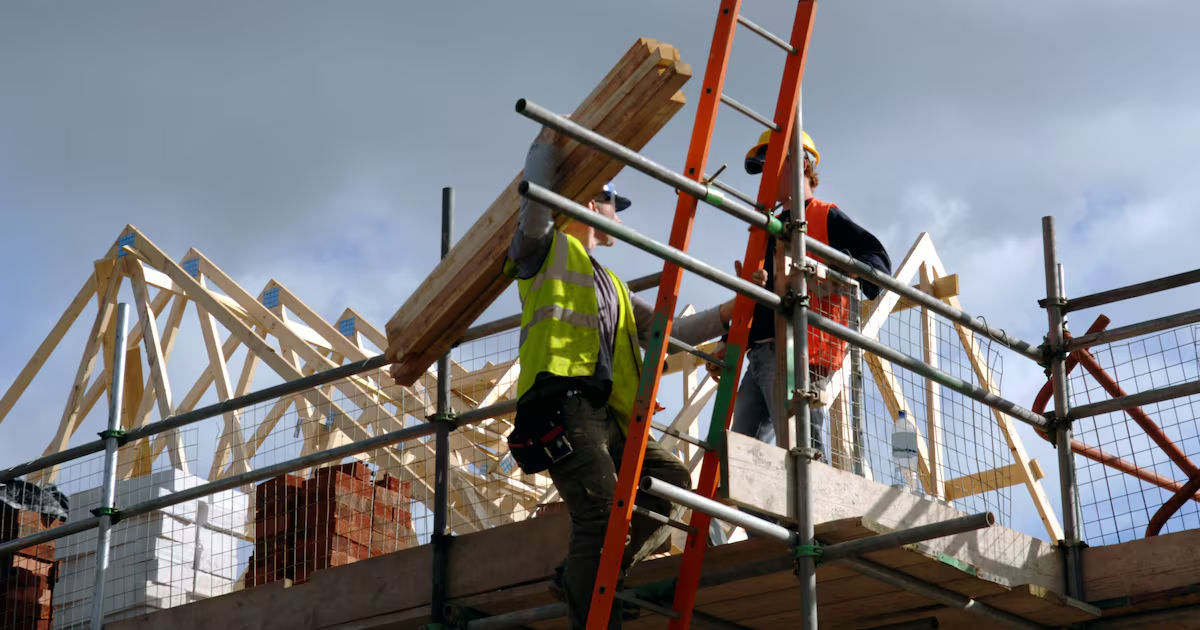
Housing output will continue to improve over the next couple of years, according to estate agent Sherry FitzGerald, after new home completions hit 7,856 in the first three months of the year – their highest level for an opening quarter since 2011.While the “same challenges” that have persisted in the market over the past decade are still present, there is “much reason to be optimistic”, the group said, adding the data suggested housing completions this year will be “in line with, if not higher” than 2025.According to the latest biannual analysis by Sherry FitzGerald research, housing supply in Ireland continues to be severely limited, despite a rise in the number of second-hand homes listed for sale as of January.During this period, only 0.7 per cent of the country’s private housing stock – amounting to 14,629 properties – was available on the market for sale.While this represents an increase of 4,250 units compared to the record low in January 2025, the figure remained “significantly below the required number necessary for a stable and effective housing market”.Advertised stock at the start of the year was 28 per cent lower than January 2020, when 20,332 second-hand properties or 1.1 per cent of second-hand homes were advertised for sale.In Dublin, 3,952 second-hand properties were advertised for sale in January, representing just 0.7 per cent of the capital’s private housing stock, up from 0.5 per cent a year earlier. While stock levels increased in all areas compared to 2025, many parts of the country “continue to experience particularly acute shortages”, the group said, “especially beyond the main urban centres.”[ Reuse of vacant buildings could meet 40% of Dublin’s housing targets, report findsOpens in new window ]Monaghan and Carlow, in particular, recorded “incredibly low levels” of stock advertised for sale at 0.3 per cent and 0.5 per cent respectively.When compared with January 2020, most regions have experienced sharp declines in available homes for sale, with the largest reductions in the midwest (43 per cent), west (42 per cent), southeast (39.2 per cent) and the Border (39 per cent). In contrast, Dublin was the only region to record an increase in advertised stock levels from January 2020, rising by 7.1 per cent.The Dublin region also recorded the largest moderation in second-hand price inflation to reach an annual rate of 4 per cent in the first quarter compared to 7.6 per cent a year earlier.Overall, second-hand house prices rose by 5.8 per cent annually in the opening quarter of 2026, down from an annual rate of 7.5 per cent in the opening months of 2025.Price growth was notably stronger outside of the capital in the first three months of the year, with regional Ireland experiencing price growth of 8 per cent annually. “Despite ongoing challenges in the global landscape, prices are expected to continue to rise at a relatively robust pace this year, albeit at a more moderate pace than 2025,” Sherry FitzGerald said.[ House building slows as Middle East conflict hits orders in Irish constructionOpens in new window ]The group estimated demand stood at approximately 56,200 units per annum. “However, there are major obstacles to achieve this including the planning system, building costs, and limited supply of residential-zoned and serviced land,” it said.From 2021 to 2025, an average of 37,154 units per year received planning permission, which were “significantly below estimated demand levels, and notably not all approved units are built for various reasons”.“Positively, the number of units granted planning permission increased by 7.9 per cent last year to reach 34,974, but this needs to be significantly higher going forward,” the group said.It added the “huge increase” in commencement activity in 2024, as a result of development waivers, contributed toward a 20 per cent increase in the number of new homes delivered to the market in 2025 and “should also have an impact on delivery in 2026”.
Home builds this year will be ‘in line or higher’ than 2025, Sherry FitzGerald says
Advertised stock at the start of the year was 28% lower than January 2020, new data from estate agent shows
640 words~3 min read