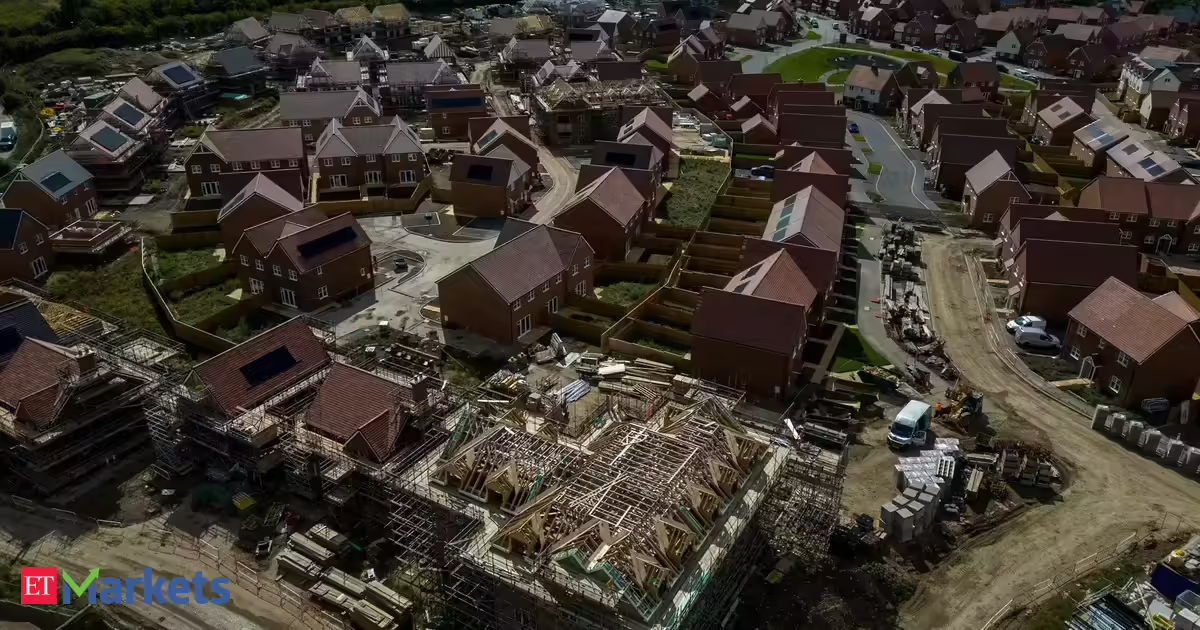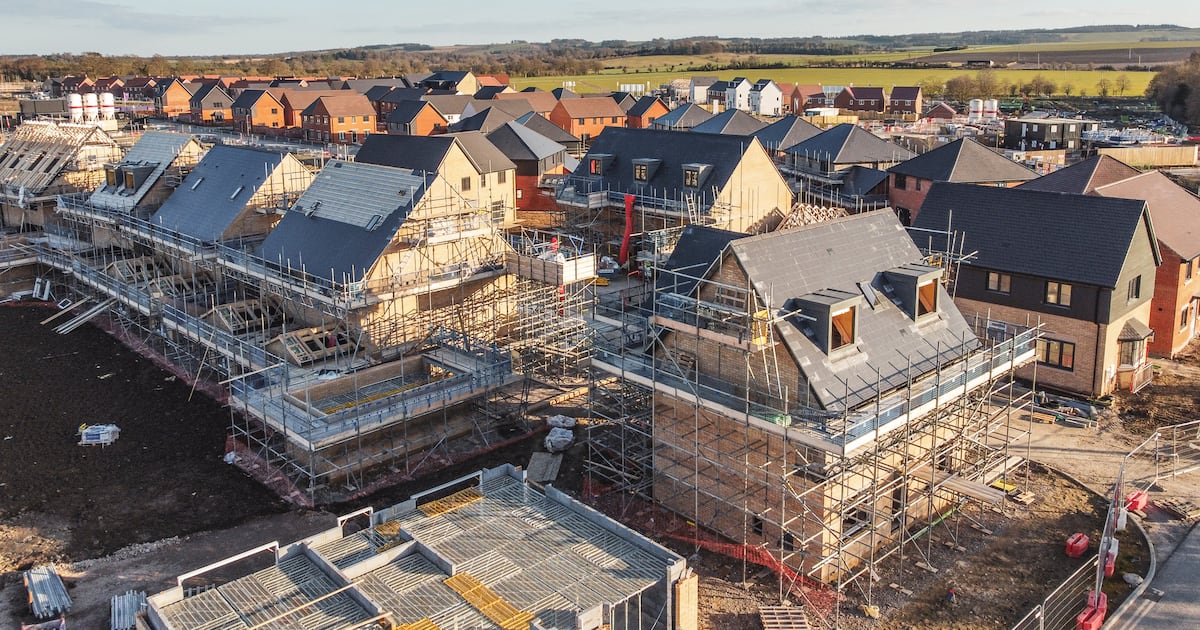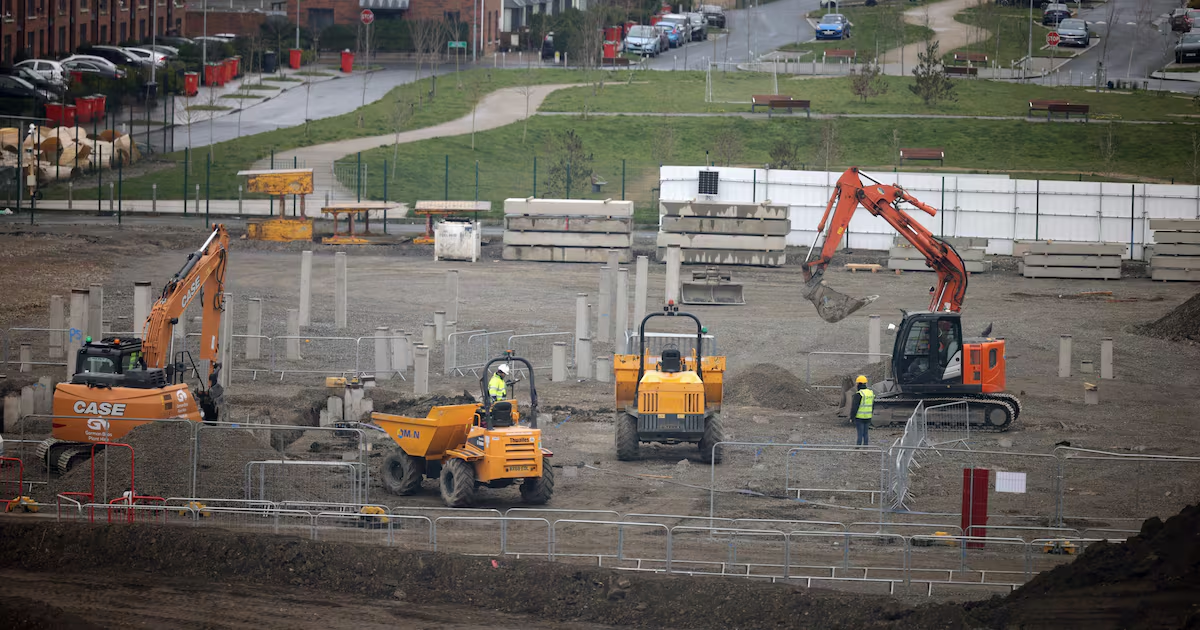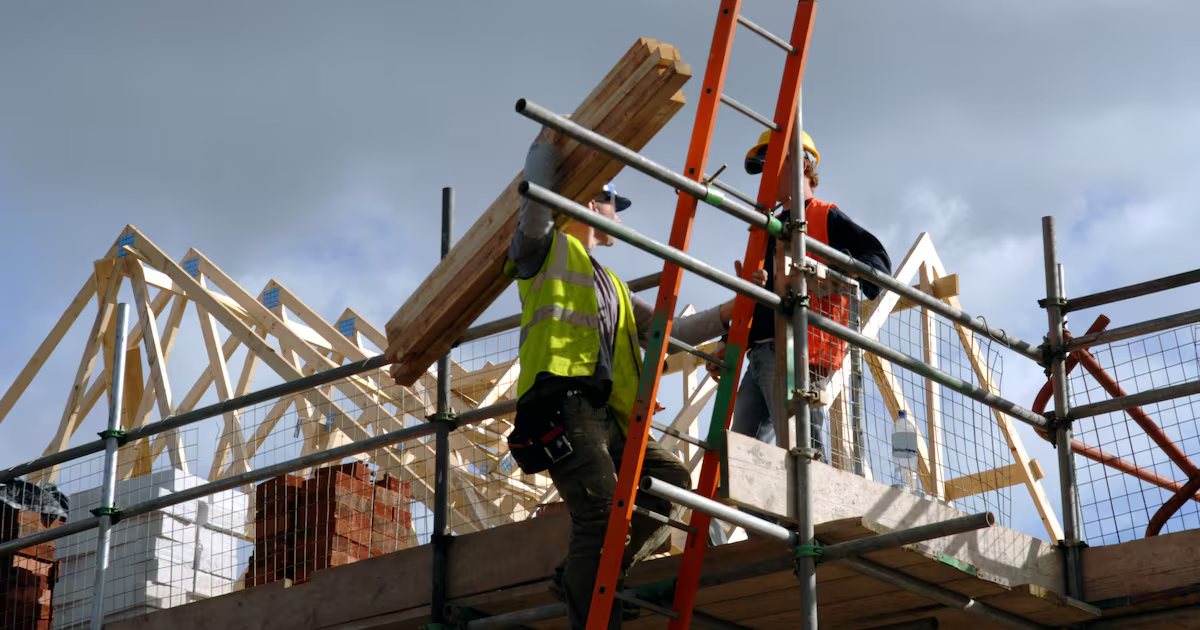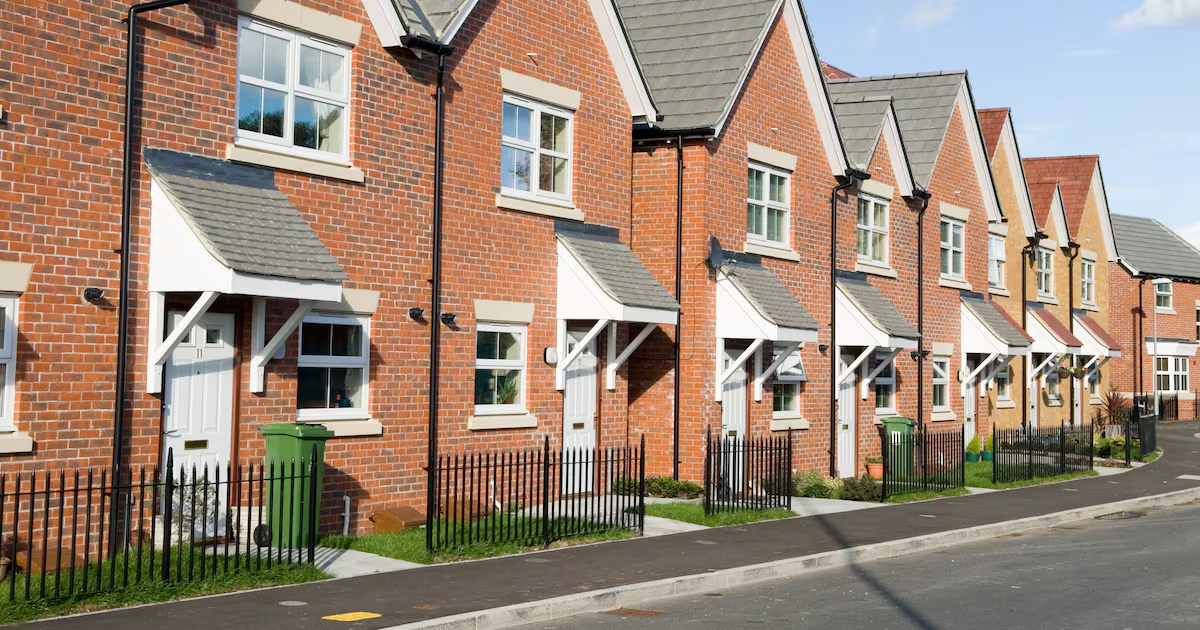
After years of bad news, a hint of positivity finally seems to be creeping into Ireland’s housing narrative. So, as we approach the quietest time of the year for home buying, it is opportune to consider what has been happening in the market, whether recent developments provide a genuine cause for celebration, and whether the tentative signs of progress are likely to be lasting.With the benefit of hindsight, it now appears that a turning point in Ireland’s housing market occurred some time ago. Rent inflation peaked at an annual rate of 11 per cent in mid-2023. Since then, however, it has steadily edged down to 4.7 per cent. Good news took longer to emerge in the sales market, where house price inflation eventually peaked at 10.1 per cent in August 2024. However this market has also cooled, and inflation currently stands at 6.2 per cent. Interestingly, this completely bucks what is happening in the wider economy, where consumer price inflation has surged from an annual rate of 0.7 per cent in September 2024 to 3.6 per cent at present. For the housing market to behave so differently suggests the dynamics behind current trends are reasonably strong. Despite slowing, rent and property price inflation both continue to outstrip wage growth. This means housing affordability is disimproving. Indeed, because wage inflation has slowed more quickly than housing costs over the last year, affordability is disimproving at an accelerating rate. Leaving aside the social ramifications, this arguably represents a macro economic risk. With housing costs accounting for a significant share of domestic budgets, it is only natural that employees would seek to reverse this trend through increased pay claims. Labour market conditions permitting, this could feed through to a wage-price spiral and negatively impact competitiveness. Overall, however, and despite this caveat, the slowdown in house price and rent inflation is a positive development. So, what has been driving it, and will it be sustained?The Government will no doubt point to the sharp rise in new dwelling completions. Last year 36,246 new homes were delivered. This represents a 20 per cent increase on 2024, and is the highest level of home building that Ireland has seen since the global financial crisis.Policy initiatives such as Croí Cónaithe (Cities), which supports unviable apartment schemes, and Enterprise Ireland’s Build to Innovate scheme, which promotes modern methods of construction, certainly facilitate developers to build more homes at a given price. The VAT cut on new apartments will do likewise. The real game changer, however, is that Government policy is giving developers confidence to build. Partly this is being addressed through planning reforms which aim to provide more predictability over timelines and outcomes. More importantly, the State has stepped up to directly buy and commission new homes on a massive scale. Last year, local authorities and approved housing bodies procured more than 9,000 new dwellings for social housing alone – equivalent to 25 per cent of the national housing output.I have questioned whether we really need to increase housing output to the levels currently being envisaged; the evidence underpinning the Government’s targets is very flimsy and heavily predicated on assumptions that suit the construction lobby. Value for money for the taxpayer is also an issue. But the biggest concern with the current policy approach is that the State has become a single dominant buyer in the market. In addition to committing capital to social housing, it is also investing heavily in cost rental and affordable home purchase schemes. All of this is being facilitated by exceptionally strong public finances. However, should these suddenly weaken, the Government may be unable to maintain its current support. This could be quite disruptive to the economy. To be fair, others would counter that a failure to address critical infrastructure deficits while we have the money to build would, in itself, represent a macroeconomic risk.‘I expect the construction lobby will be quickly out of the traps complaining about viability’— John McCartneyWhile strengthening supply has probably contributed to moderating inflation, weaker demand is also a factor. Most fundamentally, demographic pressure is clearly easing. Ireland’s headcount has been progressively slowing since 2023, and last year I said that this would continue. The latest Labour Force Survey data bears this out – population growth plunged to 1.3 per cent per annum in the first quarter of this year, from 1.8 per cent a year earlier, and a peak of 2.3 per cent in the final quarter of 2022.A common misconception is that population growth is the only factor that drives housing demand. In fact, demography plays only a role to the extent that it creates competition for a finite stock of homes. If there is not the wherewithal to pay, no amount of demographic pressure will add to demand. Factors that typically affect households’ ability to pay for housing include employment growth, wage increases, credit conditions and confidence. At present, every one of these factors is experiencing weakness. After progressively slowing over the last year, employment growth came to a standstill in the first quarter of this year. Compounding this, there have been heavy job losses in some important and highly paid sectors of the economy. Tech employment has contracted by 11 per cent in the last year, while the professional and financial services industries have also shed jobs. Although unemployment remains low by historical standards, stalling jobs growth has caused it to begin creeping up. This has fed into weaker wage inflation which, in combination with rising interest rates, is now creating a headwind for home purchase. Inevitably, these developments are impacting confidence – the Consumer Sentiment Index reached a 40-month low in April. Independent of all other factors, this is also dragging on rent and house price inflation. After so much negative news about the market it would be churlish not to embrace the emerging positives. House price inflation is now at its lowest since January 2024, while rental growth is at a five-year low. I and others have criticised elements of Ireland’s housing policy, but one also has to acknowledge the strong pickup in supply, and the fact that this does not appear to have been drawn out by heavily inflated prices. Nonetheless, three elements of caution are in order. Firstly, at least some of the cooling off in our housing market reflects a slowing economy. Economic forecasts remain broadly positive. However, the sharp contraction in tech employment, when taken in the context of global developments in the sector and flux in Europe’s trading relationship with the United States, is a concern that goes far beyond property. Secondly, despite the cooling market, housing affordability has not improved. Given current labour market dynamics this will probably not be addressed by earnings growth. So, for consumers, it is important that the slowdown in rent and house price inflation continues. Finally, on this subject, we have had false dawns in the past. It is easy to forget that house price inflation plunged to 1.1 per cent in 2023 before taking off again. If the current cooling off continues and development costs keep rising, I expect the construction lobby will be quickly out of the traps complaining about viability. Given the industry’s leverage over a Government that has staked its reputation on delivering more homes, there is a danger that this could trigger another round of subsidies which would reignite house price inflation.John McCartney is adjunct associate professor at UCD and lectures in property economics at TU Dublin
House price statistics: What do they mean and what do they tell us?
Despite a cooling market and a strong pickup in supply, housing affordability has not improved
1,240 words~6 min read