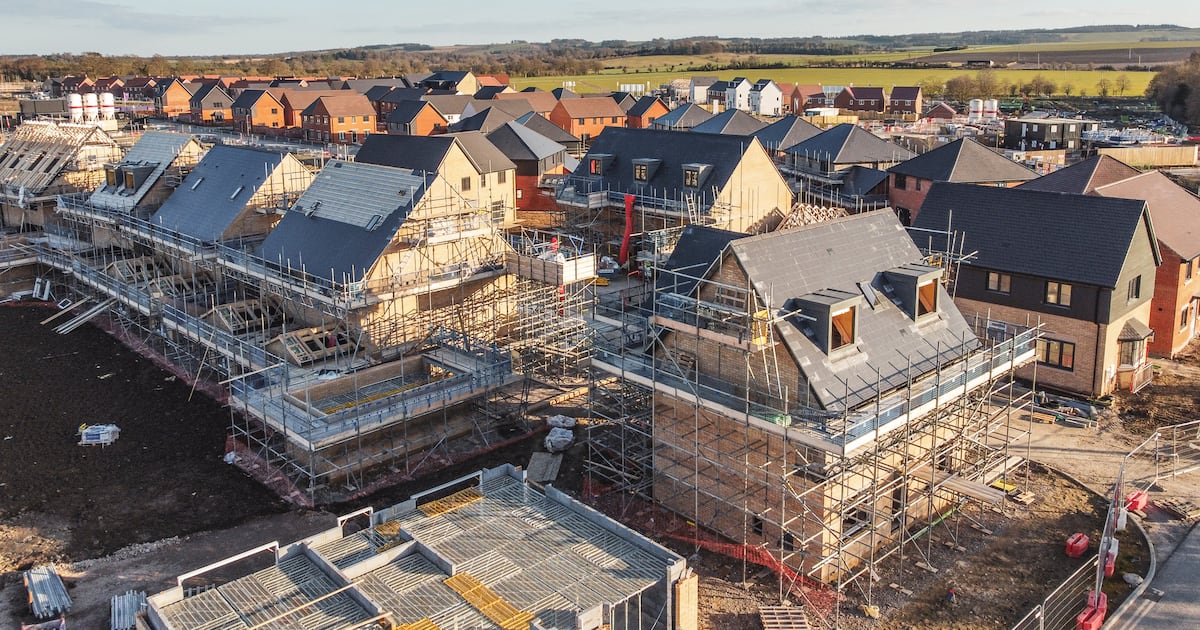
An uptick in housing completions and a flurry of new homes coming to market is not enough for Bank of Ireland to revise its forecast that Irish residential property prices will increase by 4 per cent this year. In a research note published on Wednesday, the lender’s economics unit said that while the price data for the early months of 2026 had been somewhat “soft”, a seasonal pickup is expected over the summer months. The Central Statistics Office’s residential property price index increased by 0.4 per cent in January from the previous month, before slipping by 0.3 per cent in February and treading water in March.Rents and evictions soar as house price inflation slows Listen | 39:34“This might appear concerning, with stretched affordability potentially holding back price gains,” said Bank of Ireland. “However, the index often makes a soft start to the calendar year ahead of the busy summer trading season.”The early data is “not inconsistent” with Bank of Ireland’s forecast for a 4 per cent increase in house prices this year, it said, down from a 7 per cent rise in the 2025 calendar year. Group chief economist Conal Mac Coille said the underlying data suggest house prices will increase over the coming months. “The moderate 1 per cent rise in MyHome asking prices in the first quarter, combined with the evidence [that] properties were still selling 6 per cent to 7 per cent above asking in the second quarter, points to the residential property price index measure of transaction prices rising in the coming months,” he said.However, Mac Coille said the increase in prices would be “more sedate” this year than last, because of “stretched affordability” in the market. Bank of Ireland said that while transaction volumes are rising, activity is being “almost entirely” driven by new-builds coming to market.The number of residential transactions increased by 6.6 per cent year-on-year in the first quarter and is expected to increase by 3 per cent in the third quarter, according to the research.The increase largely reflects a 30 per cent “surge” in transactions of new-builds, according to the bank’s analysis. Existing home sales continue to decline in number. “This divergence reflects a structural challenge as existing homeowners are increasingly reluctant to move amid tight supply and competitive buying conditions,” it said. “Consequently, the expansion of Ireland’s housing market, now estimated at €29 billion in transactions in 2025, continues to rely heavily on new construction.”[ Business matters: All you need to knowOpens in new window ]Homebuilding, meanwhile, continues to exceed expectations, the bank said, with completions reaching 38,191 in the 12 months to the end of March, with double-digit growth across apartments, housing estates and self-builds. “While some of the recent momentum reflects catch-up activity, particularly in apartment construction, the overall trend suggests capacity within the sector is stronger than previously assumed,” it said. “With these dynamics in play, housing completions could reach as high as 40,000 units in 2026, exceeding earlier projections of 37,500.”
Irish house prices to increase by ‘more sedate’ 4% in 2026, says Bank of Ireland
New homes drive market as affordability remains ‘stretched’ and second-hand sales continue to decline
494 words~2 min read