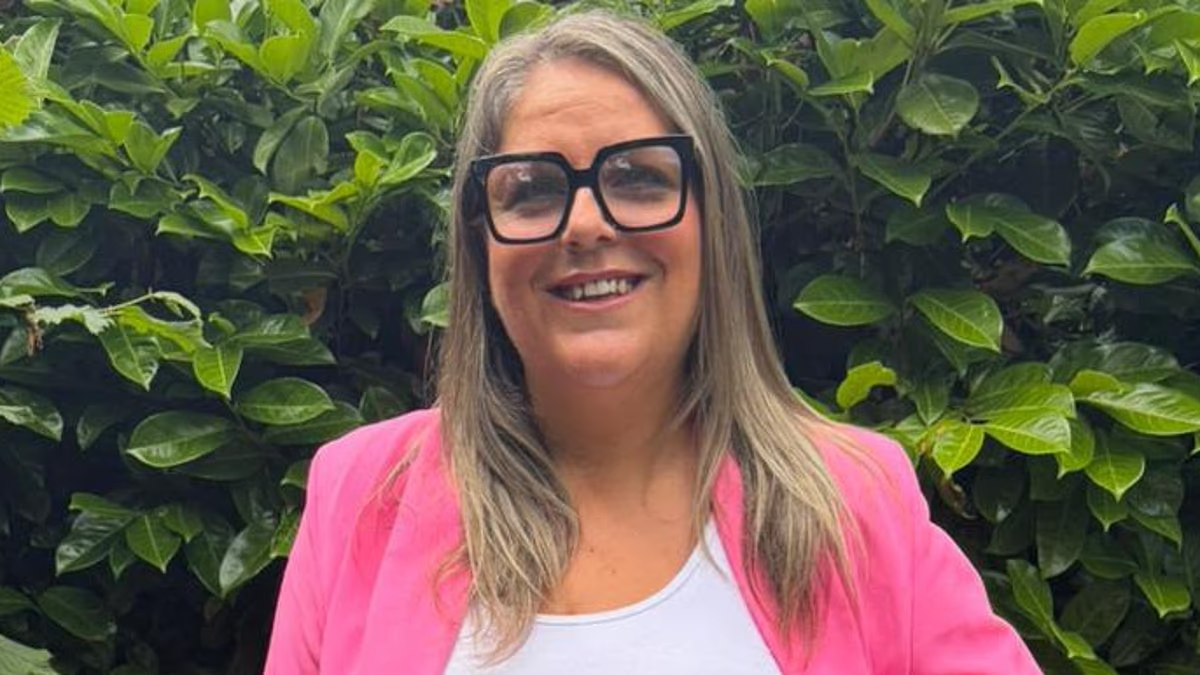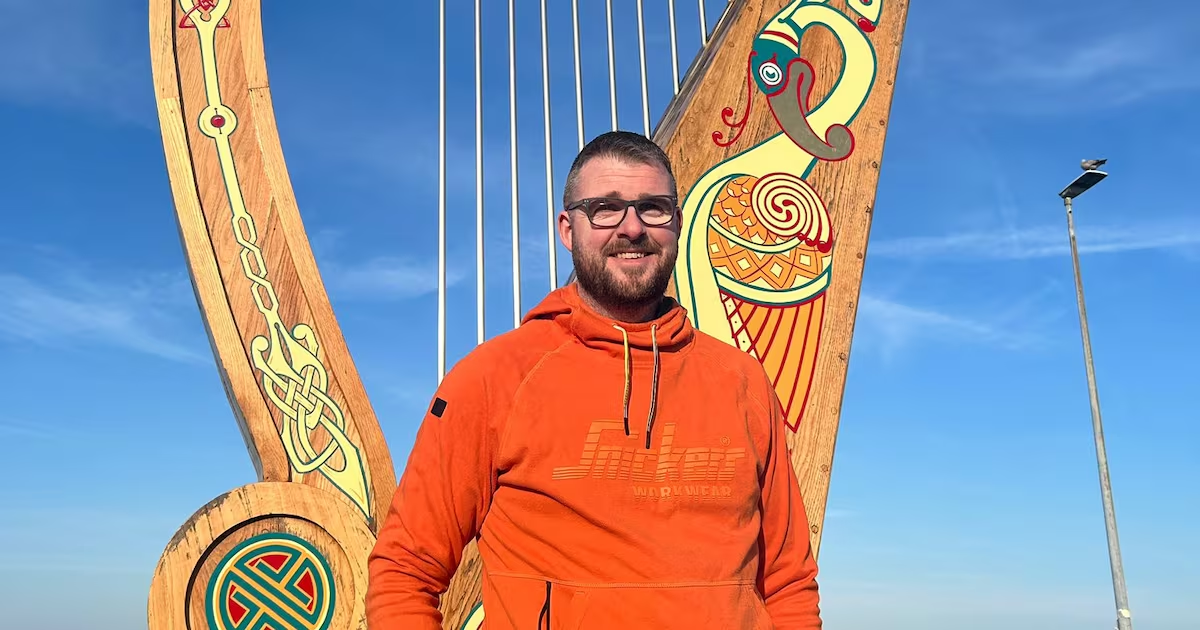
In 2012, Alex Robinson, from Enniscorthy, Co Wexford, began experiencing abdominal pain, increased bowel movements and severe weight loss.He lost almost 50kg (7st 12lb) in three months.Now 33, at the time he was informed he had Crohn’s disease. The diagnosis came as a relief in finally understanding the cause of his symptoms, but it also came with a host of new questions and concerns.Initial treatments provided relief, but by 2016, surgery became necessary with a permanent stoma.There are about 50,000 people living with inflammatory bowel disease (IBD), Crohn’s disease and ulcerative colitis in Ireland, which are chronic inflammatory diseases of the gut. Typically, people are diagnosed when they are younger, often in their late teens and into their 20s.“It can be challenging to diagnose IBD,” says Dr Catherine Rowan, consultant gastroenterologist at Beaumont Hospital in Dublin, “as a lot of people would have the condition or have symptoms for maybe 12-24 months before they get a definite diagnosis. That’s probably because there’s a lot of overlap between the symptoms and other conditions, which we have to piece together.”Receiving a diagnosis is also a process with a lot of information to take on board. Rowan says: “It is a big, life-changing diagnosis for you, how it affects you specifically, and that depends on what stage of life you’re at, what age you are, whether you’re in college, or you’re kind of embarking on your career, or you’re thinking more along the lines of starting a family. So it becomes a very personal conversation as well.”[ IBD: ‘I’ve known people who have been nervous to leave their house’Opens in new window ]Rowan says Beaumont Hospital is adopting a more holistic approach involving the gastrointestinal team with doctors and IBD nurse specialists doing a huge amount of work with patients. “This is particularly the case when people are newly diagnosed in educating them about the disease, in managing medications, and in helping them to acclimatise to what is a big change in their life,” she says.Robinson manages the symptoms and flares of the disease with his medical team, and is optimistic there are no barriers to living his life fully. “Being diagnosed with Crohn’s disease has had a huge impact on my life. I take no day for granted and I enjoy life as much as I can. Having had numerous surgeries and being left with a permanent ostomy, I now have a better quality of life to what I had.”Alex Robinson at the quays in Wexford He completed Hell & Back obstacle course adventure run in Wicklow in 2019, a few months after his last surgery, symbolising just how far he had come at that stage. When considering whether to participate, he remembers thinking, “Let’s do it all again but have a proper finish-line this time to get over. It proved to me that, with everything I’ve been through, it still hasn’t stopped me from doing something once I put my mind to it.”He has also abseiled off the top of Croke Park to raise money for Crohn’s and Colitis Ireland, although he has recognised how the multiple surgeries and securing accurate medical treatment for the condition have created significant stresses, worries and anxiety when it came to those first years managing the disease through multiple surgeries and significant life changes.“Being confined to a hospital room in Dublin, unable to leave the ward, and without family or friends, was difficult. Because I was so focused on my recovery, it wasn’t until nearly a year after that the smell of hand sanitiser at work was triggering anxiety. Soon after I went to counselling, which really helped, but you’re never prepared for that aspect.”Rowan highlights that the approach to IBD care has shifted to broadening out from the medication or surgical aspects to looking at dietetic input, psychological supports and helping patients to take more control over their condition. “We’re very aware of the burden for our patients in terms of psychological impact,” she says. “We know from various studies that people with IBD experience higher rates of depression, mood disorders and anxiety. Mental health supports are really important. That’s probably one of the areas we need to work on nationally and internationally as well to make sure that psychological support is more widely available to our patients, and that it’s available in the larger IBD centres as standard.” [ Living with IBD and an ileostomy bag: ‘Tough times don’t last but tough people do’Opens in new window ]IBD remains a taboo subject, as Robinson points out. “A lot of people don’t feel comfortable talking about their bowel movements or their toilet habits. Then because of that, a lot of people aren’t aware of the effect that it can have on people and in workplaces. For instance, it’s more than just needing to go to the toilet. When I flare up I have pain in my eyes and my joints swell up.” Prof Anthony O’Connor, consultant gastroenterologist, says: “We know that people have lost friends because of IBD. They’ve had romantic relationships that have broken up because of IBD. Some haven’t been able to achieve their potential academically or have had jobs they have had to walk away from.“It’s important that employers understand a bit more about the disease and understand where people are coming from. It’s a difficult thing for people to talk about their symptoms with their boss. It’s about trying to understand what people’s lived experience is, what people are going through, and to try and support them.“A diagnosis of IBD is not the end, but the start of a new journey,” says Robinson. “It will never define you as a person and it will give you a strength you never realised you had. I’d encourage anyone with worries about symptoms to go to your GP or hospital and to act on it straight away.”To mark World IBD Day on May 19th, and as part of the campaign It Takes a Village, Crohn’s and Colitis Ireland has a new guide on how communities can support friends, family, neighbours and colleagues with IBD. Their five tips are: 1. Learn the basicsUnderstanding what IBD actually is, is the first act of support. It’s a lifelong, unpredictable condition that affects every area of life. When families, friends, teachers and employers understand symptoms such as fatigue, urgency and pain, it immediately reduces stigma and isolation. 2. Offer flexibility IBD doesn’t run to a schedule and so people with IBD often need last-minute changes. This can be flexible work or school arrangements, unrestricted bathroom access, remote working, adjusted deadlines or rest breaks. Flexibility is one of the simplest but most powerful ways communities can help. 3. Listen without judgment Support isn’t about having the answers; it’s about believing the person and responding with compassion. Listen with empathy and avoid minimising language such as, “but you look fine”. Respecting boundaries creates psychological safety and reduces the shame many people with IBD feel. 4. Make participation possible Whether in schools, sports clubs or social settings, inclusion matters. Offer options. Allow people to step in or out without guilt or pressure. Make space for them to participate in a way that feels manageable, especially during flares.5. Offer practical helpSmall acts go a long way to making daily life easier. Helping with lifts, meals, errands, childcare, exam adjustments, shorter meetings, or honouring “No Wait” bathroom cards. Being supportive in this way reduces overwhelm and allows people with IBD to conserve their limited energy.
Living with IBD: ‘It’s more than needing to go to the toilet. I have pain in my eyes and my joints swell’
May 19th marks World IBD Day. As one sufferer says, a lot of people don’t feel comfortable talking about their toilet habits
1,243 words~6 min read