in Art, History, Museums | November 18th, 2025 1 Comment
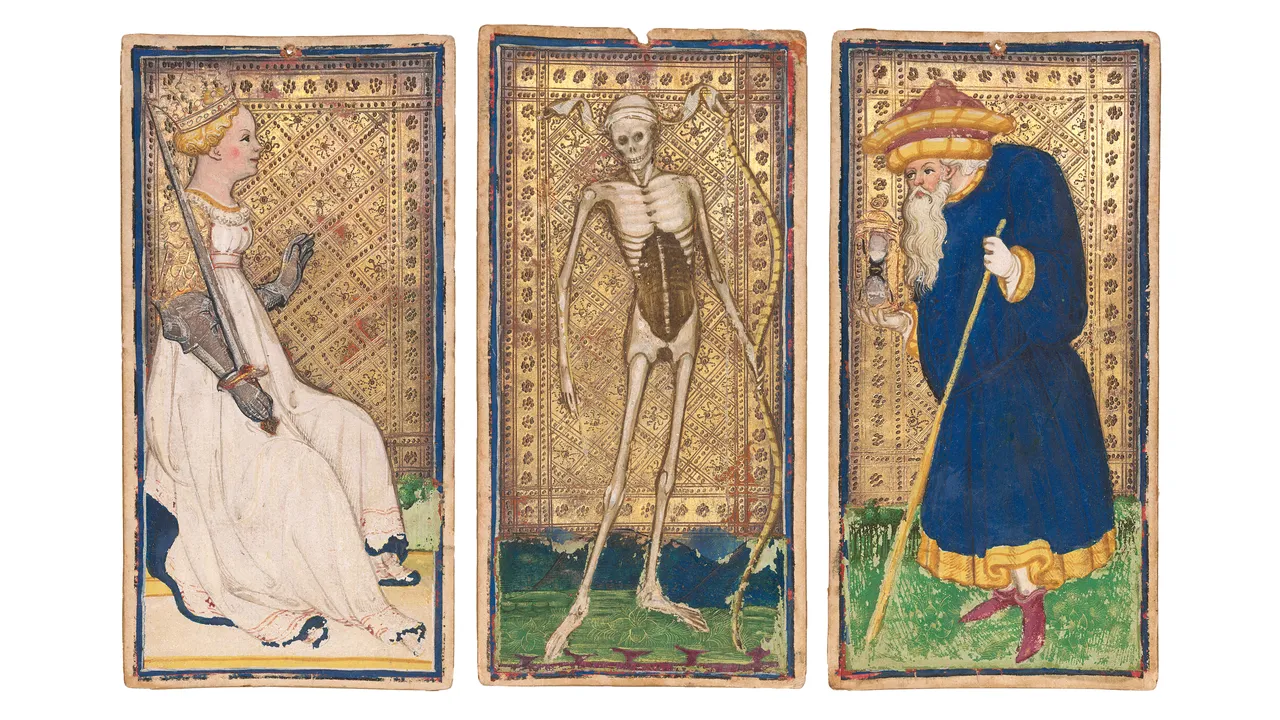
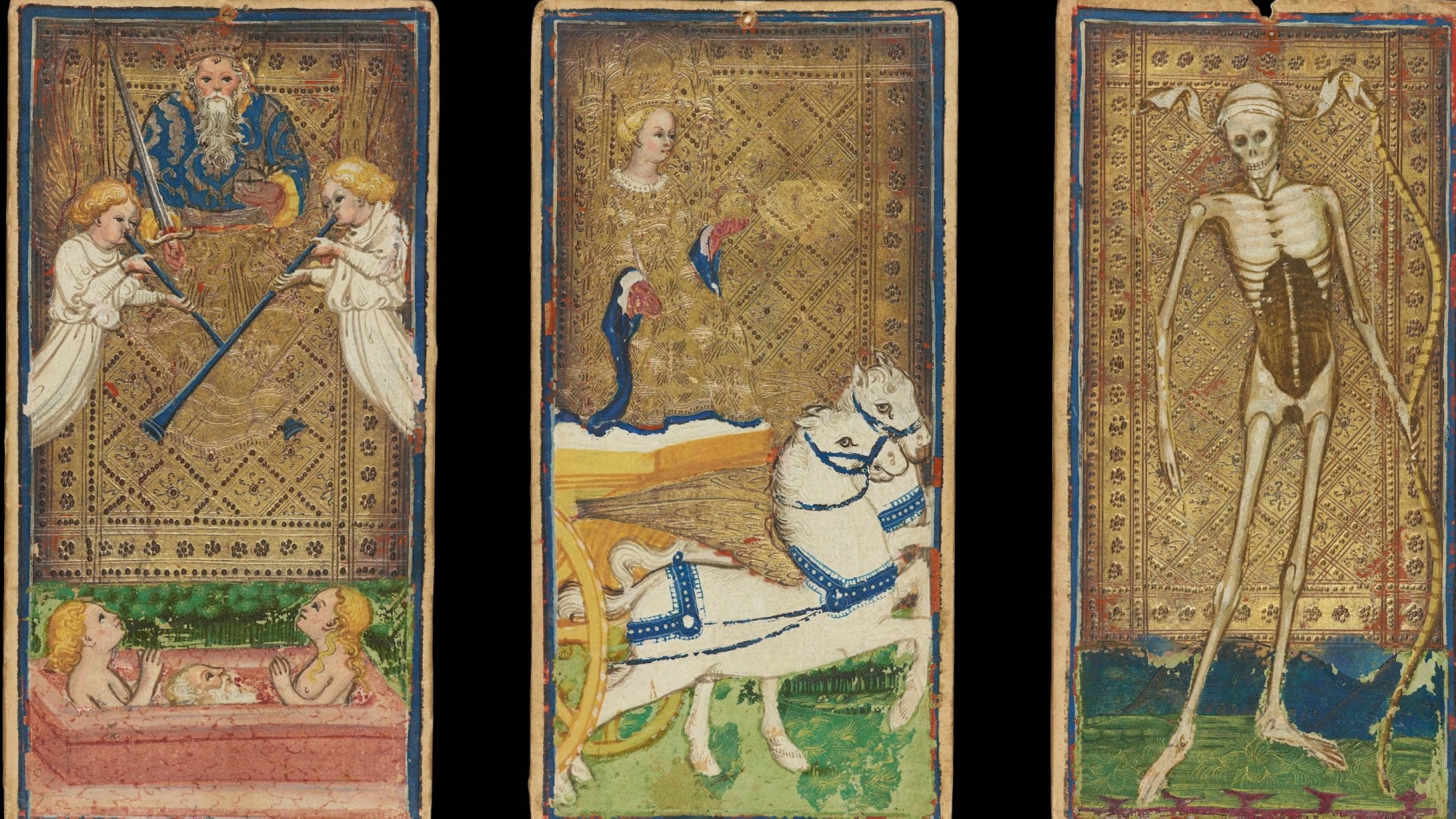
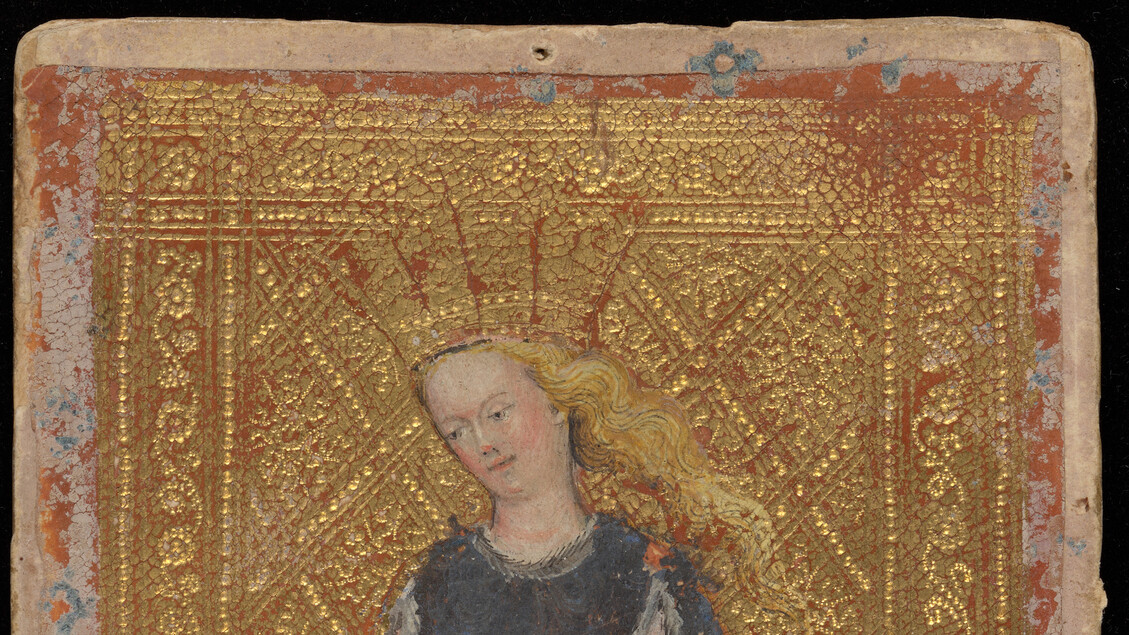
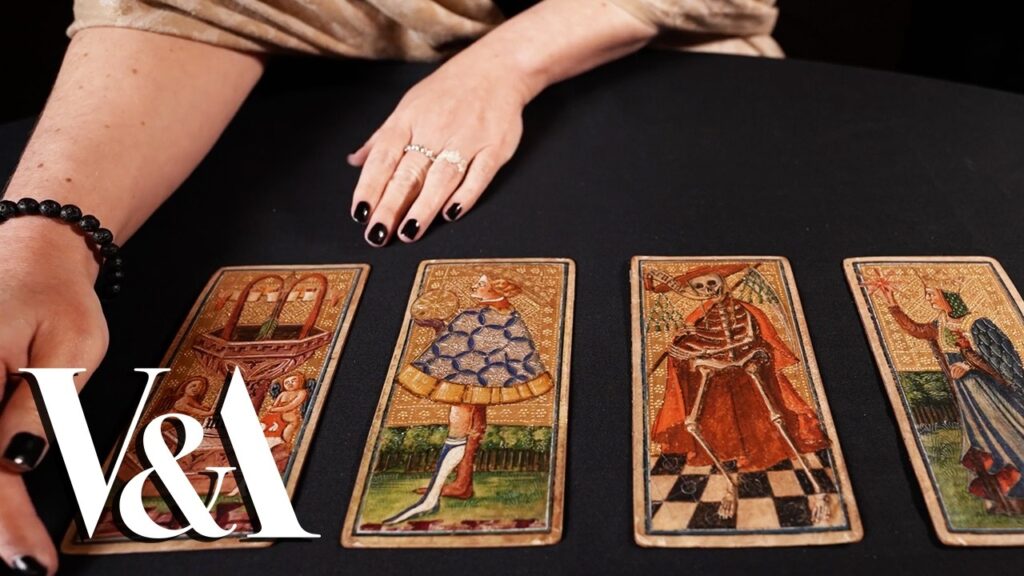
Whether or not we believe that the cards of the tarot have supernatural powers, we all think of them primarily as tools for divination. It might seem as if they’ve played that cultural role since time immemorial, but in fact, that particular use only goes back to the eighteenth century. They were, at first, playing cards, used for a game known as tarocchi in Renaissance Italy. That was the original purpose of the oldest tarot cards in possession of the Victoria and Albert Museum, which you can see unboxed by curator Ruth Hibbard in the video above. Throughout its fifteen minutes, Hibbard and two colleagues also “unbox” five other decks produced across the half-millennium of tarot history.
These include the early eighteenth-century Minchiate Deck, whose name refers to a slightly more complex Florentine card game that evolved alongside tarot. The word itself possibly originates from the term sminchiare, “to play your highest card” (though in Sicilian dialect today, it has a rather different meaning).
Later, circa 1807, comes Le Petit Oracle des Dames, “the petite oracle of women,” the earliest deck in the video expressly produced for cartomancy, or prediction of the future through cards — albeit only as a form of light entertainment for gatherings of ladies. A decade or two later, out came the luxurious Tarocco Soprafino, which bears lavish illustrations made with copper-plate engraving and colored stenciling.