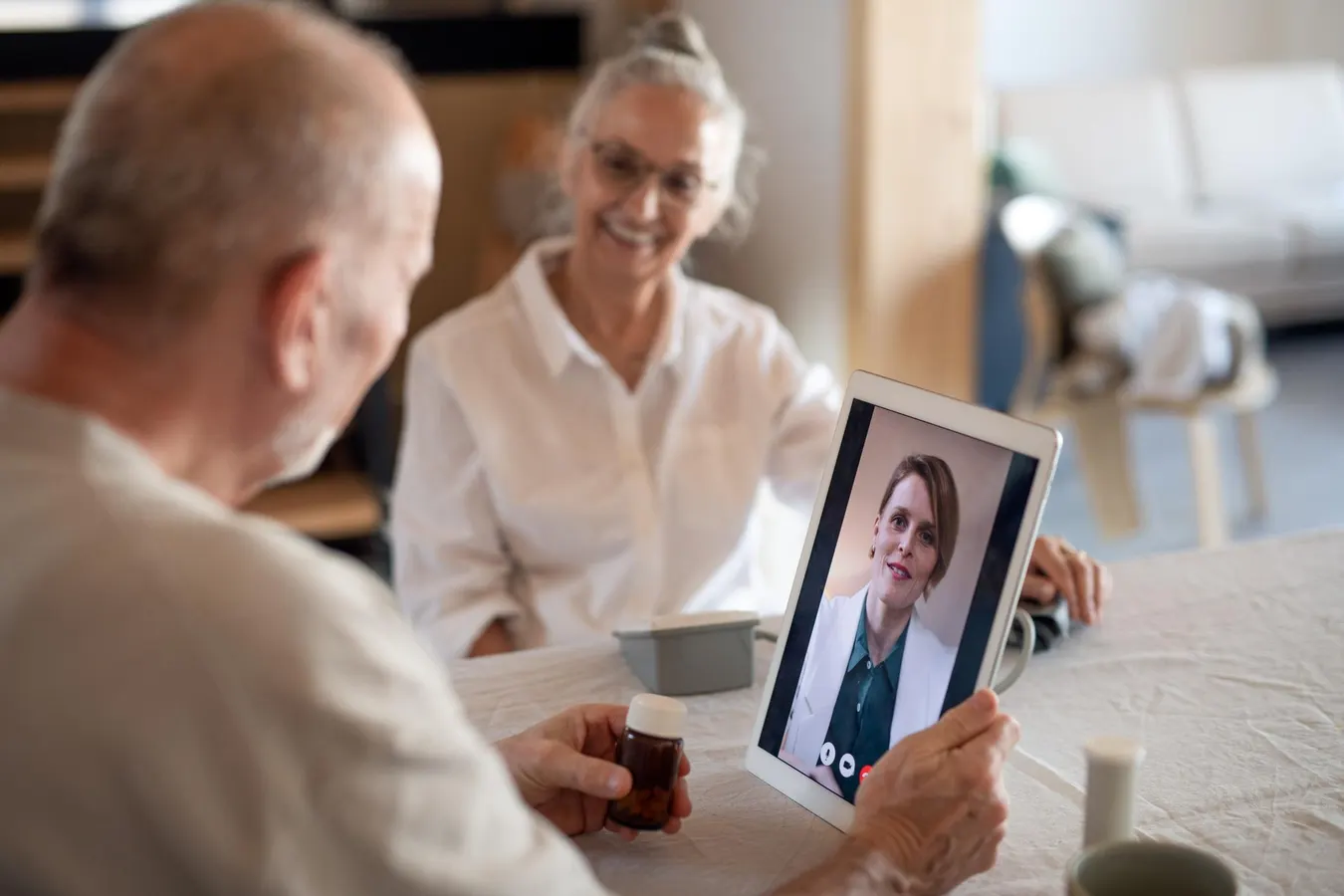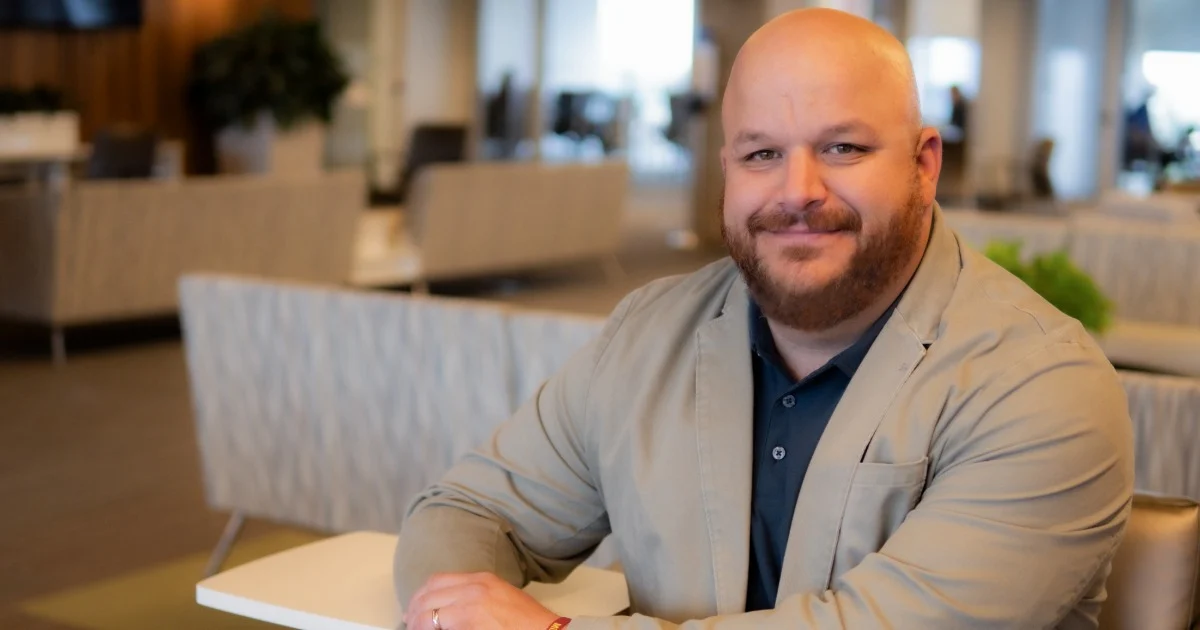
For years, rural healthcare workers have quietly carried responsibilities far beyond the limits of their resources. In small hospitals scattered across communities with shrinking populations and long travel distances, physicians and nurses often function as emergency responders, care coordinators, social workers and lifelines, all at once.Yet while modern healthcare increasingly depends on real-time information sharing and coordinated systems, many rural providers still work with delayed records, disconnected organizations and staffing shortages that turn even routine patient care into a logistical challenge.Dr. Hamad Husainy has seen these pressures firsthand. Before becoming chief medical officer at vendor PointClickCare, he spent years practicing medicine in rural communities across states including Mississippi, Washington and Alabama.The work demanded constant improvisation: stabilizing emergency patients, coordinating with local skilled nursing facilities and arranging transfers when cases exceeded what small hospitals could safely handle.What stayed with him most, he said, was not a lack of dedication among rural caregivers, but the widening gap between what those teams were expected to accomplish and the infrastructure available to support them.Healthcare IT News sat down with Husainy to discuss transforming rural care in various ways, including via connectivity, transparency and shared accountability.Q. You have worked as a physician in rural settings. Based on that work, what are your observations about where rural healthcare organizations need help?A. During my career, I have often favored working in rural settings and embracing the challenges across states such as Mississippi, Washington and Alabama – covering emergency departments in communities of fewer than 10,000 people and often with limited bed capacity and modest ED volumes.My responsibilities ran the range of what a rural ED physician knows all too well: stabilizing acute presentations, coordinating with the local skilled nursing facility and home health agency, and arranging transfers when a case exceeded what we could safely manage on site.What stays with me from that time is the gap between what rural care teams are trying to accomplish and the infrastructure available to support them. The clinical commitment in rural communities is extraordinary. People know their patients. They show up for their neighbors. But the systems around them have not kept pace with the demands of modern care.Three observations stand out.First, rural teams often operate with significant delays in information flow. A patient discharges from a tertiary hospital three counties away, and the local provider finds out days later, sometimes from the patient.By that point, decisions have been made, follow-up has been missed and the window to intervene is closing. I have treated patients who underwent surgery 100 miles away and then returned home, only to present at our ED with postoperative concerns and no available operative notes, no discharge instructions and no direct line to the treating specialist.Second, the workforce is stretched in ways that compound every other problem. When staffing is thin, every fax, phone call and manual chart chase pulls time away from patient care. The technology that exists to remove that burden in larger systems often has not made it to the rural ones that need it most.Third, rural providers are frequently the last to hear about changes in a patient's care and the first to absorb the consequences when coordination breaks down. Out-of-market referrals, avoidable readmissions, missing post-acute follow-up – these land on rural balance sheets even when the breakdown happened elsewhere in the chain.That mismatch between clinical commitment and operational support is what pulled me toward rural health from the system side. Fixing it is not about working harder. It's about giving these teams the same information advantages and coordination tools that the rest of the healthcare system takes for granted.Q. You say getting quality care to rural patients requires connectivity, transparency and shared accountability across the healthcare continuum – which means transformation. Please elaborate on your view of transformation in rural care.A. Transformation has been used as a buzzword often enough that it has lost meaning, so let me say what I actually mean by it.I am talking about changing the basic conditions under which rural care is delivered – not just buying more tools or layering on more programs. Rural systems do not have the bandwidth for that, and they have already absorbed many initiatives that came and went without lasting impact.Connectivity is the first piece. Today, the typical rural hospital, SNF, clinic and home health agency operate in adjacent silos, even when they sit a few miles apart. They serve overlapping patient populations, yet they cannot see each other's encounters in real time. Connecting those settings is not a nice-to-have. It is the foundation for everything else.Transparency is the second piece. When a patient moves between settings, every receiving team should know what happened upstream. Not three days later. Not after another round of phone calls. At the moment of decision. That requires shared, structured data, and it requires the discipline to actually use it in workflow.Shared accountability is the third piece, and it is the hardest. A rural community's health outcomes are not the responsibility of any single hospital, plan or agency. They are produced by the network. Performance, therefore, must be understood across the network, and incentives need to reinforce keeping care local, coordinating well and supporting smooth handoffs. That kind of structural shift goes beyond contractual changes.Put those three together, and you start to see how a rural community moves from a collection of separate organizations to something that behaves like a coordinated system. I think that is what transformation has to look like. Anything short is optimization at the edges.Q. You say rural healthcare needs structural improvements in care coordination, information sharing, access to care and community awareness. Why are these essential in your view?A. Each of those four areas addresses a concrete problem in rural care today.Care coordination matters because the patients we are most worried about – like frail older adults, people with serious behavioral health needs, and mothers and infants – are the ones who touch the most settings. If their care teams are not aligned across the hospital, the SNF, the clinic and home, gaps open exactly where these patients can least afford them. Coordination is what closes these gaps.Information sharing matters because clinical decisions are only as good as the information in front of the clinician. A rural ED physician seeing a patient at 2 a.m. needs to know what medications were started at the regional hospital last week, what conditions are active and where the patient was last admitted.Without that context, they are practicing on partial information, which leads to defensive, expensive, sometimes unsafe care. The whole point is the right information in the right hands at the right time.Access to care matters because distance is real. Asking a patient to drive 90 minutes for a follow-up they will not actually make is not access. Real access means more care delivered locally where it can be, supported by virtual reach where it cannot, and clean handoffs when patients do need to travel. It also means rural hospitals being financially stable enough to keep their doors open in the first place.Community awareness matters because rural communities have characteristics that shape health in ways the data alone does not capture. The local employer, the food landscape, the geography, the trust networks, the way news travels.Providers who understand their community deliver different care than providers who do not. Building that awareness and building infrastructure that respects it rather than overwriting it is part of the work.None of these four can carry the weight on its own. They reinforce each other, which is why structural change must address all of them at once.Follow Bill's health IT coverage on LinkedIn: Bill SiwickiEmail him: [email protected]Healthcare IT News is a HIMSS Media publication.WATCH NOW: New payment and delivery models mean big shift for Medicare
Q&A: Changing the basic conditions under which rural care is delivered
Dr. Hamad Husainy says America's rural providers are doing heroic work with outdated systems, fractured communication and too little support. Meaningful transformation is possible, he says, but will require more than new technology.
1,288 words~6 min read