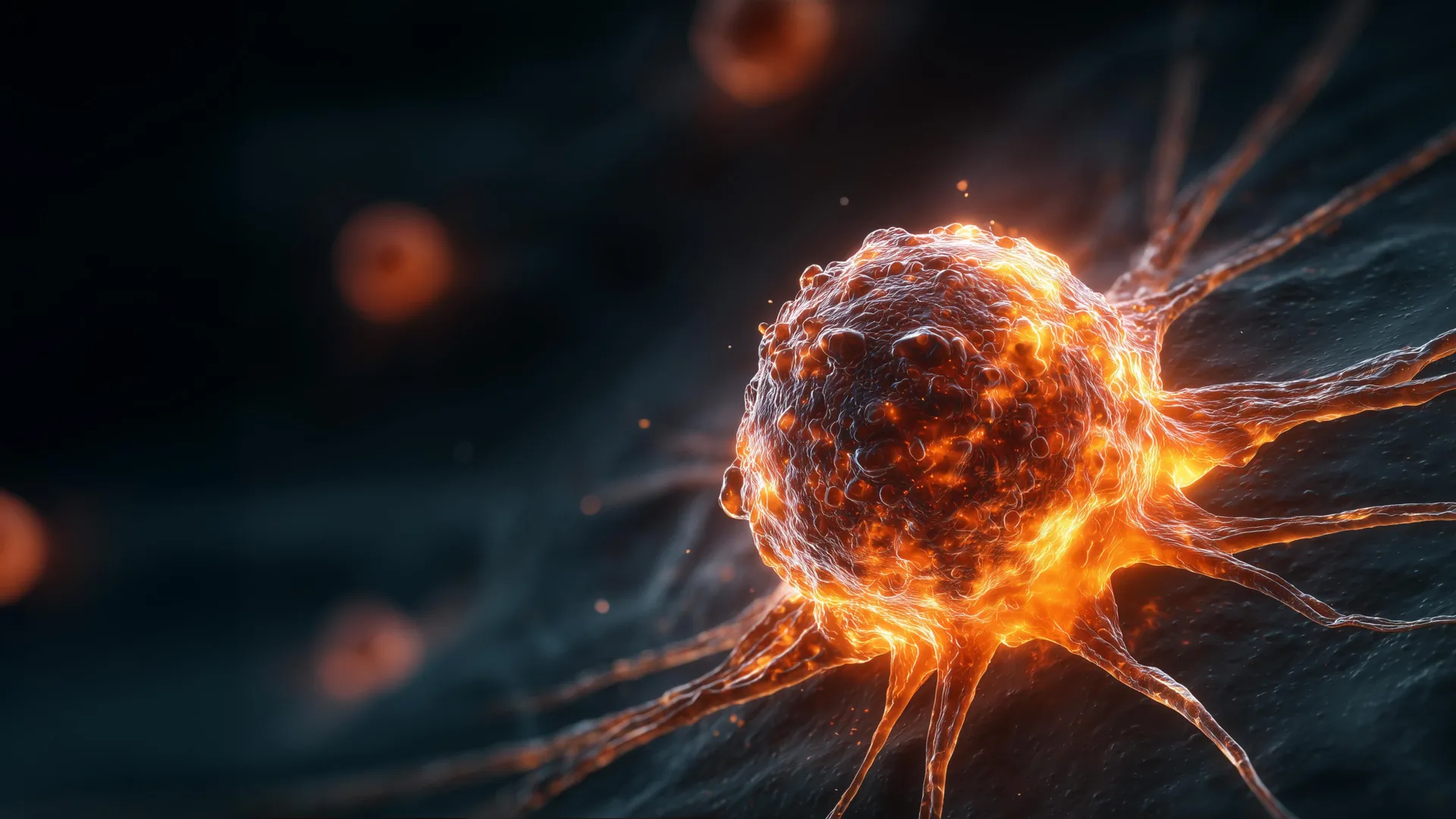
Scientists have identified a new weakness in harmful "zombie-like" cells that could open the door to better cancer treatments and therapies for age-related diseases. These cells, known as senescent cells, survive in a fragile state by producing large amounts of a protective protein that keeps them from dying. Researchers at the MRC Laboratory of Medical Sciences (LMS) and Imperial College London discovered that removing this protection can force the cells into self-destruction, offering a promising new treatment strategy.
The findings suggest the approach could work alongside chemotherapy and other existing cancer therapies to improve patient outcomes.
Why Senescent "Zombie Cells" Are Dangerous
Cancer develops when cells divide uncontrollably. However, many tumors also contain senescent cells, which no longer divide but remain highly active in harmful ways. Chemotherapy often increases the number of these cells because it is designed to stop rapid tumor growth.
Although senescent cells do not directly make tumors larger, they release molecules that can damage nearby tissue, encourage cancer spread, and trigger harmful immune system activity. These cells are also linked to aging-related conditions such as fibrosis. Because of their role in disease, scientists have become increasingly interested in developing drugs that specifically eliminate senescent cells.