When we say progress, what do we mean? Progress for whom? Progress by whom? No matter how many women’s empowerment campaigns are run or self-congratulatory Women’s Day messages shared in the office group chat, the reality remains that money and business are heavily gendered.A former RBI regulator and fintech founder, Shinjini Kumar’s Busy Women: Building Commerce and Culture in Middle India is both a travelogue and a sociological study. Travelling through thirty tier 2 and tier 3 cities, the book is the story of the women entrepreneurs who are changing the rules of a game heavily stacked against their victory – in turn, shaping the country’s economic and cultural landscape.In a fascinating conversation with Scroll, she talked about the compounding benefits that working women bring to a family and a country despite the countless structural barriers.You talk about how migration in India is deeply uneven: men usually move for work, while women move for marriage, often leaving their support systems behind. For the women entrepreneurs you met, did starting a business in a new city feel like a way to rediscover themselves, or was it more about coping with the isolation of joint-family life? And did being “outsider brides” ever give them an unexpected edge, since they weren’t fully tied to the unspoken social rules of their new hometowns?It occurred to me when I started to travel that working-class men migrate freely, mostly without families, wherever work takes them. But in the professional as well as entrepreneurial class, barring some communities like the Marwaris, migration between small cities is low. A couple of generations ago, cities like Jamshedpur or Baroda attracted educated people, especially engineers, civil servants, or accountants from the south of India, which had taken the lead in technical education. With the declining prestige of public sector and state jobs and simultaneous growth in the private sector and startup jobs in Metros and Tier 1 cities like Bangalore, Pune, or Hyderabad, the talent now moves there or outside India. And it makes sense. If you are leaving home, you might as well maximise your opportunity. Why move from Kanpur to Raipur?Interestingly, I met many women who are CAs, architects, engineers, designers, doctors, with degrees from reputed institutions in India or often from tier-one universities outside India, who have moved to these cities after marriage. Very often, they come with work experience in their hometowns or in other big cities. Tier 2 cities often do not have the opportunity to absorb this talent. This is when many of these women look at entrepreneurship. The marital home and network are now their network. With the opportunity also comes dependence on the new family.I used to be peeved at women with education and opportunity who said they were constrained by their marital families. As I understood the dynamics of marriage-related migration, it started to make sense. You are literally on someone else’s ground. But often, this also opens avenues to family capital, real estate, or entrepreneurial networks. Anecdotally, business families seek out wives who are qualified to fit into their businesses. To your question of the outside-in perspective, it indeed helps with both the entrepreneur as well as the local ecosystem.You describe the “bar paradox”: how women’s presence is used to signal safety in public spaces, even as that signal exposes how unsafe those spaces really are. When you apply this idea to Tier-2 cities, where women are reshaping urban culture by turning homes into cafés, studios, and performance spaces, how lasting do you think this change is? In places like Patna or Kanpur, where norms around modern social life are still unsettled, can this kind of cultural entrepreneurship function as a form of soft infrastructure in the absence of strong law and order? Or is it a more fragile bubble, sustained mainly by local elites?As a young woman, I had noticed that women working on construction sites or in small roadside hotels and shops were visible. But lack of safety kept everyone who did not “need” to be out on the road within the confines of their home. Our professors in Patna would come in an Ambassador or a Fiat car, sometimes with white lace curtains. We rarely saw them outside on our weekend rounds of the theatre or ice cream parlours. But when we did spot them, it used to be so exciting! In large parts of India, schoolgirls on cycles and teachers and other women on scooters have been a true revolution! The precondition of a safe space would be great to have before giving wheels to these women, but if it does not exist, why lock the women? They are taking the risk, but in a way, they are making the roads safer and more equal for other women.As for the transformation of the urban spaces in these towns and cities I visited, multiple factors will keep it going and growing. Once physical infrastructure is in place and people become mobile, aspirations quickly upgrade. Once you go to college, you want to hang out. The chai sutta stalls have served the boys well, but the girls want someplace nice. So do young people on a date, or startup founders meeting investors. These are not luxuries. They constitute the necessary infrastructure of urban living.As for the elite, they set aspirations. They can choose to set aspirations for big weddings and Karva Chauth, or they can set them for accessible art and history! In fact, they really do not need to care. They are not as vested in the local soft infrastructure because they are mobile. They care more for the physical infrastructure, so they can take their flight to Ibiza or wherever they party! A friend of mine in South Mumbai calmly stated the truth that he goes to London more often than he goes to Bandra. So, he is not the client of the hip Bandra café. The youngsters in Bandra are.Similarly, the elite in Patna may, in fact, turn up their noses at the local café and the quality of coffee. But the local boys and girls will want it. It is circular logic. The more equal spaces we create, the more we set rules of civilised behaviour. The more civilised we are, the easier it is to run these places. Look at Delhi. It has come such a long way from when we were in university in terms of places to hang out or people to meet. But it is still dealing with the disturbing absence of norms of interaction in public spaces. That has not made us go back and lock the girls, right? That has given rise to women’s floors and bars and discounts to women in bars.A question that keeps surfacing in the book is one many women hear once their families are financially secure: Kya zaroorat hai? – What’s the need? You describe two damaging responses: the blunt “Why do you need this?” and the more polite “At least she’s doing something.” Which do you think does greater long-term harm to India’s economy and social fabric, the outright dismissal of ambition, or the softer pressure to stay small, flexible, and part-time so the second shift at home remains untouched?Both actually. The kya zaroorat hai casts its net wide. It hurts women of all classes, once their families rise above the zaroorat. Even in the most liberal, well-educated families, it is not uncommon for the woman to take the back seat, regardless of her talent or potential, because the family can do without her financial contribution. And the chauvinistic bridegroom who says, “I will not let my wife work because I already make enough money”, continues to flourish across the country, more or less. The “kuch to kar rahi hai” is the phenomenon that I found more diabolical. It is the sweet poison that keeps women within limits, even when they do not want it or can easily do more.I also feel bad because these role expectations, when they are so firmly set in families, constrain families from optimising their finances and well-being, in a way, also hurting men. In aggregate, they constrain the economy of the country. In my book, I talk about a family where the mother-in-law (ex-banker) and daughter-in-law (engineer) take charge of an electrical business while the men move on to pursue social and creative careers. Imagine if they had followed gender norms, and the men would be trapped running the business they did not want to, and the women would be at home. Sub-optimal outcomes are very common in our families because of the ceiling on women from doing better than their men!You point out that in families with both sons and daughters, women often inherit only what’s left once male interest fades, while in families with only daughters, there’s far more deliberate grooming. Do you think this demographic accident of having only daughters might actually be one of the strongest forces narrowing the gender wealth gap in Middle India, perhaps even more effective than government schemes or policy interventions?Yes. This is definitely going to be the game-changer. There is no catch-up possible if women just keep building upon education and work, and men keep inheriting generational wealth. Because after three decades of liberalisation and booming real estate, commodities, and stock prices, for those who have it, generational wealth is not inconsequential anymore. Sadly, it divides those who have and those who do not more sharply than ever. This inequity is far greater on caste or class lines. But even within the same caste and class, it divides on gender lines too, and this cannot be ignored. Because there are so many girl-only families now and so many daughters are inheriting wealth, the gender gap is being chipped at slowly.You’ve been sceptical of the upbeat narrative around women-led growth, even as female workforce participation continues to fall “faster than gravity itself,” as you put it.Actually, in the couple of years post Covid, the female work participation rate has improved in India. But the disparity and visibility issues remain. For example, I met many families where women were a part of the family business, but even in their own heads, they were “just doing something” because the men made the decisions and interfaced with the world. These were qualified women, in design, Accounts, HR, finance, and even tech. Also, I do not know how work is defined or captured in the surveys, so I am sceptical of the data. The data design has not been tested with a gender lens, and gender desegregated data is not available. With Artificial Intelligence feeding off this data, this issue will get worse.Everywhere in villages or slums, I find many women doing some piecework to generate extra income, even when they are at home to care for a child or adult. But if you ask them, they say their husbands are running the household. The men own the assets you see, the house, the farm, the shop. So, one thing is the counting of unpaid care and household work. But even if you leave that, this is a complicated issue. I do, however, believe in the narrative of women-led growth because if you travel through this country, you see that women are busy. Very busy.From your experience in finance, how have you seen competence become gendered, like, say, the same behaviour being rewarded in men but questioned or even punished in women?The slight nuance there is that men have set the rules at the workplace. Not out of malice or conspiracy, but it was a space they ran for generations, so the rules were set by them. And for this reason, they find it easy to follow, mostly. Those who think differently, even among men, face consequences and often lose out. But there are some special phrases reserved to undermine women. I have come to enjoy picking on those. “She is very passionate” is one of them. Being kind or creative is often a huge compliment for male leaders, but a slur for women leaders.You describe yourself as a middle child, instinctively drawn to middle paths and middle-tier cities. You also make the observation that while the middle of the human body tends to expand with age, the middle of the Indian economy has grown increasingly slim. If the “busy women” you write about are now occupying this hollowed-out middle, is it because the formal economy failed to make room for them? Or have they found a kind of Goldilocks zone, one that allows them to avoid both the precarity of poverty and the excesses of billionaire India?That is you balancing the proverbial elephant on a soap bubble! It is true that a huge opportunity is available to the women who have education and family capital to transform our cities and communities and generate profits while at it. This would be nation-building; men and women recycling, gardening, restoring heritage, creating institutions of special education, art, literature, local cuisines, textiles, and what have you. But I would not say it is a movement yet. There is still a very large segment of the female population that is drowned in the happy bubble of jewellery, big weddings, and family prestige. If my book makes younger women with resources rethink and re-evaluate their options and choose to do better to make this a better country to live in, to make their cities more interesting and fun, I will be very happy.Finally, if there’s one thing “busy women” should stop normalising, starting tomorrow, what would it be?Being nice. I was quite amused by how much women care about appearing nice and not stating the truth of their lives because someone will feel bad or get hurt. I do not mean to say that one has to pick up fights or lead bitter lives. It is a strength to forgive. But if women do not start to acknowledge the truth of their circumscribed lives and talk about them with honesty, younger women get confusing messages. More importantly, young boys who want to do better do not have that many role models who help them grow up to be better men. The nuance is important. I will give you an example.Before the microfinance movement and governments’ benefit transfer programs, people did not really understand that poor women faced double discrimination, and putting money in their hands could change their families and communities. Now everyone does. But the same men, whose hearts bleed for these poor women, have a very inadequate understanding of the battles of their educated wives and daughters who struggle to cope with societal and professional structures designed to constrain them.What are you reading currently? Do you have a next book in mind?I am reading Gurucharan Das’s latest book, Another Sort of Freedom, and enjoying it. Yes, my next book is already on my mind. It also came out of the same journey, but is not gender focussed.
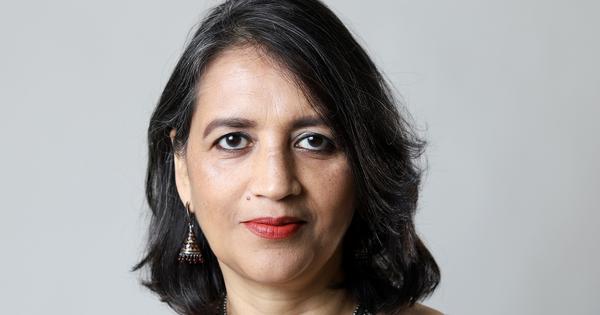
‘The more equal a space, the more we see civilised behaviour’: Shinjini Kumar, author, ‘Busy Women’
In an interview, Kumar talks about how women’s rising expectations in tier 1 and 2 towns are changing India.
2,491 words~11 min read