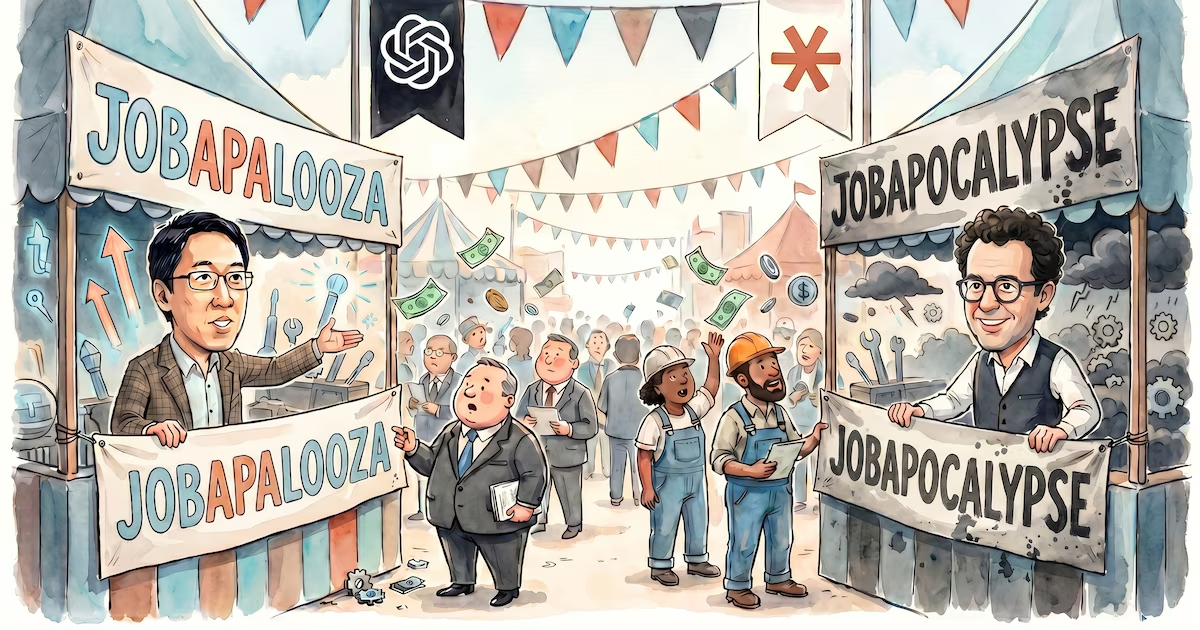
The launch of ChatGPT in 2022 ignited the artificial-intelligence boom—and elicited a chorus of warnings from AI bosses of an impending jobs apocalypse. Never mind that they have reason to talk up the disruptiveness of their products, or that rich-world employment is near all-time highs—the dark message has landed. Seven in ten Americans think AI will make it harder for people to find work; nearly a third fear for their own jobs. A dearth of openings for college graduates—especially computer programmers—amplifies the dread.
The past offers some solace for the anxious. Labour markets constantly change. Today’s offices would be unrecognisable to a worker from 50 years ago. Never in modern history has technological progress hurt the overall demand for human labour. Economic historians now play down the magnitude of „Engels’ pause”, the period during the Industrial Revolution in which working-class wages grew more slowly than the wider economy.
De redactie van NRC selecteert de beste artikelen uit The Economist voor een breder perspectief op internationale politiek en economie.
Yet history is not always a good guide to the future, as the Industrial Revolution itself showed. The top AI models are awesome. They can tackle much more complex coding tasks than people were predicting a year ago. The number of AI agents has exploded. Spending on AI by businesses is up dramatically. Annualised recurring revenue of Anthropic, a hot model-maker, is set to reach $50bn by the end of June. There is no evidence yet in the labour-market data of AI destroying many jobs. But given how fast it is improving, it would be rash to dismiss fears that it will. Society may be on the verge of a profound reallocation of resources, and political upheaval.