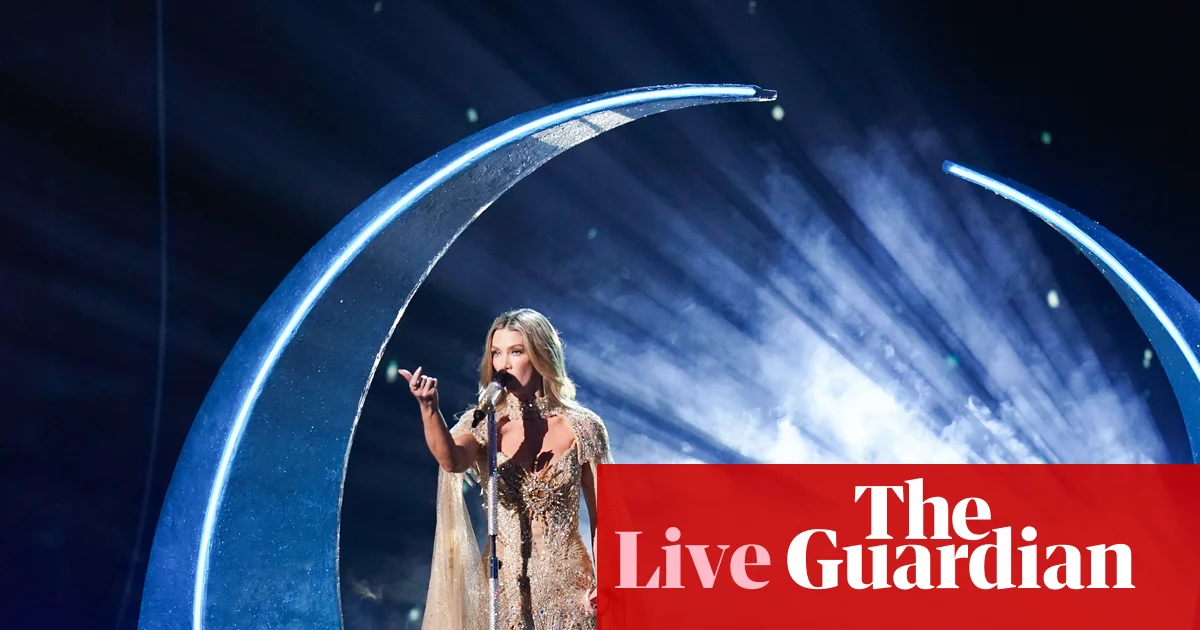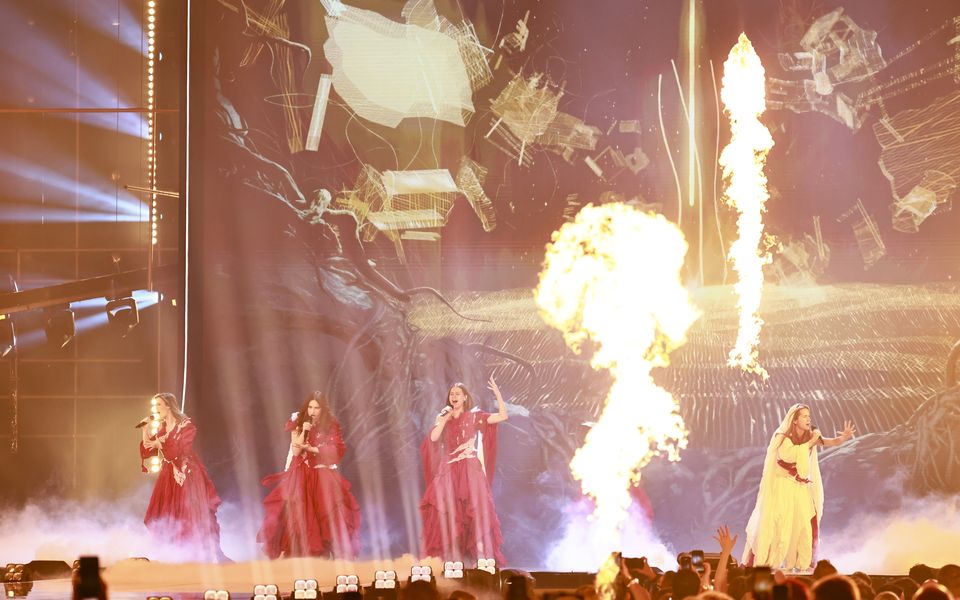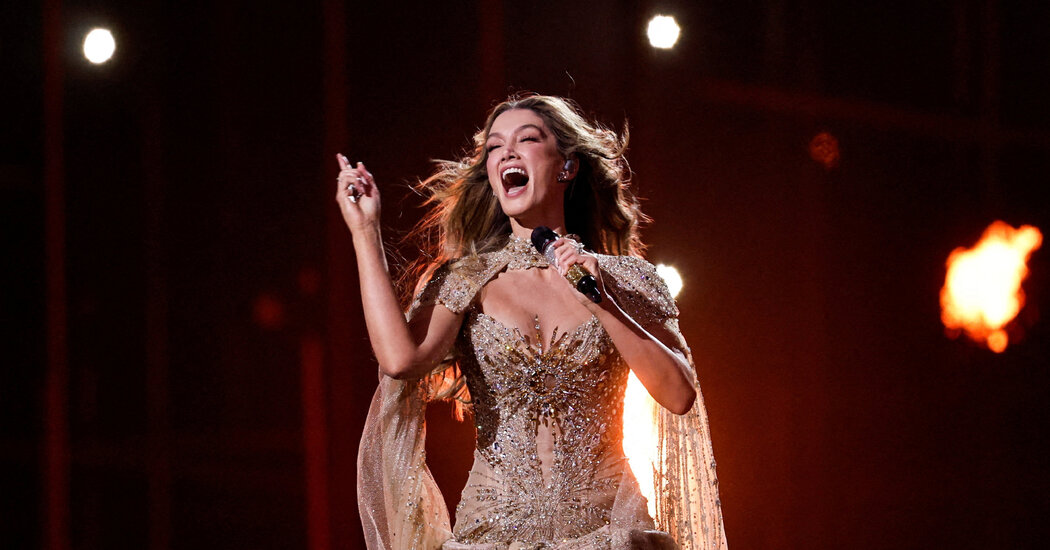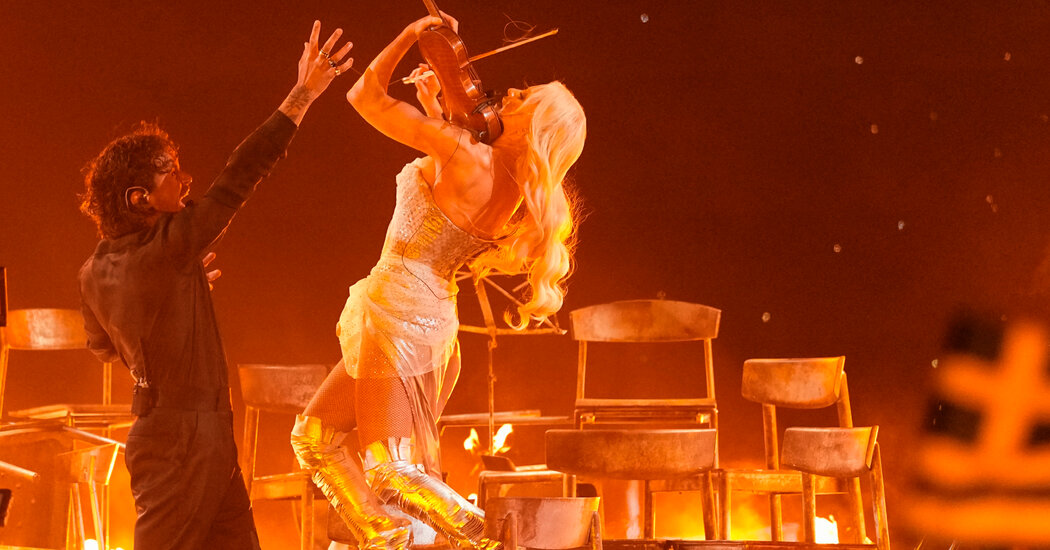
Latest PinnedHere’s the latest.Tonight, the Eurovision Song Contest is celebrating its 70th anniversary.But what is typically a joyful moment for the world’s most watched musical event is clouded by questions around Israel’s ongoing participation. Five Eurovision stalwarts, including the Netherlands and Ireland, have boycotted the show to protest Israel’s military actions in Gaza.Here in Vienna, most fans have been ignoring that crisis this week and were focused on the music. Eurovision introduced the world to Abba, Celine Dion and Maneskin — and tonight’s show includes the usual mix of songs from the brilliant to the bizarre.Those tuning in — and anyone can this year on Eurovision’s YouTube channel — will sees acts including a Lithuanian in silver body paint, a Greek dressed as a cat and a suave Italian man singing a disco song perfect for wedding dance floors.The favorite is Finland’s Linda Lampenius and Pete Parkkonen with “Liekinheitin” (“Flamethrower”), a duet between a star violinist and a hot pop star. But there is an act for a variety of musical tastes, whether you love opera or snarling rock.The final is scheduled to start at 9 p.m. Vienna time (3 p.m. Eastern). To get ready, you can read our rundown of this year’s most popular acts, our investigation into the events that led to those five countries’ pulling out, and our look at how easy it can be to sway the vote in some countries.Stay here for all the action as it happens. I’ll be reporting from Vienna, and we have music, TV and fashion experts ready to comment on every twist and turn.Alison Lim, 39, an occupational therapist from Perth, Australia, said that this was her third time attending Eurovision and that she’d loved the contest since childhood. “My family had a tradition of getting up early every year at 3 a.m. to watch,” she said. She’s expecting Delta Goodrem, Australia’s artist, to win this year. “She clearly enjoys being onstage and relishes the crowd, and she’s an amazing singer,” Lim said. If Australia does win, Lim said, she hopes a “warm country” like Greece will host Eurovision on Australia’s behalf. “We want a good holiday,” she said.ImageCredit...Alex Marshall for The New York TimesVienna has a rich pop music scene, and it isn’t just ‘Rock Me Amadeus.’ImageThe Austrian rock band Bilderbuch, which has taken up the mantle of Austropop in the last decade.Credit...Barbara Gindl/Agence France-Presse — Getty ImagesSay the words “Austria” and “music” in a single breath, and several names usually come to mind: Mozart, Haydn, Schubert, Johann Strauss. That’s no accident. Classical music is, after all, the calling card for this country of nine million.But the Austrian music scene didn’t just disappear during the last century and a half. In fact, Austria — including its capital, Vienna, which is hosting this year’s Eurovision Song Contest — has a robust pop music scene.One familiar name for American listeners might be Falco, whose song “Rock Me Amadeus” spent three weeks at No. 1 on the Billboard Hot 100 chart in 1986.Falco, perhaps Austria’s best-known international pop star, represents a broader contingent of ’70s and ’80s Austropop performers, including Georg Danzer, who charmed listeners with his song “Jö Schau,” about a naked man who walks into a cafe, and Erste Allgemeine Verunsicherung, or E.A.V., a rock band whose name is a corporate name-hijack of a staid Austrian insurance company.In the last decade, rock bands like Wanda and Bilderbuch have taken up the Austropop mantle, releasing songs that now play on repeat at parties, such as “Maschin” and “Bologna.”One of Austria’s most popular music genres is Wienerlied, or Viennese song — traditional music going back to the 19th century that features lyrics about life, wine and Vienna and is sung in a spoken style. Artists like Voodoo Jürgens and Wiener Blond have breathed new life into the genre in recent years.It’s impossible to discuss popular Austrian music without mentioning Udo Jürgens, the crooner known as Europe’s Frank Sinatra. He won Eurovision in 1966 and sold more than 100 million records during his career, and Bing Crosby recorded one of his top hits, “Griechischer Wein,” as “Come Share the Wine.”For more contemporary, global sound, there’s 5K HD, an experimental pop band; Cari Cari, an indie rock duo; Bibiza, who blends hip-hop and indie rock; and Alicia Edelweiss, an Austrian British artist who sings about nature, friendships and feminism.Where to see acts like these in Vienna?Popular venues for live music include Arena, Flucc, Flex, Szene Wien, Frau Mayer, and Club Porgy and Bess. For a more underground vibe, the ring road separating Vienna’s inner and outer districts is studded with music venues like Rhiz, Venster 99, The Loft, B72 and Lucia.And for bigger acts, the go-to concert halls are the Wiener Stadthalle and Ernst Happel Stadium, where Taylor Swift planned to perform in 2024 before canceling her three shows because of a terrorist threat.AdvertisementSKIP ADVERTISEMENTThere’s a tattoo studio inside the arena, and some fans have been getting tattoos with the Eurovision heart logo and “united by music” slogan. Leonard Sorger, 24, the studio manager, said that his tattooists had inked 72 people during the semifinals this week and that he expected another 30 tonight. Some fans had asked for neck tattoos, he said, adding, “I wasn’t expecting them to do it somewhere so obvious.”ImageCredit...Alex Marshall for The New York TimesWhy are five countries skipping Eurovision, and does it matter?ImageA protest in November outside the television studios of RTÉ, the Irish state broadcaster, calling for a boycott of the 2026 Eurovision Song Contest if Israel was allowed to participate.Credit...Clodagh Kilcoyne/ReutersFive countries are not taking part in tonight’s contest in protest over Israel’s ongoing inclusion given its military actions in Gaza. And they are not countries that Eurovision can afford to lose for long.Each country’s broadcaster pays a fee toward Eurovision’s costs, and one of the missing nations, Spain, usually contributes so much money that it gets automatic entry into the Eurovision final.Of the other nations boycotting — Iceland, Ireland, the Netherlands and Slovenia — two are major contributors to Eurovision history, and their music fans follow the event assiduously.Ireland has won Eurovision seven times, including twice thanks to the singer Johnny Logan. (His heart-wrenching “Hold Me Now,” from 1987, is a Eurovision classic).The Netherlands has won five times — most recently in 2019 with Duncan Lawrence’s soaring indie track “Arcade” — and the country’s fans, decked in orange, are usually a visible presence at Eurovision events.The five countries had wanted a vote on Israel’s participation in this year’s contest because of the war in Gaza. They announced their boycott in December after Eurovision’s members instead voted to accept rule changes that tamped down on political interference and lowered the maximum number of votes each viewer can cast from 20 to 10.Eurovision said those rule changes would address the perception that Israel was having an unfair influence on the contest’s results, fueled partly by Israeli government-funded ads for Israel’s singers.Israel’s broadcaster, KAN, accepted those rule changes, but has said in statements that its acts have done so well recently simply because of the power of their songs.It’s unclear whether the five boycotting countries will return anytime soon.There’s a joyous atmosphere inside the arena already, with fans using makeup stands in the concourse to jazz themselves up. Larissa Riemer, 31, from Germany, said she had been “close to a heart attack” when she secured a ticket for the final and was excited for tonight’s show. She’s supporting Greece, Austria and Croatia — but really, she said, “all of Eurovision.”ImageCredit...Alex Marshall/The New York TimesAdvertisementSKIP ADVERTISEMENTA Times investigation tracked Israel’s efforts to gain soft power from Eurovision.ImageYuval Raphael represented Israel at the Eurovision Song Contest last year.Credit...Sebastian Reuter/Getty ImagesLast fall and winter, senior Israeli diplomats urgently contacted officials and television broadcasters across Europe to address a delicate, if unexpected topic: Eurovision.Broadcasters wanted to ban Israel from Eurovision and threatened to boycott the contest over the war in Gaza. Some even accused the Israeli government of unfairly influencing the 2025 results through a mass voting campaign.This diplomatic push to keep Israel in Eurovision was just one aspect of a drama that unfolded over the past year around the world’s most watched cultural event. To the Israeli government, Eurovision became a chance, through strong showings by its singers, to burnish the country’s flagging reputation and rally international support.A New York Times investigation found a well-organized campaign by Prime Minister Benjamin Netanyahu’s government that embraced Eurovision as a soft power tool, and a secretive contest organizer that was ill-equipped to respond.KAN, Israel’s public broadcaster, which selects the country’s Eurovision entry, has said in a statement that it was never involved “in any prohibited campaign” to influence results.And there is no evidence of a coordinated campaign this year. But the contest finishes tonight with the controversy hanging over it.Even before the voting controversy burst into view, financial records show, Israel spent at least $1 million on Eurovision marketing. Some of that money came from Netanyahu’s “hasbara” office, a euphemism for overseas propaganda, to promote Israel’s singer.Eurovision’s director, Martin Green, said in an interview that Israel’s actions last year were excessive but did not contribute to Israel’s unexpected second-place finish.A Times investigation based on previously undisclosed voting data, Eurovision documents and interviews with more than 50 people, however, found that the campaign could have easily changed the contest outcome.How a few hundred voters could have swayed Eurovision results.ImageWatching a screening of the Eurovision Song Contest at a community center in Tel Aviv last year.Credit...Maya Levin/Agence France-Presse — Getty ImagesOver 56 million music fans tuned in to last year’s Eurovision final, making it the world’s most watched cultural event. Viewers cast 14 million votes to help choose the winner, organizers said.But almost immediately after the competition, fans began questioning whether an Israeli government advertising campaign had tipped the popular vote in favor of Israel’s contestant, despite Eurovision’s longstanding tradition of government neutrality.Organizers assured the public that there were no voting irregularities. And they privately told broadcasters that Israel had not influenced the outcome. But they did not commission an outside review, The New York Times found. And they did not release voting data. Doing so, they said, would undermine the contest’s security.Data obtained by The Times shows that, in some countries, just a few hundred people would have been enough to secure a popular vote victory under last year’s voting rules, which have since been tightened. That made the contest far more susceptible to government influence campaigns than organizers have acknowledged.AdvertisementSKIP ADVERTISEMENTWho’ll take the Eurovision title? Prediction markets give some clues.ImageLinda Lampenius, representing Finland, during the first semifinal of the Eurovision Song Contest in Vienna on Tuesday.Credit...Martin Meissner/Associated PressWant to know who’ll win this year’s Eurovision?Well, prediction market traders are increasingly piling into the song contest, and their wagers might offer some insight.On Polymarket, where more than $175 million in Eurovision bets are at stake, Finland is the clear favorite with a 44.5 percent chance of winning, according to the site’s users.Finland also leads on Kalshi, another popular prediction market. And Europe’s traditional bookmakers likewise have Finland’s Linda Lampenius and Pete Parkkonen as the favorite to win.Their track, “Liekinheitin” (“Flamethrower”), has all the classic elements of a Eurovision winner. The duet between Lampenius, a violinist, and the pop star Parkkonen, is catchy and dramatic. During the performance, Lampenius sprints along the stage in high heels while carrying her violin — a 1781 Gagliano, worth an estimated $660,000.Violinists and fiddlers have won Eurovision before, notably Alexander Rybak, who won the 2009 contest for Norway with “Fairytale.” And ever since Finnish TV viewers chose “Liekinheitin” to go to Eurovision, it’s topped fan polls as this year’s best Eurovision track.That doesn’t mean victory is in the bag. Heading into last year’s final, Kaj from Sweden was the favorite with “Bara Bada Bastu,” a comedy song about saunas. It finished in fourth place.Vladislav Bering, 22, a Polymarket trader who lives in Bulgaria and said he had placed about $1,500 on Finland to win, said in an interview that he had gone on “instinct” in deciding to bet on the Finns. He said that the act’s staging was brilliant and that such spectacle was needed to win.For the same reason, he also put about $1,000 on Australia’s Delta Goodrem this week after seeing her semifinal performance. “It was such a good show,” he said of a performance that at one point sees the singer stand atop a gold piano.According to prediction markets, only Goodrem, a former star of the wildly popular Australian soap opera “Neighours,” Greece’s madcap Akylas and Bulgaria’s Dara have a chance of challenging the Finns.But there are many other acts looking to take tonight’s title, too, with other talked-about contenders including Denmark and Romania.
Eurovision 2026 Live Updates: Grand Final Set to Begin in Vienna
Anticipation is building in Vienna for the grand final of the wildly popular singing contest’s 70th anniversary edition.
2,117 words~10 min read