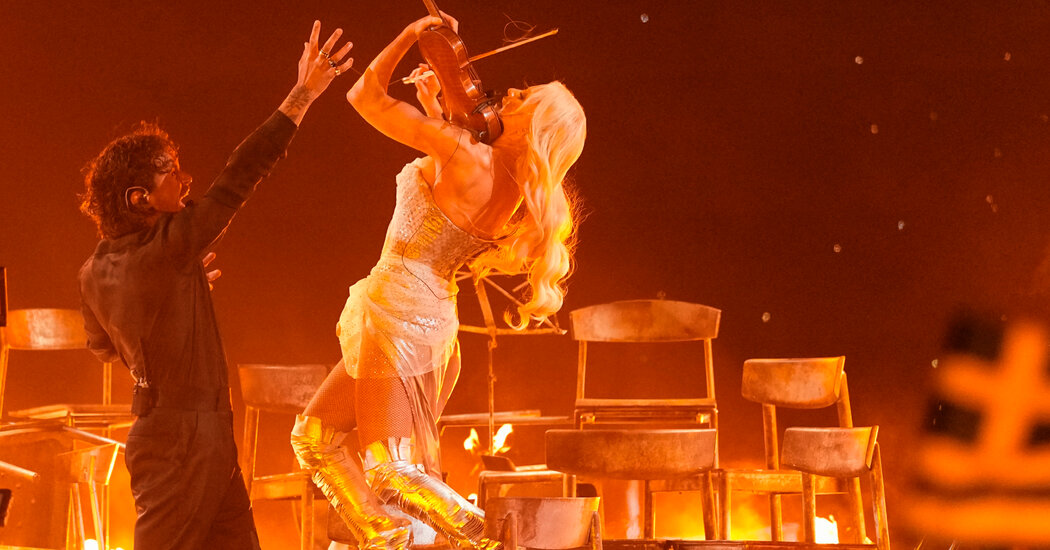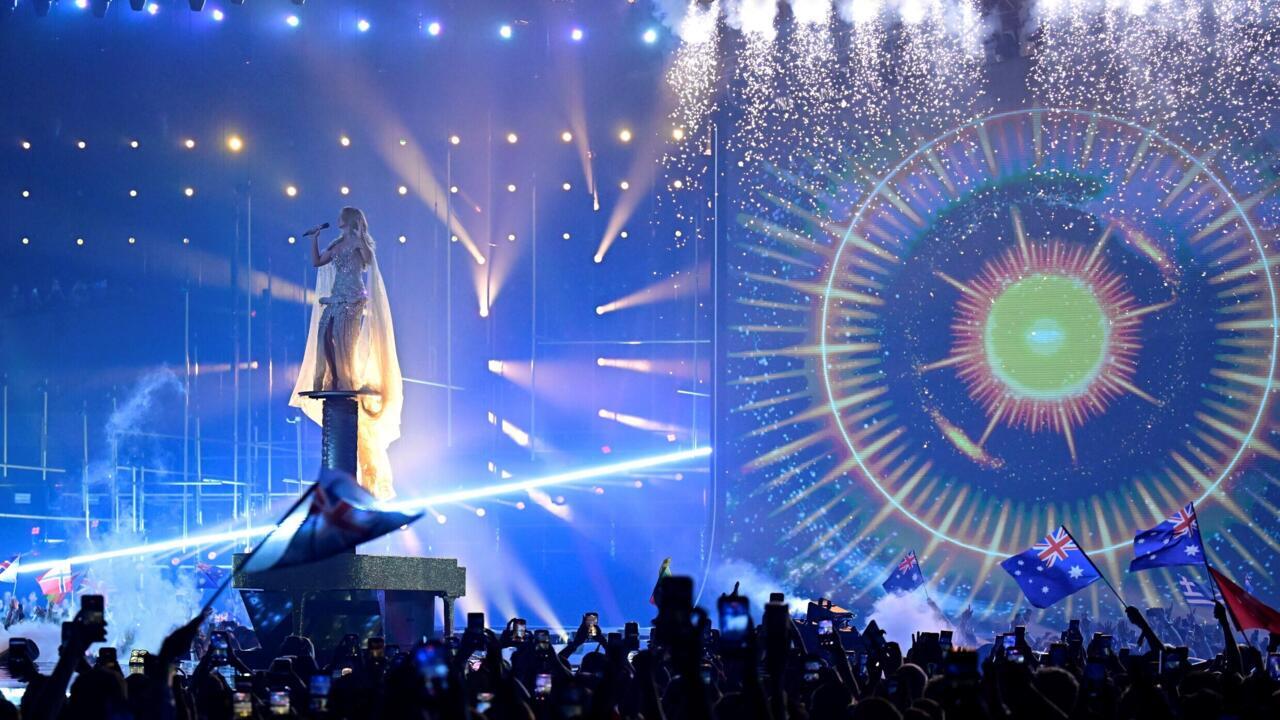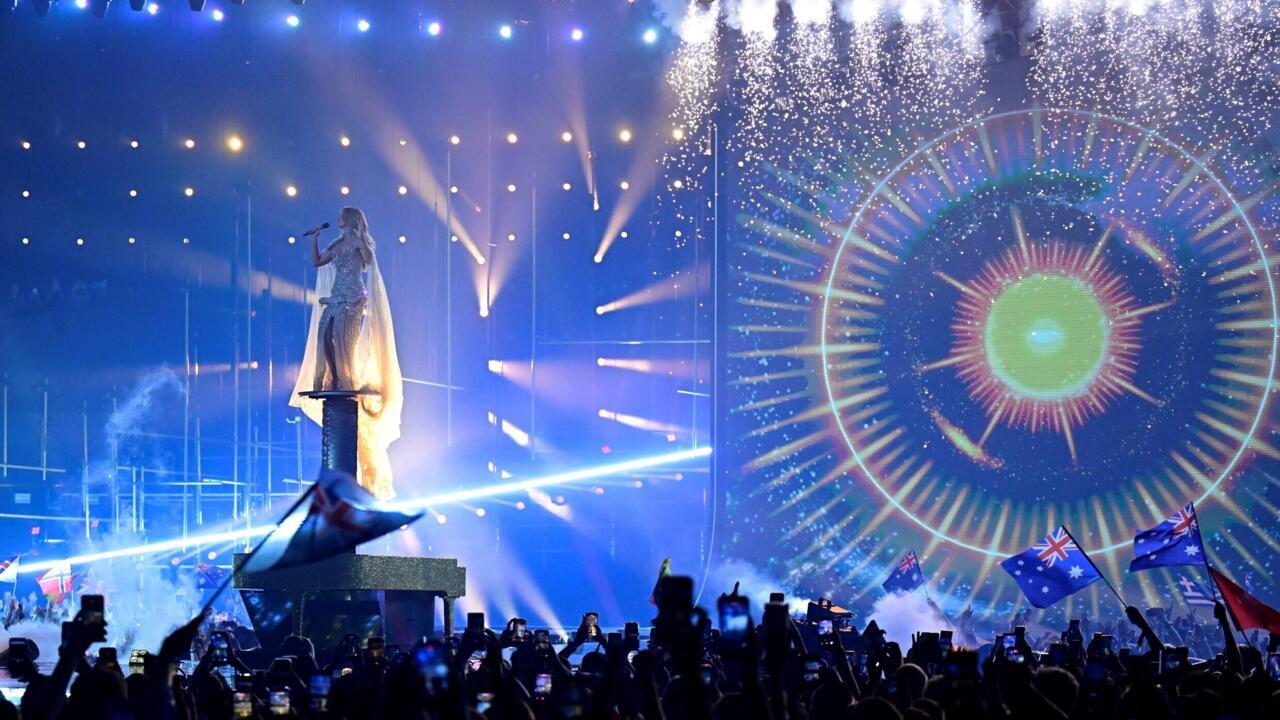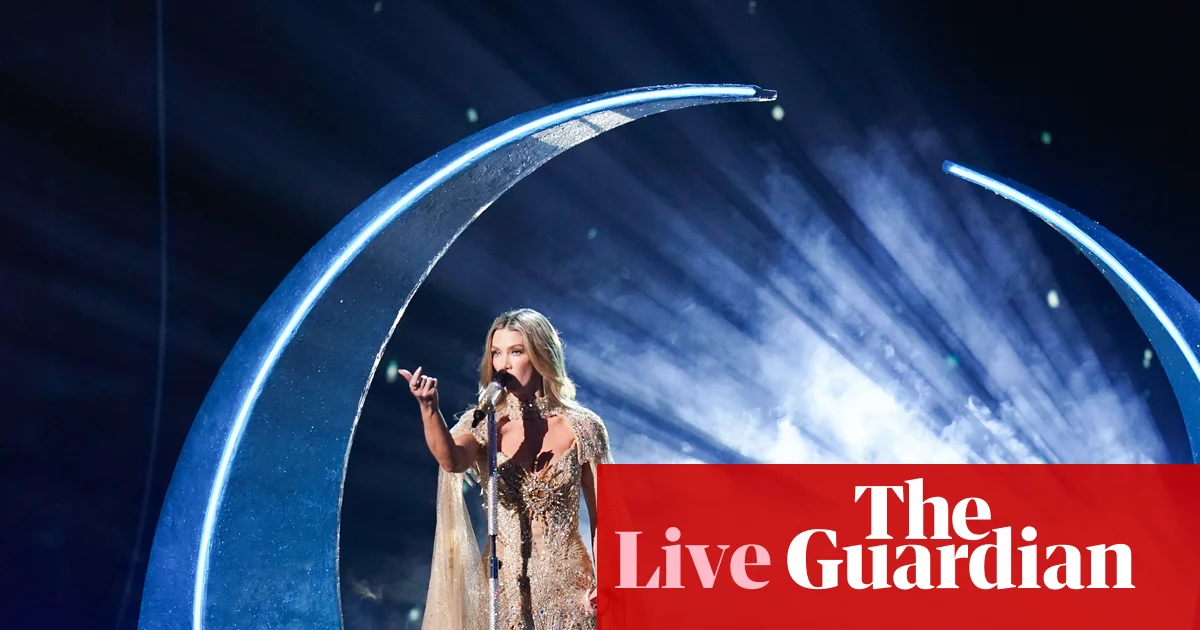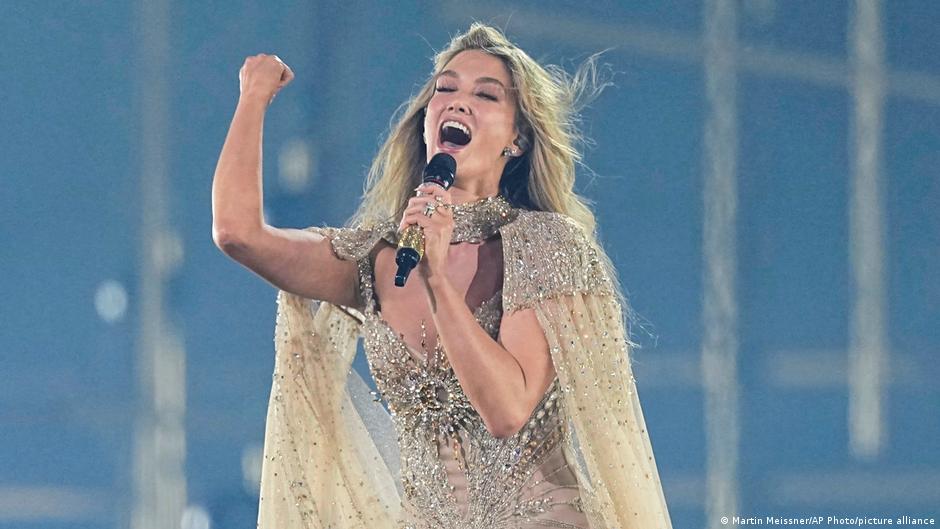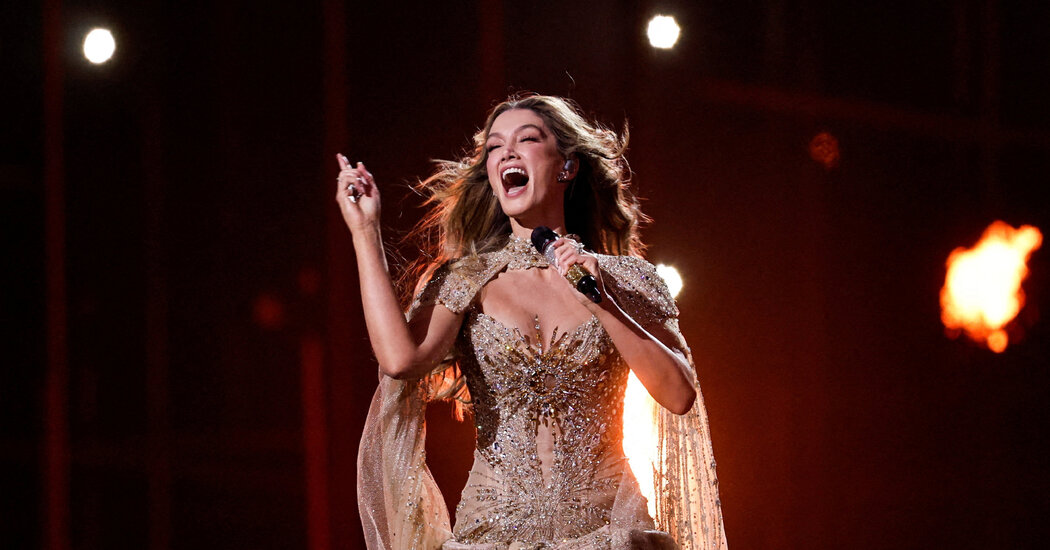
PinnedHere’s the latest.Tonight, the Eurovision Song Contest is celebrating its 70th anniversary.But what is typically a joyful moment for the world’s most watched musical event is clouded by questions around Israel’s participation. Five Eurovision stalwarts, including the Netherlands and Ireland, have boycotted the show to protest Israel’s military actions in Gaza.Here in Vienna, most fans have been ignoring that crisis this week and are focused on the music. Eurovision introduced the world to Abba, Celine Dion and Maneskin — and tonight’s show includes the usual mix of songs from the brilliant to the bizarre.Those tuning in — and anyone can this year on Eurovision’s YouTube channel — are watching acts including a Lithuanian in silver body paint, a Greek dressed as a cat and a suave Italian man singing a disco song perfect for wedding dance floors.The favorite is Finland’s Linda Lampenius and Pete Parkkonen with “Liekinheitin” (“Flamethrower”), a duet between a star violinist and a hot pop star. But there is an act for a variety of musical tastes, whether you love opera or snarling rock.The final got started at 9 p.m. Vienna time (3 p.m. Eastern). To catch up, you can read our rundown of this year’s most popular acts, our investigation into the events that led to those five countries’ pulling out, and our look at how easy it can be to sway the vote in some countries.Stay here for all the action as it happens. I am reporting from Vienna, and we have music, TV and fashion experts commenting on every twist and turn.France’s Eurovision act is just as much America’s.ImageMonroe is representing France with “Regarde!,” in which she shows off her operatic vocals.Credit...Martin Meissner/Associated PressThe United States may not yet take part in Eurovision, but Americans still have a homegrown act to root for this year: Monroe, who was born and raised in Salt Lake City, is representing France.The daughter of a French mother and American father, Monroe is singing “Regarde!,” a soaring track about falling in love (“It hits you like lightning”) in which she repeatedly shows off her operatic range.If she wins tonight, Monroe will be the third singer in a row to use operatic skills to help secure the Eurovision title, following JJ of Austria and Nemo of Switzerland.Monroe, 17, said in an interview that she had loved growing up between two cultures, and her dual heritage showed up even in her childhood listening habits. At home on the couch with her father, Monroe recalled, she’d listen to American and British singers like Adele and Whitney Houston, but in the car with her mom, she’d get a diet of French-language pop including Céline Dion, Lara Fabian and Barbara.“It’s kind of allowed me to appreciate both cultures,” said the singer, whose full name is Monroe Vata Rigby.Monroe’s breakthrough came in France last year when she won “Prodiges,” a popular TV talent show for classical musicians. In the final, she sang the renowned “Queen of the Night” aria from Mozart’s “The Magic Flute” — the same virtuoso piece that JJ performed to get the evening started.Since then, she has released a classical album and is now at Eurovision. Monroe insisted that taking part in the high-camp singing competition wasn’t a left turn, because she had always wanted to mix pop and classical music onstage and demonstrate how together “they could produce something that was very beautiful.”Before she learned that she was going to Vienna, Monroe had planned to study music at a college or conservatory in the U.S., but she said she had deferred offers to take part in the show.Still, she was making time for an hour or two’s study a day while in Vienna, she said. “Learning in life is the most important,” the 17-year-old said.AdvertisementSKIP ADVERTISEMENTLook Mum No Computer is wearing a British staple: Dr. Marten boots. I wonder how long it took to break them in enough to shimmy across the stage.It bears repeating because it keeps happening: Britain holds the record for the most second places at Eurovision, with 16 times. The last time it was runner-up was in 2022, with Sam Ryder’s “Space Man.”Scott BryanBritain’s entrant, Look Mum No Computer, or Sam Battle, is a musician and YouTube content creator. He also has his own museum in southeastern England. He’s known for taking analogue devices and repurposing them for unexpected purposes, such as a “Furby Organ” made out of the popular 1990s toys. “Eins Zwei Drei” is the first time in Eurovision history that Britain has a song name in a language other than English.When asked about his likelihood of winning, and the fact that the country’s 2025 entrant, Remember Monday, scored zero points in the public vote, Battle told BBC News, “That’s a really good T-shirt: Look Mum No Points.”Scott BryanCroatia’s 2024 entrant, Baby Lasagna, was runner-up. Last year, the country failed to qualify for the grand final.AdvertisementSKIP ADVERTISEMENTLelek definitely nailed the witchery imagery with their deep red and lace ensembles and the smokey floor.ImageCredit...Tobias Schwarz/Agence France-Presse — Getty ImagesAlthough fewer of the songs are entirely in English, there are still holdouts like “Bangaranga” from Bulgaria, probably so that more people can delight in classic Eurovision lyrics like “I’m an angel / I’m a demon / I’m a psycho / For no reason.”Dara, representing Bulgaria, was asked by interviewers numerous times this week about what “Bangaranga” means. She ended up posting a lengthy explanation on Instagram saying that it’s “inspired by kukeri — ancient Bulgarian ritual performers who scare away evil” and “is your higher self stepping forward.” It’s also a fun word to sing, which she does about 30 times in three minutes. I will be joining in, as will everyone else in the arena.ImageCredit...Lisa Leutner/ReutersDaniel Zizka, the Czech act, is straying from the fashion precedent set by the night’s previous performers. He is wearing … slacks and a navy button-up shirt.AdvertisementSKIP ADVERTISEMENTMore leather! First Israel, then Serbia and now Malta’s act is dressed up in a double-leather ensemble.ImageCredit...Tobias Schwarz/Agence France-Presse — Getty ImagesScott BryanMalta has competed in Eurovision 37 times but has never won the contest. It has come close a handful of times, and this year’s entrant — Aidan, with “Bella” — is memorable.In case the camera trick at the end leaves you wondering, both the camera and Aidan are spinning at the same time.Eurovision entries from Malta have almost always been in English in the past, but this one adds Italian and Maltese to the mix. This is representative of a larger trend: The number of songs performed entirely in English seems to have peaked in the late 2010s, and has been shrinking since. They represented less than half of the 35 entries this year.Dressing a group act is tricky — go with matching outfits and you risk looking camp. Serbia’s act, Lavina, is unperturbed by this with their silver grommet adorned leather, talon-like nails and striking eyeliner.ImageCredit...Lisa Leutner/ReutersAdvertisementSKIP ADVERTISEMENTSerbia is the only country to have won at its first Eurovision appearance, thanks to Marija Serifovic with the song “Molitva” in 2007. Mind you, Serbia had participated before, but not as an independent country — first as part of Yugoslavia then as part of Serbia and Montenegro.Australia has sent a classic number: a woman in a golden gown, belting her heart out in a relatively minimal staging. Banking on a traditional approach may pay off if audiences have reached the saturation point with acts getting nuttier and nuttier.Delta Goodrem is a vision in an embellished column gown completed with jewels arranged like a sun at her bust. And, because this is Eurovision, she couldn’t leave the matching cape at home.ImageCredit...Lisa Leutner/ReutersDelta Goodrem’s “Eclipse” is one of the few songs this year with a key change — a once-popular move that would rev up a song as it entered its final stretch, usually around the 2:30 mark. It certainly worked for the 1977 winner, “L’Oiseau et l’Enfant,” by Marie Myriam from France, and the 2007 winner, “Molitva,” from the Serbian singer Marija Serifovic.AdvertisementSKIP ADVERTISEMENTHUGE cheer for Australia in the arena.Australia’s strategy: Go big. On everything.ImageDelta Goodrem, representing Australia, shot to stardom as a teenager in the early 2000s starring in the wildly popular Australian soap opera “Neighbours.”Credit...Helmut Fohringer/Agence France-Presse — Getty ImagesSometimes a Eurovision nation surprises everyone by sending a singer who seems to have little need of a fame boost. They’re neither a young act trying to break through nor an older star desperate to revive a flagging career.This year that person is Delta Goodrem, representing Australia, who shot to stardom as a teenager in the early 2000s starring in the wildly popular Australian soap opera “Neighbours,” and then as a singer of epic ballads.Her debut album, 2003’s “Innocent Eyes,” was the biggest-selling album of the 2000s in Australia.Since then, Goodrem has released six further albums. She has also gained a reputation as an inspirational speaker, giving speeches about her recovery from both cancer and a medical procedure that resulted in her temporarily losing the ability to speak.So why is she at Eurovision with “Eclipse,” an epic ballad that grows in momentum and volume with each verse?Goodrem, 41, has said in interviews that friends had asked her for years to enter the song contest; then, in 2025, she finally decided to try. Her approach in writing the song was to go as big as possible, she said this week at an event staged by Wiwibloggs, a popular Eurovision site.“When you’re doing Eurovision, I want a key change, I want high notes, I want wind machines, I want sparkles, I want surprises, I want it all!” Goodrem said.She took the same maximalist approach for the staging, she added. “I want pyro! I want fire! I want smog! I want lighting! And I want 7,000 sparkles on my dress!”That method might just work. Goodrem is one of the big favorites to win.Leléka’s fringed black and white train seems to be the perfect prop for a dramatic performance. As are her black half gloves.ImageCredit...Tobias Schwarz/Agence France-Presse — Getty ImagesAdvertisementSKIP ADVERTISEMENTScott BryanThere has been speculation that Leléka’s song contains the longest note in Eurovision history — although I’m not entirely sure how we would work that out.Leléka, who has just come onstage representing Ukraine, has a setup involving rolls of cloth falling from the ceiling above her. She had some issues this week when the rolls got stuck or landed with an audible thud, so fingers crossed that doesn’t happen now.The zippy little flute line you hear right before the start of every performance is one of the signature lines of the character Papageno in “The Magic Flute.” Dorothee Freiberger and Martin Gellner incorporated themes from that Mozart opera for their theme music for the contest. The Austrian broadcaster ORF is really on brand with this nod to opera-rich Vienna.Finally a party here! This is the night’s first arena-wide singalong.AdvertisementSKIP ADVERTISEMENTGreece’s Akylas wants it all.ImageAkylas representing Greece, during a dress rehearsal for the first semifinal with his performance of “Ferto.”Credit...Martin Meissner/Associated PressLast fall, Greece’s representative tonight, Akylas, was fearing that his music career was over.He had spent years trying to make it as a pop star and had two minor successes in his home country, but he had also needed to work as a waiter and cruise ship performer to pay his rent. At that point, he was busking for tourists in Athens.“It was the most difficult September in my life,” Akylas, 27, recalled in an interview: “I was like, ‘Maybe I should go back to the cruise ship.’”Instead, he wrote “Ferto” (or “Bring It” in English). And now he is among the favorites to win tonight.On the madcap track, which mixes traditional Greek instruments with electronic bleeps, Akylas sings in Greek about wanting everything the world can offer, including diamond rings, submarines and lots of “sashimi tuna.”“I want the summit, not just a step,” he sings. Though the lyrics make him sound like an insatiable Disney villain, Akylas said they also reflected his background growing up in a working-class household in Serres, a small city in northern Greece, where he desired things that others had.The lyrics also chime with the economic precarity and rising homelessness that many Greeks experienced in the financial crisis that began in 2008, Akylas said. “A lot of my generation grew up feeling something was missing,” he added.Since he won Greece’s Eurovision selection process, Akylas said, many of his dreams have come true. Millions of people have watched the video for “Ferto.” Fans have been dressing like him, including in knitted hats with kitten ears like he wears onstage. He even got a phone call from Prime Minister Kyriakos Mitsotakis to wish him luck, he said.Does he now have everything he sings about wanting in “Ferto?” “The money, no,” Akylas said with a laugh. “But that’s going to come!”AdvertisementSKIP ADVERTISEMENTAdvertisementSKIP ADVERTISEMENTIsrael’s Noam Bettan brings some French flair.ImageNoam Bettan of Israel performing “Michelle” in Tuesday night’s semifinal.Credit...Tobias Schwarz/Agence France-Presse — Getty ImagesIsrael has a recent habit of sending power ballads to Eurovision.There was Eden Golan’s “Hurricane” in 2024, then Yuval Raphael’s “New Day Will Rise” last year.This time, the country is trying something different with “Michelle,” a more upbeat pop track by Noam Bettan, in which he sings about a toxic relationship over Spanish guitar and a shuffling Middle Eastern beat.It’s also largely in French. “Adieu ma belle / Je te laisse partir / Mais je t’aime” Bettan sings in a typical excerpt. (“Goodbye my love, I’m letting you go, but I love you.”)Bettan’s language choice stems from his French heritage: His parents emigrated to Israel from Grenoble, France, before he was born.The 28-year-old’s appearance at Eurovision is the end point of “more than eight years of hard work, Sisyphean work,” trying to make it as a singer, Bettan recently told The Times of Israel.Although Israel has won Eurovision four times, the contest’s stage is a fraught place for any Israeli right now. Bettan told the BBC this week that he had heard “booing and everything, and there was a moment of, like, a wow effect, you know? A little bit of shock.”Bettan’s presence has also stirred controversy in Vienna for another reason. Last week, excerpts from planned video ads by him appeared on social media in which he encouraged fans to vote for his song the maximum 10 times allowed.Eurovision’s organizer issued a statement saying it had told Bettan’s team that the ads were “not in line with our rules nor the spirit of the competition” and told him to drop the campaign.Bettan told the BBC this week that he had been unaware that contestants weren’t allowed to ask fans for multiple votes, and had deleted the ads.The ads echoed ones that Israel’s last entrant, Yuval Raphael, released last year and the Israeli Government Advertising Agency placed on YouTube, leading to accusations that Israel was trying to unduly influence the vote. Other nations don’t typically release calls for fans to vote the maximum number of votes.KAN, Israel’s public broadcaster, which selects the country’s Eurovision entry, has said in a statement that it was never involved “in any prohibited campaign” to influence results.AdvertisementSKIP ADVERTISEMENTA Danish theater kid thinks the omens are good for him.ImageSoren Torpegaard Lund, representing Denmark this year, said that musical theater and Eurovision were “natural bedfellows.”Credit...Lisa Leutner/ReutersWhen Soren Torpegaard Lund entered Denmark’s Eurovision selection competition in February, he was third favorite to win out of eight. Chances were, he was going home with nothing.But then he wowed the TV audience with his performance of “Foer Vi Gaar Hjem” (“Before We Go Home”), a pounding dance track about a night out, during which Lund climbed on top of a Perspex box filled with club kids and tried to smash his way inside.He won easily.This week, Lund, 27, was third favorite in the bookmakers’ odds to win the Eurovision final, and said in an interview that he hoped the coincidence was a favorable omen. “My room number at my hotel is also 333,” Lund said, “so I’m, like, ‘There’s something about this number.’”Lund attributed the strength of his performance to his background in musical theater. He grew up in a small town in southern Denmark where most people were obsessed with sports, and he was the odd one out drawn to the stage.When he was about 10, he played the lead in an amateur production of “Oliver!” and immediately felt he had found his calling. “It was the most natural thing,” he recalled.Now, he’s a musical star in his home country, having played the lead in a Royal Danish Theater production of “West Side Story.” Next year, he’s scheduled to play the lead male role in a musical adaptation of Shakespeare’s “Romeo and Juliet.”Few musicals feature dance music like Lund’s Eurovision track, but the singer said that musical theater and Eurovision were “natural bedfellows.” In both, he said, you don’t have to act cool in the way that pop stars typically do.You can be vulnerable onstage or flamboyant. You can whisper or scream. “You’re allowed to be who you want to be,” he said.AdvertisementSKIP ADVERTISEMENTAdvertisementSKIP ADVERTISEMENTWho is JJ? Last year’s winner starts the show with a pop/opera mix.ImageJJ of Austria, the winner of last year’s Eurovision, performing during this year’s Eurovision Song Contest in Vienna on Thursday.Credit...Martin Meissner/Associated PressWhen the Austrian countertenor Johannes Pietsch, known as JJ, won the 2025 Eurovision Song Contest with “Wasted Love,” that number’s mix of pop and opera felt just right for a performer who has named Ariana Grande as his favorite singer and who studied at the Vienna State Opera school and the Music and Arts University of Vienna.JJ, who has an Austrian father and a Filipino mother, grew up in Dubai and Vienna, a background that may help explain his disdain for musical boundaries.His competitive streak began showing in earnest in 2020, when he was 18 and entered the British version of the TV show “The Voice.” JJ won over the show’s coach will.i.am with a rendition of “The Sound of Music” in his blind audition, and was eliminated in the knockout round. Admittedly, his take on ABBA’s “The Winner Takes It All” in the contest indicated that he had not yet entirely refined his genre-mixing skills.Not done with TV competitions, JJ went on the Austrian show “Starmania,” whose alumni include Thomas Neuwirth, who’s also known as Conchita Wurst and won Eurovision in 2014 with “Rise Like a Phoenix.” And the two singers teamed up for a mashup of their winning numbers last year.As is traditional at Eurovision, the previous year’s champion is prominently featured in the current festivities, and so at tonight’s final, JJ is performing “Queen of the Night,” a song that incorporates different styles. The title refers to a character from “The Magic Flute,” which should bring back memories for the singer, as JJ appeared in a production of that Mozart masterpiece at the Vienna State Opera mere months before heading to Eurovision last year.Coincidentally — or is it? — the Nemo song “The Code,” which won Eurovision for Switzerland in 2024, combined pop, drum-and-bass and opera, and at one point dropped what sounded like a quick reference to an aria sung by … the Queen of the Night.AdvertisementSKIP ADVERTISEMENTVienna has a rich pop music scene, and it isn’t just ‘Rock Me Amadeus.’ImageThe Austrian rock band Bilderbuch, which has taken up the mantle of Austropop in the last decade.Credit...Barbara Gindl/Agence France-Presse — Getty ImagesSay the words “Austria” and “music” in a single breath, and several names usually come to mind: Mozart, Haydn, Schubert, Johann Strauss. That’s no accident. Classical music is, after all, the calling card for this country of nine million.But the Austrian music scene didn’t just disappear during the last century and a half. In fact, Austria — including its capital, Vienna, which is hosting this year’s Eurovision Song Contest — has a robust pop music scene.One familiar name for American listeners might be Falco, whose song “Rock Me Amadeus” spent three weeks at No. 1 on the Billboard Hot 100 chart in 1986.Falco, perhaps Austria’s best-known international pop star, represents a broader contingent of ’70s and ’80s Austropop performers, including Georg Danzer, who charmed listeners with his song “Jö Schau,” about a naked man who walks into a cafe, and Erste Allgemeine Verunsicherung, or E.A.V., a rock band whose name is a corporate name-hijack of a staid Austrian insurance company.In the last decade, rock bands like Wanda and Bilderbuch have taken up the Austropop mantle, releasing songs that now play on repeat at parties, such as “Maschin” and “Bologna.”One of Austria’s most popular music genres is Wienerlied, or Viennese song — traditional music going back to the 19th century that features lyrics about life, wine and Vienna and is sung in a spoken style. Artists like Voodoo Jürgens and Wiener Blond have breathed new life into the genre in recent years.It’s impossible to discuss popular Austrian music without mentioning Udo Jürgens, the crooner known as Europe’s Frank Sinatra. He won Eurovision in 1966 and sold more than 100 million records during his career, and Bing Crosby recorded one of his top hits, “Griechischer Wein,” as “Come Share the Wine.”For more contemporary, global sound, there’s 5K HD, an experimental pop band; Cari Cari, an indie rock duo; Bibiza, who blends hip-hop and indie rock; and Alicia Edelweiss, an Austrian British artist who sings about nature, friendships and feminism.Where to see acts like these in Vienna?Popular venues for live music include Arena, Flucc, Flex, Szene Wien, Frau Mayer, and Club Porgy and Bess. For a more underground vibe, the ring road separating Vienna’s inner and outer districts is studded with music venues like Rhiz, Venster 99, The Loft, B72 and Lucia.And for bigger acts, the go-to concert halls are the Wiener Stadthalle and Ernst Happel Stadium, where Taylor Swift planned to perform in 2024 before canceling her three shows because of a terrorist threat.AdvertisementSKIP ADVERTISEMENTWhy are five countries skipping Eurovision, and does it matter?ImageA protest in November outside the television studios of RTÉ, the Irish state broadcaster, calling for a boycott of the 2026 Eurovision Song Contest if Israel was allowed to participate.Credit...Clodagh Kilcoyne/ReutersFive countries are not taking part in tonight’s contest in protest over Israel’s ongoing inclusion given its military actions in Gaza. And they are not countries that Eurovision can afford to lose for long.Each country’s broadcaster pays a fee toward Eurovision’s costs, and one of the missing nations, Spain, usually contributes so much money that it gets automatic entry into the Eurovision final.Of the other nations boycotting — Iceland, Ireland, the Netherlands and Slovenia — two are major contributors to Eurovision history, and their music fans follow the event assiduously.Ireland has won Eurovision seven times, including twice thanks to the singer Johnny Logan. (His heart-wrenching “Hold Me Now,” from 1987, is a Eurovision classic).The Netherlands has won five times — most recently in 2019 with Duncan Lawrence’s soaring indie track “Arcade” — and the country’s fans, decked in orange, are usually a visible presence at Eurovision events.The five countries had wanted a vote on Israel’s participation in this year’s contest because of the war in Gaza. They announced their boycott in December after Eurovision’s members instead voted to accept rule changes that tamped down on political interference and lowered the maximum number of votes each viewer can cast from 20 to 10.Eurovision said those rule changes would address the perception that Israel was having an unfair influence on the contest’s results, fueled partly by Israeli government-funded ads for Israel’s singers.Israel’s broadcaster, KAN, accepted those rule changes, but has said in statements that its acts have done so well recently simply because of the power of their songs.It’s unclear whether the five boycotting countries will return anytime soon.
Eurovision 2026 Live Updates: Grand Final Begins in Vienna and Latest on Results
Britain is now onstage in the competition. Thirteen countries have already performed. The voting is underway.
3,939 words~18 min read