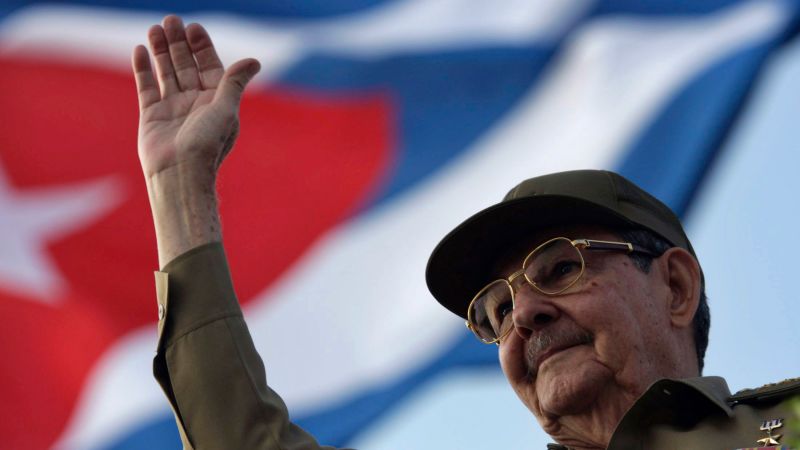
When Raúl Castro, the brother of the late Fidel Castro, resigned in 2021 as First Secretary of the Communist Party of Cuba, the highest position of power on the island, it marked the end of almost six decades Castro rule.
The mantle was passed to Miguel Diaz-Canel. But for many Cubans, Raúl has continued to exercise what they consider a kind of “power in the shadows,” as they claim his presence and influence in the country’s politics remain ever-present.
During his farewell at the closing of the 8th Congress of the Communist Party of Cuba in April 2021, the army general warned that, as long as he lived, he would be ready, “with his foot in the stirrup,” to defend socialist Cuba.
In the following years, Raúl continued to participate, on occasion, in central events celebrating the triumph of the Cuban revolution. He even received some presidents and political leaders from allied countries at the National Palace.
“The party is just a façade. Diaz-Canel has no power at all; the power lies with Raúl and the Armed Forces who, besides having the cannons, have the bank accounts,” says Sebastián Arcos, director of the Cuban Research Institute at Florida International University.