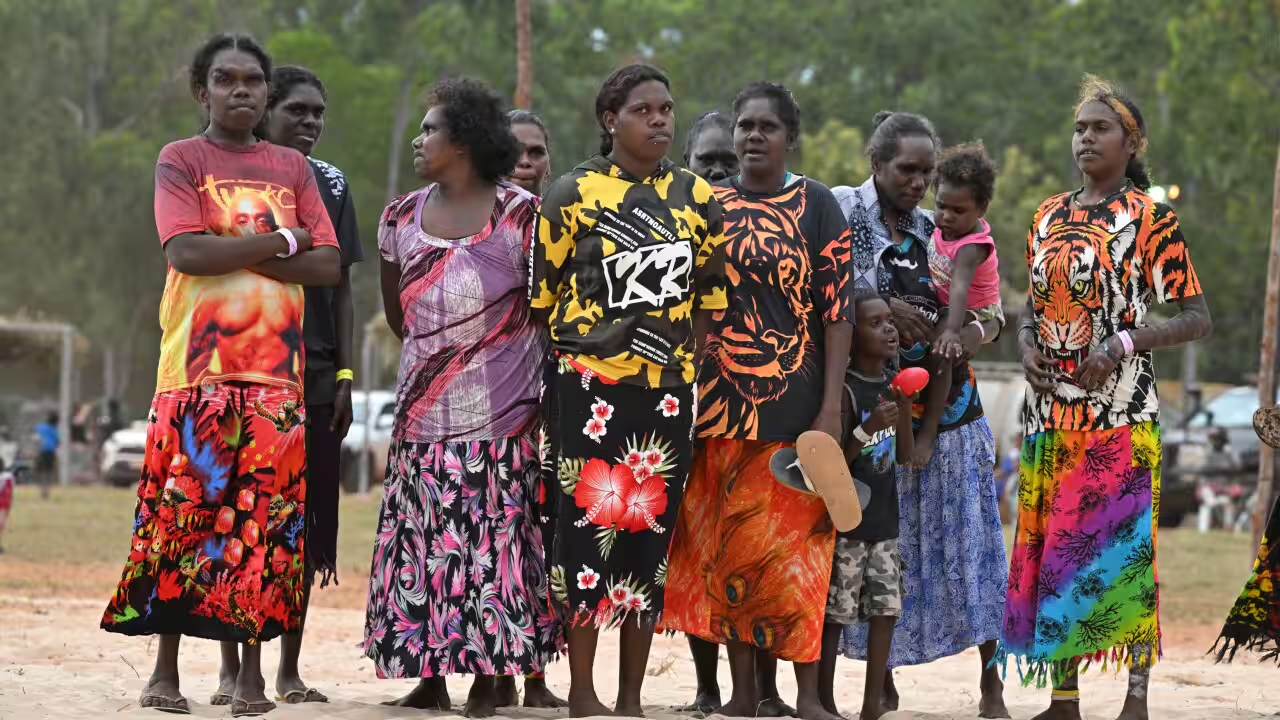
Rising Indigenous employment is being driven by women who are better qualified than men and more likely to attend school and avoid the justice system.A new study undertaken by researchers from Australian National University and the University of Queensland examines nine sets of census results from 1981 to 2021.It found 93 per cent of the growth in Indigenous employment over the four decades was down to women entering the workforce.Their job rates more than doubled from 25.4 per cent to 51.3 per cent, while those for men edged up just 4.3 per cent over the 40-year period.Rising employment among Indigenous women is closely linked to substantial gains in post‑secondary education, which have outpaced those of Indigenous men.The study found Indigenous women are more likely to complete post-school qualifications as mature-age students.It pointed to large increases in post-secondary educational attainment between 1981 and 2021 for all Australians.For Australian men, the proportion with a post-secondary qualification rose from 8.6 per cent to 33.3 per cent, while for Australian women the increase was even greater, from 6.8 per cent to 41.2 per cent.For Indigenous women, the increase was from 0.7 per cent to 18 per cent, while for Indigenous men the rise was from 0.6 per cent to 9.3 per cent.Study lead Christian Eva said employment rates for Indigenous men and women were now nearly equal and the next census might show the rates were higher for women than for men.Primary industry, health care and public administration were sectors where Indigenous women with higher qualifications found work, he told AAP.The study found employment gaps had narrowed in cities and regional areas but had widened sharply in remote Aboriginal communities.High incarceration rates were keeping Indigenous males out of jobs, schooling and skills training, Eva said."If we are talking about large amounts of Indigenous men taken completely out of the labour market, it's going to have an impact."School absenteeism, homelessness, health issues and substandard housing also contributed to Indigenous males being kept out of skills training, higher education and the labour market, Eva said."A large proportion of the Indigenous population are unable to participate in those things, not because they don't want to, but because they can't because they are excluded for those reasons."In 2021, 52.2 per cent of Indigenous people aged 15 to 64 were employed, compared with 74.6 per cent of non-Indigenous people.The study noted the 5.6 percentage point increase in Indigenous employment between 2016 and 2021 meant it was one of only a few Closing the Gap targets that was on track.For the latest from SBS News, download our app and subscribe to our newsletter.
Next-generation Indigenous women are leading the way on employment growth
A new study has shown that employment rates for Indigenous men and women are now nearly equal.
433 words~2 min read