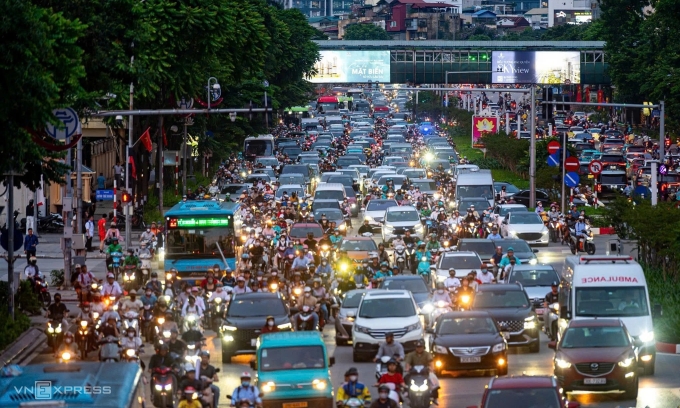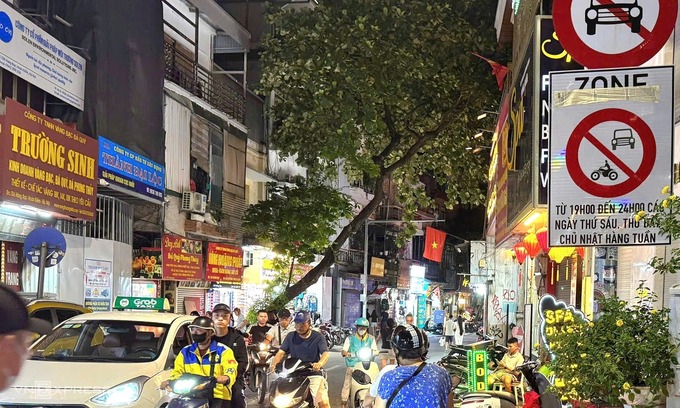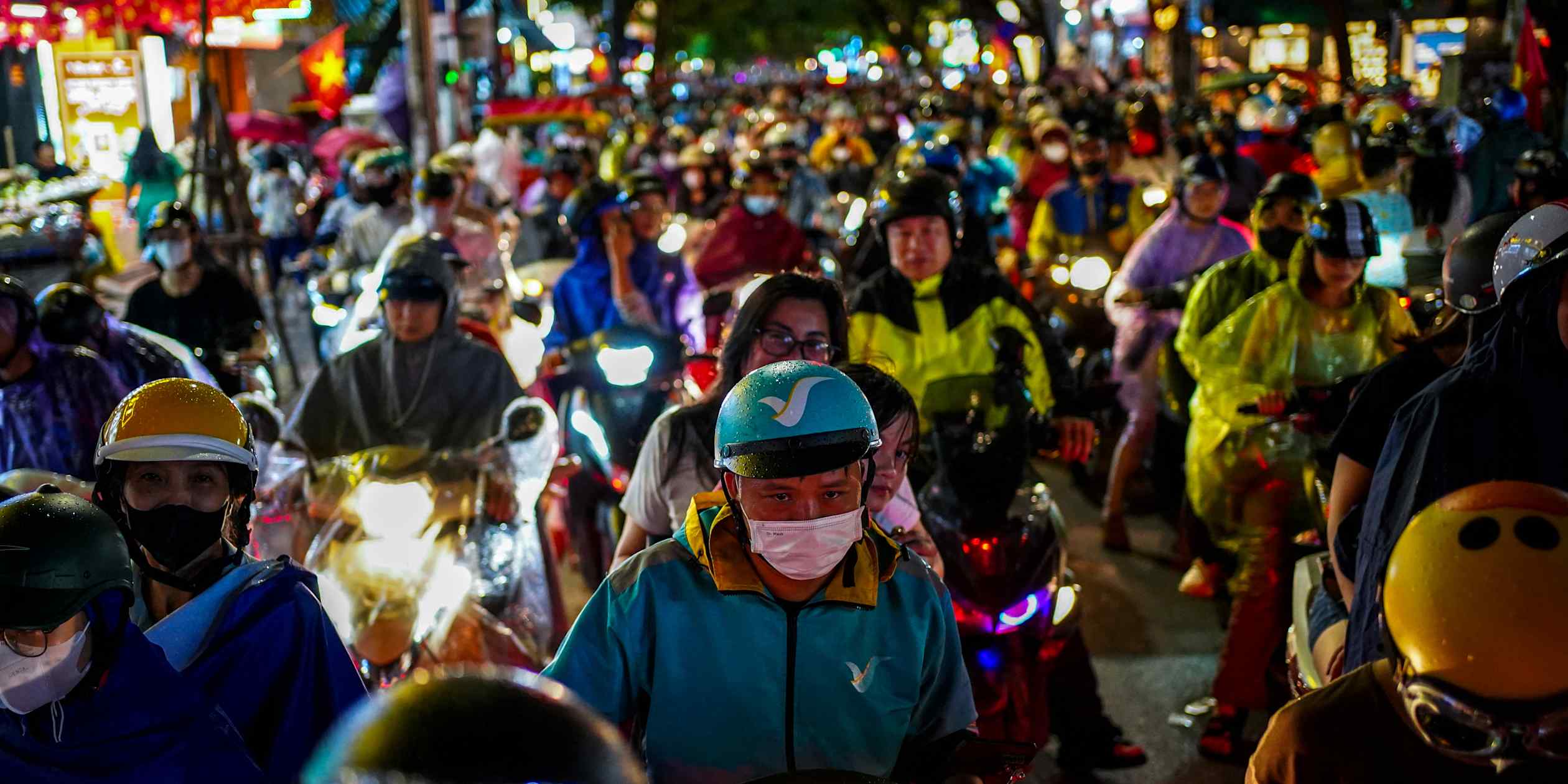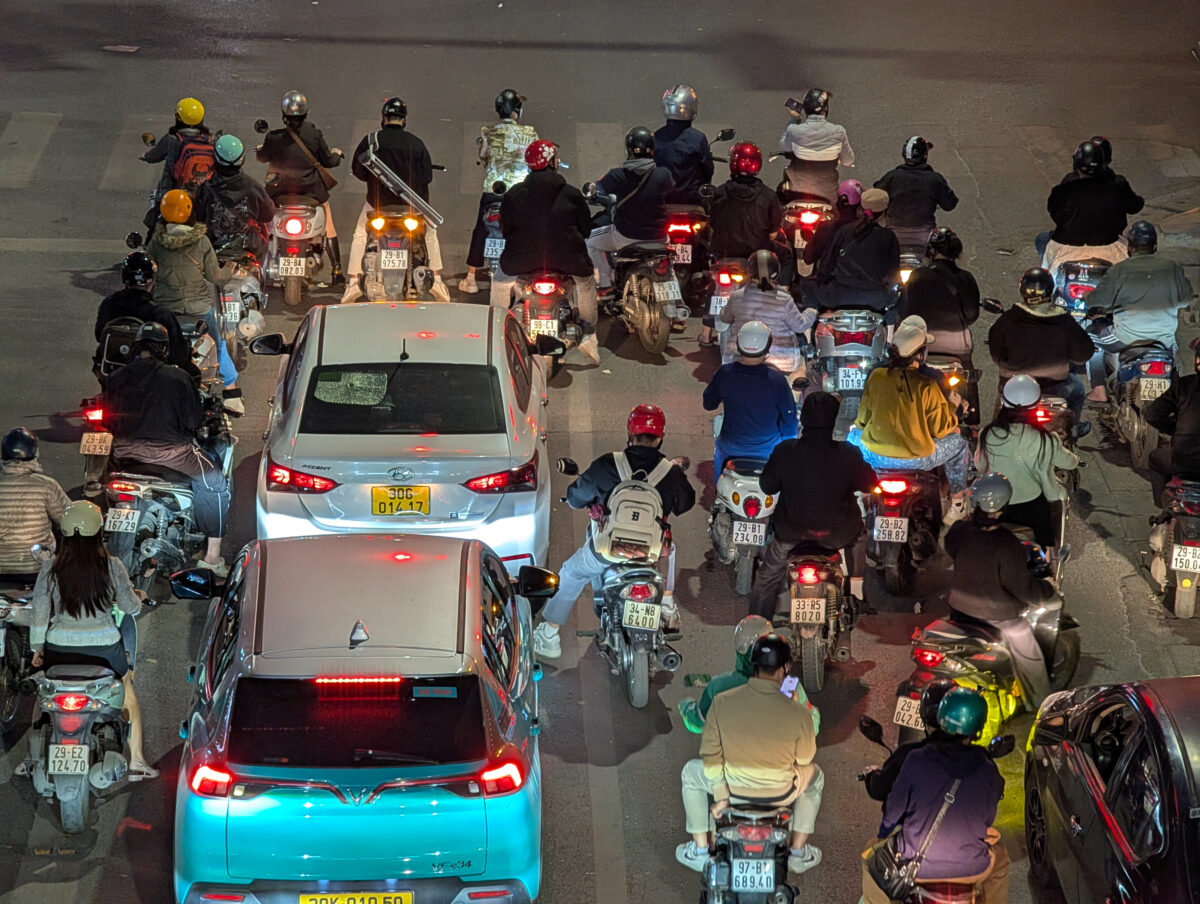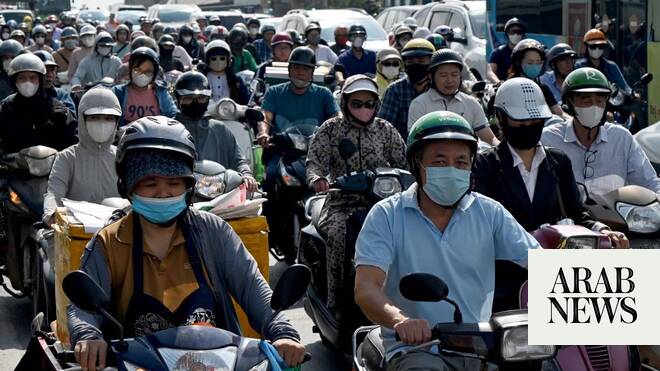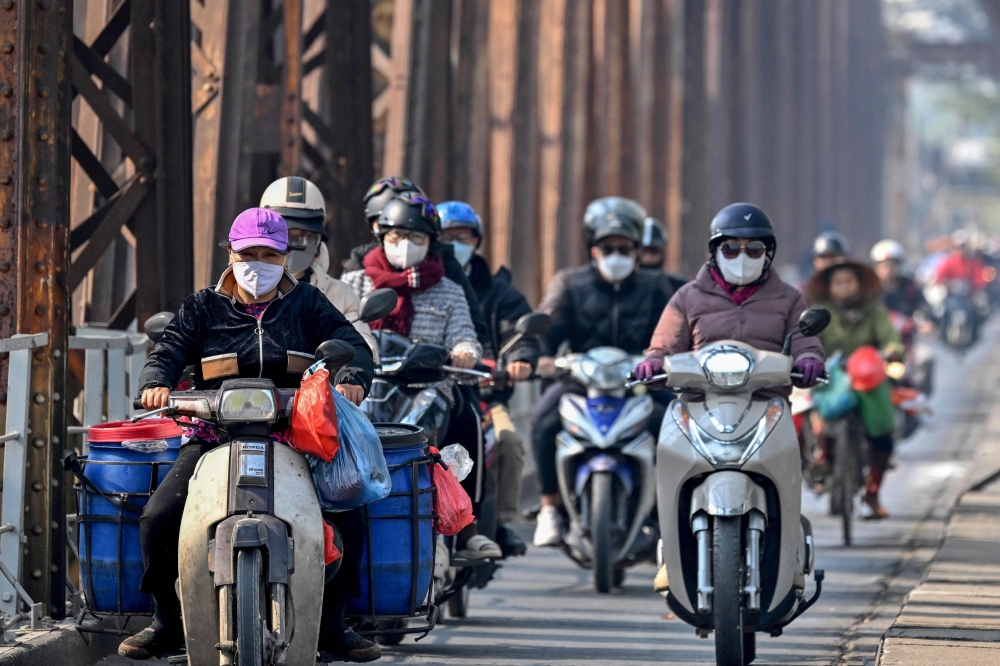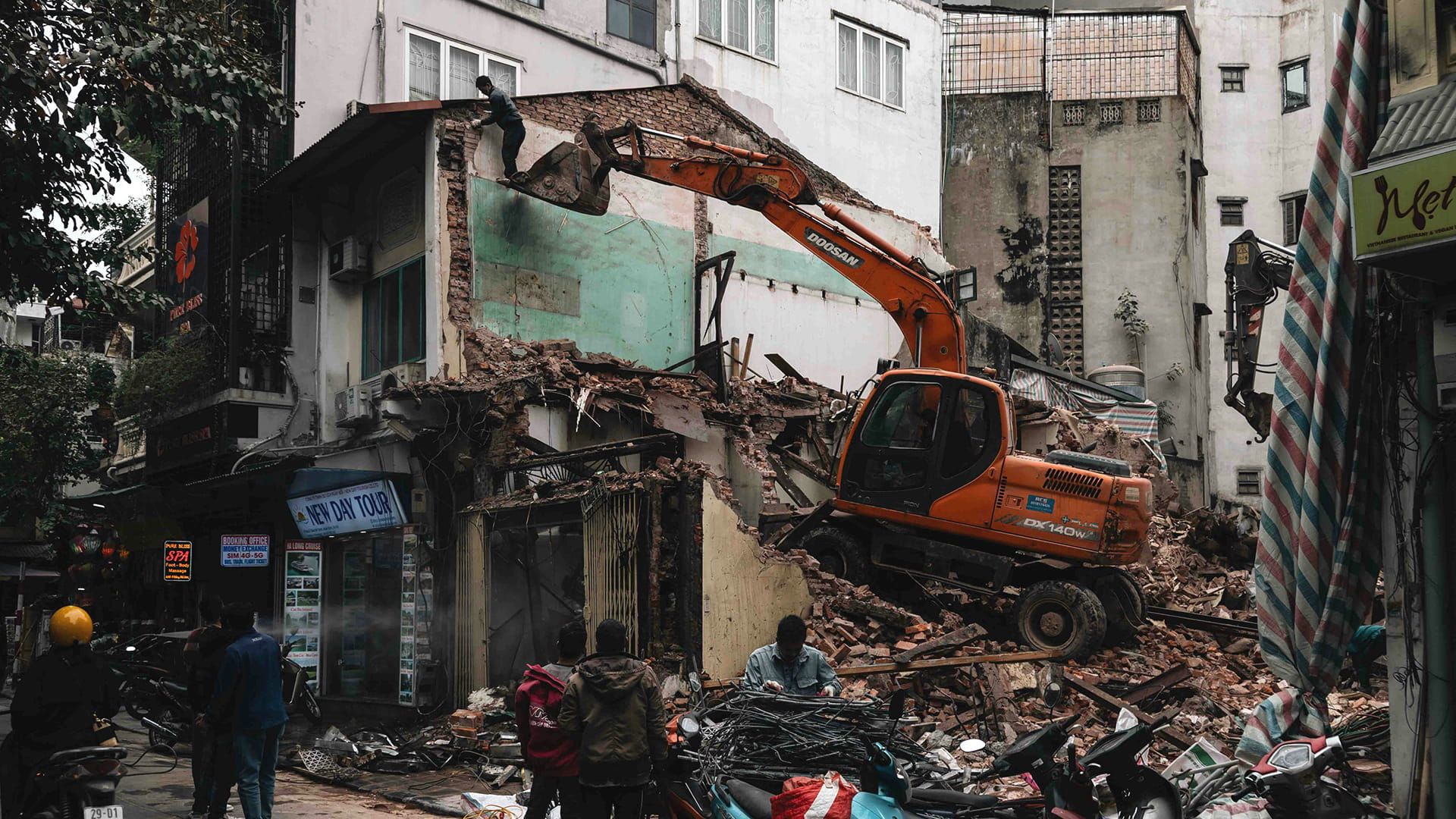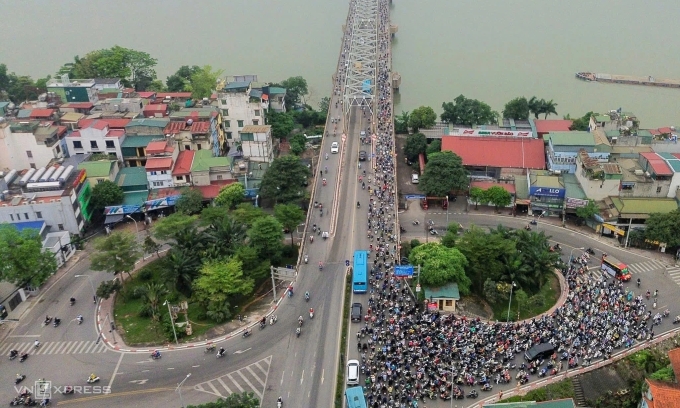
Under a draft resolution now open for public feedback, the People's Committee will determine which streets, lanes, directions, and time windows to restrict private vehicles from Jan. 1, 2035, based on actual conditions and the capacity of public transport to absorb displaced trips.
The resolution bundles together investment support for clean-energy and non-motorized transport infrastructure, subsidies for converting fossil-fuel vehicles, and a phased approach to restricting polluting vehicles in the Vietnamese capital.
The Department of Construction, which is drafting the resolution, said the scope of private vehicle restrictions will depend on the capacity of public transport in each area, including metro lines, buses, and public bicycles. The city will only consider applying restrictions once residents' travel needs can be met and trips replaced without disruption, it said.
Restricted zones would also need adequate traffic management and monitoring systems, and the city would have to publicly release maps and implementation plans at least 12 months before each phase takes effect.
The 2035 date is anchored to Hanoi's metro buildout. Under the city's master plan for urban rail investment, Hanoi expects to complete 96.8 km of metro lines by 2030, with another 301 km of lines under preparation. The full network is targeted for completion in 2035.