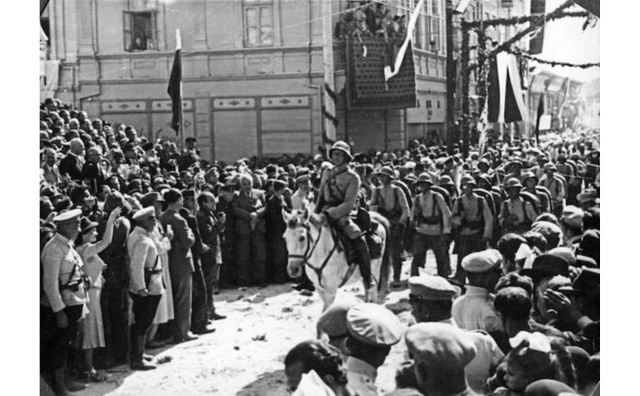
Bulgarian soldiers enter Dobrich, Dobruja, after the Craiova Agreement of 1940 (Wikipedia)
History is rarely as clean as the winners write it. Bulgaria ended World War Two on the losing side, signed a peace treaty as a defeated nation, and yet walked away with more territory than it started with. Bulgaria set a precedent as the only defeated country in World War Two to emerge from the war with a territorial gain. No other country on the losing side can say that.
To understand how that happened, you have to understand what Bulgaria was dealing with before the first shot was ever fired. The Treaty of Neuilly-sur-Seine in 1919 had imposed severe territorial losses on Bulgaria, including the loss of Southern Dobruja to Romania, and left a lasting wound on Bulgarian national consciousness. For two decades, getting Dobruja back was not a fringe ambition, but the central goal of Bulgarian foreign policy. When Hitler came along and started redrawing maps, Bulgaria saw an opening.
On September 7, 1940, Southern Dobruja, lost to Romania under the 1913 Treaty of Bucharest, was returned to Bulgarian control by the Treaty of Craiova, formulated under German pressure. Tsar Boris III got back a territory that generations of Bulgarians had considered rightfully theirs, and he did it without firing a single bullet. From a purely Bulgarian perspective, that was an extraordinary diplomatic achievement.