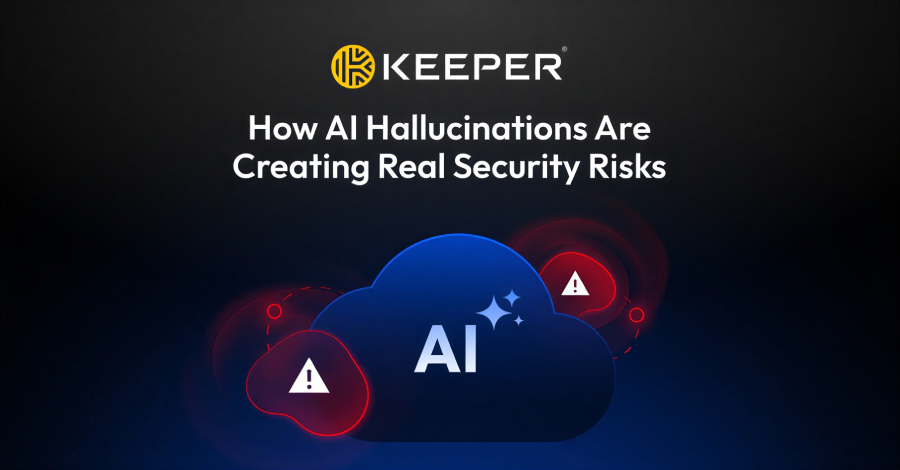
AI hallucinations are introducing serious security risks into critical infrastructure decision-making by exploiting human trust through highly confident yet incorrect outputs. When an AI model lacks certainty, it doesn’t have a mechanism to recognize that. Instead, it generates the most probable response based on patterns in its training data, even if that response is inaccurate. These outputs may appear authoritative, making them especially dangerous when driving real-world security decisions.
Based on Artificial Analysis’s AA-Omniscience benchmark, a 2025 evaluation of 40 AI models found that all but four models tested were more likely to provide a confident, incorrect answer than a correct one on difficult questions. As AI takes on a larger role in cybersecurity operations, organizations must treat every AI-generated response as a potential vulnerability until a human has verified it.
What are AI hallucinations?
AI hallucinations are confidently presented, plausible-sounding outputs that are factually inaccurate. Base language models don’t retrieve verified information; they construct responses by predicting words and phrases from learned patterns in their training data. Since their responses are statistically likely but not necessarily true, hallucinated outputs can closely resemble accurate information. While hallucinating, AI models may cite nonexistent sources, reference research that was never conducted or present fabricated data with the same conviction as trusted information.