There is a troubling entitlement that has seeped into contemporary politics and the concept of citizen engagement. Today, many believe that citizen participation is limited to voting or being spurred into protests in service of partisan political agenda. The idea that effective governance means shielding citizens from the reality of global crises has become an accepted norm, one far removed from the foundational discussions held during the Constituent Assembly debates, where duties were frequently mentioned alongside rights.
Currently, the political class seems fixated on keeping citizens insulated and reactive. Oil wars may erupt, shipping lanes can collapse, and once stable regions may ignite, yet if petrol prices rise, forex reserves dwindle, or the government calls for restraint, leadership is deemed to have ‘failed’. That is not how nations navigate turbulent times.
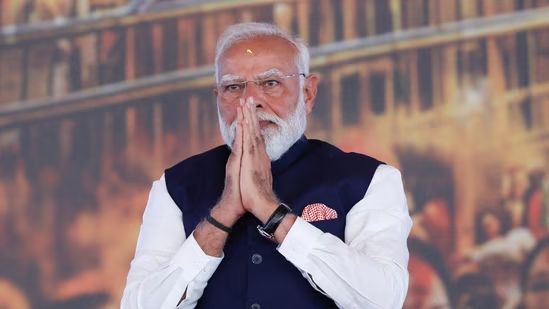
Prime Minister (PM) Narendra Modi’s address regarding the West Asia crisis was significant not only for its appeal but for the psychological shift it represented. He didn't announce rationing, emergency controls, or introducing wartime restrictions. Instead, he did something increasingly rare in politics: He treated citizens as informed adults and stakeholders. He encouraged responsible fuel use, careful foreign travel, delayed gold purchases, carpooling, remote work, and reduced waste--merely suggestions, not diktats.