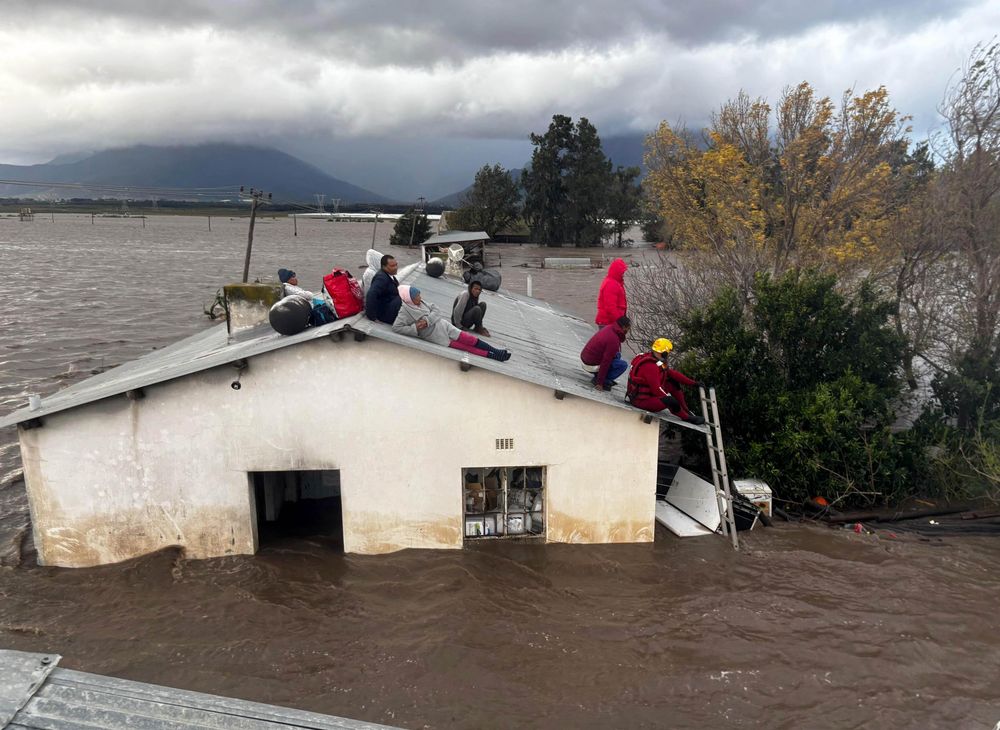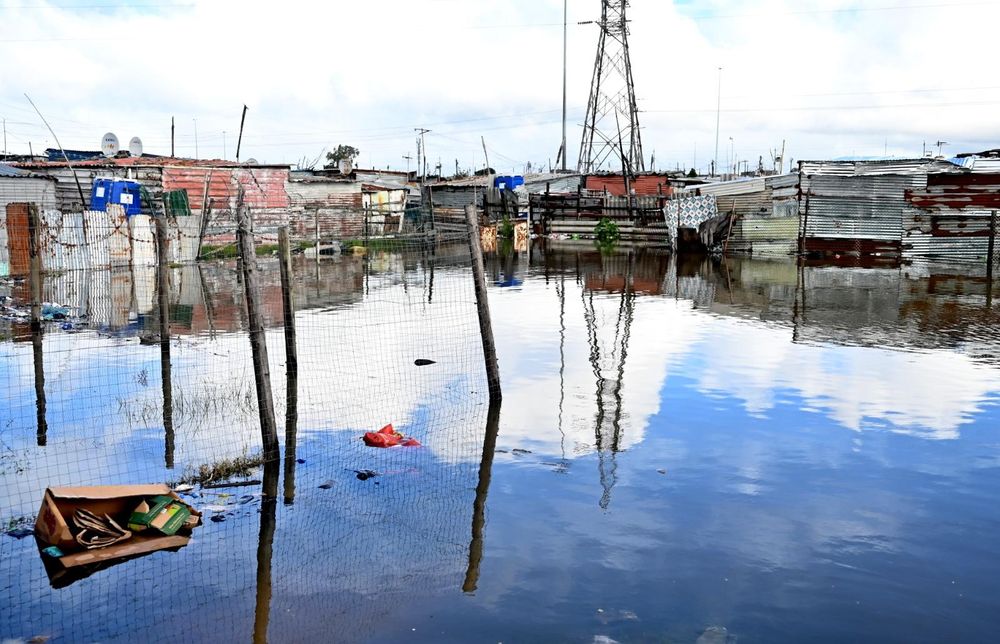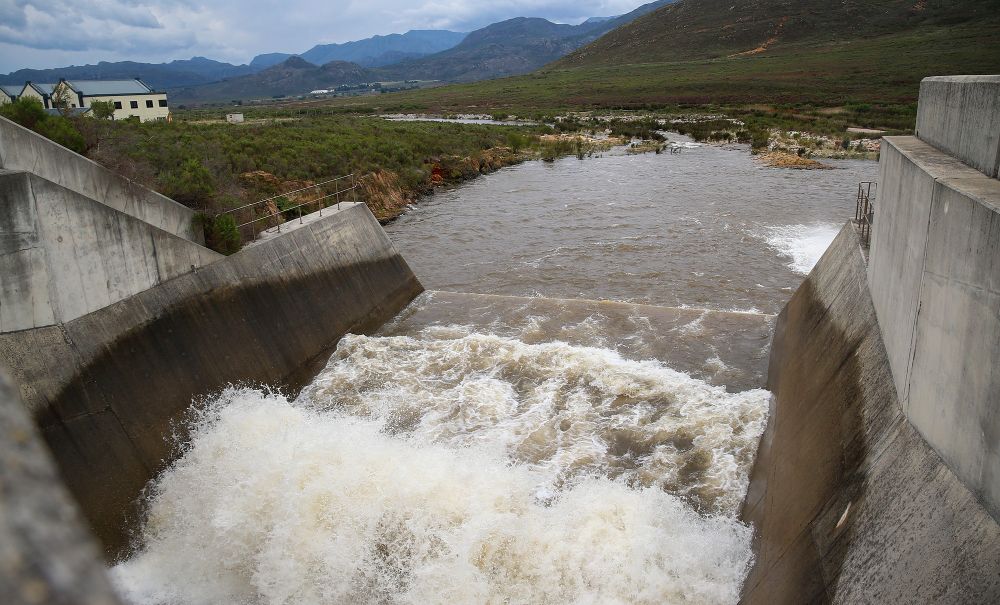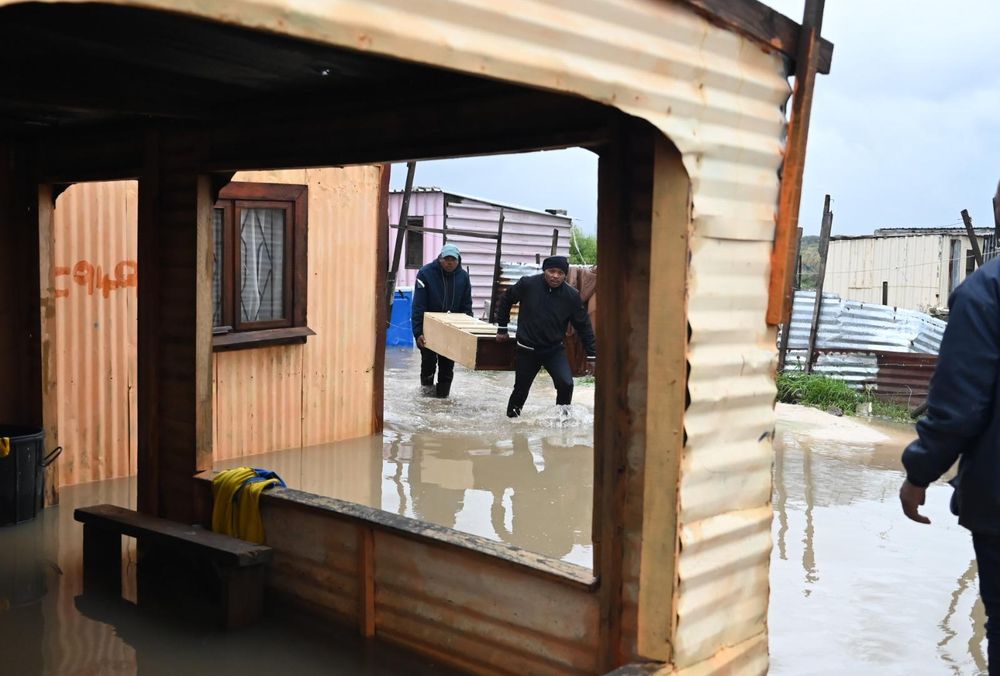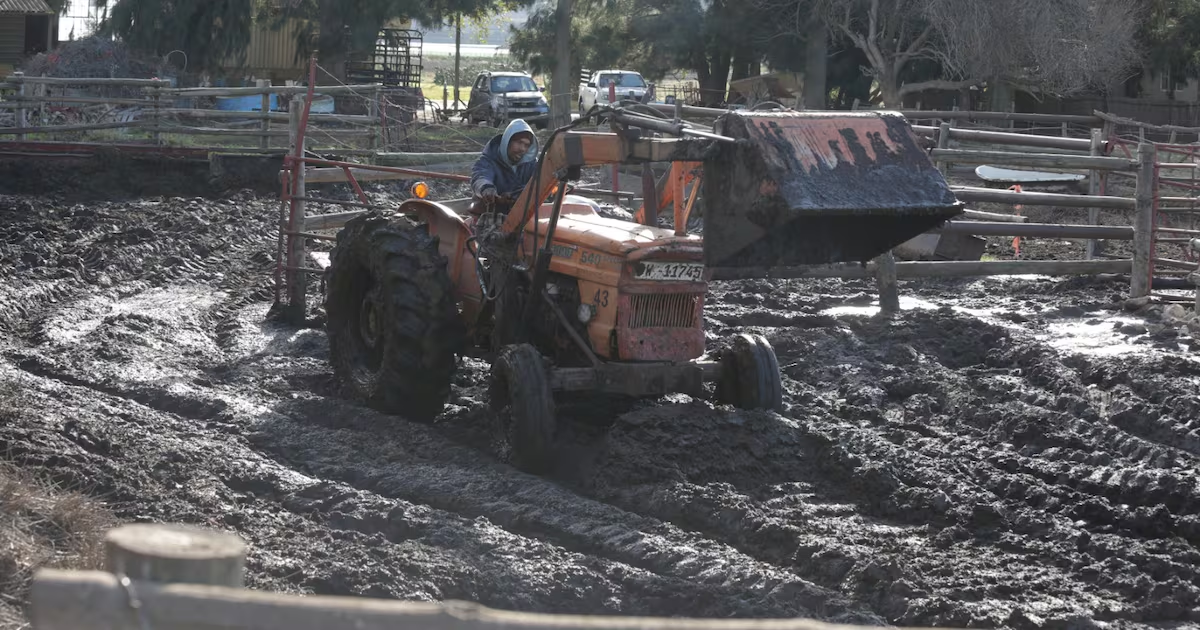
Many Western Cape farmers are tallying up the heavy loss of crops and livestock as well as damage to infrastructure from the torrential rains and gale-force winds that lashed the province for days, leaving as many as 10 people dead.The City of Cape Town said the latest assessments indicated that more than 83,000 residents had been affected, with residents in Vygieskraal, Overcome Heights, Dubai, Khayelitsha, Philippi East, the Ramaphosa informal settlement, Gugulethu, Valhalla Park, Lwandle, Mfuleni and Kampies requiring humanitarian aid.Farmers in one of the country’s agricultural hubs ― which is prone to severe weather such as rainstorms and high winds ― are still trying to quantify the cost of this latest episode, said Darryl Jacobs, the deputy director-general for agricultural development and support services in the Western Cape department of agriculture.“The situation is desperate, with many farmers having lost entire crops and livestock, as well as suffering devastating infrastructure damage,” he told Business Day. “The damage is across the entire province. Infrastructure was destroyed, houses damaged beyond repair and agriworkers displaced. In certain areas the impact is the most devastating on record.”Springfield Estate, one of the major wine producers in the town of Robertson along the Western Cape wine route, said the damage from floodwater surging through the Breede River — a crucial water source for agriculture— left roughly 90ha of its 220ha of land submerged.“This is our fourth major flood since June 2023, each one has brought higher water levels than the last. This has been the most devastating not only for us but for the entire Robertson region,” it said in a statement.“Fifteen hectares of new vineyards planted last winter have been completely washed away; soil preparation, cover crops, irrigation, trellising and vines in a matter of hours.”The Breede River floods also devastated the Van Loveren Family Vineyards, reaching levels of nearly 2m throughout the winery and causing significant damage to warehousing facilities, vineyards, infrastructure and operational equipment.Initial assessments indicate substantial losses to stock holdings, with an estimated 1.3-million bottles of wine, together with barrels and production equipment, including filtration systems and solar battery infrastructure, the company said.Away from agriculture, humanitarian relief efforts are ongoing in communities affected by the adverse weather, the City of Cape Town said.The latest totals from completed assessments indicate that 83,184 people living in 21,546 dwellings have been affected, the city’s disaster risk management spokesperson, Charlotte Powell, said.“Several of our NGO partners have stepped forward to provide hot meals and blankets, including Ashraful Aid, Gift of the Givers, Islamic Relief and Mustadafin. The South African Social Security Agency and the department of social development have also stepped in to help,“ she said.On Thursday, the Western Cape department of social development asked for donations from the private sector and the general public to support relief efforts. The department funds five humanitarian relief organisations that have been working alongside several others to provide blankets, meals and hygiene packs to affected residents.“However, due to the large number of households simultaneously impacted across the province, the system is under severe strain,” it said in its appeal.To date, 3,628 people across the Western Cape have been displaced and are being housed in community halls, it added.The province’s infrastructure department said work is ongoing to repair multiple severely damaged roads, which have been temporarily closed, with teams grappling with flooded routes, washed-away sections, fallen trees, debris and rockfalls. Most schools across the province reopened on Wednesday after being forced to close at the start of the week. The provincial department of education said schools that need to remain shut due to infrastructure damage or access challenges caused by the storm can request permission on a case-by-case basis.
Western Cape farmers count cost of devastating floods
Floods devastate crops, livestock and infrastructure across the province
609 words~3 min read