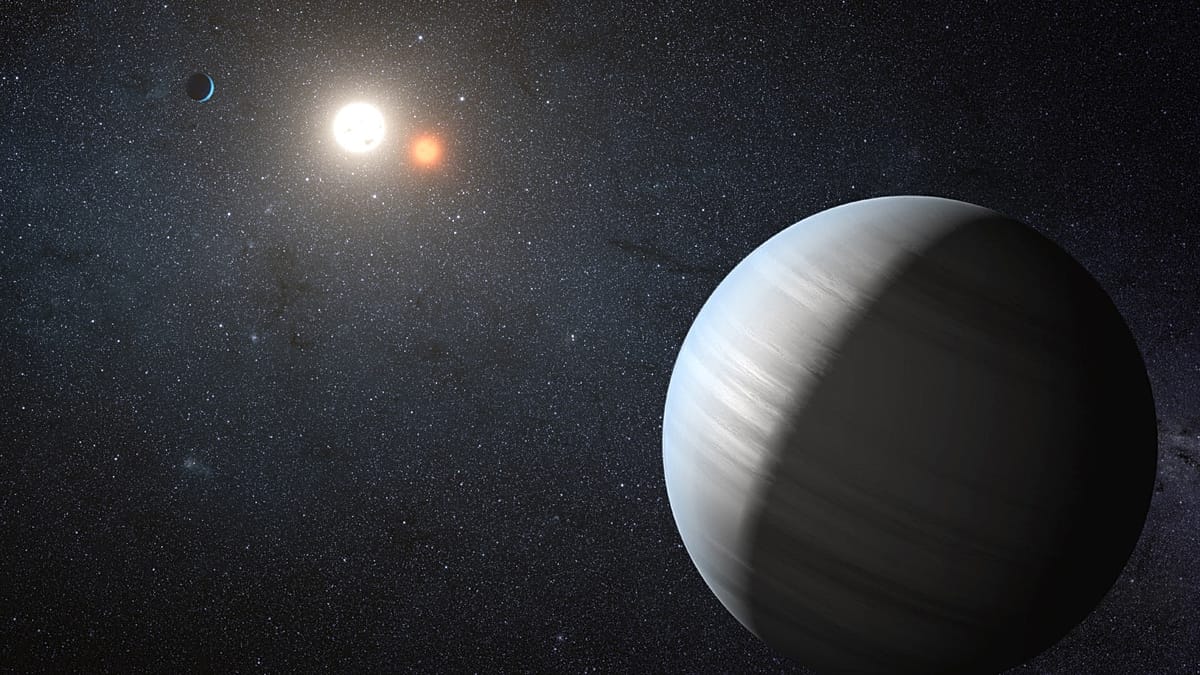
A team of astronomers has identified what they believe are 27 "candidate planets" orbiting binary star systems, using a radical new detection method.
Instead of spotting a planet crossing in front of a star, which has been the usual way of detecting new planet-like objects — known as the transit method — researchers looked for tiny changes in the timing of how two stars eclipse each other.
These tiny shifts in eclipse timing can reveal the gravitational influence of an unseen planet orbiting the system.
The study, published in the Monthly Notices of the Royal Astronomical Society and led by Margo Thornton, a PhD candidate at the University of New South Wales and SETI Institute researcher, analysed data from NASA's Transiting Exoplanet Survey Satellite (TESS).
Most known “circumbinary” planets — planets orbiting two stars, as seen in the iconic twin-sunset scene on the fictional planet Tatooine in Star Wars: A New Hope, part of the original trilogy — are found when they pass in front of one of their stars and dim its light.