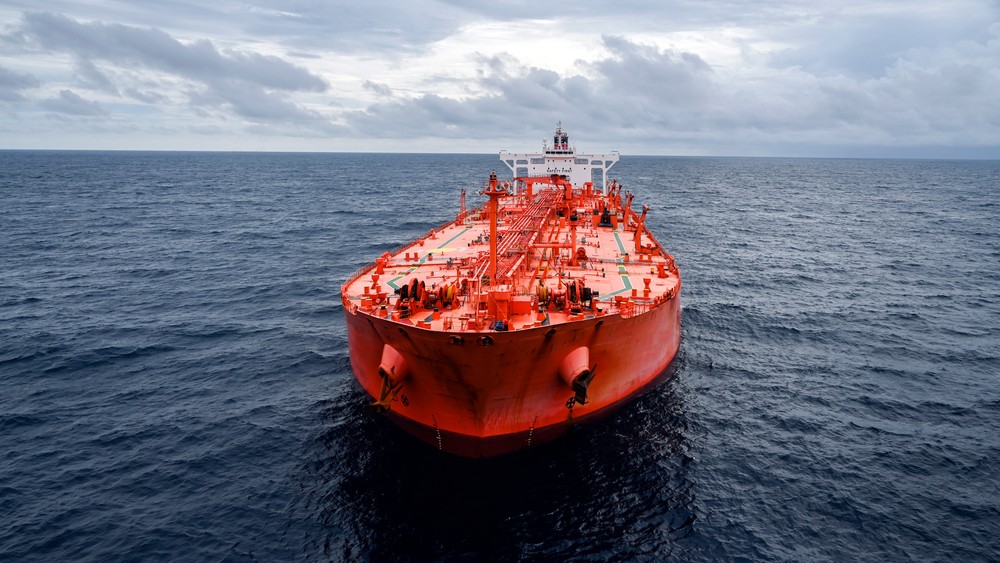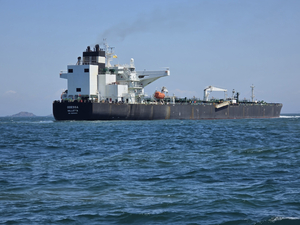
Much of profit surge reflects short-term inventory effects that could turn negative if oil prices fall The oil tanker Odessa is seen off the coast of Seosan, South Chungcheong Province, on May 8 after passing through the Strait of Hormuz shortly before Iran reimposed a blockade on the key shipping route. The vessel was scheduled to unload 1 million barrels of crude oil later in the day at an offshore mooring facility operated by HD Hyundai Oilbank. (Yonhap) Soaring oil prices fueled by conflict in the Middle East have driven a sharp rebound in first-quarter earnings across the global energy industry, benefiting not only oil-producing giants but also South Korean refiners that import and process crude oil.Still, analysts caution that the strong profits posted by Korean refiners are fundamentally different from those of global oil majors, given that a significant share of the gains is driven by short-term inventory accounting effects rather than fundamental improvements in profitability.Among refiners, S-Oil on Monday posted 1.23 trillion won ($824.9 million) in operating profit for the January-March period, swinging from a loss of 21.5 billion won a year earlier. The figure marked the company’s strongest quarterly performance since the second quarter of 2022, shortly after Russia invaded Ukraine.The refiner, whose parent is Saudi Aramco, said more than half of its operating profit, or 643.4 billion won, stemmed from inventory-related gains; crude oil secured at lower prices before the conflict surged in value by the time refined products were sold.SK Innovation also swung back to profit in the first quarter, posting 2.16 trillion won in operating profit. The bulk of the gains came from its refining subsidiary, SK Energy, which earned 1.28 trillion won in operating profit. Roughly 60 percent of the profit, or about 780 billion won, came from inventory-related gains, it said.The company was candid about the fragility of the gain, describing it as “temporary accounting profits that could shrink or disappear if oil prices decline in the future."GS Caltex and HD Hyundai Oilbank told a similar story. GS Caltex' operating profit came to 1.64 trillion won, up 14-fold on-year, while HD Hyundai Oilbank reported 933.5 billion won, up nearly 30-fold from a year earlier.Despite unprecedented earnings, Korean refiners appear reluctant to celebrate. They all acknowledged that much of the profit boost stems from a timing mismatch known as the “lagging effect” -- the gap between buying crude at lower costs and selling refined products at today’s elevated prices.The effect is especially pronounced in South Korea, where refiners maintain large crude inventories due to their geographic distance from oil-producing countries and the time required for transportation, storage and refining.The country’s four major refiners purchased crude oil at around $60 to $70 per barrel in January and February, before the outbreak of the US-Israeli war on Iran. Prices have since climbed to around $100. When crude prices rise, the value of both crude inventories and refined petroleum products increases, allowing refiners to book inventory valuation gains.But those gains could swiftly become losses if oil prices fall. Refiners that bought crude at elevated prices now may find themselves selling petroleum products at lower market prices later, causing inventory valuation losses and squeezing margins.“This is ... not a structural improvement in profitability,” an industry official familiar with the matter said. “Once the situation in the Middle East stabilizes and oil prices fall, this will turn to inventory-related losses.”The situation echoes 2020, when Korean refiners collectively posted losses of 5 trillion won after oil prices spiked and then collapsed — a precedent that has the industry bracing itself for a difficult second half.“Crude oil supply disruption that led to a drop in utilization rates could weigh heavily on second-half results,” the official said. “If high oil prices continue to suppress fuel demand, refining margins could narrow considerably, dealing a serious blow to profitability in the latter half of the year."Additional pressure is also stemming from the government’s implementation of a price cap on petroleum products.The Ministry of Trade, Industry and Energy introduced fuel price ceilings in March to help ease cost burdens on drivers and industries over fluctuating oil prices triggered by the Middle East crisis. Under the system, the government has set maximum prices for oil products that South Korean refiners sell to gas stations and distributors in line with global oil price movements.To support this program, the government has set aside 4.2 trillion won to compensate refiners for losses from a fuel price cap. But concerns are growing that compensation costs may soon outstrip the allocated budget as the war drags on.“The government may be pressured by the public to provide less financial support after reiners posted such strong profits,” another industry official said. “That could complicate already tough discussions over compensation measures tied to the price controls."
Why Korean refiners aren’t celebrating their earnings boom
Soaring oil prices fueled by conflict in the Middle East have driven a sharp rebound in first-quarter earnings across the global energy industry, benefiting not
794 words~4 min read